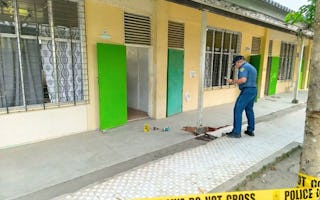
Time Running Out For ‘Malaya Lolas’
The Malaya Lolas or comfort women are now down to 20 and are mostly bedridden or in declining health.
When the country commemorated “Araw ng Kagitingan” or the Day of Valor on April 10, President Marcos spoke before the ageing war veterans and lauded their sacrifices when they defended the country from Japanese occupation during World War II.
“We live in a different time now. Those who once faced each other in battle now work together for peace. So one might ask, ‘Is there still a need for heroes? Do we still have within us Filipinos that character of heroism that has defined us as a people for all our history?’” Marcos Jr. said at the Mt. Samat National Shrine in Pilar, Bataan.
“We need to only look around us to find the answer. We see it in our veterans – some of whom are here with us today. They have passed on to us this shining legacy, this treasure, for us to burnish,” he added.
April 9 marked the fall of Bataan to Japanese troops in 1942 and signaled the start of the Bataan Death March, Marcos said it also “marked the beginning of the Filipinos’ resurgence as a fighting force to defend, and to take back the land of their forefathers.” (The commemoration of the Day of Valor was moved to April 10 this year for long weekend.)
Among those who attended was Koshikawa Kazuhiko, the ambassador of Japan to the Philippines, who in his speech apologized for their soldiers’ actions during the war.
“As we stand on this hallowed ground, I would like to (express my) heartfelt condolences to the victims of the fierce battles that took place here… I also have my utmost respect for the war veterans who have contributed to the peace and security that we all enjoy today. We the Japanese people feel deep remorse for our country’s actions before and during the Second World War,” the ambassador said.
But in the hour-long commemoration, no mention was made of the other wartime victims who became heroes in their own right despite their traumatic experiences – the steely female sexual slavery victims or the “comfort women.” They were raped in garrisons all over the country as part of Japan military’s sexual slavery system.
For fighting the Japanese, Filipino male war veterans are entitled to medical, educational, and burial claims from the government distributed by the Philippine Veterans Affairs Office. Even their surviving spouses and dependents are given these benefits.
The women slavery victims – now nearing an average age of 90 – do not have the same.
The discrimination endured by the comfort women prompted the UN Committee on the Elimination of Discrimination against Women (CEDAW) to call out the Philippine government’s failure to help the grandmothers, and to order the state to give the lolas (grandmothers) the same benefits.
In a decision dated March 8, the UN CEDAW scored the Philippine Commission on Women’s failure to address the “institutionalized system of wartime sexual slavery, its consequences for victims/survivors or their protection needs” even though their male counterparts during the war receive government compensation.
“(I)n contrast, Philippine war veterans, who are predominantly male, benefit from State-sanctioned special and esteemed treatment, including educational benefits, health-care benefits, old age, disability and death pensions and burial assistance. The Committee takes note of the authors’ assertion that it is discriminatory that no corresponding dignified treatment, recognition, benefits or services or any form of support are provided for the Malaya Lolas,” the UN CEDAW said in its 19-page view.
“This is a symbolic moment of victory for these victims who were previously silenced, ignored, written off and erased from history in the Philippines. The Committee’s Views pave the way for restoring their dignity, integrity, reputation and honor,” committee member Marion Bethel said in a news release about the ruling.
The UN women committee’s decision stemmed from a communication by a group of Kapampangan comfort women, who hailed the Philippine government to the international body for its failure to address their concerns.
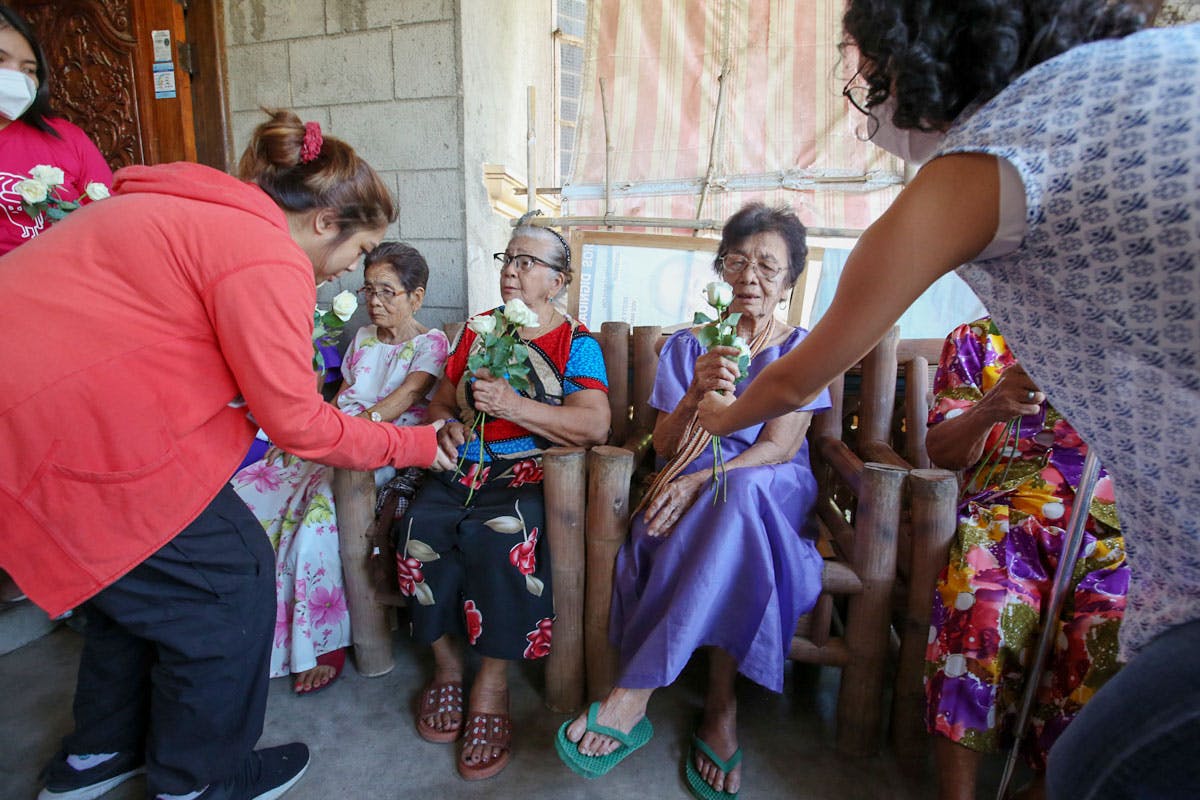
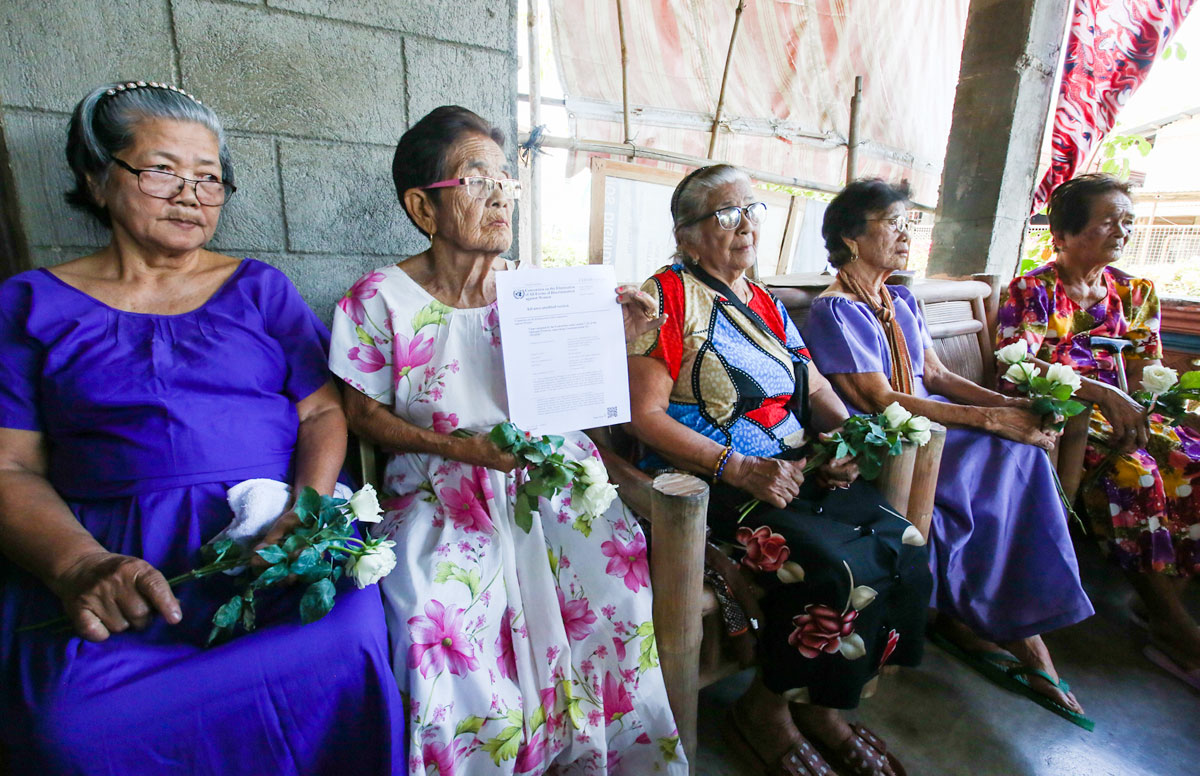
The lolas – collectively called “Malaya Lolas” (Free Grandmothers) -– celebrated their UN victory at their hometown in Pampanga in time for Women’s Month on March 19, when they welcomed visiting reporters and students with a song that told their stories of survival.
Free lolas
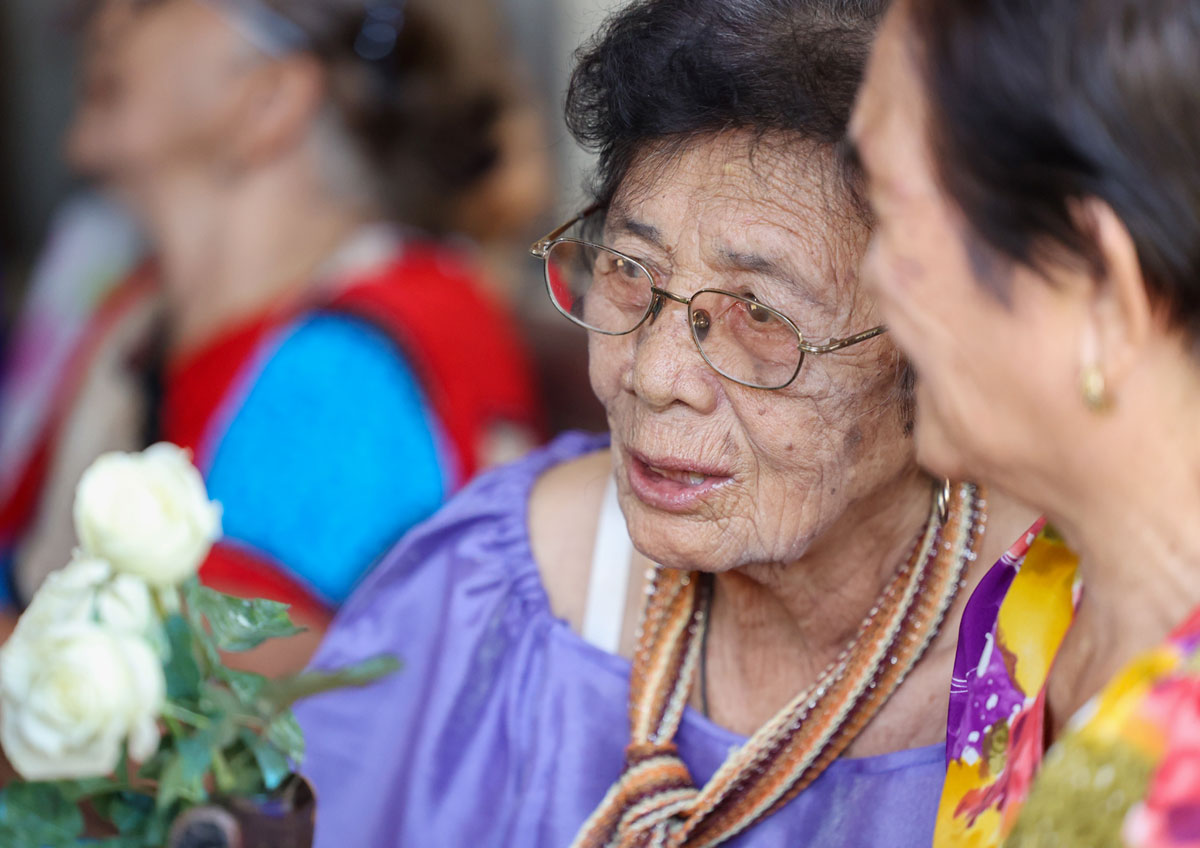
When Lola Pilar Galang sang the story of the Malaya Lolas, she conjured up images of death and destruction in Barangay Mapaniqui during the war.
Men who resisted the Japanese and even those who were innocent were bayoneted or burned to death by the Japanese soldiers, who razed the town they saw as a seat of the guerilla movement.
After the men were killed, the women were next – forcibly taken to the Bahay na Pula, in nearby San Ildefonso, Bulacan, where they were tortured and raped.
The Malaya Lolas, now in their 90s, were not women at the time of the war that raged in the Philippines during the 1940s. They were young girls when they were abused.
Lola PIlar remembered all of this too well as she sang their history:
“Sa isang umaga kami ay pinukaw, putukan ng kanyon at mga machine gun;
Lahat ng lalaki, kanilang nahuli, itinali nila sa mga haligi;
Ikinasa nila ang mga machine gun at walang natira kahit isang buhay;
Pinagsama sama sa loob ng eskwela at saka sinunog mga bangkay nila;
At nang matapos na ang pagpaparusa, ang mga babae ang hinarap nila;
Kaliwa at kanan ang pangangaladkad, ang mga kargada ay pinabubuhat;
Sa Bahay na Pula, doon pinadala, ang lahat ng hirap amin nang nadama.”
“Sinulat nila ang kantang ito para lalong hindi malimutan ang kasaysayan nila (They wrote this song so that their history will never be forgotten),” their lawyer Virgie Suarez said to the crowd who fell silent after the song.
“Kung titingnan mo ang kanilang kasaysayan, ang patong-patong na pandarahas sa kanila at sa kanilang barangay ang may matinding epekto sa kanilang sikolohikal, pisikal at emosyonal na kalagayan (If you look at their story, the layers of violence inflicted on them and their community have a grave effect on their psychological, physical, and emotional states),” she added during a visit with reporters and students that coincided with the barangay fiesta.
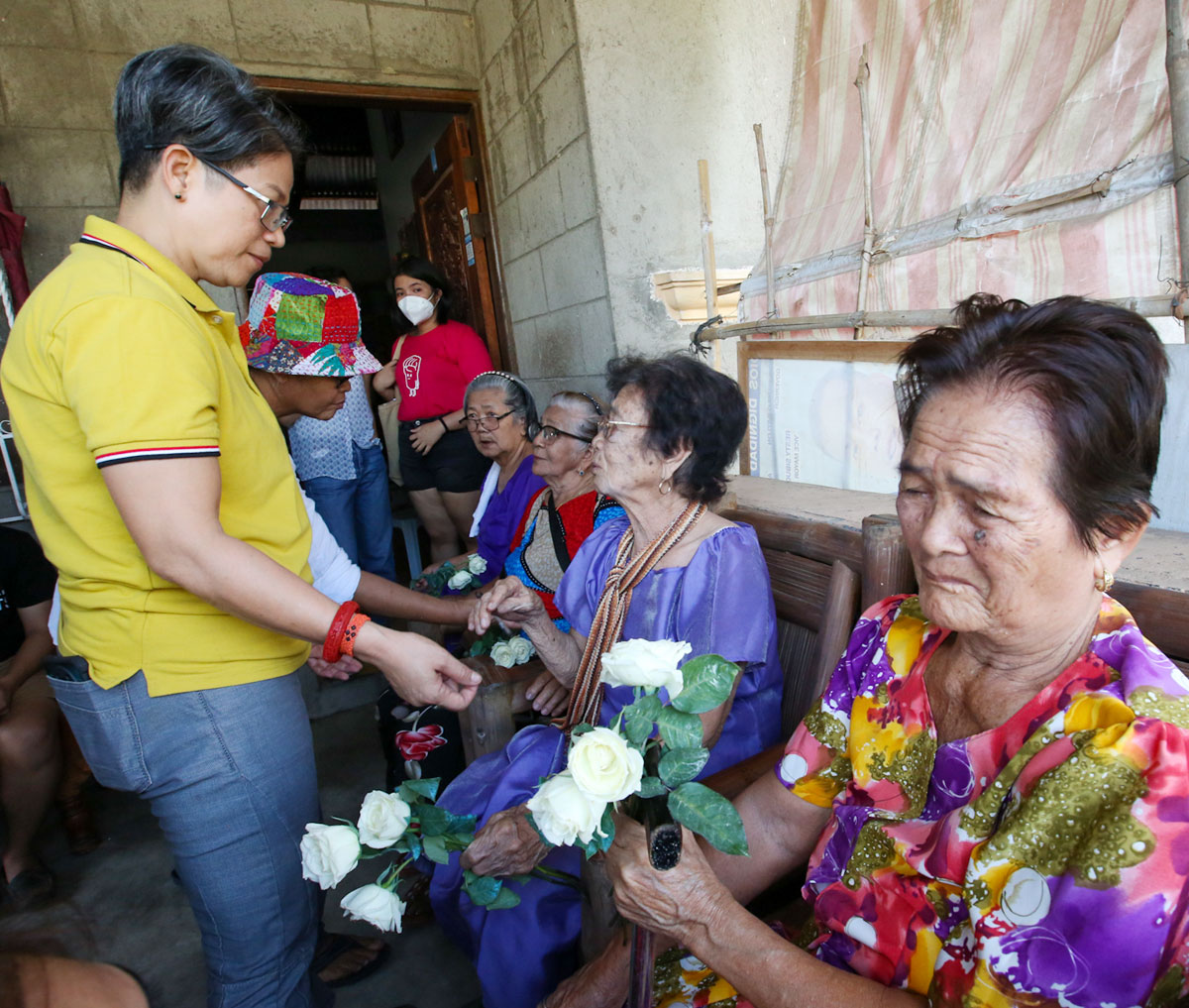
Bands marched on the road and guests were invited to taste Kapampangan cuisine in the households.
As it was Women’s Month, they also celebrated their UN CEDAW win with the community.
“This is a victory, which is why we are here to celebrate with the fiesta. But let us not allow it to become a ‘paper victory,’” Suarez said.
The Malaya Lolas of Pampanga are always dressed for the occasion whenever they are reunited to celebrate their cause for recognition.
They are usually garbed in vibrantly colored baro’t saya, displaying a bright disposition that seems to run counter to what they went through in the country’s dark history.
But on that Sunday morning, their attire was simple, but retained their colorful outlook. Lola Pilar chose a light violet dress that extended all the way to her ankles, accentuated with a knitted scarf over her neck.
The others are in varying colorful hues of their own liking. Lola Maria Quilantana, the Malaya Lolas president, came in in a white dress with pink floral design.
She was quiet when Lola Pilar sang their story. But when it was her turn to speak, she turned defiant and wasted no time to demand the country’s leaders to take action.
“Gloria Arroyo, para sa iyo itong sasabihin ko (I am addressing you, Gloria Arroyo),” Lola Maria said, referring to the former president and now district representative of their native hometown Pampanga.
Lola Maria recalled that Arroyo visited the lolas before and even accompanied them at the “Bahay na Pula” in nearby San Ildefonso town at a ceremony that recognized their struggles.
But Arroyo has not visited them since. “Magmula nang tayo ay magkita sa Bahay na Pula, hindi na kita nakita (Since we saw you at the Red House, we never saw you again),“ Lola Maria said, wagging her finger as if reprimanding a granddaughter.
“Ngayon, may problema kaming gustong ilapit sa iyo. Siguradong matutulungan mo kami. Kahit saan kang lulapalop, hahanapin kita (Now we have a problem we want to consult with you. I’m sure you would be able to help us. Wherever you are, I will find you),” she added.
While Malacañang earlier acknowledged the UN CEDAW view to provide reparations, it had taken the position that war claims had been paid during the 1956 reparations deal with Japan.
But as the UN CEDAW pointed out, the agreement only dealt with the reconstruction of areas ravaged by the war, such as Manila, which was leveled to the ground in the fighting.
The reparations deal was also made decades before the lolas, who were up to then suffering in silence, came out in the open about their wartime experience in the 1990s.
“Nananawagan kami kay Presidente Bongbong Marcos na ipatupad na ang UN resolution (We are calling on President Marcos to implement the UN resolution),” Lola Candelaria said.
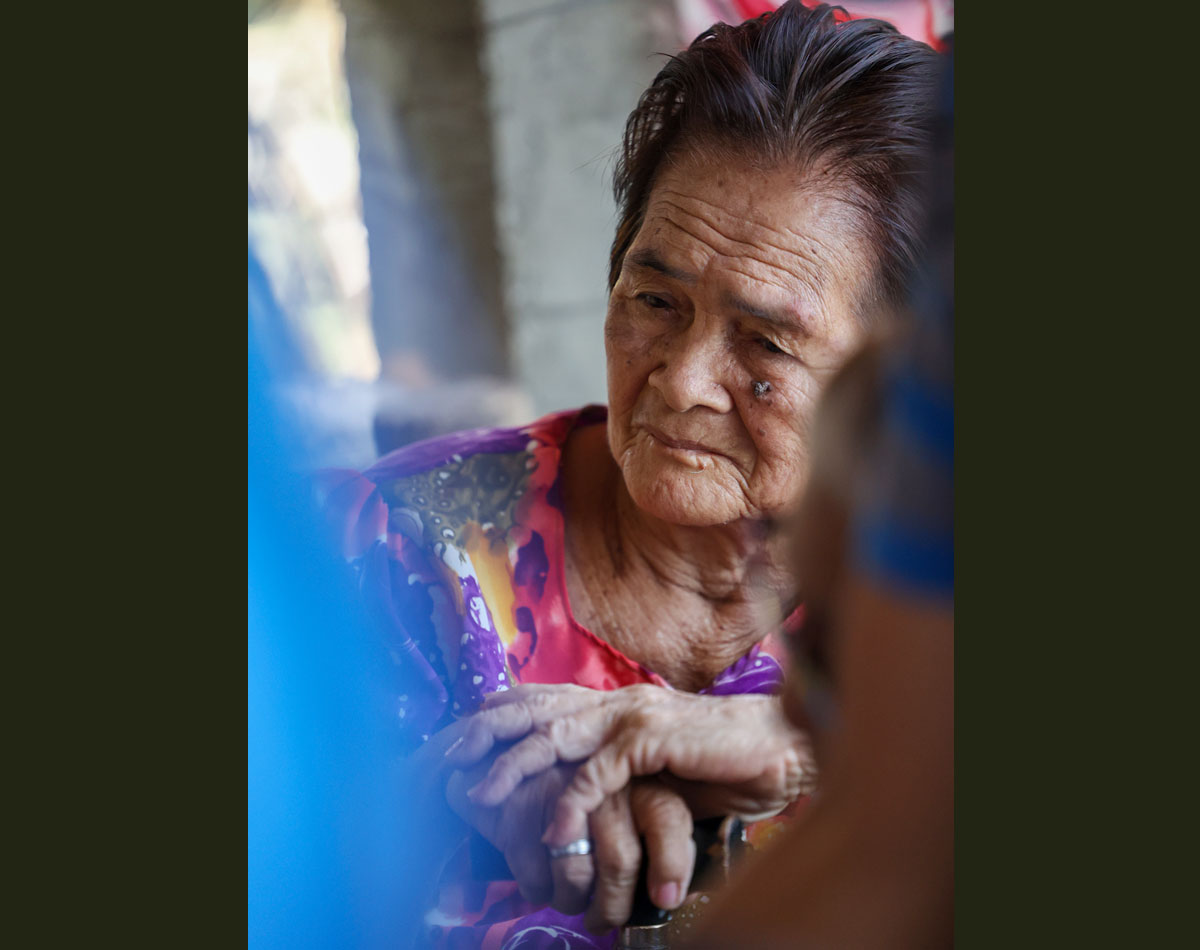
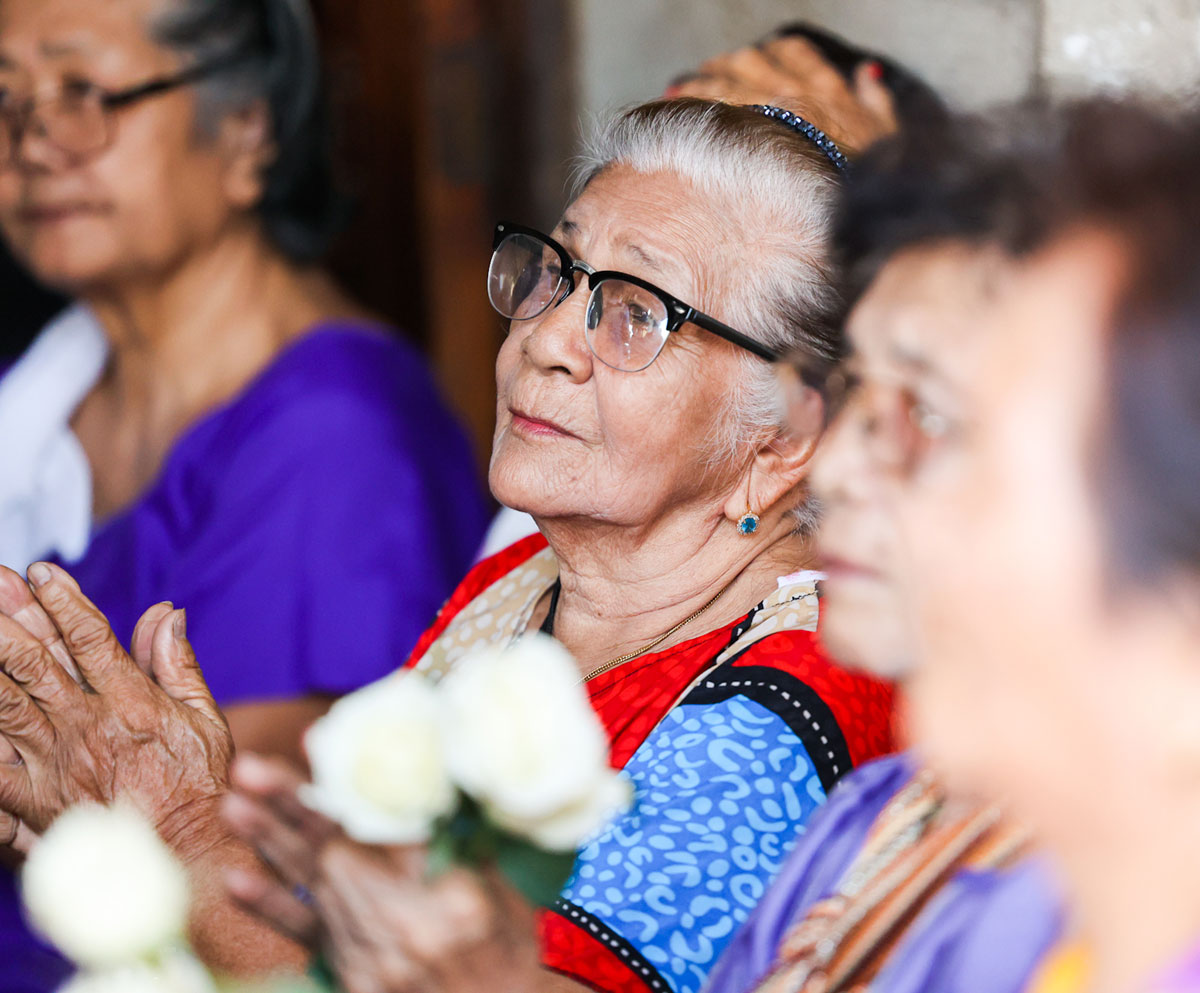
Many of the Malaya Lolas are now bedridden and in declining health, Lola Maria said. From their peak of close to a hundred lolas during their heydays, the Malaya Lolas are now down to at least 20.
“Sa totoo lang, ako na lang ang malakas na lumilibot at nag-re-report sa kanila. Hindi na nila kaya ‘yon. Marami nang mahina na talaga (Truth to be told, I am the only one strong and capable of going around and reporting to them. They couldn’t do it anymore. They are becoming weak),” said Lola Maria, now 87.
“Matatanda na kami. Tulong na lang talaga ang kailangan namin (We are really old. Help is all we need),” she stressed.
Suarez said Marcos need not wait for the passage of a bill that would allocate funds for the medical and financial assistance of the lolas in compliance with the UN CEDAW order.
Marcos can easily issue an executive order to this effect, she noted. The President has powers to tap into discretionary funds that can be used to finance the reparations, added lawyer Romel Bagares, another Malaya Lolascounsel.
“Ang estado, ang gobyerno, pangunahing responsable sa atin, lalo na sa inyo bilang naabusong mamamayan. Ang kaban ng bansa ay nasa gobyerno (The state, the government, is mainly responsible to us, especially to you who were abused),” Suarez said, addressing the lolas.
“Kaya rin pangunahing obligasyon ng ating gobyerno na tiyakin ang suportang pinansyal, medikal, counseling. Ang unangmay kasalanan talaga ang gobyernong Hapon. Iba pa ung pananagutan ng gobyerno ng Pilipinas sa inyo bilang mamamayan (Which is why it is the government’s main obligation to ensure financial, medical, and counselling support. It is the Japanese government who is at most fault here. But the Philippine government is also accountable to its citizens),” she added.
Ending their historical song, Lola Pilar sang of their fears that they will pass on from this world without getting their due recognition:
“Ang Malaya Lolas ay matatanda na, ubos na ang lakas at mahihina na;
Kung walang suporta, papaano na sila? Mga karamdaman, hindi na gagaling pa.”
Surviving kin
While there is a dim light of hope for the lolas, chances are even more slim for the families of those who have passed away.
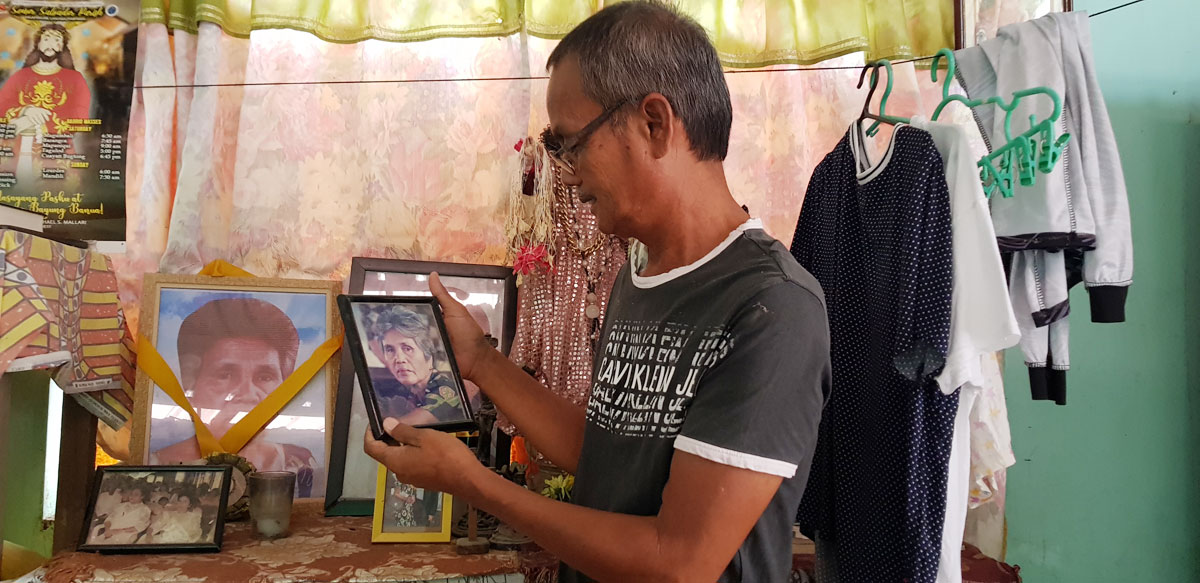
Marcelo, son of the late Malaya Lolas president Lita Vinuya, shared with The Philippine STAR his struggle as he could not afford his dialysis for kidney ailment.
Speaking to this reporter while nursing a bandage on his neck, Marcelo said if only his mother were alive, help would have arrived for his medical condition.
His mother was raped at the Bahay na Pula when she was just 11 years old. When The STAR interviewed Lita Vinuya in November 2019, she was still strong and full of hope that one day, justice will be served for wartime victims like them.
“Mga 28 na lang kaming buhay. Puro kami may karamdaman. Baka maubos na kami, hindi pa rin maibigay ang tulong legal (Only 28 of us remain alive. We all have ailments. Maybe one day we will all be gone with no legal help given),” Lola Lita said in 2019.
Marcelo said his mother grew weak one day, and in just a week, died in November 2021 at 90 years old.
“Malungkot ako na wala na ang Inang. Wala nang tumutulong sa akin (I am sad that my mother is gone. No one is helping me anymore),” Marcelo said when he welcomed The STAR to his house to show his late mother’s pictures, placed in an altar with religious images.
As a young boy, Marcelo already heard stories about the abuse his mother endured at the red house, based on stories exchanged between his father and uncles.
Marcelo expressed hopes that the compensation for his mother could be used for his medical bills as the son of a former president of the group.
“Noong buhay pa si Nanay, kahit papaano natutulungan ako. Ang tingin ko sa kanya parang mabait sa akin, dahil ako ang panganay siguro. Naalala niya ‘yung maliliit kami, nakikigapos lang kami, nakikitanim. Kaya naiiyak ako, dahil sa nanay ko, kahit papaano natutulungan ako (When my mother was still alive, at least I got help. I see my mother as kind to me as her eldest, and because of our experience in the past being poor farmers who live off someone else’s land. That is why I get teary-eyed remembering my mother, who could have helped me if she were still alive),” Marcelo said.
Meanwhile, the daughter of Malaya Lolas member Victoria dela Peña – Niña – said she was frustrated that the surviving kin may not even enjoy the benefits of the reparation, even though it was her mother’s immediate family who took care of her when she was bedridden because of a stroke. Victoria died in 2012 at 88 years old.
“Sumama loob namin. Part din naman ang nanay namin ng Malaya Lolas. May naiwan silang pamilya. Kung pagbibigyan ‘yung buhay na lola, dapat ‘yung naiwan din ng namatay (We still feel bad about it. My mother had been a member of the Malaya Lolas. She left behind a family. If the surviving grandmothers get the benefits, the surviving kin must receive the same),” said Niña, who invited The STAR to her house to partake of their fiesta food. She lives with her family just in front of Lola Lita’s home.
“Kahit sino namang anak ng dating Malaya Lolas, siyempre kahit papano nag-e-expect din kami na one day, mabigyan ng tulong (Any child of a former Malaya Lolas member would not be ashamed to admit that he or she expects help one day),” she added, noting that she had supported her mother’s rallies with the other grandmothers and had never been ashamed that her mother was a former comfort woman.
The UN CEDAW ruling that favored the comfort women’s cause has laid down specific ways for the government to tap into its resources to provide support for the comfort women. But their need for recognition does not stop at them receiving financial aid from the state.
It extends to making sure wartime sexual slavery does not happen again.
Bahay na Pula
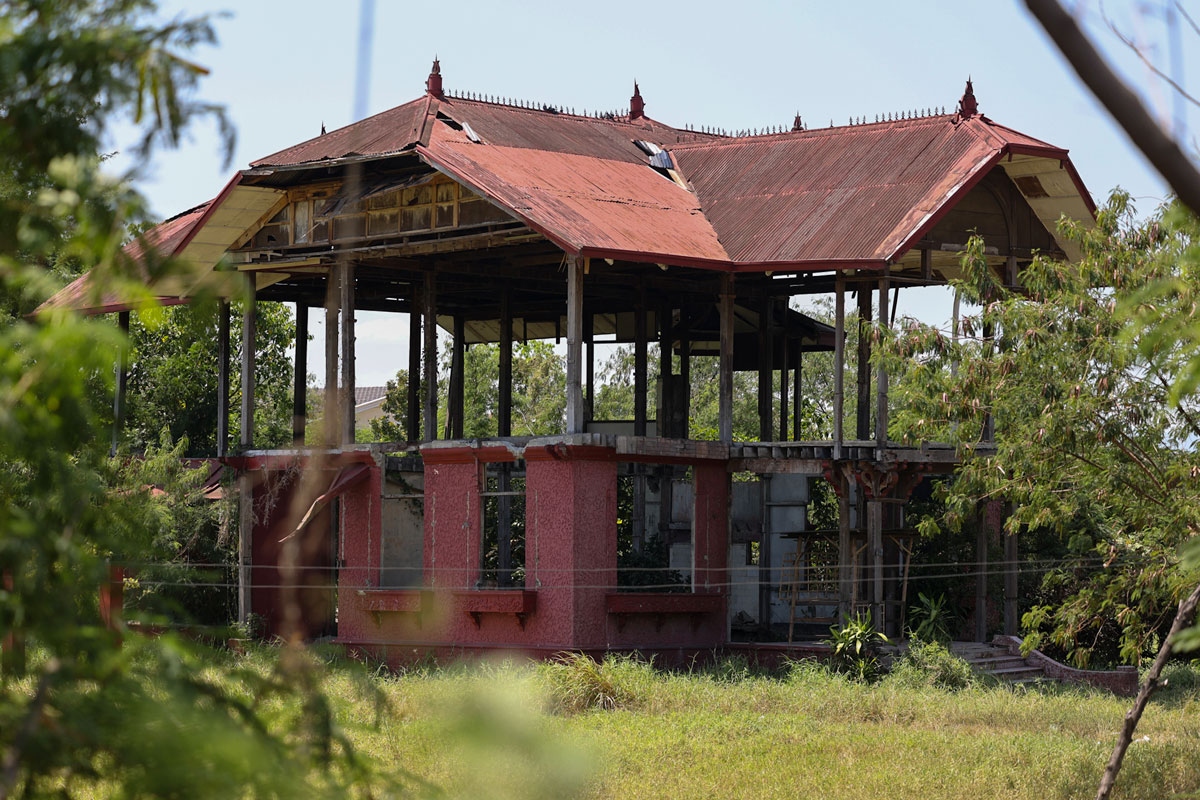
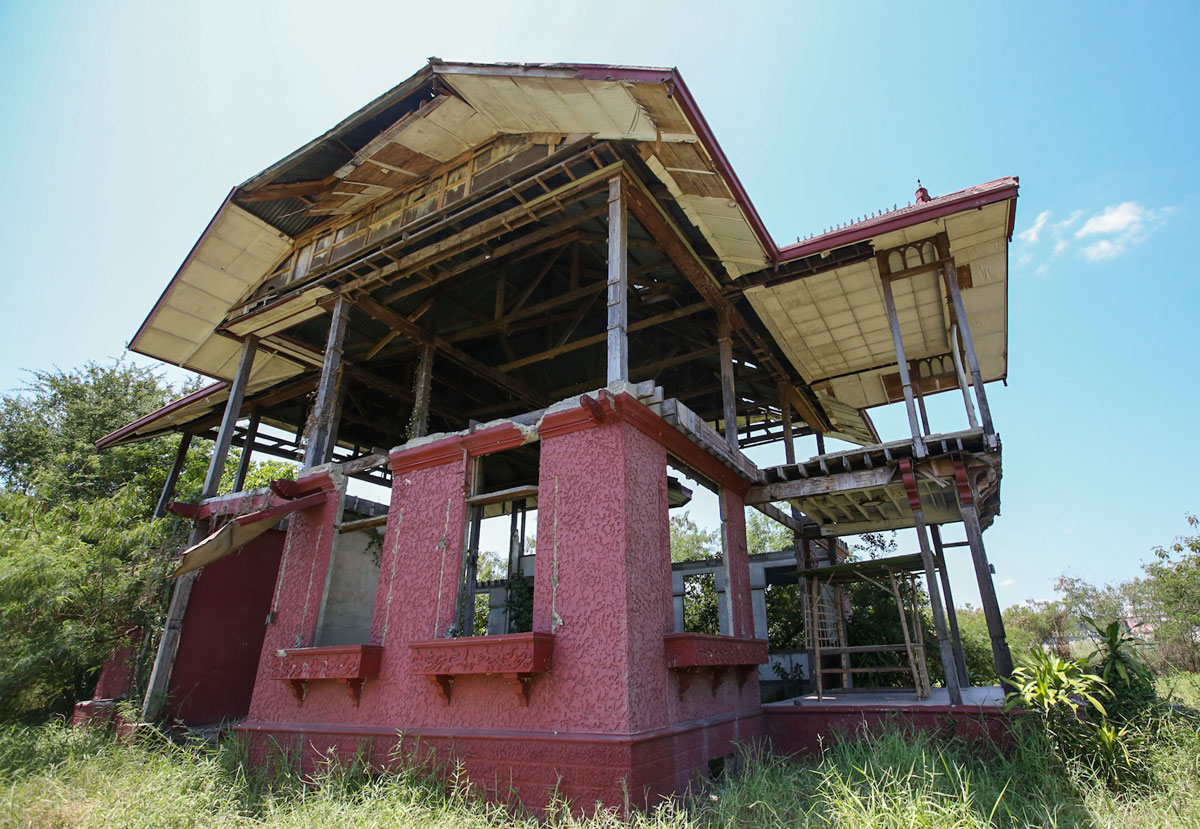
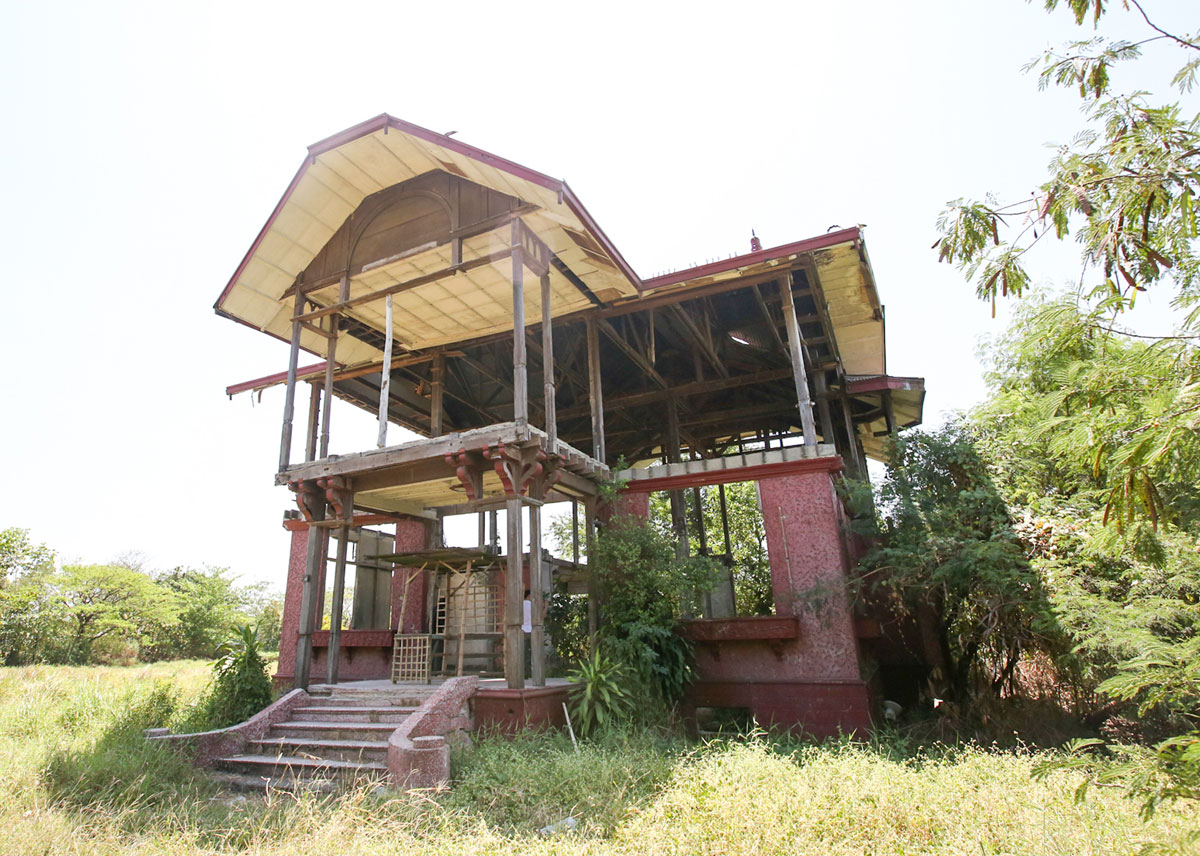
Separated from Barangay Mapaniqui in Candaba by a vast, dry field, the Bahay na Pula
lies in ruins just by the highway of Barangay Anyatam, Bulacan – a
pre-war mansion built in 1929 and owned by the wealthy Ilusorio clan.
The walls of the house have been knocked down following a storm, according to a resident who dropped by the house during the visit by The STAR. But it has retained its walls and roof retained the red color, a reminder of the bloodshed that occurred there.
The mansion has been partially demolished as early as 2016 amid talks to relocate it to the Las Casas Filipinas de Acuzar in Bagac, Bataan.
But those plans have to be shelved after the UN CEDAW ordered the Philippinesgovernment to preserve the mansion and convert it into a memorial “to honor (the comfort women’s) struggle for justice,” and to enlighten the public about the horrors of sexual slavery during wars.
Journalist Ma. Ceres Doyo wrote in a 2016 column in the Philippine Daily Inquirer about her visit to the house in the early 2000s. She said the Malaya Lolas held meetings at the house despite their traumatic experiences inside.
She recalled a conversation with a comfort woman identified only as Lola Beniang, who told her graphic details about the Filipino men who were thrown to the school house to be burnt, when the Japanese attacked Barangay Mapaniqui and razed it to the ground.
“Mabango ang amoy ng taong nasusunog. Kung gutom ka parang gusto mong kumain (Burning human flesh smells good. If you were hungry you’d feel like eating),” Lola Beniang told the journalist, who was shocked at what she just heard.
“Pagkatapos noon, parang humukay ako ng butas na napakalalim at (nilagyan) ng takip. Na ayaw ko nang mabuksan (After that I dug a hole that was so deep and then put a lid on it. I didn’t want it opened ever),” she added in the conversation with the reporter, while they were both seated on the mansion’s front steps.
Lola Maria’s eldest daughter Juanita remembers playing at the red house when they were young, oblivious to the fact that their mother was raped there. She said her mother, Lola Maria, was even friends with the house caretaker then.
Juanita said she never heard the story from Lola Maria because it does not sound good for a daughter to hear such tales from her own mother.
She does not look forward to the time the house will be converted to a museum as ordered by the UN CEDAW.
For Juanita, it was better to bury the memory with the house, instead of using the mansion as a memorial so that future generations would not forget.
“Hindi kami nagagandahan doon, kasi (makikita ‘yun) ng magiging kaapu-apuhan. Gusto na namin mabura ‘yung nangyari noong unang panahon (We don’t find it a good idea, because our great grandchildren will see that museum),” Juanita said in an interview with The STAR.
“Hindi maganda (na malaman) ng kaapu-apuhan na gano’n ang nangyari sa kanila kasi wala silang kakayahan lumaban, hindi tulad ngayon na talagang mulat na ang mga tao (It does not bode well for future generations to know what happened to their grandmothers, who at the time had no capability to fight back, unlike now when more people are aware),” she added.
“Bilang anak ni Lola Maria, huwag nang ipangalandakan pa ‘yon. Matatanda na sila (As Lola Maria’s daughter, I only wish that she won’t be paraded anymore, with what she went through. The grandmothers are getting old),” she said, turning silent at the thought.
The mansion remains empty, biding its time until it can be of use again – this time, as a house of memory to prevent history of abuse from happening again.
A white rose was left by a visitor on its bare interior, a silent offering of peace for the victims who suffered behind its walls.