



Tayo Na Sa Antipolo: Religious ‘Pilgrimage’ Takes Place Online As Public Masses Remain Banned In Most Areas
Over the years, the crowds have dwindled, but the pilgrimage to Antipolo remained alive. Amid the coronavirus disease 2019 (COVID-19) pandemic, however, the devotees are nowhere to be found – physically.
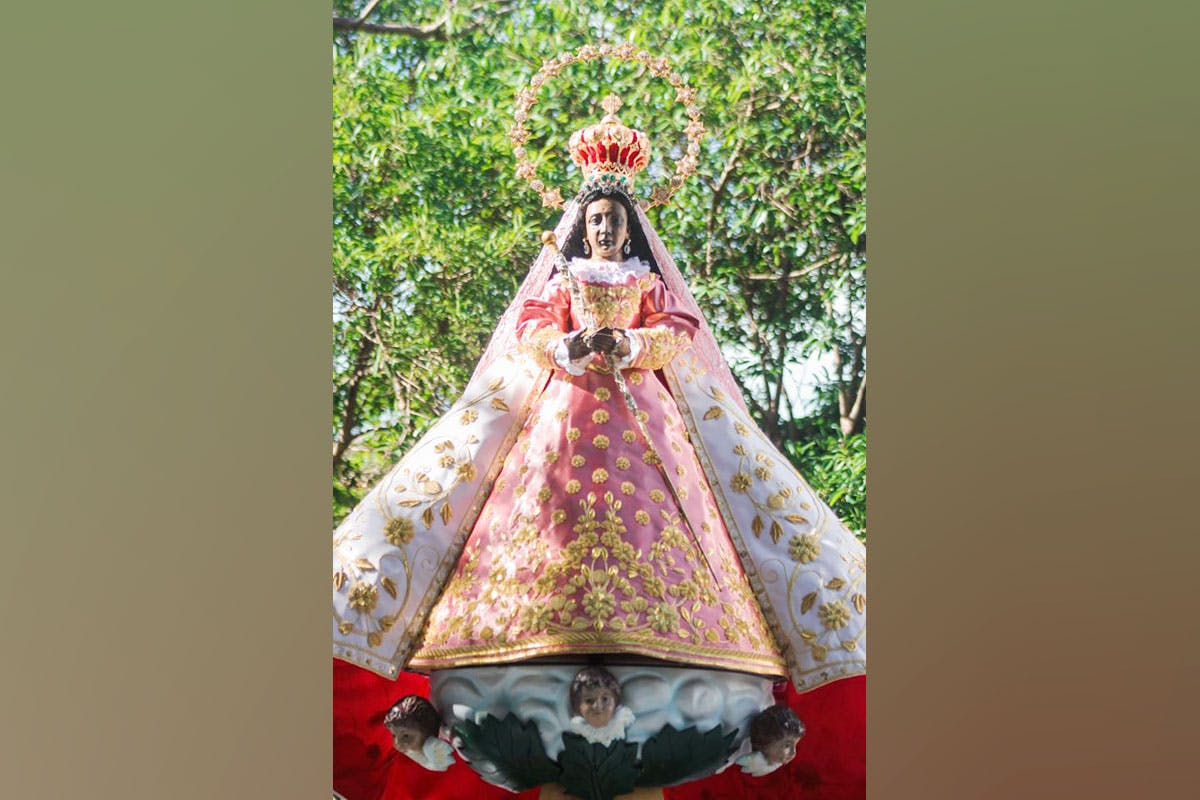
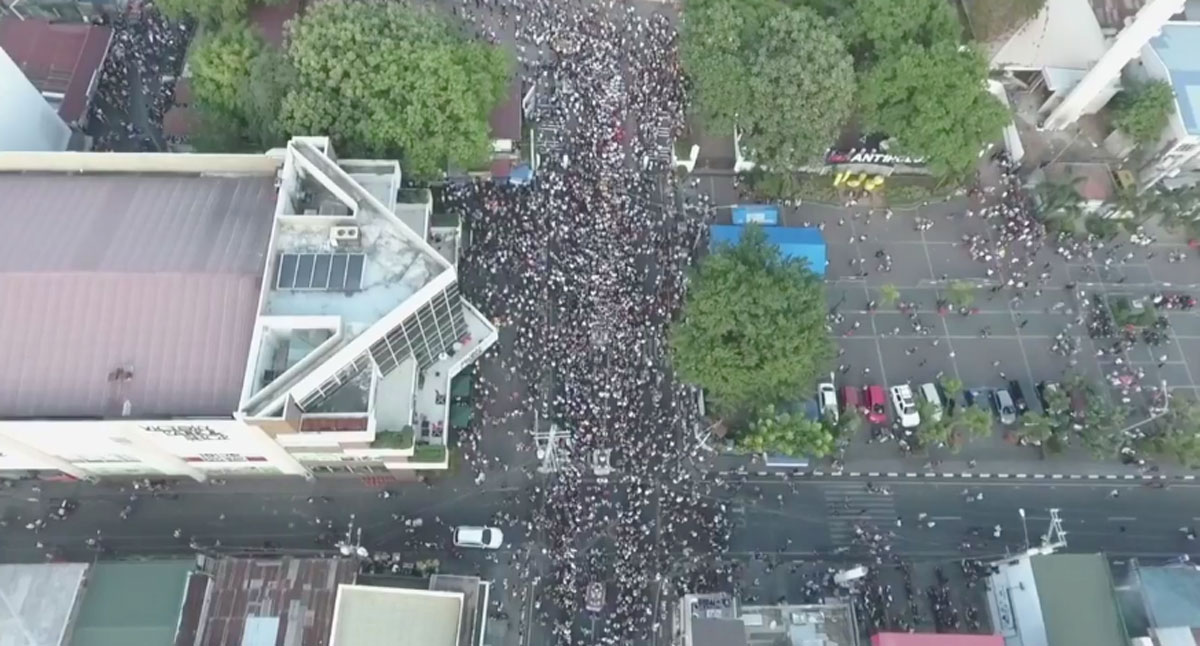
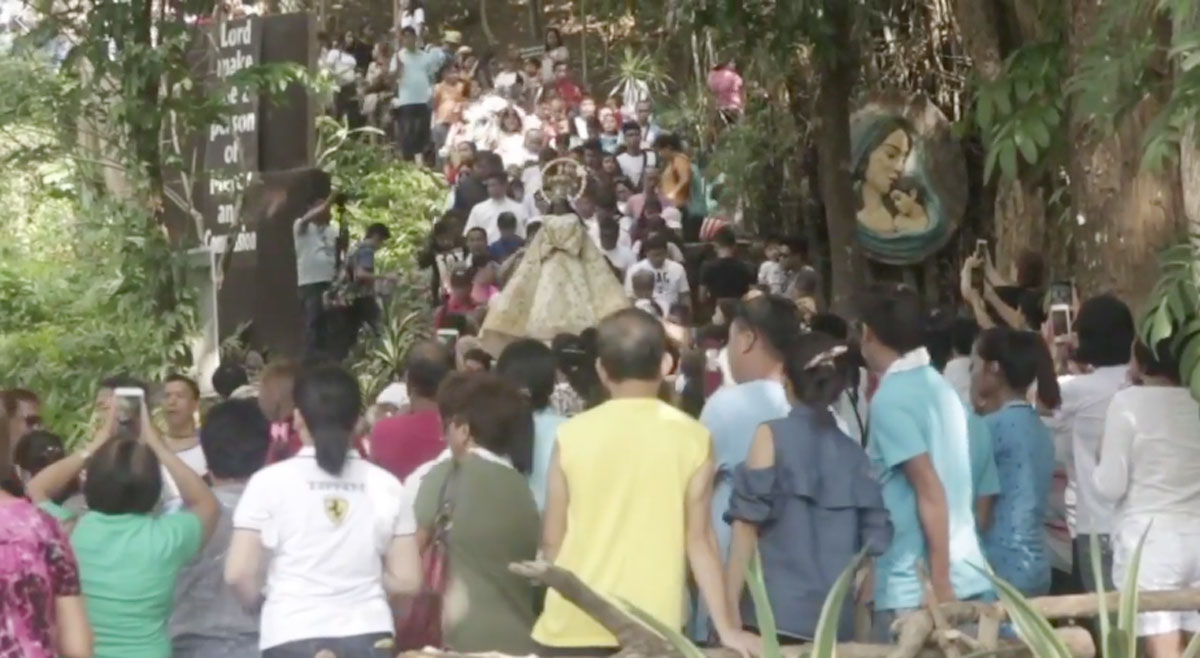
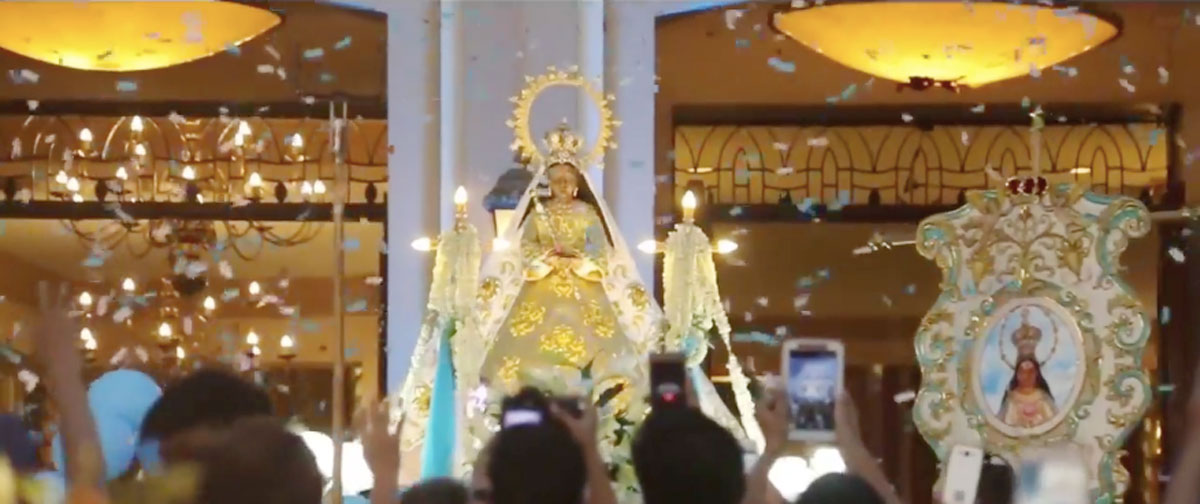
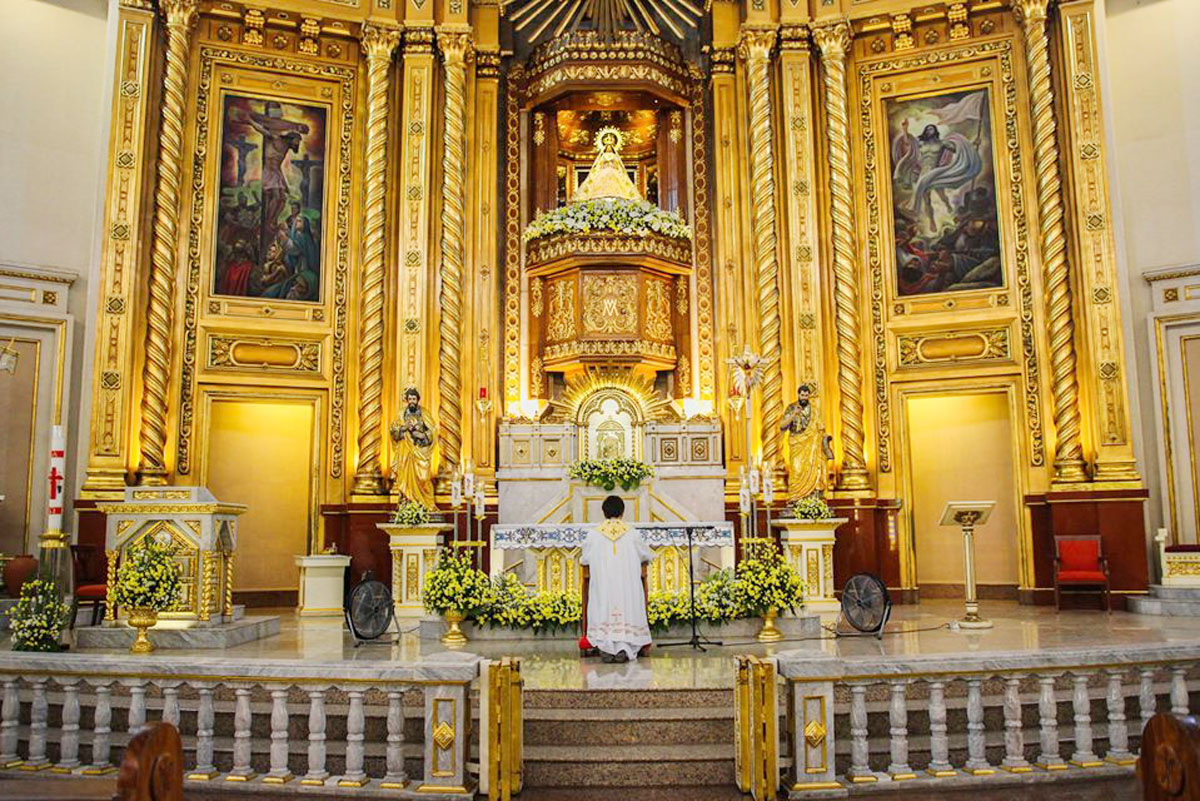
During Holy Week and in the month of May, longtime residents of Antipolo in Rizal are used to seeing swarms of devotees visiting the Antipolo Cathedral or the National Shrine of Our Lady of Peace and Good Voyage.
In the past, many of these devotees would sleep on the streets after the “Alay Lakad” or walk offering on the evening of Maundy Thursday and go home the next day after exploring places in the town that eventually became a city in 1998.
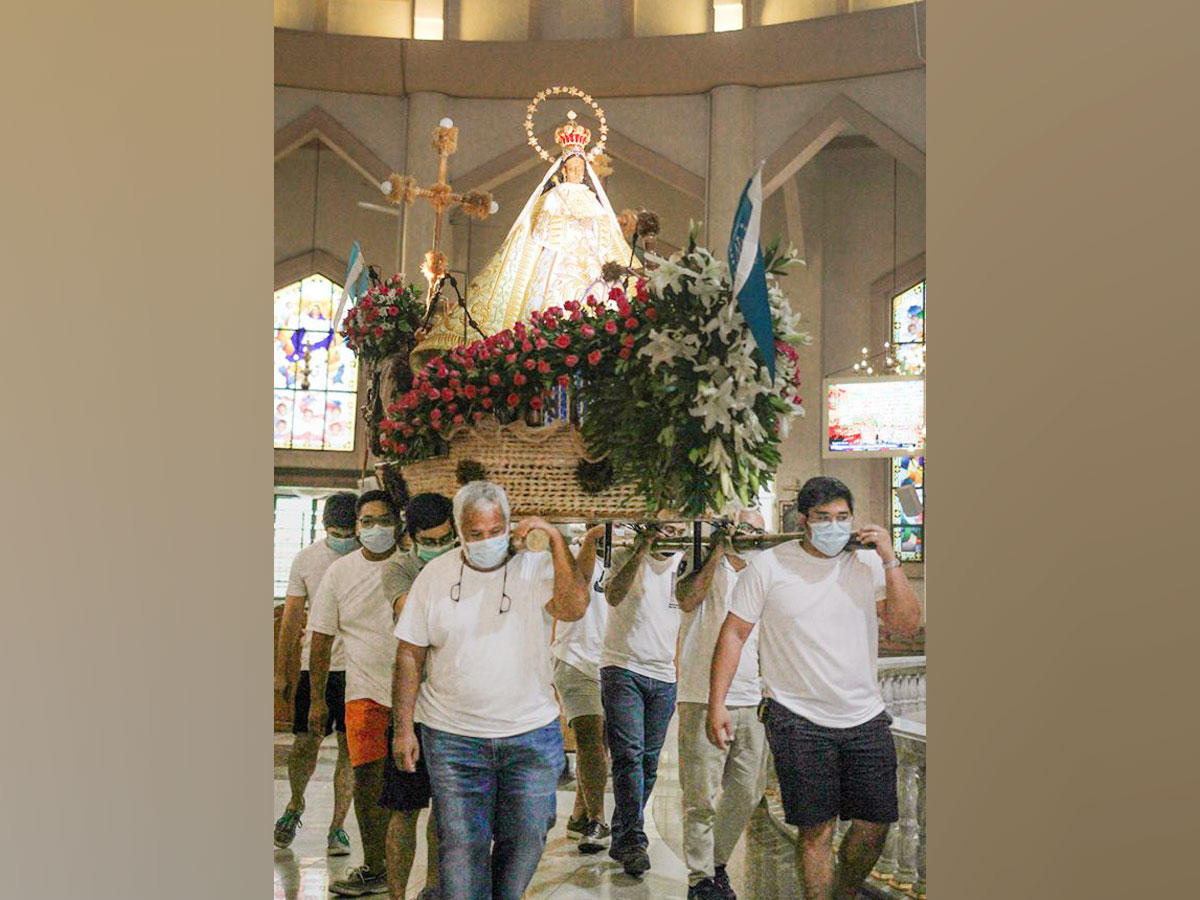
Residents did not mind waking up to a lot of newspapers and other materials on the roads where the devotees spent the night. The “Alay Lakad” heralded the start of people from all walks of life coming together in Antipolo to pray for peace, safe travel, healing and other concerns. Thousands of cars get blessed at the shrine especially during the pilgrimage season.
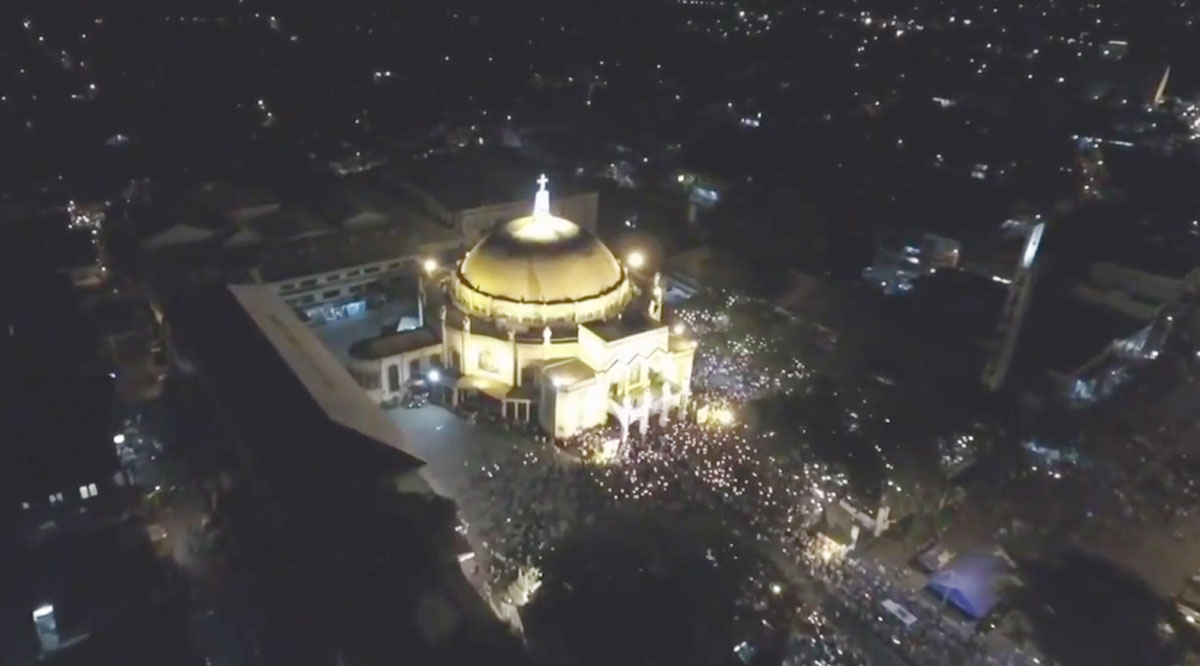
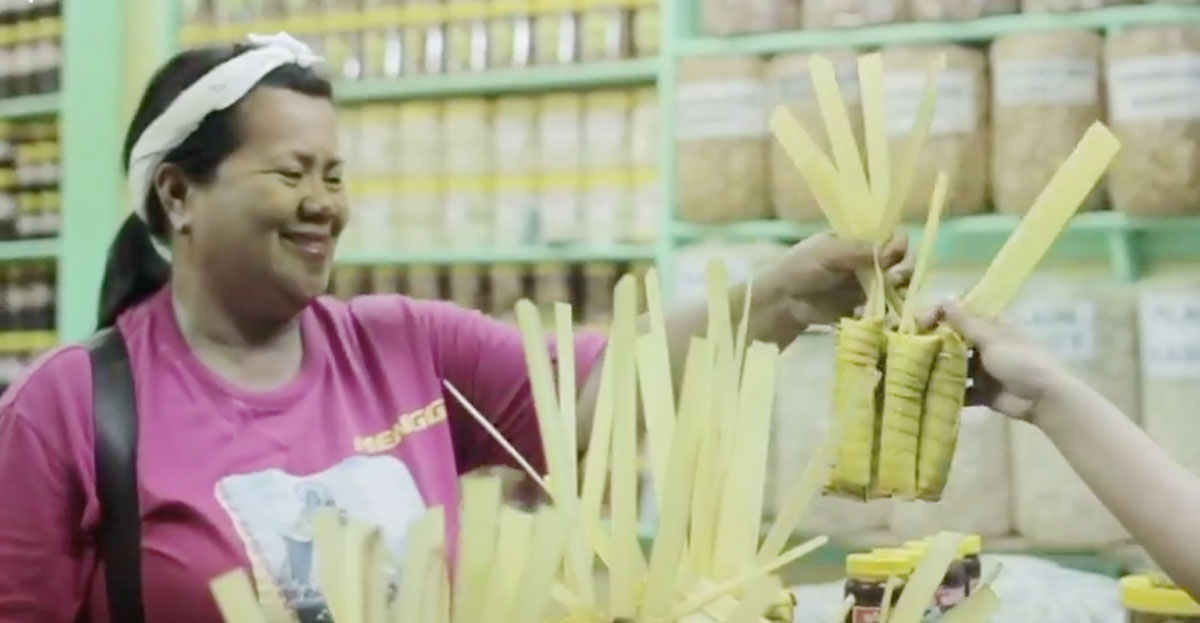
Those hundreds of thousands of devotees each year allowed businesses to flourish in Antipolo, including the famous suman (rice cake) and cashew industries. There are currently over a hundred resorts, restaurants and other events places that travelers can visit in the city.
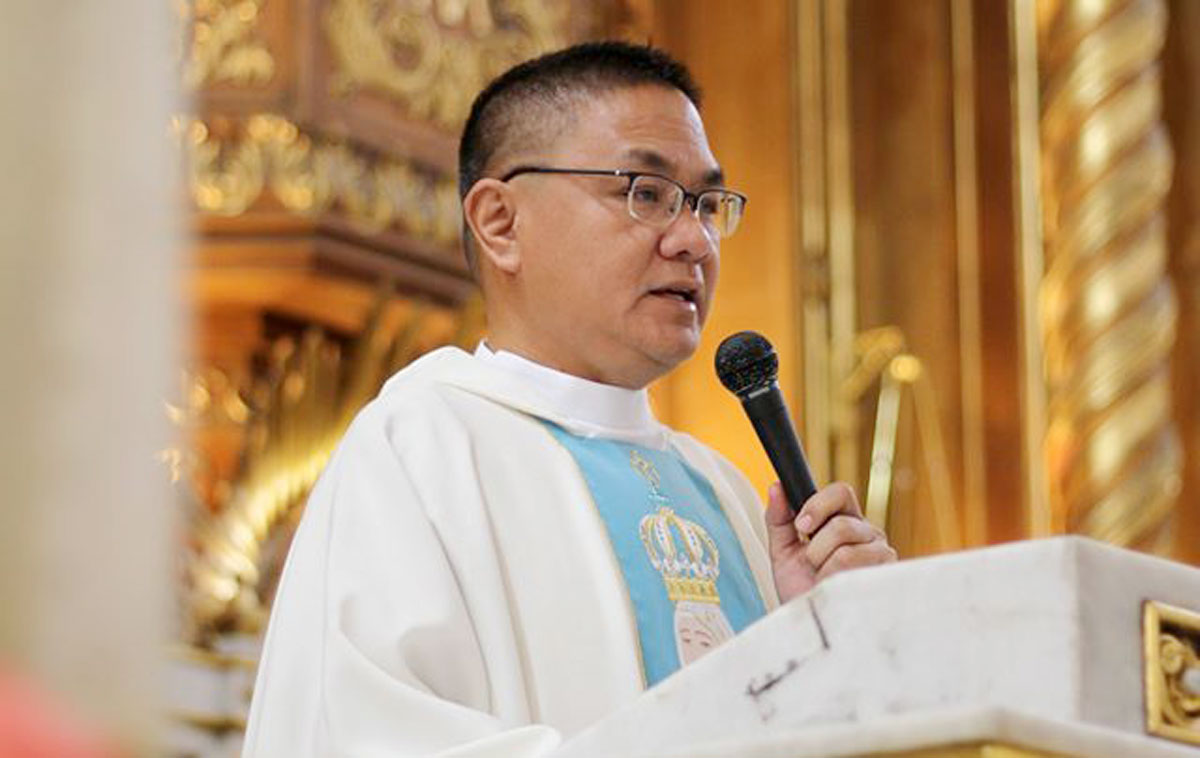
“Sa tingin ko pumupunta sila hindi lamang dahil sa suman, hindi lamang dahil sa kasoy, hindi lamang dahil magpabasbas ng sasakyan o mag-abroad. Pumupunta ang maraming Pilipino, ang mga kababayan natin dito sa Antipolo dahil gusto nila ng kapayapaan na nanggagaling sa ating Panginoong Hesukristo. Kapayapaan na buhat kay Kristong muling nabuhay. Na ‘yun ang ibinibigay ng Birhen ng Antipolo, ng mahal na birhen sa bawat isang pumupunta sa kanya,” Fr. Reynante Tolentino, the shrine rector and parish administrator, said in video message about the pilgrimage to Antipolo posted on the Birhen ng Antipolo – Our Lady of Peace and Good Voyage (@birhenngantipolo) Facebook page.
All of these have been affected by the pandemic. Activities like Flores de Mayo, Santacruzan or Grand Sagala, Queen of Antipolo, Antipolo Idol and others have been canceled.
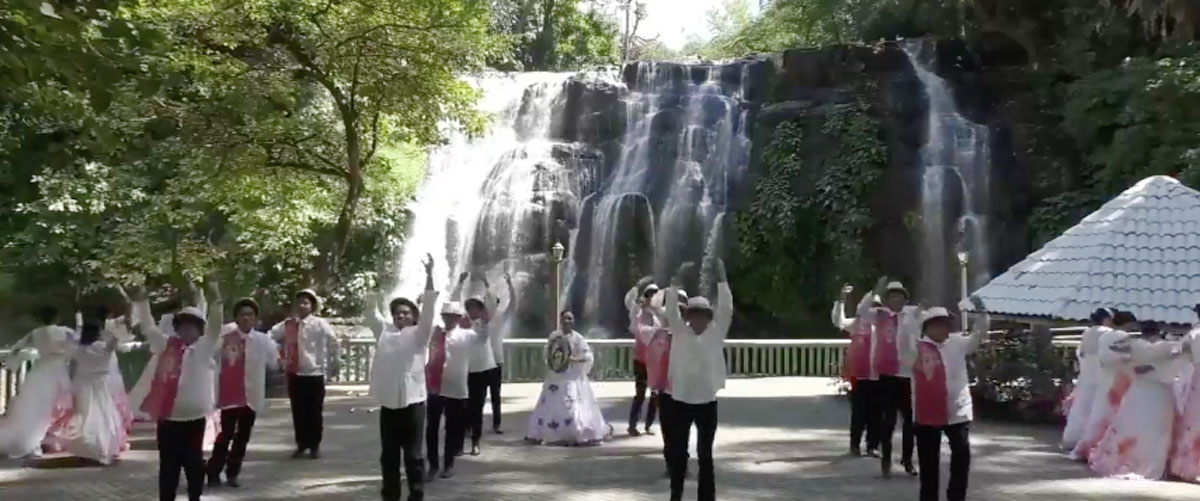
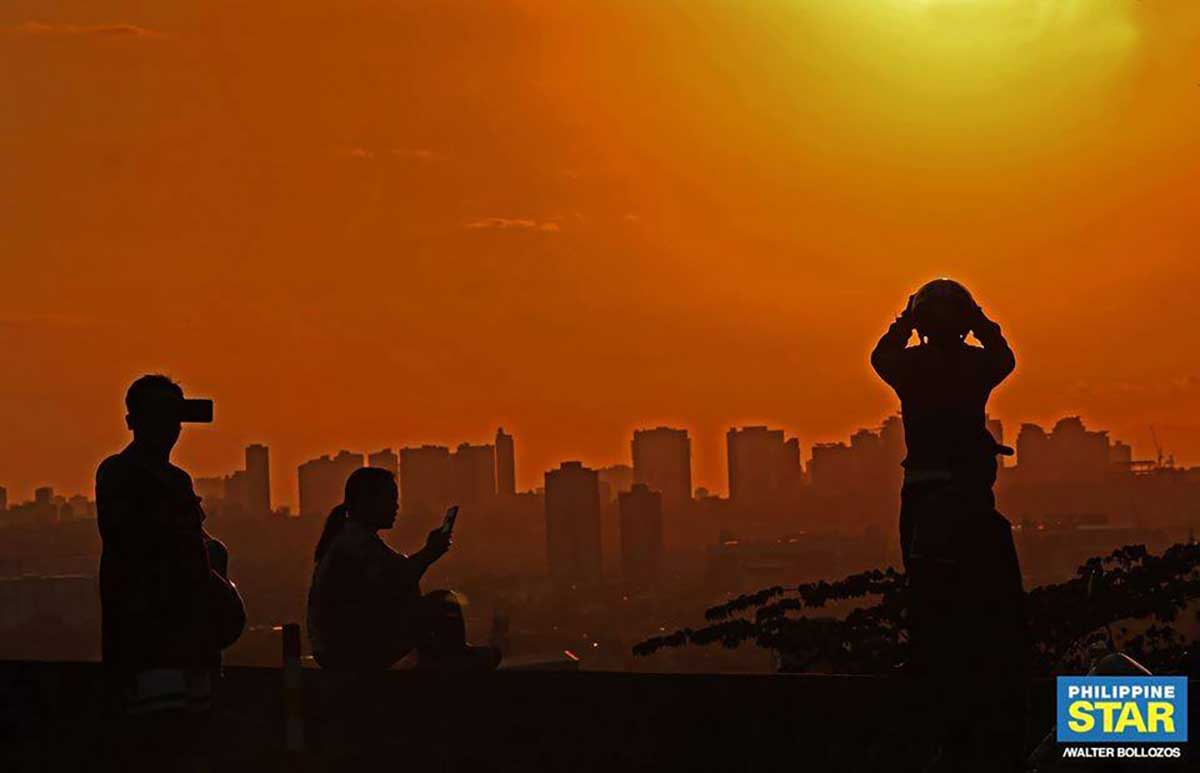
The custom of visiting the shrine in May has been recorded as early as the 19th century. But devotees come any day of the year as well. The young Jose Rizal, who would become the national hero, and his father Francisco Mercado were reported to have gone to the shrine on June 6, 1868 in thanksgiving for the survival of the boy and his mother Teodora Alonso during his delivery in 1861.
Based on accounts, the image of the Our Lady of Antipolo was brought to the country in 1626 from Mexico and that the town was named after the tipolo (breadfruit) tree, which was abundant in the area, and where the statue was said to appear after vanishing several times from a church being constructed in the 1630s.
Over the years, the crowds have dwindled, but the pilgrimage to Antipolo remained alive. Amid the coronavirus disease 2019 (COVID-19) pandemic, however, the devotees are nowhere to be found.
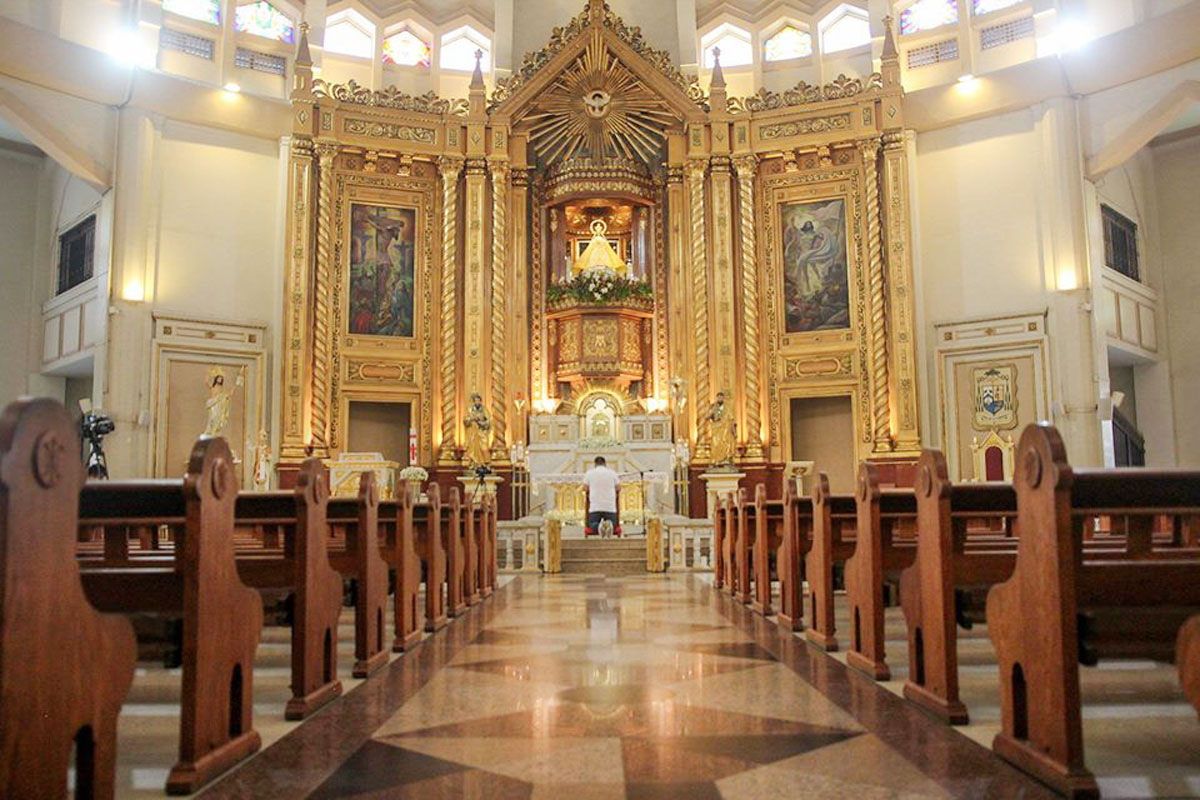
Bro. Francis Edward Baasis, a seminarian of the Diocese of Antipolo, said the “doors of the church are closed and the pews inside are empty,” but this does not mean there are no faithful in this pilgrimage season.
“The people are invisible inside the church, but the church is very visible wherever the faithful are because of the technologies. They are absent inside the building, but the church is present wherever they are going,” Baasis told The Philippine STAR in an online interview.
According to Baasis, the church is reaching out to the flock through social media. He said this is like “going back to the ancient church during the time of the persecution of the early Christians, (wherein) the church can be found inside their house, the domestic church.”
Since the start of the enhanced community quarantine in March, almost all the Roman Catholic dioceses and communities are doing the liturgical and devotional activities online such as masses, holy hours, processions, communal prayers and many more.
“Even the pastoral activities such as giving catechesis, religious and spiritual seminars and conferences and donation drives are being done through social media,” Baasis said.
“Pope Francis is challenging the church leaders to be creative in responding to the needs of the people. I believe many Catholic pastors are doing their best to nourish the Christian life of every member of the church even if they are isolated,” he added.
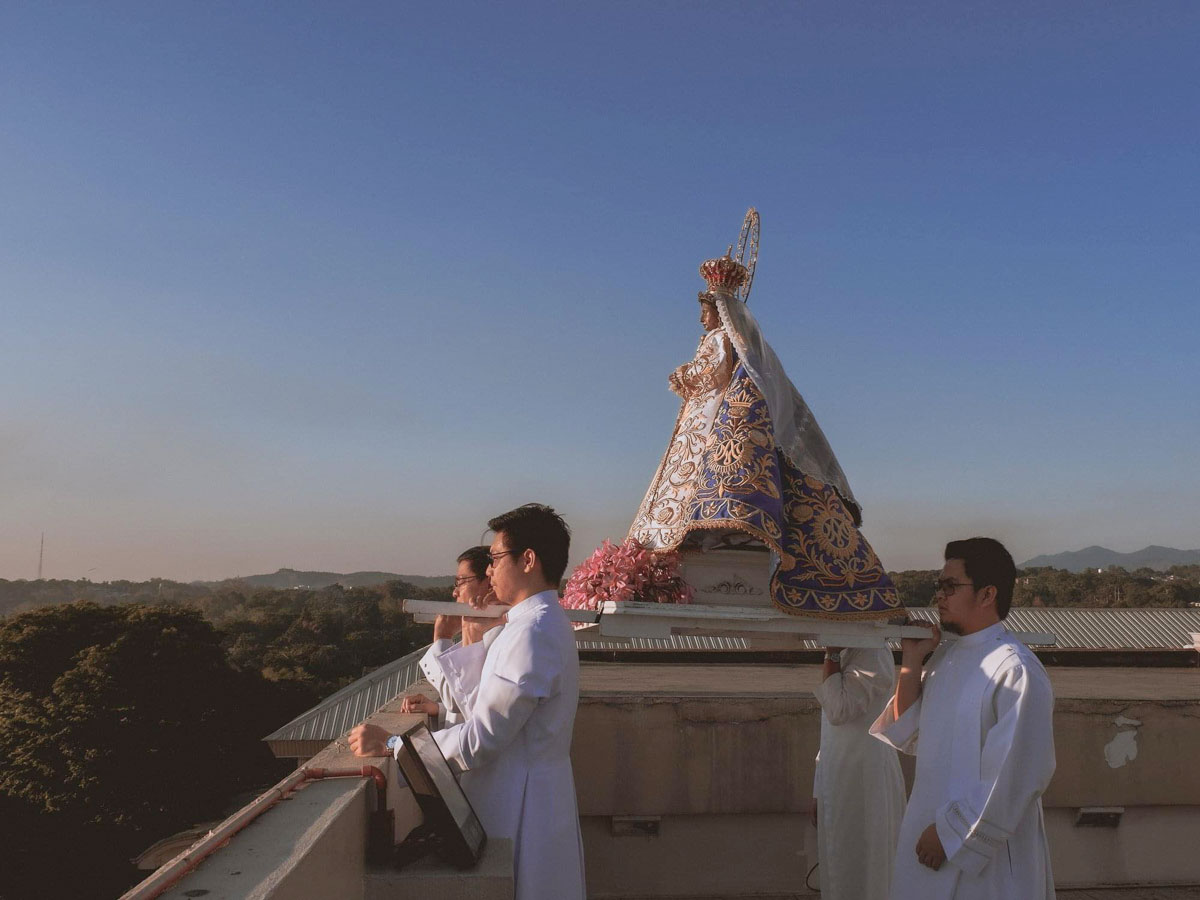
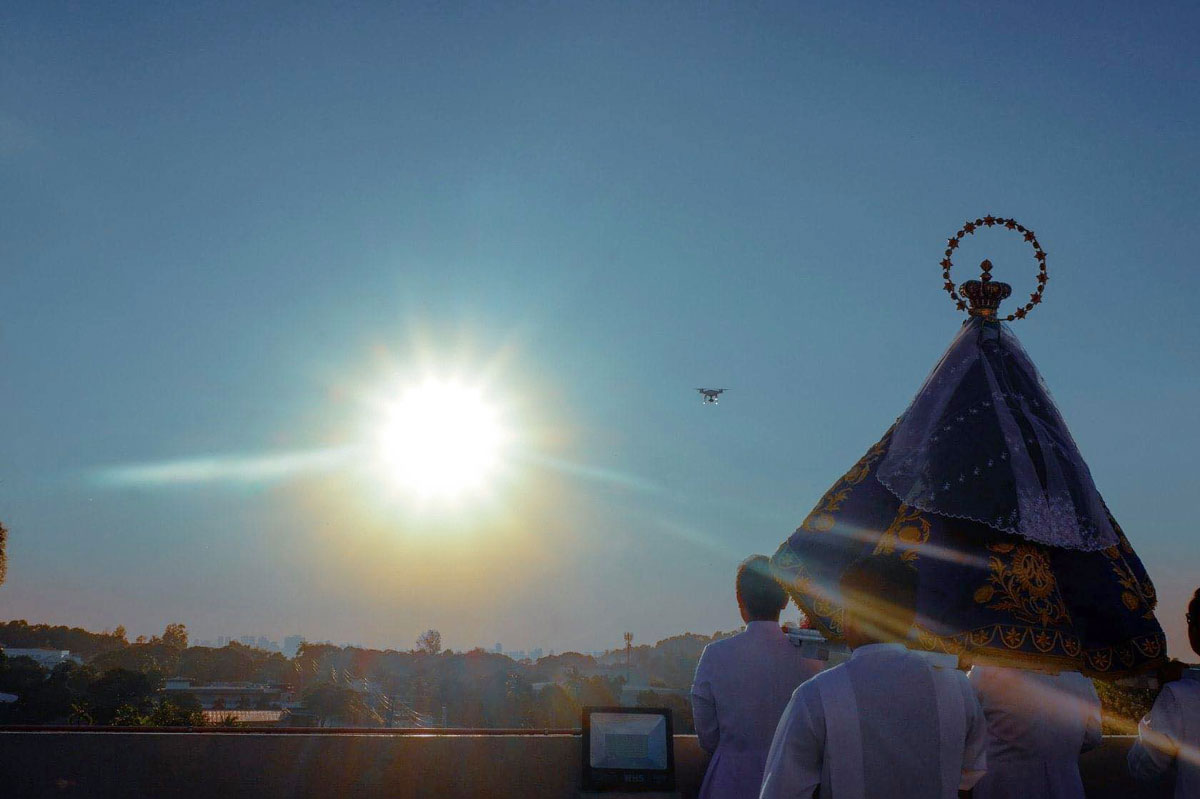
In the Antipolo Cathedral, Baasis explained that church leaders are utilizing the technologies available to connect with the parishioners and devotees of Our Lady of Antipolo.
“We are continuing the tradition in an extraordinary way. We have celebrated the passion, death and resurrection of the Lord through our Facebook Live in our official Facebook Page: Birhen ng Antipolo – Our Lady of Peace and Good Voyage (@birhenngantipolo). During the extraordinary Holy Week celebration, we realized the thirst of many people to go to the church. However, there is nothing that we can do because of this crisis,” Baasis noted.
“Nevertheless, reflections and realizations of necessary and basic things in our faith that were forgotten before are now being contemplated and appreciated. This crisis made us feel the paschal mystery more because we are experiencing it in real time as we commemorate it,” he said. Paschal mystery pertains to one of the central concepts of the Catholic faith, relating to the history of salvation.
During the pilgrimage season, Baasis said the church is continuing the activities online. For example, the annual walk for peace from Quiapo, Manila to Antipolo on April 30 could not be done because of the ECQ. This was the start of the pilgrimage season every May. Instead, Baasis said they held a prayer for peace and healing together with the Quiapo Church, reciting the rosary in front of the Black Nazarene and the Virgin of Antipolo.
“We cannot gather together, yet we can pray together,” he stressed.
Every year, Baasis noted that people flock to the Pinagmisahan Hill (Via Dolorosa or White Cross) to commemorate the miracle attributed to Our Lady of Antipolo. He explained that during the Spanish colonial period, there was an epidemic. When the image of Our Lady of Antipolo was brought to the highest hill where the cathedral complex is now located and a mass was celebrated, the epidemic ended.
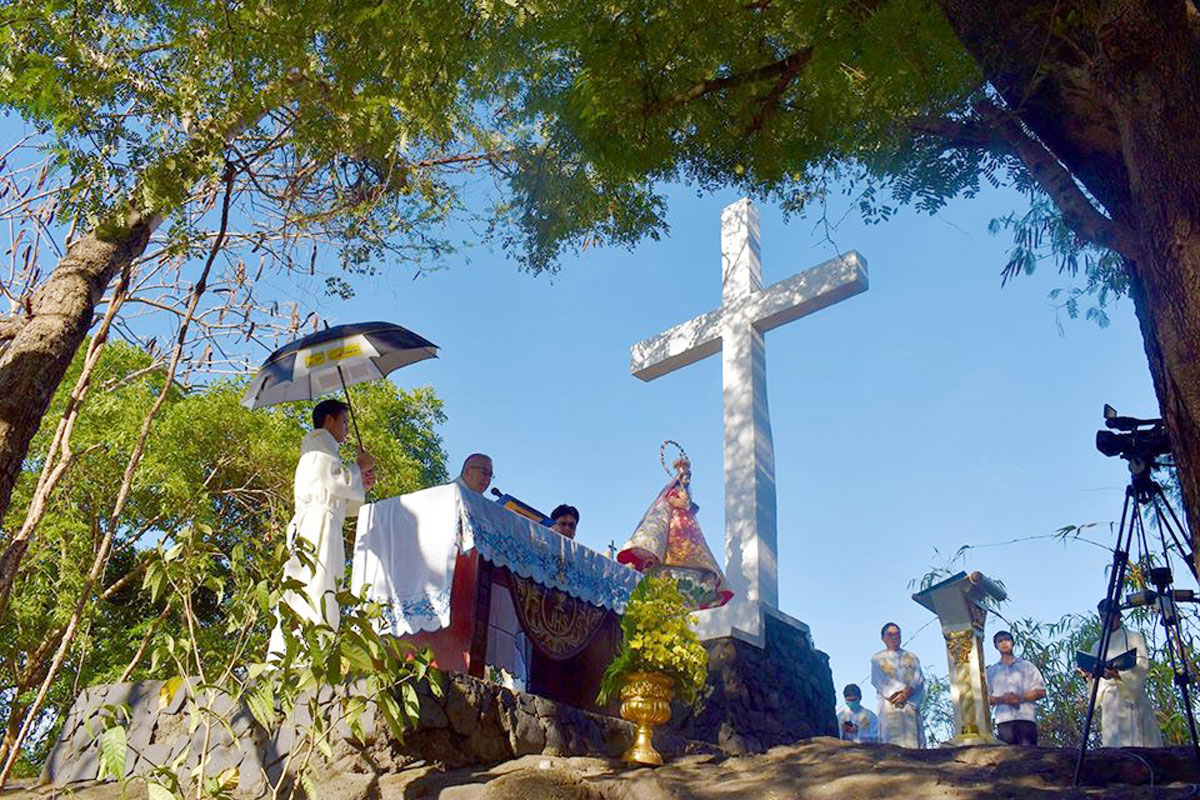
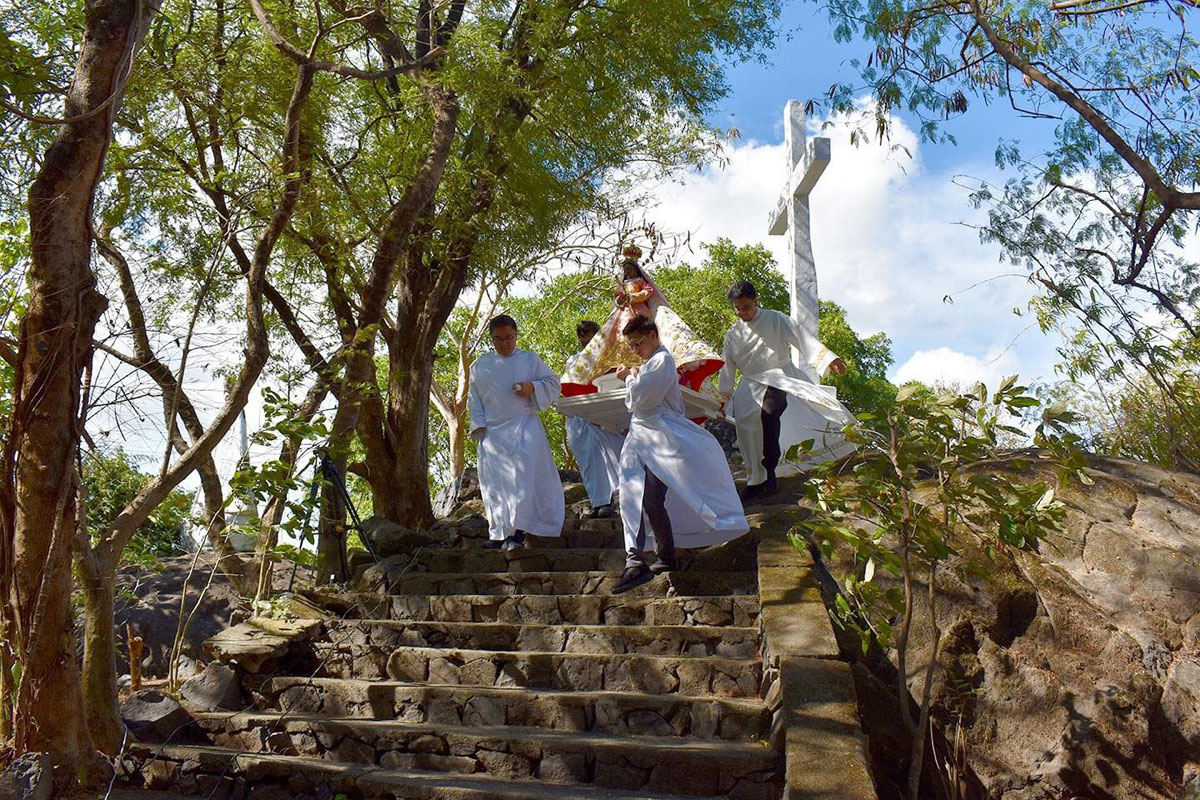
“Last May 5, 2020, we continued the tradition, yet without the thousands of people there. Nevertheless, they were present by watching on Facebook Live. There, we celebrated (Our Lady’s) solemnity and commemorated the miracle attributed to her. We hoped and prayed that the same miracle would happen again in the present,” Baasis said.
The celebration of the solemnity of Our Lady of Antipolo is held every first Tuesday of May.
“These are our ways of keeping the religious practices alive here in Antipolo,” Baasis said.
Challenges to the Catholic Church and the flock
On May 17, a day after Antipolo and other areas in the country were placed under general community quarantine (GCQ), Tolentino explained during an online mass that the cathedral could not be opened if the number of people to be allowed inside would be limited.
Tolentino pointed out that it would not be easy to bar people from entering, and that many of the faithful would be left outside the church if only up to 10 people could attend mass based on the guidelines for GCQ implementation.
Under the more stringent modified ECQ, only five participants may attend gatherings while 10 people may do so in GCQ areas. Public gatherings are banned under the ECQ, the strictest scenario.
The number of people that can join religious gatherings under the MECQ and GCQ guidelines is so small that participants will be limited to the preacher, his assistants, readers, choir members, and the technical crew of churches that hold online masses.
On April 23, Archdiocese of Manila Apostolic Administrator Broderick Pabillo questioned the guidelines, saying the limitations set for religious activities are unreasonable.
Pabillo appealed to the government to allow public masses, saying religious services are also essential while the country is facing a crisis caused by the coronavirus pandemic. Pabillo assured authorities that physical distancing and sanitation measures would be implemented if masses are permitted.
Pabillo said five persons for such a large structure as the Redemptorist Church in Baclaran or the Manila Cathedral is “laughable.” The government, he added, should have instructed religious groups merely to ensure that there would be a one-meter or two-meter distance between those attending masses.
“This directive on religious activities was surely taken without any consultation with the religious sector. This is a problem with the government. They make arbitrary decisions without proper consultation with the sectors involved. So they come out with unreasonable directives,” Pabillo said.
Under Circular No. 20-38 dated May 2020, Catholic Bishops’ Conference of the Philippines (CBCP) president and Davao Archbishop Romulo Valles said “we eagerly await” the “new normal” where the Catholic Church would be allowed to celebrate the liturgy with the faithful in attendance on site.
“We approach this phase of our life as a church with the wise thought of our Holy Father who said, ‘At this time, when indications have been given to start coming out of quarantine, we pray that the Lord will grant to His people, to all of us, the grace of prudence and obedience to these indications, so that the pandemic will not return,’ ” Valles said, quoting Pope Francis’ homily at Casa Santa Marta in Rome on April 28.
Valles said the CBCP released on May 16 a new set of Recommendations and Guidelines for the Liturgical Celebration under the “new normal.”
“During these days, we may hear of some guidelines from the government and health authorities regarding our conduct of worship. They may at first come across as impractical or without sense to us. In this scenario, I believe that the way forward is to patiently ask and seek clarification from the source of these guidelines. It is good to remind ourselves that these guidelines are meant not only for the Catholic Church but for all men and women and communities of faith who practice different modes of worship and prayer,” Valles said.
“My sincere thought is, may we try to take the lead in showing the spirit of patience, calmness, understanding, open communication and cooperation in these very trying times as we continue to patiently present our particular concerns to the proper authorities,” he added.
On May 11, Malacañang urged religious groups to coordinate with local government units (LGUs) and to present proposals on how to observe safe physical distancing in places of worship.
Last month, the Inter-Agency Task Force (IATF) for the Management of Emerging Infectious Diseases allowed religious events to be held in areas that are under the more lenient GCQ starting May 1. The task force took it back after local executives expressed concern that safe physical distancing may not be observed in religious ceremonies.
On Friday, May 22, Ozamiz Archbishop Martin Jumoad said that only a few people attended mass on Sunday, May 17, at the Immaculate Conception Cathedral in Ozamiz City compared to religious services before the COVID-19 outbreak.
“People are afraid to come to church because of this pandemic. Practically only a few attended our Masses when we opened the church,” Jumoad was quoted as saying in an article posted on the CBCP website.
Jumoad said the Immaculate Conception Cathedral can accommodate around 1,500 worshippers, but only around 300 people attended when he inaugurated the full opening of the cathedral on May 17.
The local government of Ozamiz City has allowed the holding of masses and other religious activities subject to safety protocols implemented by the DOH to avoid the spread of COVID-19.
Parañaque has also allowed masses to resume in Catholic churches in the city. Physical distancing was enforced through the use of packing tape for spacing on the pews as well as visual cues as masses resumed in at least one of the churches.


