



Senate Impeachment Court Approves 92 Trial Days
Based on the order, a copy of which was obtained by The Philippine STAR, 62 trial dates have been set for House prosecutors and 30 for the Vice President Sara Duterte’s defense team.
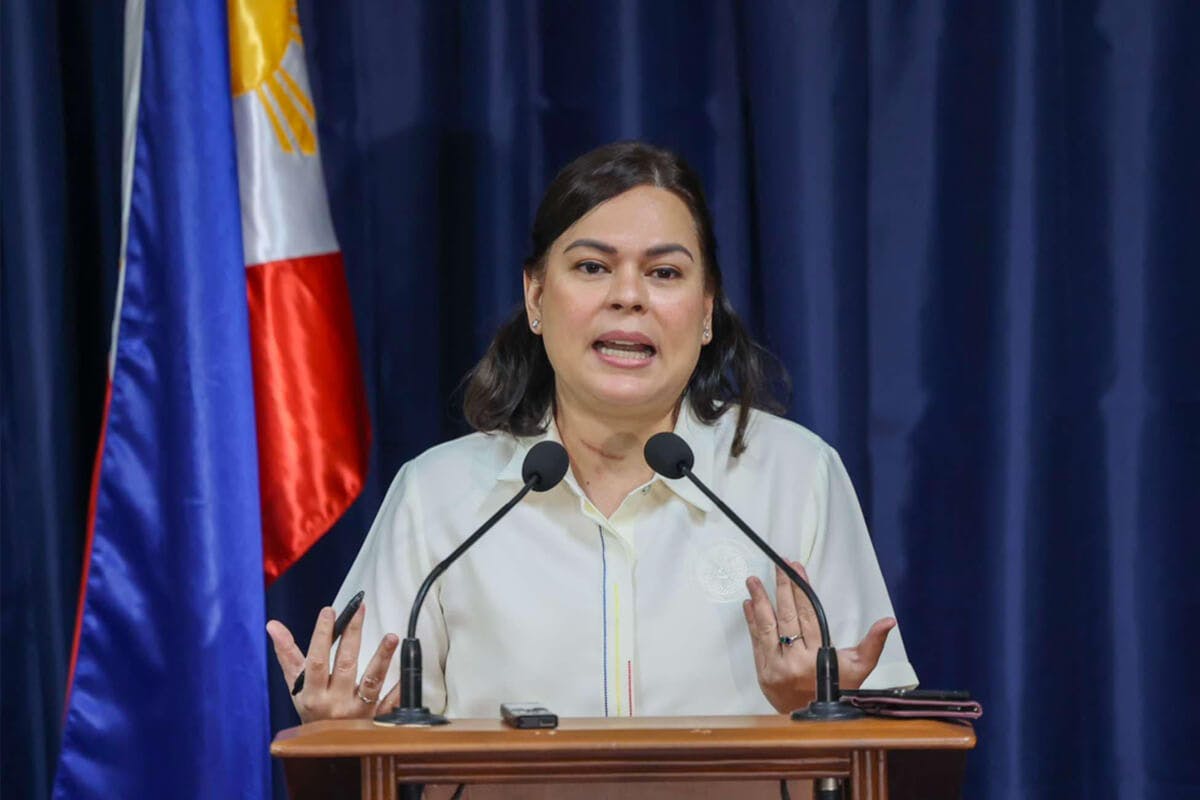
The Senate impeachment court has approved a 92-day trial for Vice President Sara Duterte commencing on July 6.
The approved trial period – contained in the 14-page Pre-Trial Order signed by Senate President Sherwin Gatchalian on June 29 – is much shorter than the previous estimate of seven to eight months.
Based on the order, a copy of which was obtained by The Philippine STAR, 62 trial dates have been set for House prosecutors and 30 for the Vice President’s defense team.
The trial convenes at 2 p.m. on Mondays, Tuesdays and Wednesdays until July 28 – a day after President Marcos delivers his fifth State of the Nation Address – with a slightly revised schedule: 3 p.m. during Tuesdays, Wednesdays and Thursdays.
In total, the prosecution has 57 witnesses, while the defense has 45. The witnesses will testify under a strict One-Day Examination Rule, meaning their testimonies must be completed on their scheduled date unless the court grants an extension for good cause.
The impeachment court also approved a four-stage timeline requested by the prosecution panel led by Batangas 2nd District Rep. Gerville Luistro.
The issue on grave threats and assassination plot made by Duterte during a press conference will have 11 trial dates, while the one on the misuse of confidential funds will have 31 trial dates. DepEd corruption will cover eight trial dates and unexplained wealth, 12 trial dates.
Senators from the minority bloc led by Sen. Alan Peter Cayetano, meanwhile, are again appealing to the Supreme Court (SC) to invalidate the Senate plenary session last June 3 that saw his ouster as Senate president.
Premature dismissal
With less than a week before the start of the trial, House prosecutors have warned the Senate against prematurely dismissing the impeachment case, arguing that short-circuiting the trial would deny the Filipino public the right to hear the evidence.
“It’s already an established fact that under the Constitution, the Senate’s mandate is to try and decide, meaning to say there has to be a time for the proper trial to be conducted and for the evaluation of the evidence and the testimony of the witnesses for both panels to cross-examine,” House trial spokesman and Lanao del Sur Rep. Zia Alonto Adiong Adiong said on Tuesday, June 30. “It’s not exactly in the Constitution that the Senate can dismiss outright the case or the Articles of Impeachment.”
On June 1, Duterte’s legal team submitted its formal answer to allegations against Duterte, actively urging the impeachment court to dismiss them.
In her defense, the Vice President primarily invoked freedom of expression, bank secrecy laws and an alleged lack of evidence.
Adiong criticized the Vice President’s response as “a recycled narrative” that relied heavily on procedural objections rather than on substantive issues.
Addressing Duterte’s claim that her remarks regarding an assassination plot were a protected political expression, Adiong said: “I don’t think opinion and threat are the same.”
“One conviction in one article is sufficient enough for the Vice President to be automatically removed from office,” he pointed out.
Deputy Speaker Paolo Ortega V of La Union also argued that stopping the trial before it begins would constitute a grave injustice to the public.
“What’s most important now is the presentation of evidence. Before making judgment, hear the case first,” Ortega said.
Deputy Speaker Jay Khonghun of Zambales called on both the public and the Senate to reserve judgment until the trial concludes.
“The people have waited for this constitutional process. They should not be deprived of the opportunity to know the facts that will be presented before the impeachment court,” Khonghun said.
Former Surigao del Norte representative Robert Ace Barbers, recently named trial spokesman and impeachment adviser for the prosecution, added that the public deserves to be apprised of hard evidence, not social media campaigns.
“The Filipino people should not be asked to decide based on slogans, speculation or social media campaigns. They deserve to hear the evidence first,” Barbers said.
Defense team spokesman Michael Poa said they expect House prosecutors to borrow from the Estrada impeachment playbook to press for the opening of the sealed box from the Bureau of Internal Revenue containing the tax records of Duterte and her husband Manases Carpio.
“It’s not far that they will tie it to what happened during the second envelope of former president Estrada. So, we’re very aware of that,” Poa told the Bilyonaryo News Channel.
He was referring to the impeachment trial of Estrada in 2001 where senator-judges voted 11-10 to reject the presentation of the so-called second envelope that supposedly contained damning evidence against him.
The rejection of the evidence triggered a walkout and sparked a people power uprising that ousted Estrada.
“Again, for us, we are aware that maybe they will try this, because you know, the impeachment is all about propaganda also, impeachment, isn’t it? It’s political. And we’re not afraid to show it,” he said.
Meanwhile, the Catholic Educational Association of the Philippines (CEAP) said that accountability should never be measured alone by votes in the impeachment trial.
“Are we looking at the numbers, or are we looking for the truth? Because if the only question we ask is ‘do we have the numbers?’ then perhaps we have mistaken democracy for a simple counting exercise. Maybe we should just skip the hearings, ignore the evidence, close the books and declare that truth itself needs a majority before it deserves to be heard,” CEAP said on Facebook. – With Bella Cariaso, Ghio Ong


