


Quake Survivor Recounts Fear
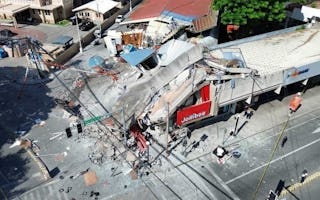
“I thought about my children and my niece, what if something had happened to them?” said Jojo Calma, 44, who was driving his motorized tricycle taxi in front of a building when it collapsed.
A resident in General Santos City, home to about 700,000 people that was worst-affected by the powerful 7.8-magnitude earthquake that struck Mindanao, recalled the fear he felt as tremors shook the area, saying they were unlike anything he had experienced in the past.
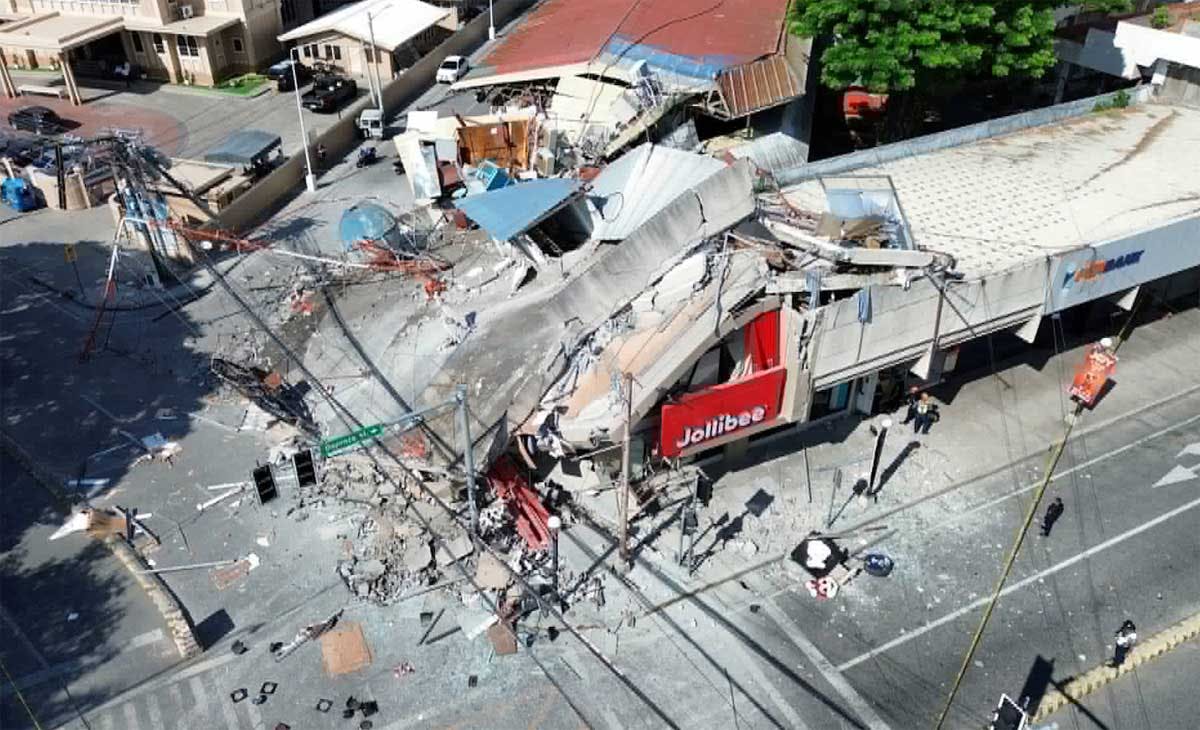
“It was the first time I experienced something that strong, that I really couldn’t stop myself from tearing up. I thought about my children and my niece, what if something had happened to them?” said Jojo Calma, 44, who was driving his motorized tricycle taxi in front of a building when it collapsed.
The collapse of that building housing a fast-food outlet was captured in a ?video released by the local government, showing panicked onlookers fleeing as a cloud of dust spread quickly through the air.
Calma said his children were in school when the earthquake struck, but are safe, although his sibling's home was destroyed. “Thank God they’re okay,” he said.
The quake struck just as schools were returning from a long break.
The death toll following the earthquake risen to at least 32, with dozens of people injured, disaster officials said, as Manila stepped up search and rescue operations.
The quake, which triggered tsunami warnings across several ?countries, hit early in the morning about 20 kilometers off the coast of Sarangani province, with tremors felt strongly across Mindanao and 420 km away in the city of Manado on the Indonesian island of Sulawesi.
The Philippines mobilized military and disaster response teams and authorities were verifying preliminary reports of 32 people killed and 134 injured across Mindanao, mostly from falling debris and landslides, according to civil defense officials.
Tsunami warnings were canceled after more than six hours in the southern Philippines, northern Indonesia and the Malaysian state of Sabah on Borneo island, where residents in coastal areas had been told to evacuate immediately to higher ground.
The disaster came eight months after the Philippines suffered its deadliest tremor in 12 years, when a shallow 6.9 magnitude quake hit off the central island of Cebu, killing 79 people. Two powerful quakes struck Mindanao two weeks later, the strongest at a magnitude 7.4.
‘No electricity or water’
The Philippine seismology agency said there were more than 200 aftershocks, at least nine of those strong and felt across Mindanao, the highest at a magnitude 6.7.
Shops and buildings in General Santos were damaged, some with broken signs and glass, others reduced to piles of concrete and rubble.
“When I got home, there was no electricity and water. We are all ?affected, we don’t have anything to drink,” said 30-year old tricycle driver Jayson Manarca.
One hospital was evacuated due to concerns about cracks on higher floors. One of the buildings at the city's Notre Dame of Dadiangas University collapsed, but no-one was inside.
A video shared by one school the moment the quake struck showed a large group of children sitting on the floor swaying rapidly from side to side, some hugging teachers, before fleeing en masse as a makeshift shelter collapsed behind them.
Benjie ?Ancheta, police chief of Sarangani's Alabel town, said the quake occurred during a police flag-raising ceremony, causing some people to faint.
The US Tsunami Warning System said multiple countries could be affected, and Australia initially warned of potential tsunami waves on its northern coasts.
Japan’s meteorological agency issued an advisory and said a tsunami of 0.2 meters or lower had been observed, with some disruption to ferries and precautionary beach closures.
Witnesses in ?Indonesia’s Manado said they felt the quake strongly. Only minor damage was reported, according to Abdul Muhari, spokesperson for Indonesia’s disaster mitigation agency.
A tsunami with a wave the height of up to 0.75 m was detected in some regions in North Sulawesi, where people started moving to safer areas, including residents of the remote Sangihe Islands, among the closest to the Philippines.