



Phl Rejects Calls To Pass SOGIE, Same-Sex Marriage, Divorce Bills
Justice Secretary Jesus Crispin Remulla explained that they rejected outright these recommendations as “not acceptable” in the Philippines, being a pre-dominantly Catholic nation.
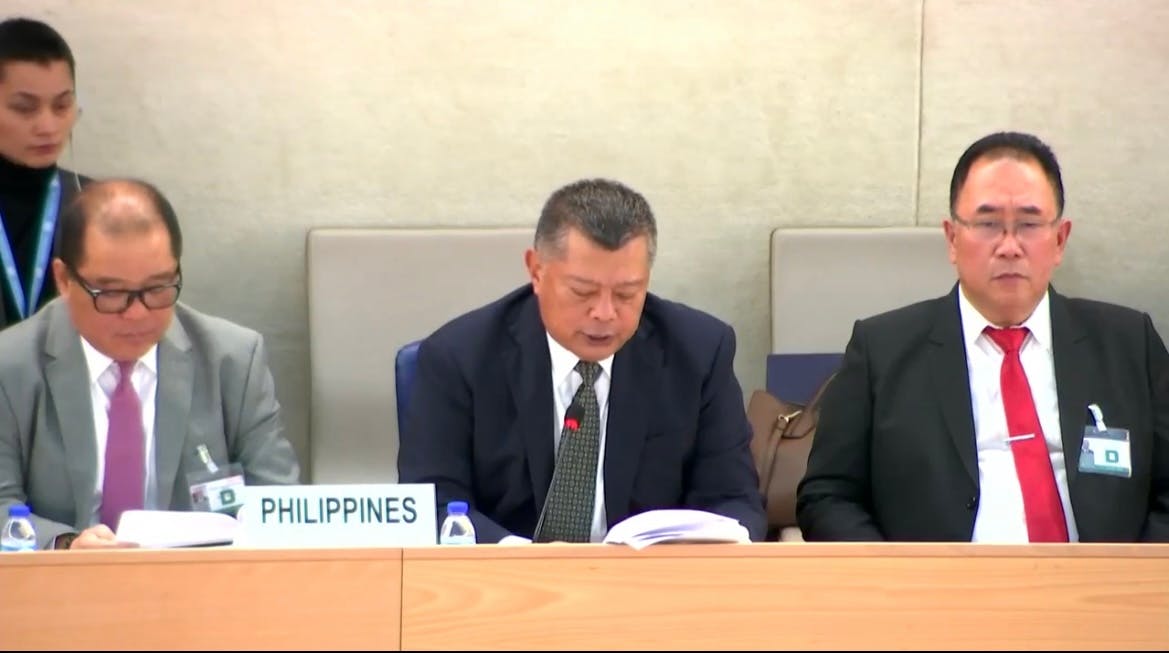
The Philippine delegation to the country’s Universal Periodic Review (UPR) in Geneva, Switzerland has rejected the recommendations for the country to adopt measures such as the Sexual Orientation, Gender Identity and Expression (SOGIE) Bill and laws legalizing same-sex marriage, divorce and abortion, among others.
In his radio program on Saturday, Nov. 19, Justice Secretary Jesus Crispin Remulla explained that they rejected outright these recommendations as “not acceptable” in the Philippines, being a pre-dominantly Catholic nation.
“They want the SOGIE Bill for same-sex marriage to have the same as in their countries. So, that’s not acceptable for us. They really want a lot to be implemented here,” Remulla, speaking in Filipino, said.
It was Remulla who led the Philippine delegation to the fourth cycle of the UPR of the country at the United Nations Human Rights Council (UNHRC) last week.
The Philippine delegation was composed of representatives from the Department of Justice (DOJ), the Presidential Human Rights Committee (PHRC) secretariat, the Department of Foreign Affairs (DFA) and the Permanent Mission of the Philippines to the UN in Geneva.
Remulla said they also rejected the recommendation for the Philippines to adopt abortion, which the UNHRC considers as a measure for respecting women’s rights over their body.
He said the UNHCR also sees the legalization of divorce and the legislated total removal of the death penalty in the country as measures that the Philippines should adopt.
For Remulla, there may be a glimpse of hope in legalizing divorce now than in the past Congress when then-Senate president Vicente Sotto III was firmly against it.
Still, he said: “Divorce, even though we want it, needs thorough discussion, given that ours is a Catholic nation.”
“In these modern times, the debate might be better because there will be no tactics employed to jettison any measures to implement divorce in the Philippines,” he said, noting how Sotto had blocked previous attempts to pass the bill in the Senate.
With regard to the death penalty, Remulla said he personally supports its legislation but that the three branches of government must be consulted about matters that concern religion in the country.
At least 297 recommendations were presented by the member-states of the UNHRC during the UPR of the Philippines and 97 of these were rejected outright by the delegation for being “culturally reprehensible,” Remulla said. He emphasized, though, that the Philippine delegation accepted the 200 other recommendations.
Among these were the UN Joint Program, the Philippine Commission on Human Rights, a National Human Rights Action Plan, combating discrimination and gender-based violence, maintaining a moratorium on the death penalty and preventing extrajudicial killings.
The justice chief said they have also accepted the recommendation for conducting independent investigations, decongesting prisons, further expanding access to justice and protecting human rights defenders and journalists and in promoting the rights to education, health and adequate standard of living.
The recommendation to uphold the rights of persons with disabilities, indigenous peoples, women, children, refugees and stateless persons were also accepted by the Philippine government.
The recent UPR of the Philippines in Geneva was participated in by almost 120 UN member-states.


