



'Panciteria' In Rizal's Fili In Decrepit State
Far from its then glitzy image, the 1880s panciteria is now a crumbling structure with a gate to keep away drug dependents who used the abandoned house for pot sessions.
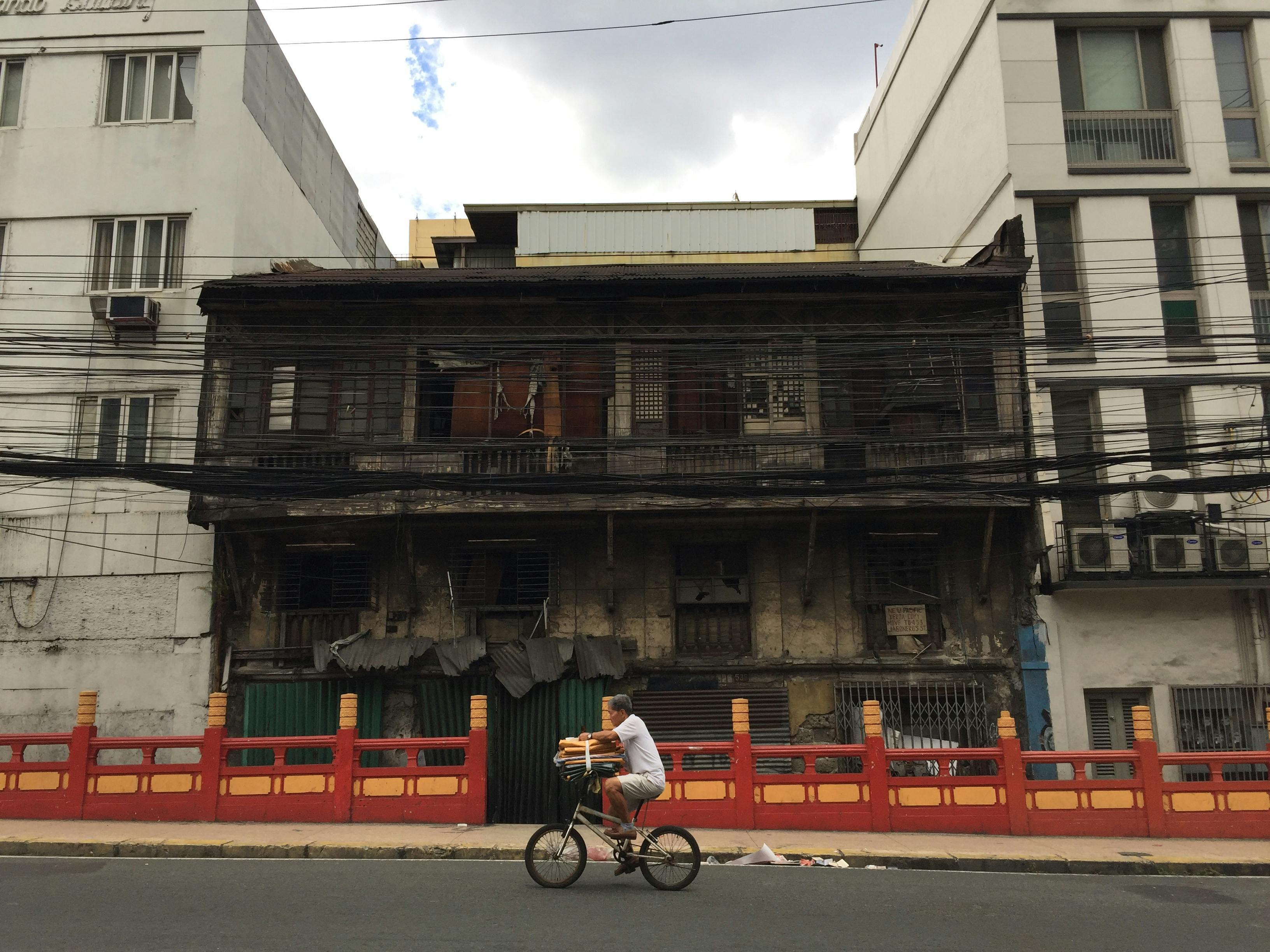
Sandwiched between two buildings in Binondo, Manila is a decrepit century-old structure said to be a Spanish-era panciteria that was mentioned by Jose Rizal in the novel "El Filibusterismo."
This crumbling wooden building with its dilapidated capiz shell windows is believed to be the Spanish-era restaurant "Pansiteria Macanista de Buen Gusto" famous back when Binondo was a bustling commercial district.
The building looked out of place between an Asia United Bank building in front of the Plaza San Lorenzo Ruiz, and the San Fernando building, tucked in a corner of Juan Luna and San Fernando streets in front of the Binondo church and just beside a bridge.
Rizal, whose execution the country commemorated on Monday, Dec. 30 , wrote of the panciteria as the venue of a meeting of 14 students where they ate "pancit lang-lang" while mocking the Spanish friars, in Chapter 25 of "Fili" entitled "Smiles and Tears."
"In the center of the room under the red lanterns were placed four round tables, systematically arranged to form a square. Little wooden stools, equally round, served as seats. In the middle of each table, according to the practice of the establishment, were arranged four small colored plates with four pies on each one and four cups of tea, with the accompanying dishes, all of red porcelain. Before each seat was a bottle and two glittering wine-glasses," Rizal wrote in describing the panciteria according to the 1912 version of the "Fili" by Charles Derbyshire available on Project Gutenberg.
Far from its then glitzy image, the 1880s panciteria is now a crumbling structure with a gate to keep away drug dependents who used the abandoned house for pot sessions, according to security guard Roldan Roque in a nearby building.
In 2017, a lighted candle was left inside the wooden building that almost caused a fire had it not been reported to authorities, Roque recalled.
"I just know that the building has history," Roque told The Philippine STAR yesterday.
The last time he was able to go inside, he saw rubbish around, and police even confiscated drug paraphernalia in the building, said Roque, who has been securing the adjacent building since 2016.
"Three people were even arrested there in 2017 in a pot session. The building was really left to ruins and abandoned,” he added.
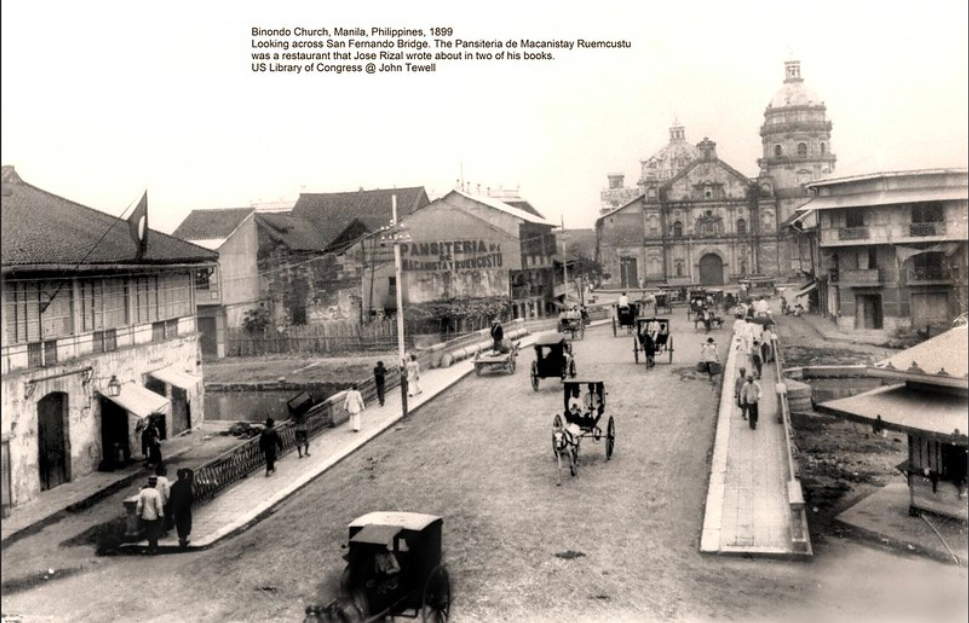

The National Historical Commission of the Philippines (NHCP) is conducting further research on the building to determine if it is the same panciteria in Rizal's novel.
The panciteria is an 1880s structure then owned by a certain Don Severino Alberto, according to Stephen Pamorada of the Heritage Collective, citing Lorelei de Viana's book “Three centuries of Binondo architecture, 1594-1898: A socio-historical perspective.”
The building is now owned by Ever New Realty and Development Corp. located in San Nicolas, Manila, Pamorada said.
For now, the building is a "Presumed Important Cultural Property" having been over 50 years old, said architect Wilmer Godoy of the NHCP Historic Preservation Division, which means it is protected from being demolished.
“Status of the structure is not yet officially declared both in national and local levels. Only that it has presumption of an important cultural property under the National Cultural Heritage Act, since it's a 50 plus-year-old structure,” Pamorada explained.
Tito Encarnacion of the Advocates for Heritage Preservation expressed hope the government would take steps to preserve the heritage building since a beautiful white Spanish-era building just in front of the panciteria was recently demolished.
“It is definitely a heritage structure that is worth preserving. It is in a state of advanced deterioration. If no intervention will be done on it, it may just collapse soon,” Encarnacion told The STAR yesterday.


