



Pagasa: Sierra Madre Weakens Uwan Into Typhoon, But…
Casting Sierra Madre as the protector of typhoons is a tale as old as time, but experts are urging the public shift the conversation from how Sierra Madre protects the people from typhoons to how to save the mountain range from deforestation.
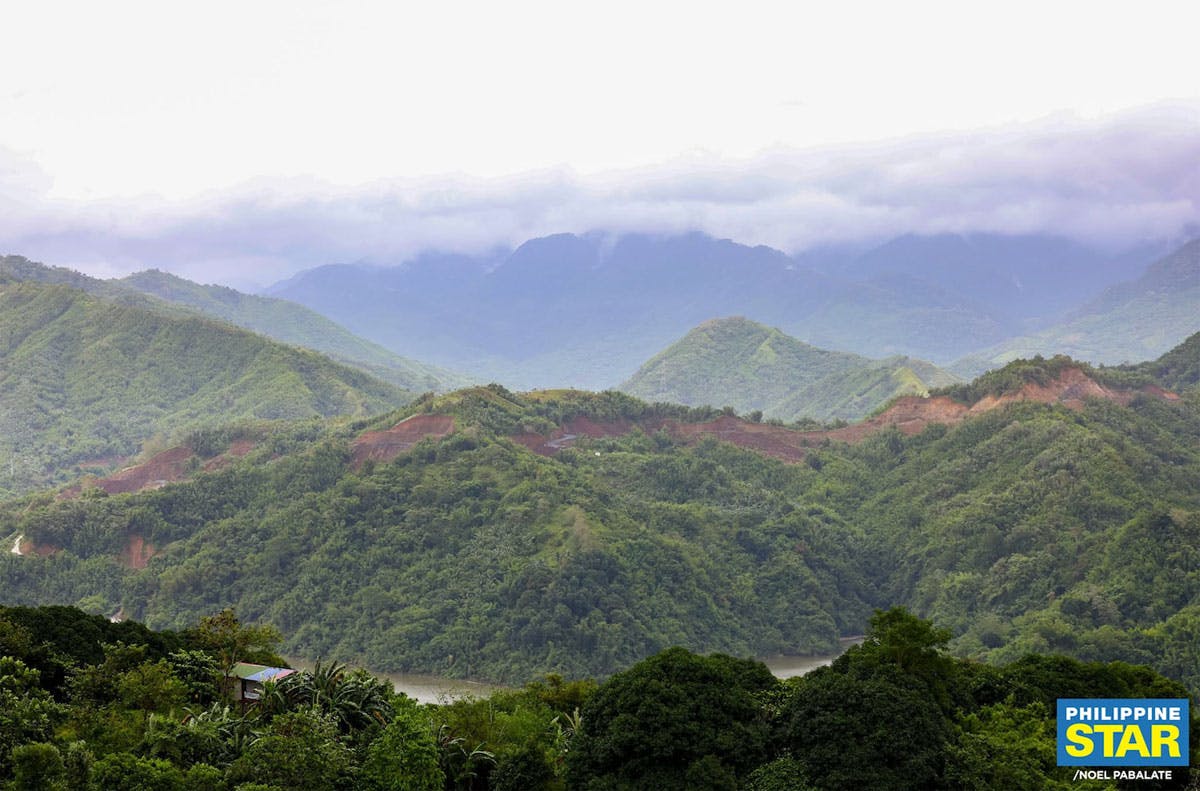
The Sierra Madre is trending on social media, after Super Typhoon Uwan weakened into a typhoon upon hitting the mountain range in the country’s eastern section and spared much of the Luzon provinces from its wrath.
Did the 540-kilometer mountain range temper the monstrous storm?
Yes, according to the Philippine Atmospheric, Geophysical and Astronomical Services Administration (PAGASA).
“Sierra Madre indeed weakened Uwan into a typhoon category upon landfall primarily because of the friction,” Marcelino Villafuerte II, PAGASA’s deputy administrator for research and development, said.
Villafuerte affirmed social media postings that showed satellite images of Uwan with its eye disappearing after passing through Sierra Madre.
“Sierra Madre distorted the structure of the typhoon as it passed through the mountain range with elevations of approximately 2,000 meters,” the PAGASA official explained.
Like the typhoon, however, people’s expectations of the mountain range should also be tempered, as the landform offers Luzon no blanket protection from cyclones.
American storm chaser Josh Morgerman went to his Facebook page to remind Filipinos that Sierra Madre does not diminish a typhoon from the get-go.
“It weakens typhoons after they make landfall on the east coast of Luzon,” Morgerman, who is stationed in Baler, Aurora to monitor Uwan, wrote.
Indeed, Uwan only weakened into a typhoon after crossing the mountainous terrain of northern Luzon. Prior to that, it made landfall at 9:10 p.m. in Dinalungan, Aurora, with sustained winds of 185 kilometers per hour and gusts of 230 kph.
Don’t be complacent
Casting Sierra Madre as the protector of typhoons is a tale as old as time.
Folklore has it that Sierra is deeply protective of her two sons, Iloco and Tagalo. When her suitor, Bugsong Hangin (the king of the easterly winds), killed the warrior she loved, Lusong, Sierra faced her two sons and protected them from Bugsong Hangin’s attacks with her back.
Science, however, tells a different story.
Examining 45 typhoons that struck Luzon from 2000 to 2022 using the weather research and forecasting model, Gerry Bagtasa and Bernard Alan Racoma of the University of the Philippines found that passing through Sierra Madre does not weaken a cyclone – originating from the east and moving westward – before landfall and in the first six hours it traverses land.
Both scholars discovered that the Cordillera Central, a 320-kilometer mountain range spanning the entire Cordillera Administrative Region and adjacent provinces, limits cyclones moving toward the West Philippine Sea from re-intensifying.
Using three different simulation models, experts found that Sierra Madre can reduce both wind exposure and rainfall only in provinces under the Cagayan Valley region.
Ironically, the mountain range increases the amount of a cyclone’s rainfall moving toward Metro Manila and nearby areas by 25 to 55 percent, despite a three- to eight-percent reduction in wind exposure.
“With the consideration that more damages induced by cyclones are water-related and not due to wind, relying on mountain ranges as barriers is flawed, inaccurate and potentially dangerous, as this may lead to complacency,” Bagtasa and Racoma wrote in a 2023 article for the Philippine Journal of Science, an open-access scientific journal published by the Department of Science and Technology.
Villafuerte explained that a cyclone moving through a mountain range undergoes an “orographic effect,” which enhances rainfall as its vertical motion increases.
“The clouds collect more water vapor as they travel a shorter vertical distance,” he said.
Bagtasa and Racoma urged the public to shift the conversation from how Sierra Madre protects the people from typhoons to how to save the mountain range and its rich biodiversity from deforestation and forest degradation.
After all, they said, “disastrous cyclone-related events have and will always occur in the Philippines.”


