OLD-FASHIONED LOVE: Teacher Still Sends Letters With Stamps To Fiancée
Together for around 13 years now, John C. continues to send letters to fellow teacher Angel by mail, which travel an estimated 483 kilometers and take 15 to 45 days to reach her.
It started when John C., who is from Metro Manila, thought of surprising his now fiancée Angel, also a teacher based in Sorsogon, to celebrate the day they became a couple. Since it marked a new milestone in their relationship, John C. decided to give her a handwritten letter.
“It was our monthsary…I sent her a snail mail in an envelope,” he told The Philippine STAR / OneNews.PH in a recent interview.
For the letter, John C. used a stamp that featured Pia Wurtzbach, the third Filipina to win Miss Universe in a controversial coronation night in December 2015.
The Philippine Postal Corporation (PHLPost) issued postage stamps honoring Wurtzbach, with glitters used to highlight the Diamond International Corporation crown she wore. Wurtzbach was among PHLPost’s “living legends” to be featured in stamps, since the honor is usually given to deceased personalities.
In 2016, John C. sent his letter with the Wurtzbach stamp to Angel who has been his girlfriend since 2010.
“She was surprised,” John C, said, especially since “a utility man in her school received the letter, and before the letter reached her all her co-teachers already knew (about our relationship).”
Together for around 13 years now, John C. continues to send letters to Angel by mail, which travel an estimated 483 kilometers and take 15 to 45 days to arrive in Sorsogon.
‘King of hobbies’
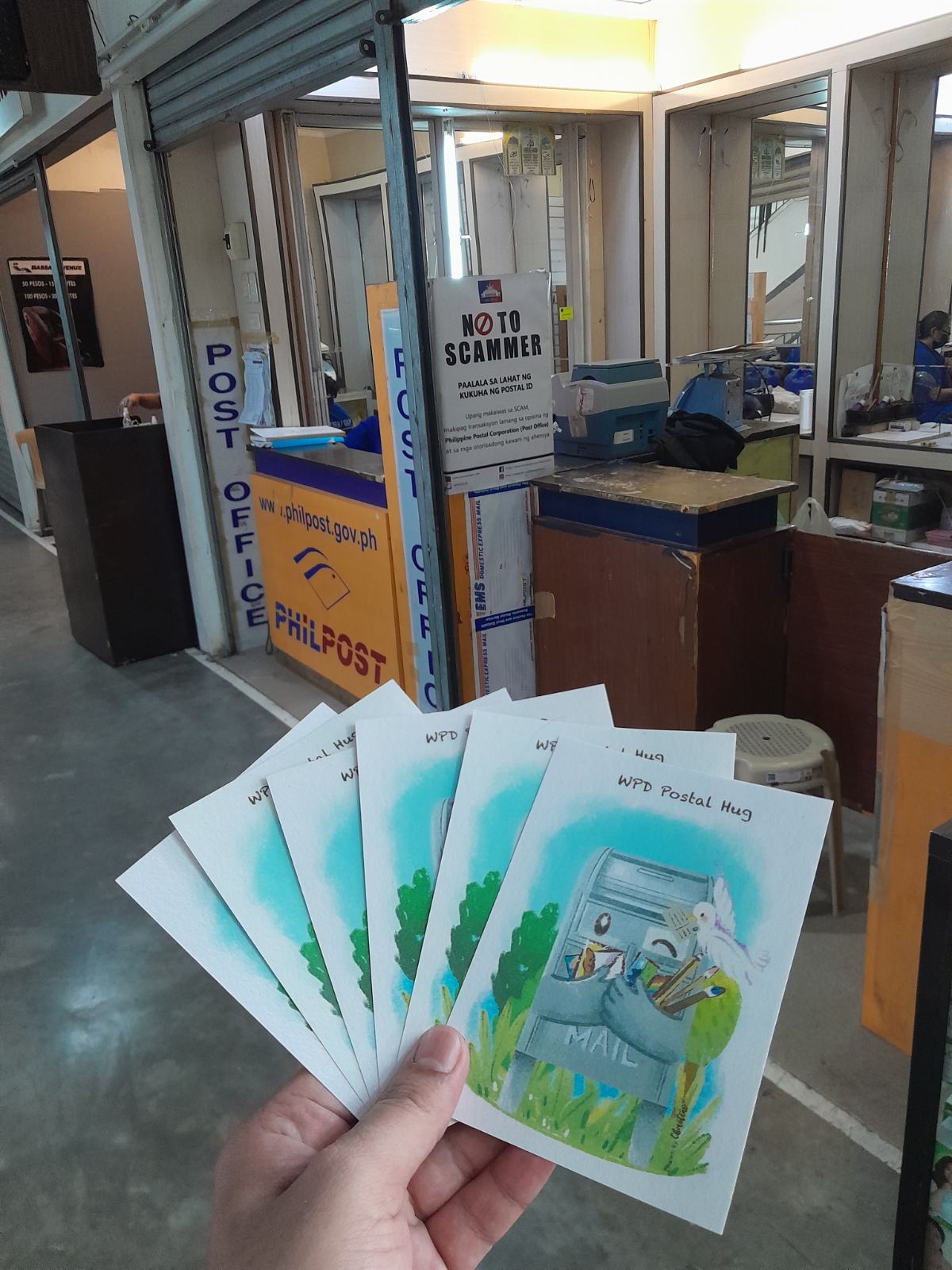
John C., who is in his early 30s, also sends postcards using a website to be able to collect more postage stamps.
Since his elementary days in 2002, John C. has nurtured a relationship with stamps and postcards.
John C. grew up attending primary school that was near a post office. “My school was just across the post office so that area was our playground…also the post office was like a mini-museum full of stamps… colorful mini-artworks displayed at the counter and walls for aesthetic purposes.”
His love for stamps and postcards grew further after joining a website called postcrossing.com, which “allows anyone to send and receive postcards from all over the world.”
So far, he has sent and received 209 postcards to and from strangers globally. Majority of these came from Germany, the United States, Russia, Taiwan, the Netherlands and China, according to statistics on his postcrossing.com account.
Treasures
John C. said he also sent and received postcards with stamps to and from Ukraine, shortly before its war with Russia broke out.
“My rarest postcard is from Christmas Island,” he shared, referring to an island under Australian rule but is located below Sumatra and Java in Indonesia. “Stamps and postcards are my happy pill, and post office is my happy place.”
Among his vast stamp collection, his “most prized” piece was the one that featured Hidilyn Diaz – who bagged a silver medal for weightlifting at the 2016 Olympic Games in Rio de Janeiro, Brazil – which she also signed.
John C. said he knew Diaz would win a gold medal, which she did in the 2020 Tokyo Olympics.
“That stamp is priceless and also most memorable because Miss Hidilyn was so benevolent I felt easy and comfortable during the signing of stamps,” he said.
John C. also treasures a stamp sent from New York by Catriona Gray, the fourth Filipina to be crowned Miss Universe in 2018, during her reign.
“Still relevant”
Asked if postage stamps remain relevant nowadays, John C. replied with a resounding yes.
“It is like a picture book and a small artwork where you can track the progress of society, to learn from our faults and to multiply our strong points,” said John C. who is also a member of the Philippine Stamp Collectors’ Society.
Josefina Cura, now 75 and who sits as board member of the Philippine Philatelic Federation, supported John C.’s insight about stamps.
During a lecture with employees of PHLPost last Nov. 15, Cura shared an anecdote heard from a fellow stamp collector that involved stamp collectors during World War 2. “On Feb. 3, 1945, some stamp collectors ran to the Manila Central Post Office. While they heard gunfire and explosions, what did they do? They canceled mails. They feared that day was going to be a turning point for Manila, and they were right. That was the last day of the Japanese occupation of Manila.”
In postal jargon, “canceling” meant the mail has been marked to prevent the postage stamp from being reused. The mark on the stamp usually bore the date.
“With stamps we can see a record of history. With the passion in collecting stamps, we develop an interest in the history and culture of a country. Using stamps, it becomes more fun and interesting to study. It is one way of educating ourselves about history,” she told The STAR / OneNews.PH.
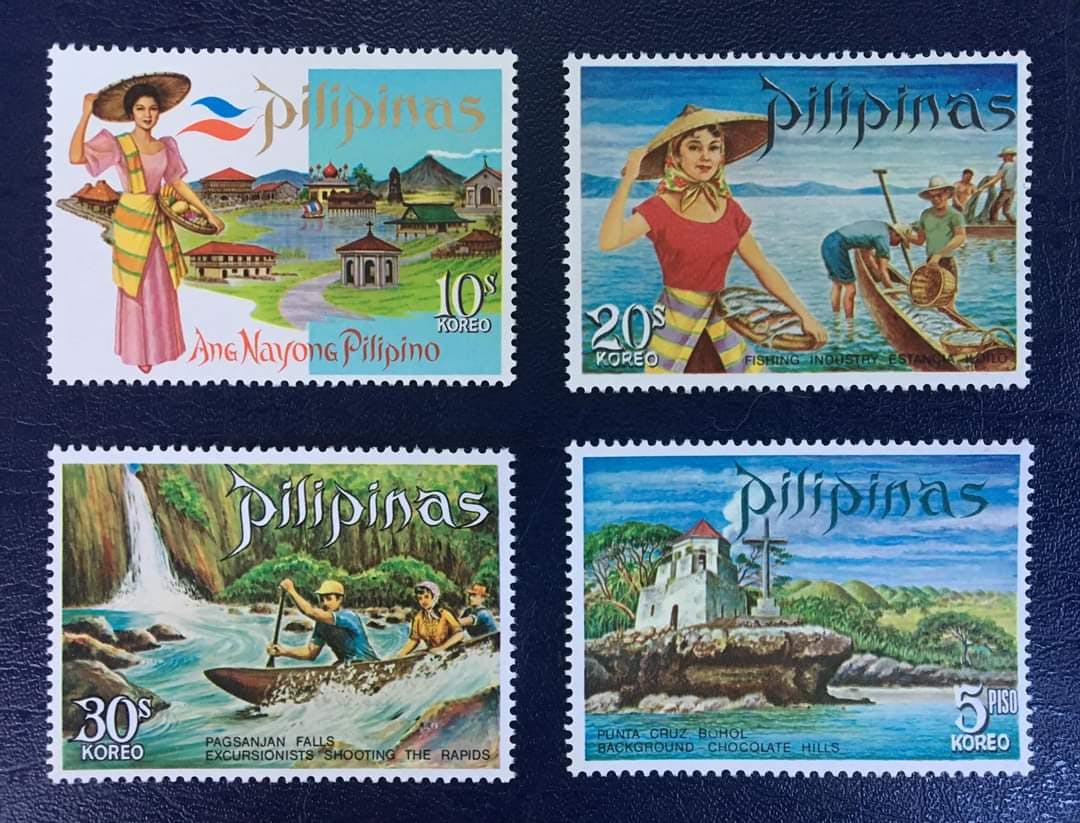
Stamps were used for the first time in the 1840s, with the issuance of a stamp in Great Britain called “Penny Black.” Worth a penny, it bore a profile of Queen Victoria and was printed in black.
Stamp collection was considered both the “king of hobbies” and the “hobby of kings” since only members of the royalty and the nobility enjoyed the privilege of sending and receiving messages with stamps.
While the Philippines established its own postal system in 1767, the country’s first stamps – bearing the profile of Queen Isabella II of Spain – was issued in 1854 or a few years after the release of the world’s first stamp from Great Britain.
Mails and stamps became more accessible to the general public as time passed, as people got accustomed to sending and receiving letters that expressed various emotions, and during occasions like Christmas.
Mails started to dwindle in the early 2000s as technology became more advanced and accessible. Snail mail has been replaced with electronic mail or e-mail, text messages and social media, while video games gave more pleasure to youngsters than stamp collecting, Cura said.
Resurgence
However, Cura expressed belief stamp collectors exercised resilience while technology progressed right before their eyes.
She said she saw a “resurgence” of interest in stamp collection particularly during the height of the COVID-19 pandemic, when people practically got stuck in their houses to avoid transmission of the dreaded coronavirus.
“Dahil walang ginagawa ang mga tao, stamp collectors started collecting again. Natuto ang mga tao na bumili online, so maraming nag-sell online ng stamps. Naging easier for collectors in the provinces to be able to buy stamps. The last three years I saw a resurgence,” she said.
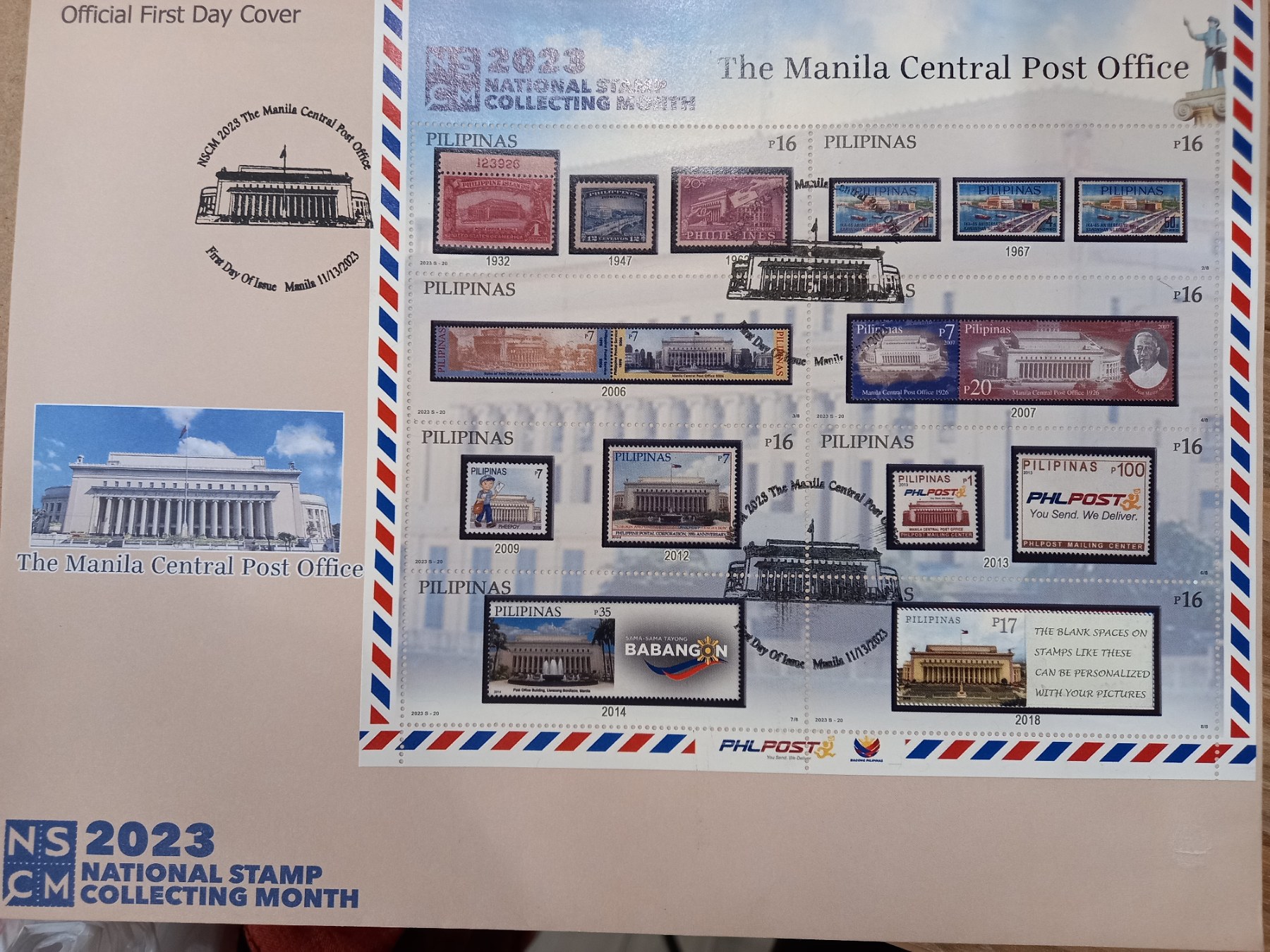
Last Nov. 13, PHLPost launched a new collection of stamps that featured the Manila Central Post Office, which was almost totally destroyed by fire that lasted for 31 hours on May 21.
The new stamp collection showed various issuances of stamps featuring the iconic building – erected in 1926 and rebuilt after World War 2 – released in 1932, 1947, 1963, 1967, 2006, 2007, 2009, 2012, 2013, 2014 and 2018. Each stamp costs P16 each, while a whole set is worth P128.
The National Museum in 2018 declared the Manila Central Post Office an Important Cultural Property.
Previously, Postmaster General and PHLPost chief executive officer Luis Carlos declared the agency, along with the Department of Tourism and the National Historical Commission of the Philippines, would restore the Manila Central Post Office to its original look. He said a bidding for the detailed architectural and engineering design of the heritage structure would be held before December this year.
“With its restoration and rejuvenation, we will bring back thousands of men who along with the Manila Central Post Office building have become the shining beacon of postal heritage,” he said during the launch of the new stamps that showed the iconic building.
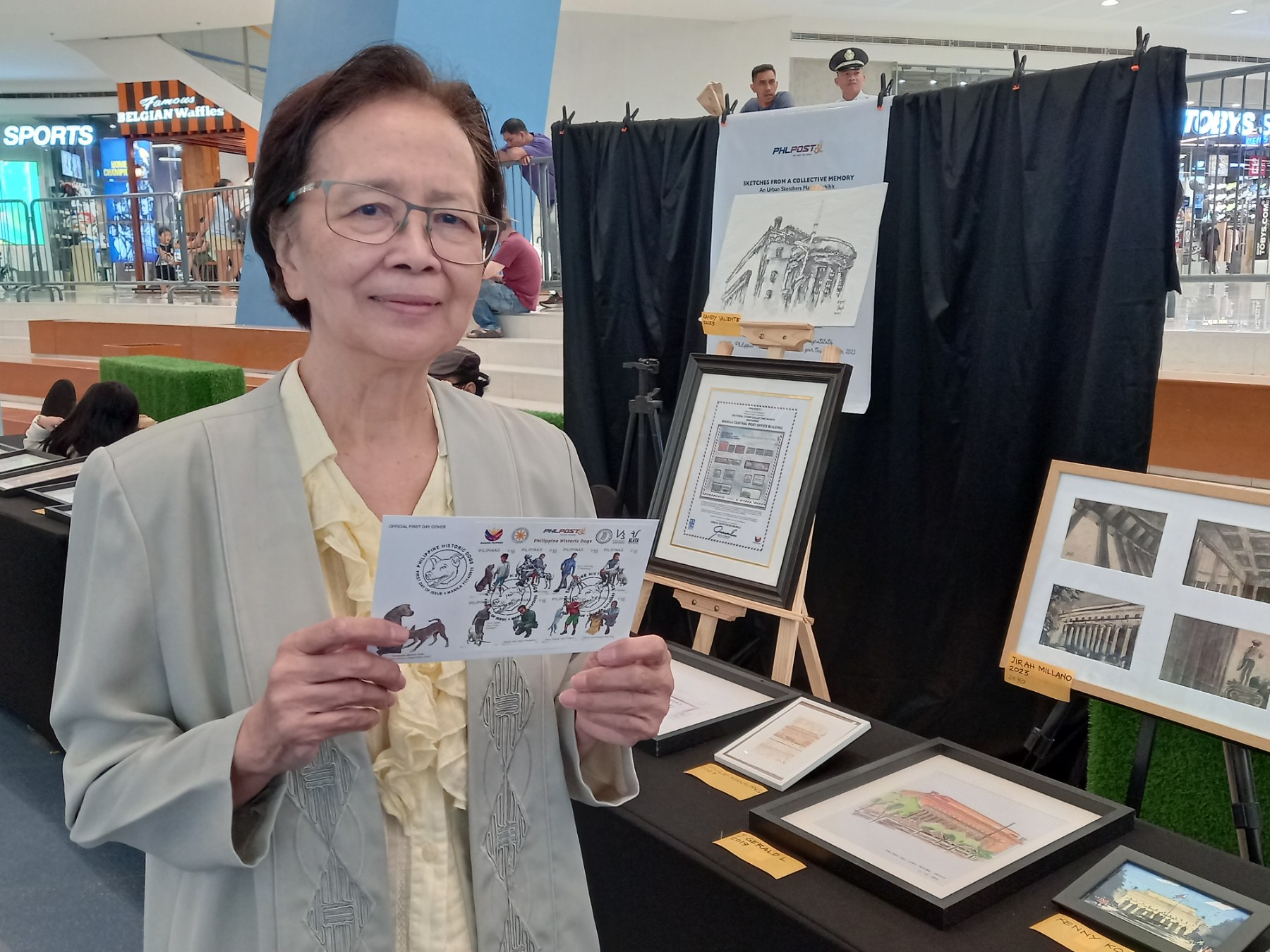
Despite its destruction, PHLPost continues to issue various stamps that featured works of National Artists, presidents, beauty queens, and even dogs.
Cura is optimistic that people will become interested in collecting stamps once they become more accessible and affordable, especially in far-flung areas where mail remains within reach.
Also, John C. expressed hope that the hobby of stamp collection will remain alive.
He said the “king of hobbies” will never die “because of the philatelists and postcard collectors who love to share their knowledge and resources” and “the marvelous artists who make the stamp designs.”