


Marcos: 13 More Metro Pumping Stations Coming
President Marcos said the pumping stations are expected to be operational by the end of the year or early 2027.
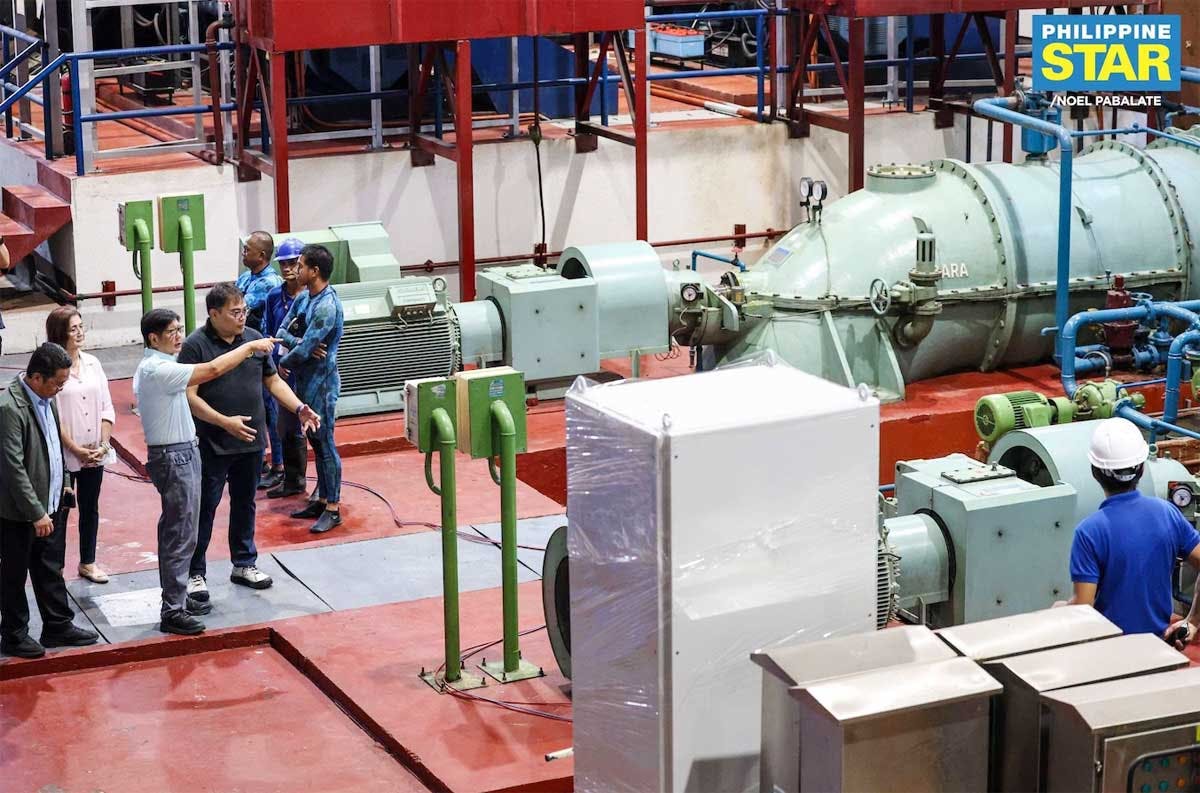
As the government studies measures to address flooding, President Marcos announced that 13 additional pumping stations are scheduled for installation and upgrading in various areas of Metro Manila.
He said the pumping stations are expected to be operational by the end of the year or early 2027.
“Because of climate change, because of the increase in volume of rainfall that has been coming to the Philippines and will come in the future, we are installing additional pumping stations,” the President said after inspecting the Tripa de Gallina Pumping Station in Pasay City yesterday.
“Those pumping stations are in and around Manila. I think, altogether, we will have 13 additional pumping stations, which we should have in place by the end of this year or the beginning of next year. Most of them should be in place already,” he added.
Of the 13 pumping stations, four are new, while the rest will be upgraded, Metropolitan Manila Development Authority (MMDA) Chairman Romando Artes said.
Speaking to reporters after the inspection, Marcos said the garbage problem contributes to the clogging at pumping stations.
“That’s why we are looking for ways to use the garbage. They are turned into compost, they are turned into organic pots while some are thrown into the landfill,” the President said. “We really need to fix this.”
He said the administration is now working on waste-to-energy programs which may be implemented by next year.
The Marcos administration has identified 39 priority sites for rainwater catchment structures aimed at addressing the perennial flooding problem in Metro Manila.
All areas in the capital region will have flood mitigation projects, which are categorized into constructed and natural inland wetlands, bioretention areas, river renaturation, mangrove forests, green corridors and spaces and river floodplains.
“So far, 39 areas were chosen and we hope there will be no impediments in the implementation of the projects so we can have areas where the rainwater can be impounded temporarily and they will not accumulate on the roads and cause floods,” Palace press officer Claire Castro said in a briefing yesterday.
There are five potential project sites in Quezon City, namely Camp Aguinaldo, Damar Village Park, Miriam College Open Field, Tierra Verde II Park and the University of the Philippines Sunken Garden.
Four possible project sites were identified in Manila: Baseco Lagoon, Freedom Triangle Plaza, Remedios Circle and the Rizal Memorial Baseball Stadium.
The government also listed the following areas as priority sites: NHA 4PH Property (Bagong Silang) and University of Caloocan City (proposed Sunken Garden) in Caloocan; Camella 3D Basketball Court and Daang Hari Road in Las Piñas; Malabon People’s Park and Malabon Sports Complex (Oval) in Malabon; Chino Roces Ave. Underpass and Estero de Tripa de Gallina in Makati; Buhangin Creek and Maytunas Creek (Upstream) in Mandaluyong; Hardin ng Bayan and Marikina River Floodplains (Bagong Sibol) in Marikina; Jamboree Lake (near New Bilibid Prison) and Open Area beside Muntinlupa Sports Complex in Muntinlupa; and Navotas Coastal Dike and Tanza Marine Tree Park.
Other possible project sites are the Open Area in Barangay Moonwalk and Open Space behind Avida Towers in Parañaque; Cultural Center of the Philippines–Roxas Boulevard and Pasay City Linear Ecopark in Pasay; Bukuhan Agricultural Area and Parking Lot in Bukuhan in Pateros; New Township/Development Area and Rizal High School Track and Field Oval in Pasig; Ermitaño Creek and Maytunas Creek (Downstream) in San Juan; Pinagsama Creek Daylighting and Pumping Station and Maya and Maysapang Creek inTaguig; Polo Riverwalk (Right Bank) and Wawang Pulo Pumping Station in Valenzuela.
Catchment areas
The government plans to construct flood catchment structures in 39 areas within the National Capital Region as part of its flood mitigation programs, the MMDA said on Wednesday.
“The purpose of nature-based solutions and catchments is to prevent runoff or overwhelming of old, antiquated, small and clogged drainage systems when it rains heavily,” Artes explained.
Under the plan, MMDA will excavate certain areas and use the underground space to install a cistern tank and a detention pond, where rainwater will be temporarily stored before discharge to the waterways.
According to Artes, Dutch consulting engineering company Haskoning identified the sites where the agency will implement the catchments.
Among these areas is the 500-hectare Camp Aguinaldo, where almost half a hectare of its golf course will be used for a 10-meter-deep rainwater catchment.
Also identified as catchment areas are the Rizal Memorial Stadium and the University of Santo Tomas in Manila, as well as Miriam College and the University of the Philippines in Quezon City. The UP Sunken Garden will be deepened to serve as a temporary rain basin.
Miriam College, according to Artes, has “agreed in principle” to the proposal, adding that a memorandum of agreement will be underway after the engineering design is finished. UST has not agreed yet, but MMDA said that the university “has not completely denied” the proposal.
MMDA said that the catchment structures can be finished within a year, or a year and a half at most. The projects will be funded through the Asian Infrastructure Investment Bank with a counterpart fund from the Philippine government.
Malacañang yesterday allayed concerns that the budget allocations for evacuation centers could be used for elections, saying the key details of the budget items, including their purpose and implementing framework, have been defined. – With Andrew Ronquillo