



Maharlika Bill Filed In Senate
Sen. Mark Villar, who chairs the Senate committee on banks, financial institutions and currencies, filed the counterpart measure of the bill creating the Maharlika Investment Fund, Senate President Juan Miguel Zubiri has confirmed.
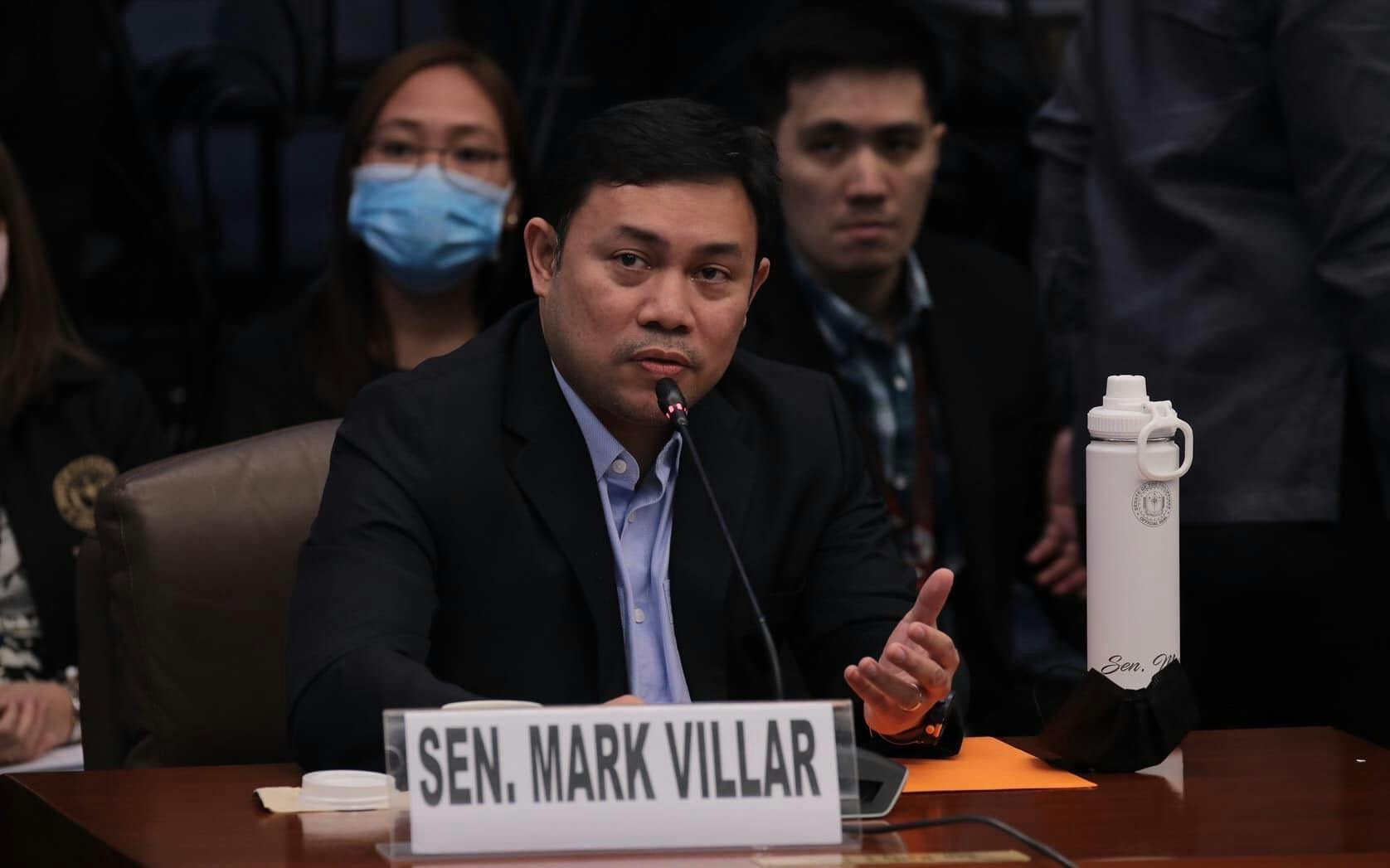
A bill creating the Maharlika Investment Fund (MIF) has been filed in the Senate as counterpart of the one passed recently by the House of Representatives.
Senate President Juan Miguel Zubiri confirmed on Saturday, Jan. 21, that Sen. Mark Villar filed the proposed measure last week.
“I think he filed last week. I hope the soonest possible time he will call a committee hearing so that we members of the Senate can discuss this,” Zubiri said in an interview with dwIZ radio yesterday afternoon. “Sen. Mark Villar, if I were him, he should call a committee hearing as soon as possible,” he said.
Referring to Villar as the chairman of the Senate Committee on Banks, Financial Institutions and Currencies, Zubiri said: “So, the ball is in his court.”
The Senate President said he intends to inquire with Villar about the direction of the MIF proposal since the latter must have discussed it with President Marcos in the many times they spent together.
“He (Villar) is always with him when he travels abroad, in presidential trips and visits and they talk about the Maharlika Fund so I think he is well adapted and he is well-versed on the need of the Maharlika Fund,” Zubiri, partly speaking in Filipino, said.
“We want to ask him what the plan here is with this wealth fund. What are the amendments that need to be added to make this proposal even better,” he said.
Zubiri admitted that he has not yet read the bill filed by Villar, but his staff had informed him that it is “more or less” the same as the version passed by the House.
Speaking to reporters while in Zurich, Switzerland last Friday, Jan. 20, Marcos said he is leaving it up to lawmakers to deliberate on the final form of the Maharlika wealth fund, stressing that he wants it to be suitable to the realities and needs of the country.
The President said that while sovereign wealth funds around the world have the same name, they are different in methodology, purpose and legal context.
“We have to design it very specifically to the Philippine condition and that’s what the legislators are trying to do now to make sure that it will suit us and it will be a good thing for us,” he said.
Marcos said there have been exchanges of communication between the Executive Branch and Congress with regard to the direction of the sovereign wealth fund even before the Maharlika bill was filed. “So, we came to a consensus,” he said.
‘Privately led’
Last Friday, Jan. 20, Albay Rep. Joey Salceda who chairs the House Ways and Means Committee said the bill creating the Maharlika wealth fund has been revised to make it more “privately led.”
Salceda said the initial fund sources of Maharlika would be limited to dividends from government-owned and controlled corporations. Dividends from the Bangko Sentral ng Pilipinas (BSP) and state-run banks would no longer be among the Maharlika fund sources, he added.
He said there will be an initial public offering – the selling of shares of stocks to the public for the first time – to raise money for the wealth fund.
Reacting to Salceda’s suggestions, Zubiri said he would look into them and determine whether they are sound or if his proposal is a better piece of legislation.
Based on what he has read online about Salceda’s proposal, the Senate chief said: “I think he wants this investment fund to have an IPO. For the public to get the funds and foreign investors to increase the funds and less risk for our government institutions.”
Marcos, too, said he is aware of that direction for the MIF but clarified that he has yet to approve a final form because the Maharlika bill is still in the process of legislation. “I do not have a role yet,” he said.
The IPO for MIF, the President said, was a suggestion of a company chief executive officer.
“We’ll see if it will suit the Philippines,” Marcos said. “Some funds have done it... the more we study it, the more it’s clear.”
The Maharlika wealth fund is intended to become a vehicle for the government to invest in various outlets such as real estate, infrastructure, bonds and foreign currencies.
Lawmakers pushing for it said the fund would be used to promote fiscal stability and support the government’s priorities.
‘Read the bill’
Romualdez, a cousin of Marcos and one of the authors of the Maharlika bill, defended the administration’s decision to push for the sovereign wealth fund, saying the government needs to work double-time to fund development projects.
“We passed it in the House. With all due respect, it’s been already filed in the Senate. For all the senators who may have their contrary thoughts, just read the bill and deliberate in the Sen-ate and let’s take it from there but the Filipinos cannot wait,” Romualdez said. “We cannot wait. President Marcos will not sit on his hands. He has no time to just waste time,” he added.
Romualdez also responded to critics questioning the timing of the proposed wealth fund.
“On the contrary, we’re late... We’re really far behind... You see the better performing sovereign funds, they’ve been around for decades,” the lawmaker said.
“We have the bring down the cost of electricity, the cost of power, the cost of oil. We have to bring in developmental projects, not just infrastructure, but we have to bring agricultural projects in. We have to make sure that there’s food security,” he added.
Reacting to the proposal to drop the dividends from BSP and state-run banks as initial funding source of Maharlika, Romualdez said there are other possible alternatives that can be explored.
He said government financial institutions, government-owned and controlled corporations and the BSP were initially considered because they have a lot of underutilized capital that are “asleep” rather than invested in AAA-grade securities or in western economies.
“There is now a shift... Even the IMF MD (International Monetary Fund managing director Kristalina) Georgieva suggests that it’s best that capital from African and Asian countries be in-vested in development projects and infrastructure projects in their developing countries and not in western economies that are already fully developed,” Romualdez said.
Mining, tourism
For his part, Surigao del Norte Rep. Robert Ace Barbers said he supports the plan of Finance Secretary Benjamin Diokno to use the earnings from the mining industry to help jumpstart the MIF.
Barbers noted that only the mining industry can save the economy post-pandemic as it is the “single biggest resource that the country has with the potential to earn trillions of dollars.”
Lawmakers have claimed that the Philippines is the “fourth richest in mineral resources” with its yields of total gold, copper, nickel and other mineral reserves more than enough to pay off the country’s entire debt.
“I have said it many times before, our mining industry can save us and our country. In 10 years, Europe plans to have 50 percent of its vehicles run on full electricity,” said Barbers, add-ing that the raw materials needed for the electric car batteries are in the Philippines.
“Allowing the mining industry to proceed full-scale will give us the edge the we badly need. We should not miss the bus again,” he said.
Aside from mining, he also proposed that the earnings from tourism be used to bankroll the Maharlika fund.
“You see, where I come from, Surigao del Norte is not only the mining capital of the country, it is fast becoming a primary tourism destination,” he said.
“So, I would propose that we also tap the huge earnings from the tourism industry. These two combined industries will no doubt rescue and lift us from this pit of debt that we are now in,” Barbers added. – With additional reports from Alexis Romero, Sheila Crisostomo


