LGUs Request For More Cash Aid Slots From DSWD
The Department of Social Welfare and Development is saying that it needs to prioritize the poorest of the poor in the distribution of cash aid as local officials face a deluge of requests for assistance from their constituents.
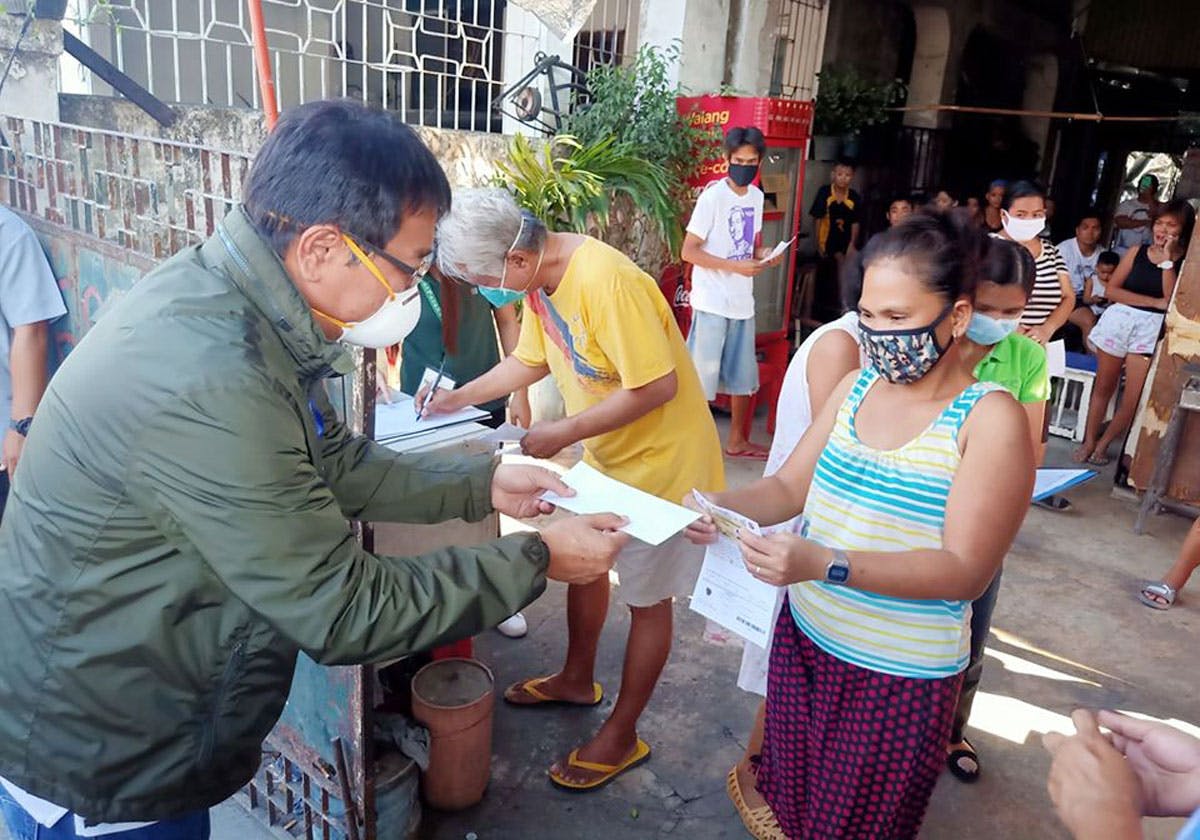
With a quota system in place over the emergency cash aid program of the national government, several local officials are appealing for additional slots to increase the number of beneficiaries in their localities.
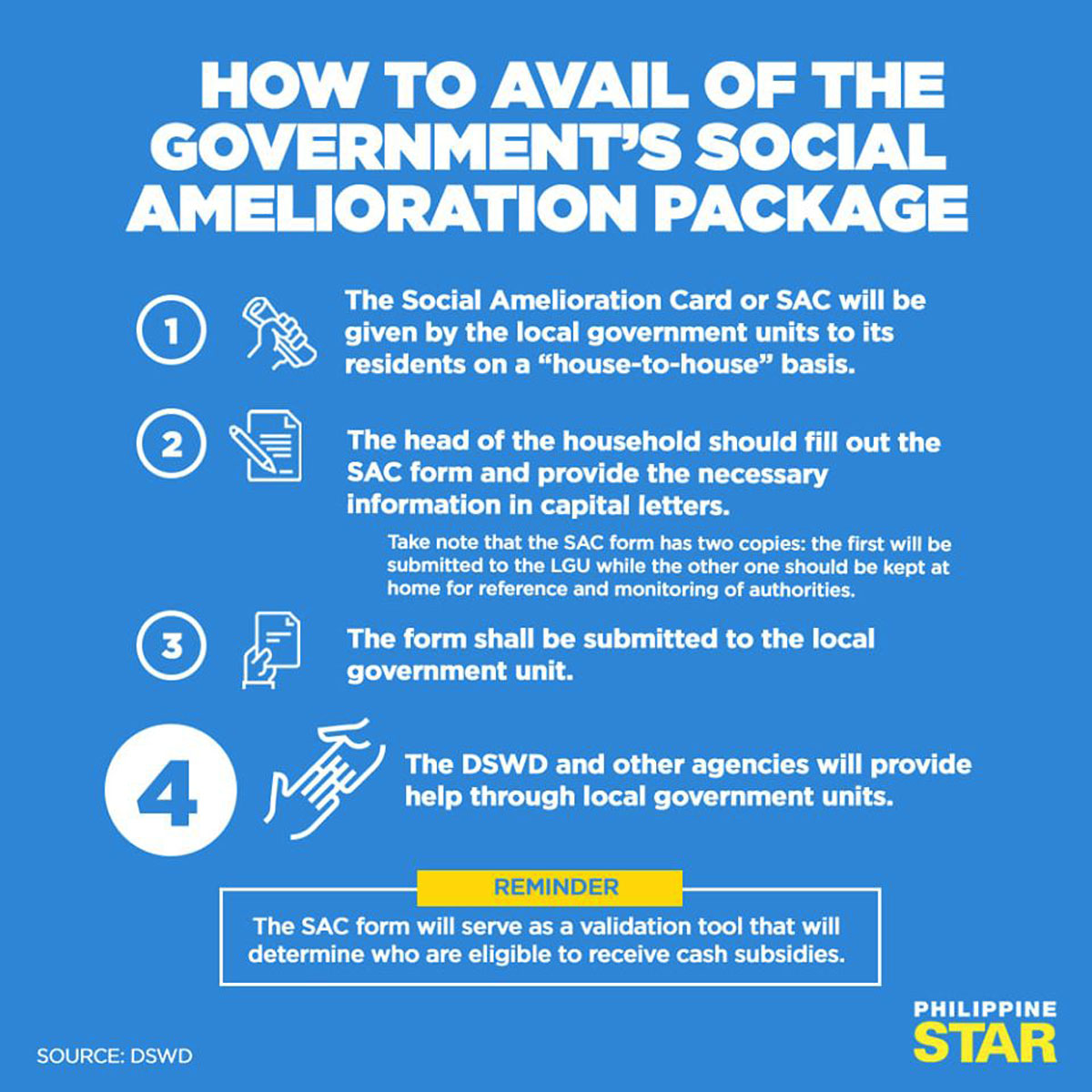
A number of local government units (LGUs) have issued announcements disputing initial reports that all households would receive forms for the P200-billion amelioration package for those affected by the enhanced community quarantine imposed in response to the coronavirus disease (COVID-19) outbreak.
In Malabon, Mayor Lenlen Oreta said he would endorse all families in the city as beneficiaries of the program, saying “every family deserves aid from the government in these extraordinary times. No one should be left behind.”
Oreta said the Department of Social Welfare and Development (DSWD), which is in charge of the program, only allotted 44,032 slots in Malabon despite having around 86,000 families in need of help.
Other LGUs have issued similar announcements.
Antipolo City Mayor Andrea “Andeng” Ynares said the DSWD handed 89,193 forms to the city despite having an estimated 155,000 households in the list of the local government.
“Akala po namin, sabi niyo, lahat ay bibigyan? Hindi naman po sa nagrereklamo. Bagkus ay talaga pong nagpapasalamat nang lubos sa tulong niyo sa aming mga kababayan. Malaking bagay po ang P6,500. Pero sana po, sabihin niyo po ang totoo sa sambayanan para naman maunawaan ng mga kababayan namin,” she said.
In Laguna, Biñan Mayor Walfredo Dimaguila Jr. asked the DSWD to comply with the previous statements made by President Duterte and Speaker Alan Peter Cayetano that all the 18 million households should receive support from the national government.
He said that only 48,121 slots have been allocated in the city, which has around 120,000 households to be assisted.
“Dahil dito, ako po ay nakikiusap na sundin natin ang pahayag ng Pangulo at ni Speaker Alan Peter Cayetano upang maipagkaloob sa ating mamamayan and kanilang pangangailangan lalong lalo na sa panahon ng kagipitan dulot ng COVID-19,” he said in a letter to the DSWD.
The local government of Bay, also in Laguna, said it has requested for additional barcoded forms as only 8,173 slots were allotted by the DSWD.
In Bustos, Bulacan, officials appealed for understanding as only 8,000 slots were allocated out of the 23,000 households in the municipality.
“Huwag po sana tayong magalit sa lokal na pamahalaan kapag hindi napagkalooban ng assistance, dahil gaya ng ibang bayan, kulang rin ang slots/allocation para sa kanila. Ito ay binaba lamang ng pamahalaang nasyunal sa mga LGU,” the local government said in a statement.
Poor households priority
The DSWD has yet to respond to concerns of LGUs regarding limited slots.
But in a statement on Sunday, April 5, the agency said the target beneficiaries are those assessed to be the most affected “given their existing life situations or circumstances.”
“The department emphasized that the government wants to help all families affected by the crisis to receive the social amelioration programs, but priority will be given to the poor and those at risk of not earning income during this quarantine period,” the DSWD explained.
The emergency subsidy program is in line with Republic Act No. 11469 or the Bayanihan to Heal As One Act, which allows the national government to provide support to 18 million low-income families affected by the protocols put in place to address the COVID-19 outbreak.
The P5,000 to P8,000 monthly subsidy will be granted for two months to provide for basic food, medicine and other essentials.
It shall be computed based on prevailing regional minimum wage rates and the existing subsidy programs of the local and national governments.

Under the joint guidelines for the program, target beneficiaries include families that belong to either the poor or informal sector, which are at risk of not earning a living during the enhanced community quarantine.
Also included are those who may have at least one member belonging to vulnerable or disadvantaged sectors such as senior citizens, persons with disability, pregnant and lactating women, solo parents, overseas Filipinos in distress, indigent indigenous peoples, and underprivileged and homeless citizens.
Informal economy workers were identified as those directly hired or occasional workers; subcontracted workers; homeworkers; househelpers; drivers of public utility vehicles; micro entrepreneurs such as sari-sari store owners; family enterprise owners; sub-minimum wage owners; farmers, fisherfolk and farm workers; employees affected by no-work, no-pay policies, and stranded workers.
Beneficiaries of the government’s Pantawid Pamilyang Pilipino Program (4Ps) no longer have to fill out the forms distributed to households as they have already received their subsidies through their cash cards.
The DSWD said P16.3 billion had been released over the weekend for some 3.6 millions 4Ps beneficiaries with cash cards.
“For 4Ps beneficiaries who have yet to receive their cash cards, funds have been downloaded to the DSWD regional offices to facilitate the immediate payment of the said cash subsidy,” the agency said.
“The Department is working on the distribution arrangements with the local government units together with the city/ municipal links who will coordinate with the beneficiaries for the scheduled release of their emergency cash subsidy,” it added.
The agency said it would employ different modes of payment to ensure expeditious distribution of the cash aid.
Last week, Duterte decided to let the DSWD lead the distribution of the cash assistance supposedly to get rid of politics and corruption in giving out the aid.
Read more: DSWD to take charge: Duterte centralizes distribution of aid despite delays
Don’t be greedy
Cabinet Secretary Karlo Nograles pointed out that each household is entitled to just one social amelioration card even if more than one of its members are qualified to receive assistance. The card serves as proof that a household is a beneficiary of the cash aid provided by the national government.
According to Nograles, the government assistance is intended to make sure that each household will have something to eat.
“Members of each household should share so that more people can receive help. If we are greedy, how about our neighbors who need help?” he said.
Nograles also urged well-to-do individuals not to avail themselves of the government assistance.
“You should just let the poor receive the aid. (It can be done on a) voluntary basis. If you are well-off and you can survive the enhanced community quarantine, just sacrifice and allow your needy neighbors to benefit from it,” Nograles said.
“If you are an employee and you are from the formal sector, don’t avail (of the assistance). You are receiving salaries from your company, why join the program?” he added.
Nograles admitted that the social amelioration cards are limited so those who can afford to buy their necessities should not deprive poor households of assistance.
Too much centralization?
Senators appealed to Malacañang to give LGUs greater involvement in the delivery of cash aid to the poor, as they noted that the delivery of assistance to distressed sectors remains excruciatingly slow.
Sen. Francis Tolentino, chairman of the Senate committee on local governments, said the DSWD can continue to handle the funds allocated by Congress under the Bayanihan Act for emergency assistance.
“But because LGU mechanisms are already in place, they should be given a greater role as they have more personnel on the ground and are in fact the direct recipients of the program, and for purposes of efficiency, identification and rapid validation, the LGUs should have a shared role and responsibility as they know better the demographics in their respective communities,” Tolentino said.
He noted that the private sector can also be of great help, especially the banking institutions and even community-based rural banks, as more helping hands would ensure faster implementation and transparency.
Sen. Panfilo Lacson warned that the “top-down” approach of the national government, particularly the DSWD and Department of Finance, instead of a bottom-up approach is resulting in an “obvious disconnect between the government and the needs and priorities of the rightful recipients.”
“If adjustments are not made, we may have some not so pleasant things in the next weeks or so,” Lacson said.
More than the central government, the LGUs have a better grasp of their constituents’ needs through their community-based surveys being undertaken periodically, he added.
Lacson said he had been receiving numerous complaints of incorrect data that do not tally with the actual number and identities of persons in need on the ground.
“Mayors are complaining that they bear the brunt of the blame and protests from their constituents because of too much centralization, further compounded by the President’s recent pronouncements that there are enough funds to cover all the 18 million families, in compliance with the Bayanihan Act,” Lacson said.
He stressed that the tedious process will not achieve the purpose of the cash aid legislated by Congress.
Sen. Sherwin Gatchalian argued that distributing of cash aid in one week to 18 million families who do not have ATMs would not be easy.
He also cited the lack of a national database or a national identification system that should make the list of beneficiaries readily available in times like this.
“How do you find them? How do you validate them? How do you distribute the cash to each family? How do you avoid duplication?” Gatchalian said.
He suggested that the most logical solution is to cast a wide net and hope that government will eventually catch the most vulnerable.
There should be a partnership with the LGUs and national government wherein the local officials will provide the on-the-ground manpower and knowledge while the DSWD and other national agencies will do the validation and distribution, he said. – With Paolo Romero, Alexis Romero