‘Lawfare’ Is Marcos’ Underreported Legacy – Chel Diokno
Human rights lawyers, like those who fought for the country’s freedom during martial law, have important roles to play in nurturing a democracy.
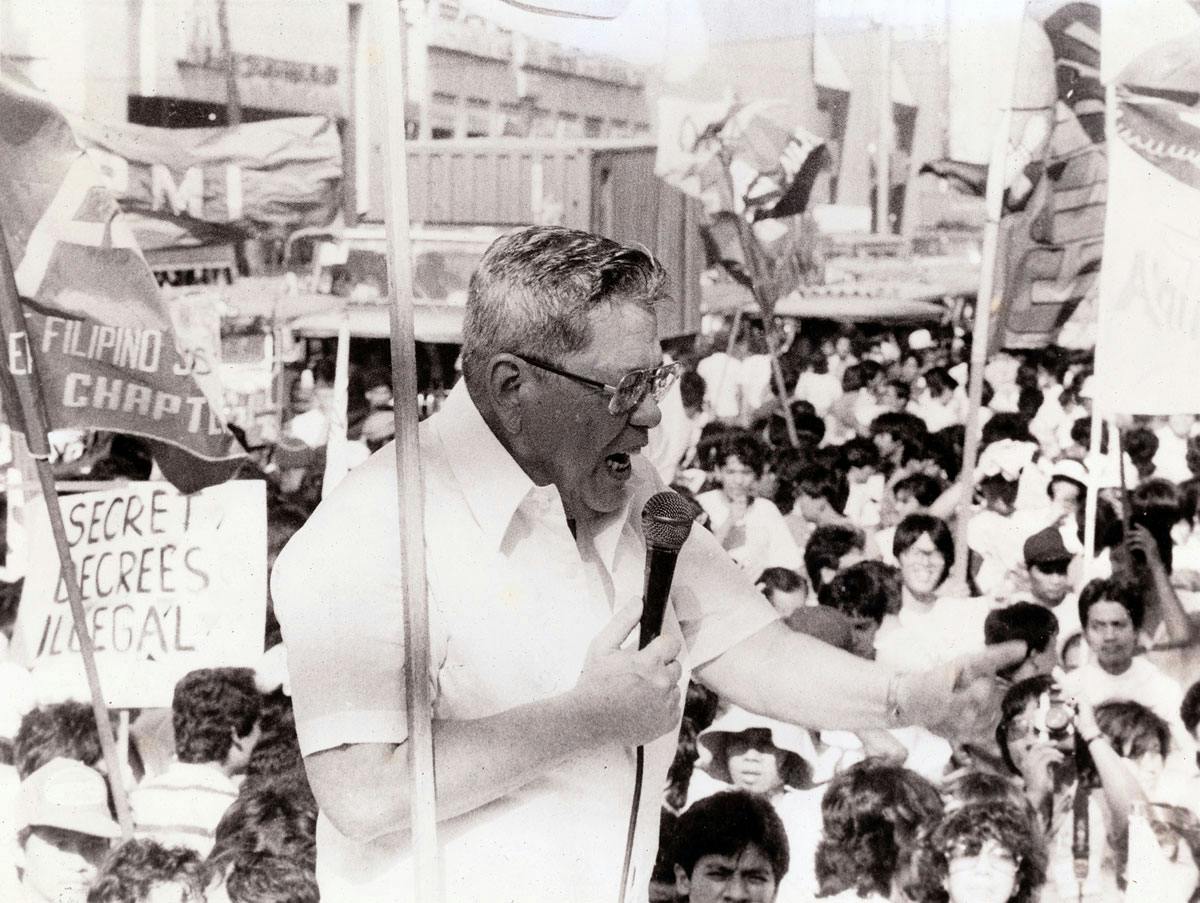
For lawyer Jose Manuel “Chel” Diokno, the “real legacy of martial law” is the weaponization of the law to silence dissent.
Talks about martial law are being revived due to alleged moves by the Duterte administration that are similar to what the late dictator Ferdinand Marcos did to keep himself in power from 1965 to 1986. Marcos placed the country under martial law from 1972 to 1981.
During the International Forum on Lawfare at the De La Salle University (DLSU) in Manila on Feb. 21, Diokno explained that Marcos “was responsible for ‘creating an oppressive climate of fear, obsequiousness and corruption that all but smothered the impartial administration of justice.’ ”
“This is rarely talked about, but we can also give credit to Marcos for completely destroying judicial independence and for perverting our legal profession,” Diokno, who is founding dean of the DLSU College of Law and chairman of the Free Legal Assistance Group (FLAG), said.
According to Diokno, Marcos started gutting the independence of the judiciary when he issued Letter of Instruction No. 11 on Sept. 29, 1972, shortly after he placed the nation under military rule. This required all government officials – including judges – to submit their letters of resignation that he could accept any time.
Then, the 1973 Constitution was ratified. Section 10, Article 17 of this Charter allowed incumbent judges to stay until the retirement age of 70, unless “otherwise provided by law or decreed by the incumbent President of the Philippines.”
“For 14 years, he could remove any judge at any time, for any cause or even without any reason. And he did,” Diokno noted.
He recalled a quote in the Civil Liberties Union of the Philippines’ Sept. 21, 1975 report titled “The State of the Nation After Three Years of Martial Law”: “Can we now view the judiciary as independent, able to protect the litigants and those accused of crimes, with no other end in view but truth, justice and fair play?”
Diokno said the more persistent effect of Marcos’s “lawfare” was that “by capturing the judiciary, (he) captured the entire legal profession” – as shown by the rise of networks of well-connected lawyers and government officials who outlasted the dictatorship and “still operate today.”
“He created mutant lawyers – glorified fixers who won their cases not because they had merit, but because they were close to Malacañang,” Diokno added.
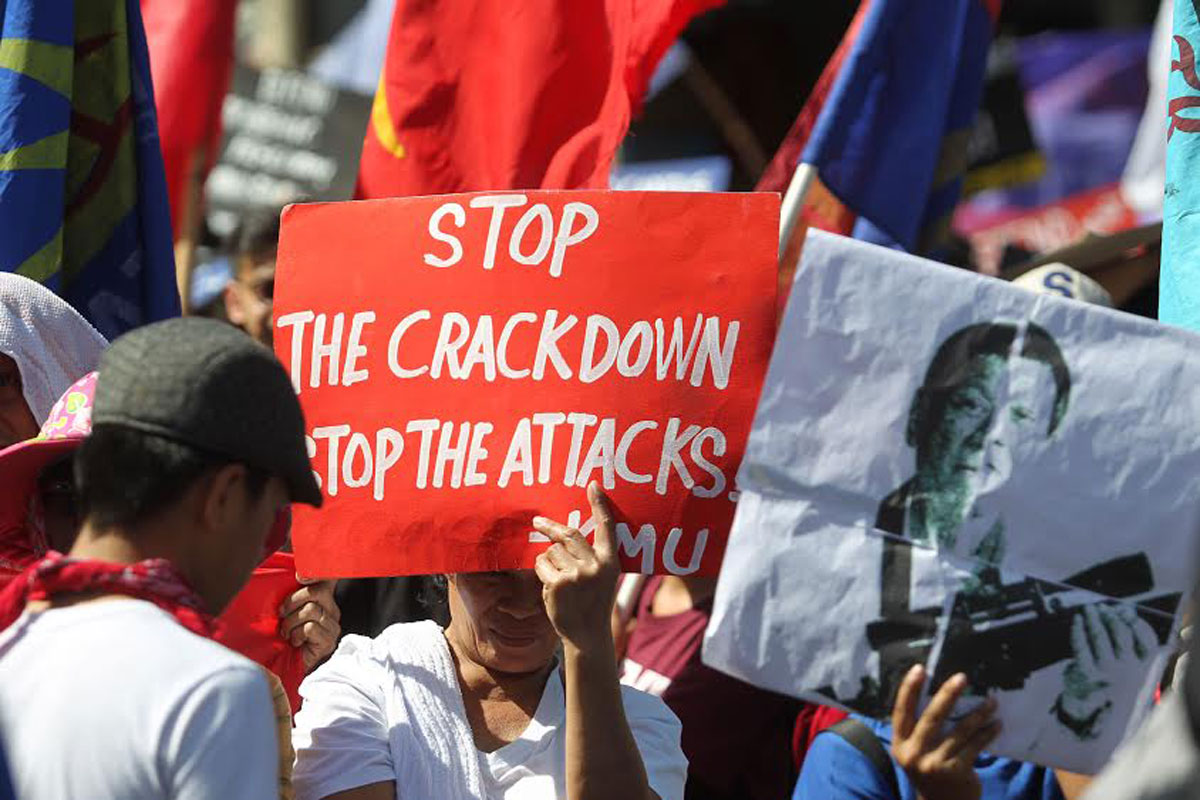
Law versus ‘lawfare’
But there were also other types of lawyers, Diokno noted, who defended human rights – “the very few brave and courageous people who fought for us” during martial law.
He stressed that the work of human rights lawyers remains far from done.
“Now our freedoms and institutions are under attack, and they’re using all sorts of weapons,” Diokno warned.
He said these weapons are guns, so-called narco lists, trolls, and the law – “the biggest weapon that they are now wielding.”
Diokno cited as example the narco lists that have the effect of intimidating judges, even – and perhaps, especially – as the accuracy of the first such list in 2016 was widely doubted because of the inclusion of a Samar judge who had been assassinated eight years before.
“They laughed. They say, ‘how can you include the name of a dead judge in a narco list?’ But think of it from the point of view of a living judge. They thought, ‘kung ’yung patay na nga na judge ay naisama sa listahan, paano pa kami na buhay pa (If a dead judge can be included in the list, how much more us who are alive)?’ ” Diokno said.
He stressed that the law was the most “effective weapon as far as putting critics in jail, removing them from office and silencing the press.” He cited the case of detained Sen. Leila de Lima, whom the Duterte administration accused of raising campaign funds for her Senate bid from drug dealers in the New Bilibid Prison when she was the secretary of justice. De Lima is held without bail on drug charges, based on testimonies by several NBP convicts, her former driver and other former subordinates.
Duterte also revoked the amnesty extended by former president Benigno Aquino III to former senator Antonio Trillanes IV. The government claimed to have lost the amnesty form submitted by Trillanes. This led to the revival of his rebellion case before the Makati City Regional Trial Court, in connection with the 2007 Manila Peninsula siege.
Then, there are the quo warranto cases filed by the Office of the Solicitor General to remove Maria Lourdes Sereno as chief justice and to seek the cancellation of the franchise of ABS-CBN Corp.
Diokno also cited the criminal and civil cases seeking to “neutralize” online media outlet Rappler and its editor Maria Ressa, which he said has a “chilling effect” and scares other news organizations from critical reportage.
“How then can we push back? Some of us tend to take a spectator point of view – they complain a lot, but don’t do much,” Diokno argued. “We can learn a lot about the lessons from the past, particularly martial law.”
He narrated the two-part strategy of human rights lawyers: confronting the Marcos regime with the detrimental effects of its policies and programs on the people, and helping the poor become aware of the causes of their situation so they could organize and mobilize themselves to overcome these causes.
Diokno said the government should be “challenged at every turn” when they impair the sovereignty of the people, and urged to interpret the law in favor of the poor. He said it is also important for lawyers to document “as thoroughly the effects of policies to show the world that these effects are so detrimental and blatantly unfair that they are shocking to the conscience.”
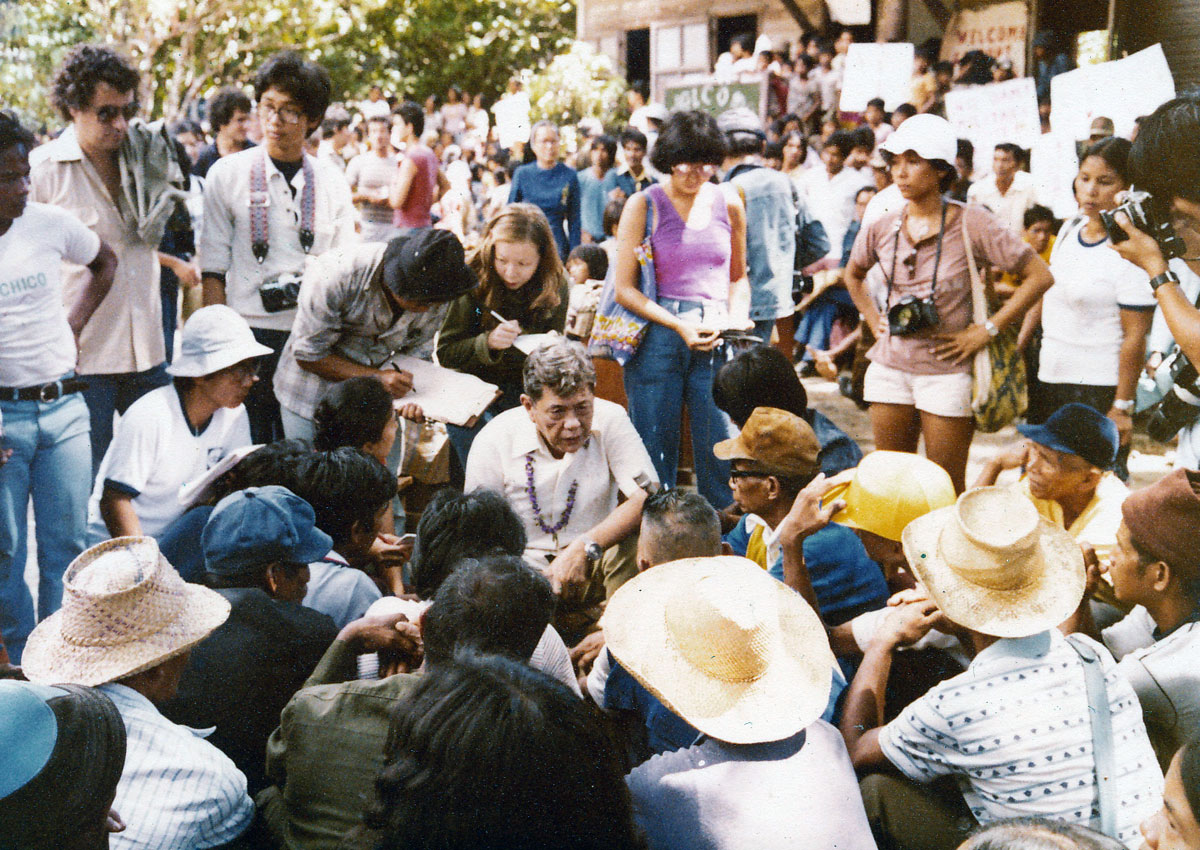
He said these tactics would be based on the belief that not all people in government are inherently bad, and that the government seeks the respect of other governments and wishes to have some semblance of legitimacy.
But Diokno said lawyers are ultimately supporting actors who help people mobilize and empower themselves, “because it is only when (people) act on their own that we can say that we are a real democracy.”
He emphasized that the power of the government “ultimately rests on our fear and submissiveness.” Hence, fighting an abusive government requires “developing the sense of self-respect in people that denies submission.”
“The strategies used to defeat a dictator before can be employed as well today for someone who wants to believe that he is a dictator as well,” Diokno said.
“The lawyers who stood for us in the past realized one thing: that just as law can be used to oppress, the law can also be used to empower and the law can also be used to liberate,” he added.
Diokno, who ran for the Senate in the 2019 elections but lost, is the son of the late senator Jose “Pepe” Diokno, who was imprisoned without charges during martial law but refused to believe in armed struggle against the Marcos regime despite his experience. Instead, Jose set up the FLAG, which his son Chel now leads, to fight the injustices of martial law.
Jose defended political detainees, tribal groups, peasants, social workers and activists, and used the legal system to promote economic, social and cultural rights.