Global Drug Reform Advocates Urge Governments To Protect Children, Deviate From Punitive Policies
The Global Commission on Drug Policy said governments worldwide should veer away from punitive drug policies and recognize children involved in illicit drug economies as victims in need of protection, healthcare, and support.
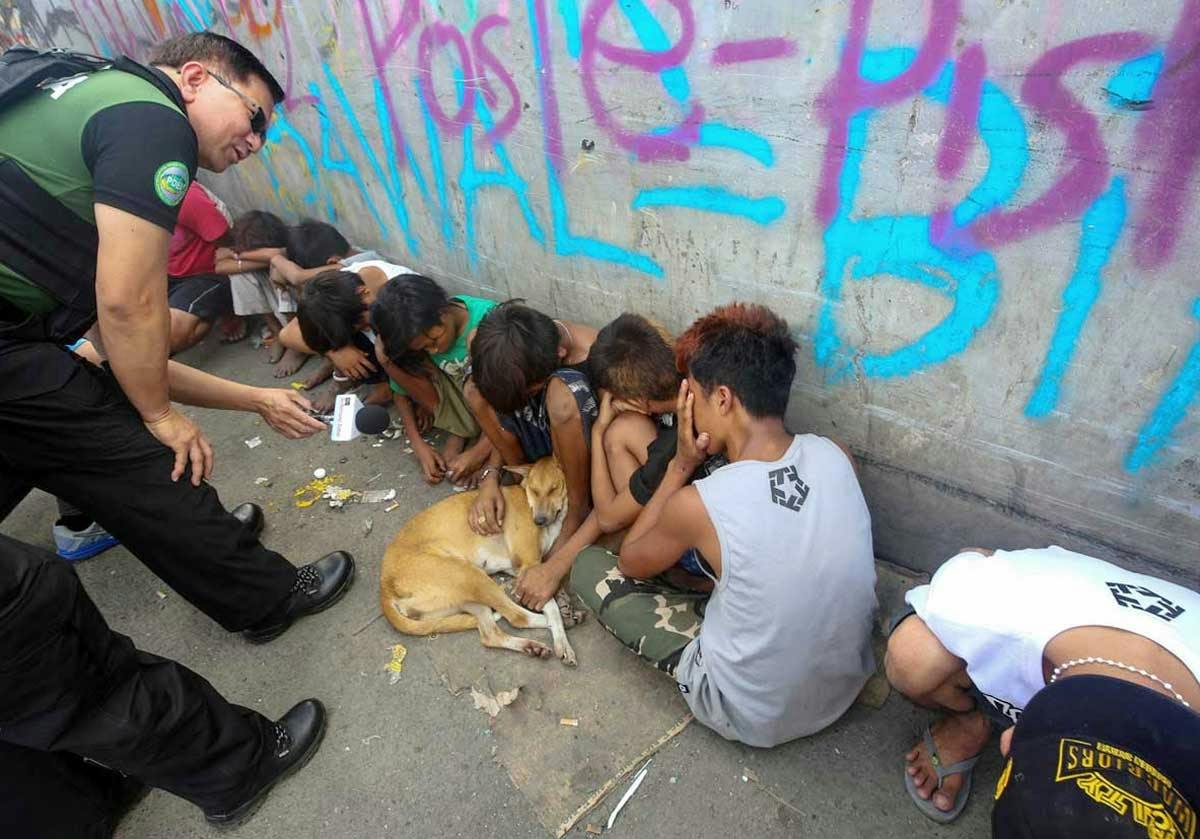
Commuters in Metro Manila and other urban areas are used to regular encounters with adolescent boys and girls sniffing “rugby” or “solvent” on small plastic bags or pieces of cloth, often with glassy eyes as they climb or hang around jeepneys.
“These rugby boys and girls represent an eyesore, a worrying concern and a huge crisis,” said a regular commuter, Dr. Mary Annjoy Aguadera, a child and adolescent psychiatrist of the government-run San Lazaro Hospital in Manila and Quirino Memorial Medical Center in Quezon City.
“Like other commuters, I look away but deep inside, we’re hoping to see cops nearby who would process them, take them to the social welfare department or halfway homes and provide what their families can’t.”
Aguadera, also a consultant of Manila Doctors Hospital, said it is sad that as the country continues to cope with the “war on drugs” that killed thousands, including children, “One can only think of the deeper reasons, such as neglect and abuse, as to why they are in the streets,” she said.
The psychiatrist is a volunteer medical professional in the Don Bosco drop-in center for street children in Makati City that provides the young people with shelter, food, and alternative learning such as vocational courses so that they do not become children in conflict with the law.
“It’s cliché but these children are the future of the country,” she said. “Don’t we all want them to stop sniffing ‘rugby’? Don’t we all want them to be protected and included in all programs and services?”
‘Include children in drug policies’
Human rights groups said nearly 122 children were among those killed during former president Rodrigo Duterte’s “war on drugs,” who died from stray bullets during police operations or were deliberately targeted in police crackdowns or for witnessing crimes.
Duterte’s trial begins Nov. 30 at the International Criminal Court for crimes against humanity for the extrajudicial killings.
With this backdrop, the Global Commission on Drug Policy (GCDP), urged governments worldwide to veer away from punitive drug policies and recognize children involved in illicit drug economies as victims in need of protection, healthcare, and support.
Launching a new policy push in September through a brief, titled “Making Children and Young People Visible in Drug Policy: A Child Rights-Based Agenda for Reform,” the group said children are affected by drug laws and policies regardless of whether they use drugs, and called for laws grounded in public health evidence, human rights, child protection, and meaningful youth participation.
GDCP consists of over 30 commissioners, former heads of state and prominent political, economic and cultural leaders who promote health and human rights-based drug policies.
The international body said children’s rights are left out from policy discussions; out of 300 resolutions passed by the United Nations Commission on Narcotic Drugs (CND) from 2000 to 2026, only 19 focused on children and youth.
GCDP Commissioner Juan Manuel Santos, former president of Colombia, said, “Young people are often among the most vulnerable where poverty, violence, and a lack of opportunities prevail. Illicit economies offer them opportunities that the legitimate economy does not.”
GCDP Chair Helen Clark, former New Zealand prime minister, said states must protect rather than penalize minors. “A policy cannot be called protective if it criminalizes children, separates families, denies them healthcare, and/or punishes those who have been exploited.”
The commission is urging governments to treat children and young people recruited into illicit drug networks as victims rather than offenders, holding accountable those who profit from their exploitation while providing youth with protection and education.
‘Make children visible’
Clark said, “Children are too often invoked to justify punitive drug policies, while the harms those policies cause them remain invisible.”
The GDCP drew four priority areas for immediate reform after consulting with 150 participants across 47 countries including the Philippines. These are:
- Ending the deprivation of liberty: Governments must eliminate criminal penalties for drug use and possession among youth and apply community-based support and restorative justice.
- Ensuring access to essential controlled medicines: Provide children necessary treatments for palliative care and pain relief and equitable access to age-appropriate medical formulations.
- Expanding youth-centric health and harm reduction: Push for confidential, non-stigmatizing health services integrated into wider mental health and recovery networks
- Protecting exploited youth as victims, not criminals: Youth recruited into illicit drug trades by organized crime – often driven by extreme poverty, displacement, or social exclusion – must be treated as victims requiring protection and education, rather than criminal offenders.
A resolve for children
In the Philippines, cases involving minors are guided by the Juvenile Justice and Welfare Act (Republic Act No. 9344), along with specialized protocols from the Juvenile Justice and Welfare Council (JJWC) and the Dangerous Drugs Board (DDB).
The DDB said youth involved in substance use are considered “children at risk” or “children in conflict with the law” if they are apprehended under RA 9165 or the Comprehensive Dangerous Drugs Act of 2002.
While rugby-sniffing minors and other children who use drugs are apprehended from time to time, the DDB said the response, while needing constant improvement, responds by ensuring child-sensitive handling by a multi-disciplinary team of social workers, psychologists, medical doctors and local government officers.
The DDB said rugby or solvent is the most common substance of abuse among marginalized children, as inhaling it “produces an intense, rapid high that can causes euphoria,” which serves to dull their hunger and mental state of distress.
It acknowledged that substance abuse among hundreds of street children is a long-standing societal issue that requires proper public health and legal intervention.
The agency said it is working on further consideration of harm reduction measures through more research and strengthening child support systems, and said it is equally important to also involve children’s voices in reforming the country’s drug policies
Meanwhile, debates continue over proposals to lower the minimum age of criminal responsibility from 15 years old down to 12 or 13.
President Marcos has directed the DDB, Philippine Drug Enforcement Agency, Philippine National Police and local government units in all urban centers and tourist destinations to remove and rescue children from the streets and put them in rehabilitation programs.