



#Laban! Nurses Cry But They Carry On
Medical workers strive to fulfill their sworn duty to care for the sick, even if this will put their own health or lives at risk.
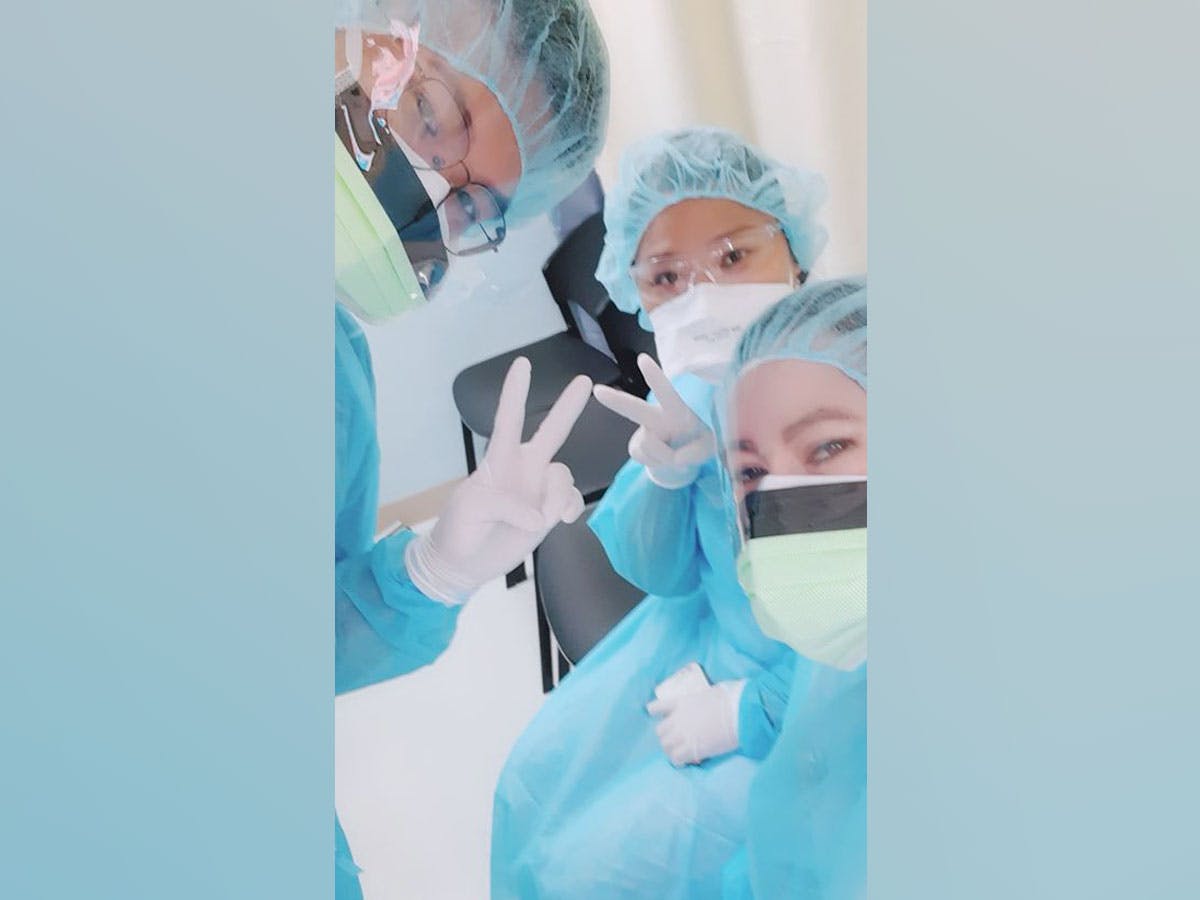
On Feb. 1, the day the Department of Health confirmed the country’s first case of coronavirus disease 2019 or COVID-2019, nurses and other health workers felt fear and anxiety.
Their sector remains in the front line to deal with the illness head on while millions retreat to the comfort of their homes as the government struggles to contain the spread of COVID-19.
“The nurses cried because they already got this sense of foreboding. They knew something bigger was going to come and they were so worried about that,” Jocelyn Andamo, secretary general of Filipino Nurses United, told The Philippine STAR.
The first case was a 38-year-old Chinese woman who arrived in the country from Wuhan City, China – the epicenter of the COVID-19 outbreak – on Jan. 21 via Hong Kong. Her case was announced on Jan. 30 after she sought consultation on Jan. 25 due to mild cough and was confined in San Lazaro Hospital in Manila. She recovered and went back to China.
Her partner, a 44-year-old Chinese man, was also confined in San Lazaro Hospital in Manila after testing positive for COVID-19. He died of severe pneumonia on Feb. 1 and was the first recorded death outside China due to the new virus.
Melanie Padilla, a nurse in a hospital in Metro Manila, admitted that some of those in her profession cry when they find a situation overwhelming.
“Oo, ’yung iba po umiiyak na kasi napaka-risky po ng work namin, kami po frontliner … Napaka-risky po sa health namin at sa mga mahal namin sa buhay,” Padilla said in an interview via Facebook messenger.
Padilla is from Tanay, Rizal, so she opted to stay in a dormitory near her workplace to avoid the hassle of traveling to and from work. From Tanay, it takes her four hours to reach the hospital, or a total travel time of eight hours each day. She reports for duty for eight to 12 hours a day and the shifting requires her to work at night.
Her co-nurses who live far from the hospital find the daily commute difficult.
“Pero it’s our profession po kaya susundin namin ang sinumpaan naming tungkulin,” Padilla declared.
As of March 14, there were 12 health workers and another employee who is not involved in health services at the Philippine Heart Center (PHC) categorized as patients under investigation (PUIs) after they were exposed to an 88-year-old Filipino female patient – identified by the Department of Health only as PH37 from Pasig City – who tested positive for the virus.
Many others were possibly exposed to the patient as she was admitted to the PHC on March 6 and died six days later.
Prior to this, a 28-year-old doctor from San Juan City – identified as PH31 –had tested positive for COVID-19 on March 10 at The Medical City in Pasig. She served as the attending physician of the 86-year-old American (PH9) from Marikina City who died on March 14, making him the ninth COVID fatality in the Philippines.
PH9 was the source of infection for four others such as his 82-year-old Filipino wife (PH29), his 42-year-old niece (PH27) and a couple, both aged 69, who are known as PH28 and PH30.
As of March 16, the Department of Health (DOH) had documented a total of 142 confirmed cases of COVID-19, including a 13-year-old Filipino girl from Quezon City who had no history of travel and exposure to the virus. The death toll stands at 12.
Pat on the back
Andamo admitted they were disappointed when President Duterte failed to acknowledge the health community when he made a public address placing the entire Metro Manila under “community quarantine” on March 12.
“While we are committed to do our sworn duty to serve the public, it is very important for us to know that our value is being recognized by the government. We are getting anxious because we do not feel the government’s support,” she said.
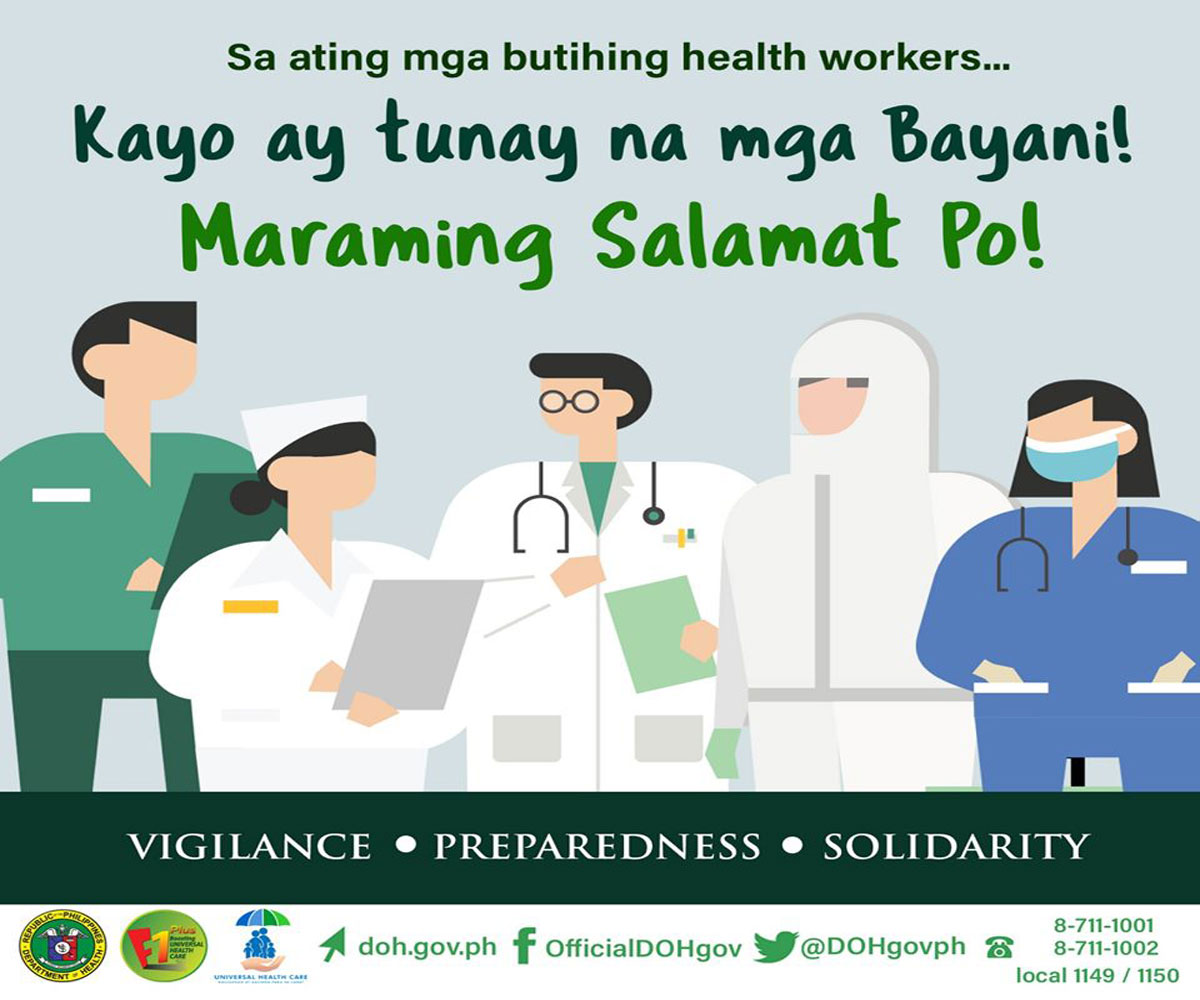
But DOH Secretary Francisco Duque III has expressed gratitude to Filipino doctors, nurses, medical staff and other public and private health workers who continuously “fight back against this formidable virus at hospitals, clinics, health centers and communities in Metro Manila and across the entire Philippines.”
“For all the brave and selfless Filipinos working at the frontlines to stop COVID-19, I have a simple message: maraming, maraming salamat po sa inyong serbisyo (many, many thanks for your service),” he said during the flag ceremony at the DOH on Monday, March 16.
Duque assured the health workers that the “tireless work at the frontlines of the COVID-19 pandemic is an inspiration to the government and to the Filipino people.”
“Your work against COVID-10 is nothing short of heroic… I want you to know that we value each and every person in the frontline. We are exerting all effort to ensure you are protected and equipped,” he said.
According to Duque, all the sacrifices of these front-liner workers are deeply appreciated.
“I also hope to see you in better times, to personally embrace and thank you for your heroism. Stay strong and keep heart. The Filipino people will never forget your heroism in the face of this great adversity,” he stressed.
Overworked, lacking in PPE
But Andamo lamented that they do not feel protected while attending to suspected and confirmed COVID-19 patients. She said that in both public and private hospitals, supplies of face masks and personal protective equipment (PPE) are running out, compromising the safety of the health workers.
For his part, Alliance of Health Workers chairman Robert Mendoza said many of their members have been complaining that they are now lacking in PPE supplies.
“They are scared because masks are running out. Most of them use masks for more than three hours so the masks are no longer effective. That means they are not protected and they are prone to acquiring the virus,” he said.
Mendoza added that COVID-19 had aggravated the conditions of health workers who are overworked and underpaid.
He maintained that many health workers are now on duty for 12 hours seven days a week, but they do not get proper compensation such as hazard pay and overtime pay, especially those in public hospitals.
Getting infected
Philippine Medical Association (PMA) president Jose Santiago echoed Andamo’s sentiments: “We should inspire them and also give them a morale booster for them to continue their dedication. So probably a simple ‘thank you’ will do to recognize the immeasurable sacrifices of our doctors.”
Santiago said they are concerned over reports of a doctor who got infected and hospital personnel who have become PUIs when they developed symptoms after exposure to confirmed COVID-19 cases.
If this continues, Santiago warned that health care facilities might run short of frontline workers.
“We are preparing for some kind of contingency that we might have later on, like the shortage of doctors, because they are exposed to PUIs or (confirmed) patients. We have to really make sure doctors remain as doctors and not as patients,” he said.
Santiago pointed out that doctors handling COVID-19 cases are also concerned about the safety and welfare of their families so they strictly observe infection prevention measures.
“We don’t want to be the ones to expose our family to this virus, so we really observe precautionary measures. We should be wearing protective gear. We do hand washing before leaving the hospital and upon checking into the house. We sanitize or take a shower before interacting with our family,” he said.
Stigma
Andamo said another problem that health professionals must deal with is stigma, citing the case of one of them who has reported receiving “probing looks” from strangers when she took public utility vehicles while in uniform.
The nurse surmised that her co-passengers, one of whom avoided sitting beside her, were worried that she might be carrying the virus.
“It really pains us that people are avoiding us. They don’t realize that we are also risking the safety of our families when we fulfill our duties,” she confessed.
Andamo said nurses and other health workers attending to COVID-19 cases should “ideally be quarantined so they do not have to go home,” thus protecting their families and other people in case the health workers are infected.
“The problem, however, is that if health workers undergo quarantine, the period they are in quarantine is deducted from their leaves, which is unfair. Their subsistence allowance and hazard pay are also deducted for that period, which is unfair,” she disclosed. – With Aurea Calica


