House, Senate Probe Flood Control Projects
At the Senate, expected to clash are Blue Ribbon committee chair Rodante Marcoleta against Minority Leader Vicente Sotto III and Senators Francis Pangilinan and Panfilo Lacson over disagreements on the flood control probe.
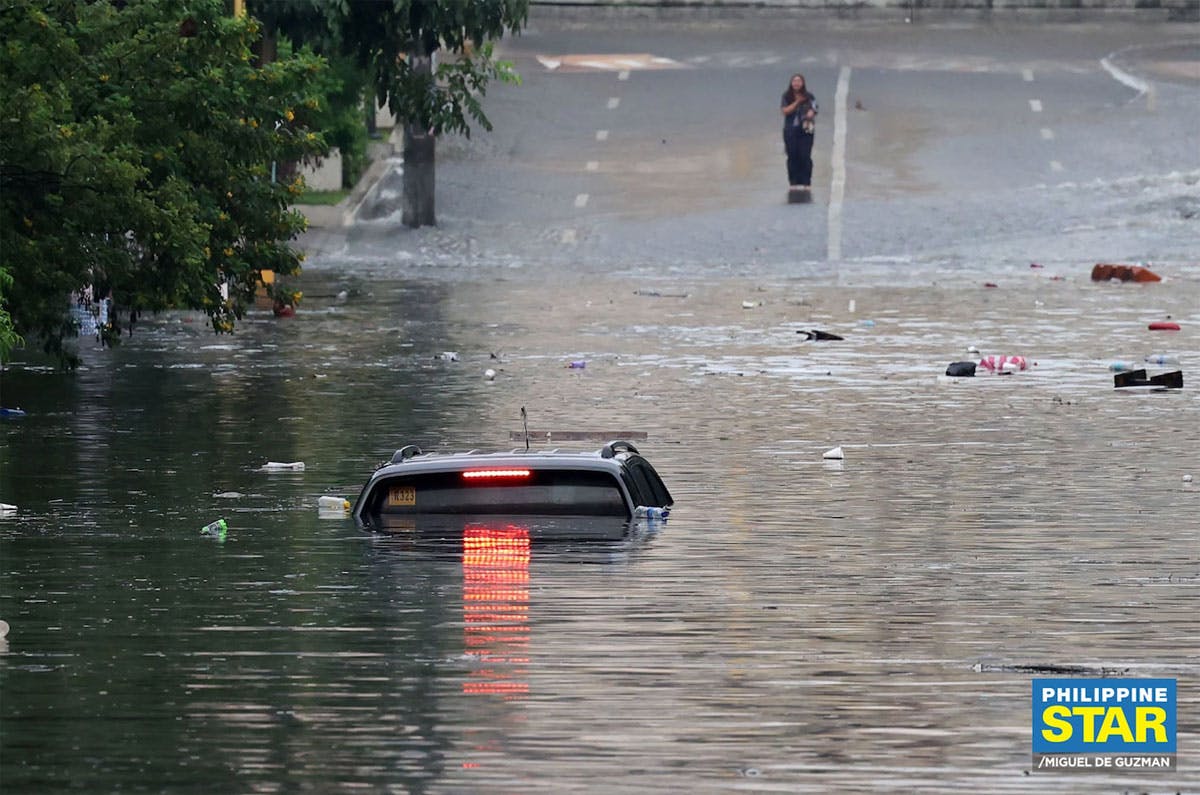
Tension is brewing in both houses of Congress as separate hearings are conducted this week on anomalous flood control projects.
At the Senate, expected to clash are Blue Ribbon committee chair Rodante Marcoleta against Minority Leader Vicente Sotto III and Senators Francis Pangilinan and Panfilo Lacson over disagreements on the flood control probe.
Meanwhile, at the House of Representatives, public accounts panel chair and Bicol Saro party-list Rep. Terry Ridon will lead the infrastructure committee hearing on flood control corruption tomorrow.
Marcoleta lashed out at colleagues as he said he felt undermined when they called for the creation of an independent body to probe flood control anomalies.
Sotto and Pangilinan were among those who caught Marcoleta’s ire, after they both pushed for an independent people’s commission (IPC) to investigate flood control corruption.
Sotto filed a bill over a week ago proposing the creation of an IPC, while Pangilinan suggested that the IPC be led by former ombudsman Conchita Carpio-Morales, former Department of Public Works and Highways (DPWH) chief Rogelio Singson and Baguio City Mayor Benjamin Magalong.
“My understanding is that you are insulting me. I don’t like to be insulted. If he (Pangilinan) wants to replace me (as Blue Ribbon chair), he should say so. Show everyone that he is better equipped to fulfill the mandate given to that committee,” Marcoleta said in his public affairs program on Net25 on Saturday, Aug. 30.
On Sotto’s proposal, Marcoleta said he took it as a sign that the former does not trust the Blue Ribbon committee.
“We can debate there. If they don’t like the way I do things, we can debate,” he added.
Marcoleta also took aim at Sen. Panfilo Lacson, who introduced a motion to reschedule the hearing today due to a scheduling conflict with the Development Budget Coordination Committee (DBCC) briefing, which also happens today, Sep. 1.
The DBCC would be briefing senators about the government’s budget and assumptions behind it such as economic growth targets, inflation, deficit goals and borrowing levels so they can scrutinize and align legislation with the administration’s fiscal priorities.
“I said, go ahead and attend the DBCC hearing. You are free to choose so why should we reset? It’s like they don’t want me to start the hearing,” Marcoleta said.
Responding to Marcoleta, Lacson clarified that he was not targeting the senator.
“To set the record straight, no one is interfering in his work. We all want to have good governance,” Lacson said on Sunday, Aug. 31.
“I was not asking for him to reschedule his hearing. I merely asked either hearing to be held on another date, because they are both important. I am not belittling his committee’s hearing, and I recognize his mandate as chairman,” he added.
Lacson explained that he was issuing the statement to correct any misinterpretations his words may have created, and that he doesn’t “want a fight but I won’t back down from one.”
Lacson said he intends to attend the finance committee session but may sit in for the opening of the Blue Ribbon inquiry if it starts on time.
He added that during the DBCC briefing, he will raise questions on government borrowing and disbursement, the DPWH’s budget surpassing education’s, the implementation of Executive Order 82 on Regional Development Councils, the use of unprogrammed appropriations for flood control projects and measures to improve transparency in public spending.
Infra comm hearing
Meanwhile, Ridon said the Government Procurement Policy Board and the Philippine Contractors Accreditation Board must also testify, given new allegations that corruption may have tainted even the accreditation process for contractors.
“We will invite all those that need to be invited as resource persons, including officials of the DPWH, as well as those contractors whose names have been mentioned by the President, and who managed to get a big chunk of the flood control projects,” he said.
Bagong Henerasyon party-list Rep. Robert Nazal, on the other hand, is calling for stronger safeguards to stop the misuse and diversion of earmarked funds, stressing that transparency and accountability must always guide their utilization.
“We want to put a stop to the misuse or diversion of these funds. Transparency and accountability must be non-negotiable when it comes to earmarked revenues,” he said, as he filed House Bill 1021, or the proposed “Earmarked Revenues Accrual and Utilization Act.”
This is to establish clear conditions for the accrual, monitoring and disbursement of earmarked revenues, which provides that while these funds may be temporarily pooled under the One Fund Concept for urgent needs, they must remain fully available for their original legal purposes.
Ghost projects?
At least two cities whose flood control projects have been “completed” still have budget allocations in the National Expenditure Program for 2026, lawmakers have discovered.
House Deputy Speaker and Antipolo City 1st district Rep. Ronaldo Puno cited the case of Marikina 1st district Rep. Marcelino Teodoro, who was surprised to learn that finished projects in the city continue to receive fresh allocations.
“The most funny thing here is that of Congressman Marcy when the proposed NEP for 2026 came. And here we were seated beside each other. He said: ‘Secretary, I will have to return this all to the DBM’ (Department of Budget and Management),” he narrated.
“When asked why, he said all of the projects listed down in the NEP were all completed,” Puno said during a news conference.
In Antipolo City, the exact opposite happened.
“I was given a NEP copy of our district engineer. I was able to get a copy of what the regional director had submitted to the national government. It turned out that we didn’t have the listed projects which we considered priority,” Puno recalled.
“These were not new requests but part of an ongoing program,” he added, noting that without continuity in the succeeding stages, communities such as Barangay Mayamot and Kingsville (subdivision) – both in Antipolo City – would remain inundated every single rainy season.
He described how Antipolo had already completed the first stage of a flood control system that diverts water away from Marikina. “It’s pitiful for residents of Kingsville,” he said, pointing out that residents remain underwater despite projects supposedly being budgeted.
Puno lamented that while projects vital to his district vanished, new allocations of unknown origin suddenly appeared in the NEP, some inflated or mangled beyond recognition.
“This one is saddening. Our project has been replaced and we don’t even know where it came from. Hundreds of millions, we don’t even know where it was sourced. The P70 million project suddenly became P1 million. And the P100-million was made P700 million. They really messed this up!” he quipped.
Science-based flood control
Amid the persistent rains and massive flooding, the Department of Science and Technology has called for a science-based and integrated approach to flood control programs.
Science Secretary Renato Solidum Jr. said on Thursday that the government should adopt an integrated water resource management program that provides tailored interventions for specific river or sub-river basins.
“DOST can provide the science and technology to make sure that these things are mapped well and the data are used in planning,” Solidum said in a press briefing during the Regional Science, Technology and Innovation Week in General Santos City.
He noted that not all flooding have the same solutions, stressing that government projects should be carefully assessed to avoid worsening the problem.
“You build a road, you elevate a subdivision by 10 meters — that’s basically a dam if there’s no proper drainage. The water has nowhere to go. This is what we should be thinking of, what the effect of the current project to the next flood is,” he said.
Solidum also said that the DOST can provide digital elevation models, forecasting tools and other data to assess the capacity of rivers and drainage systems to handle heavy rainfall brought by climate change and rapid urbanization.
He suggested incorporating flood control programs into a Geographic Information System or GIS map to help planners and decision-makers determine if proposed projects are compatible with the surrounding environment and infrastructure.
Solidum also underscored the role of local governments in managing floods, citing countries like France where local authorities lead efforts with strong support from the national government.
Catholic Bishops’ Conference of the Philippines (CBCP) president Kalookan Bishop Pablo Virgilio Cardinal David has called for ecological conversion amid the continued flooding and environmental destruction, announcing that Pope Leo XIV has approved the first Sunday of September as the “Votive Mass for the Care of Creation.” – With Mark Ernest Villeza, Evelyn Macairan