



HOLIDAY SEASON: Traffic, Overcrowding Back; DOH Warns Versus COVID Super Spreaders; Experts Suggest 10 Persons Per Gathering
Filipinos have been encouraged to go out of their homes to revive the economy amid the COVID-19 pandemic, but authorities emphasize that physical distancing – aside from wearing face mask and face shield – is important.
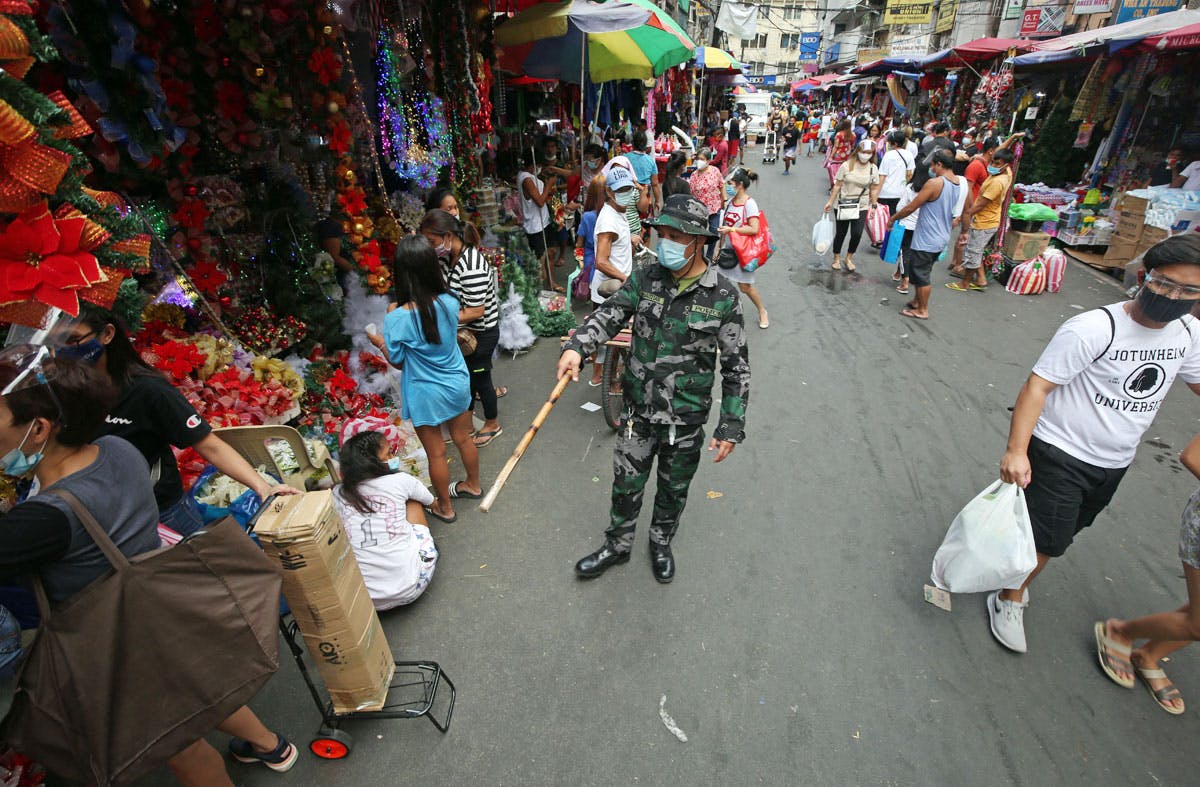
Heavy traffic is back, along with overcrowded shopping areas, which are typical during the Christmas season in this country.
But while the government has encouraged Filipinos to go out of their homes to revive the economy that has been battered by the lockdowns imposed to contain the coronavirus disease (COVID-19) pandemic, authorities are reminding the public that this cannot be done the way it used to be.
Shopping areas like Divisoria in Manila are now being watched after large crowds trooped there over the weekend for affordable merchandise. Instead of coming together to celebrate the holidays, virtual reunions are being encouraged instead of large gatherings to avoid a surge in COVID-19 cases. Christmas parties have been banned.
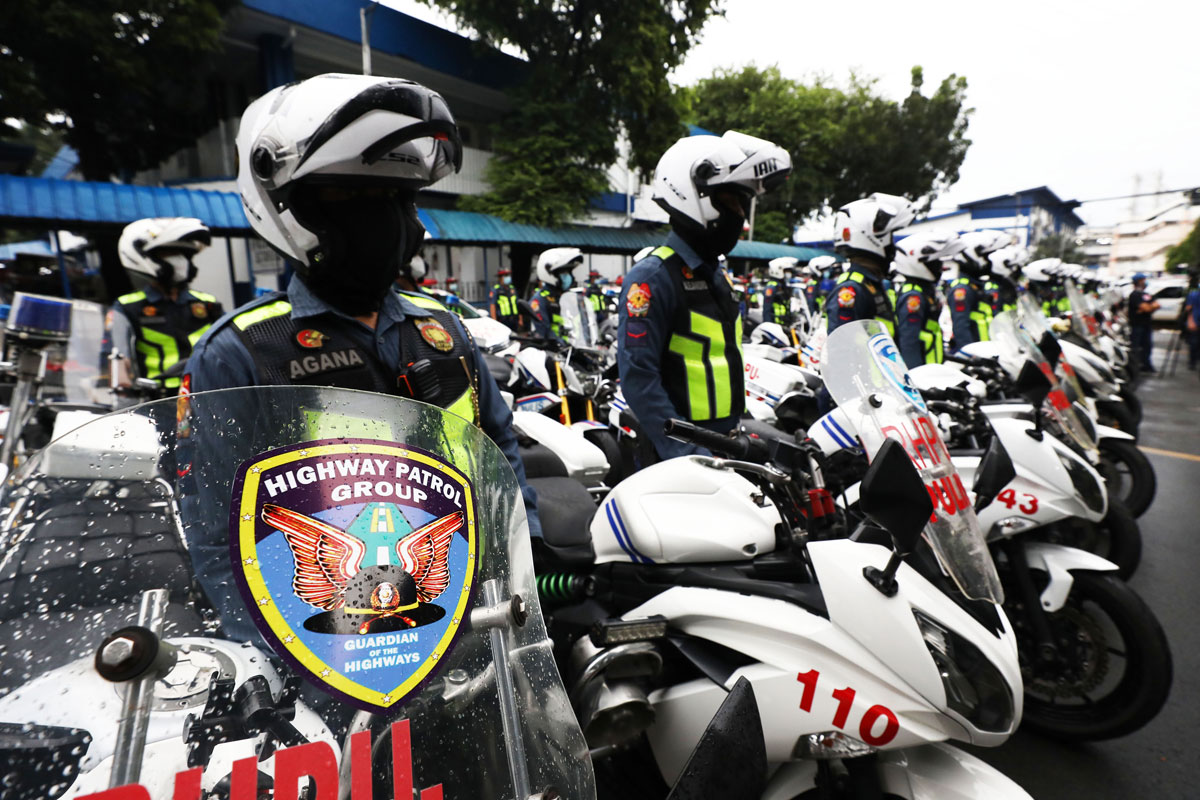
Metropolitan Manila Development Authority (MMDA) traffic chief Edison Nebrija disclosed that the agency is preparing to manage the expected holiday traffic as 60 to 70 percent of pre-pandemic traffic is back on the roads amid the general community quarantine (GCQ) imposed in the capital region.
Speaking with “The Chiefs” on One News/TV 5 on Tuesday night, Nov. 24, Nebrija said this was only a rough estimate, based on the 75 percent operational capacity allowed on certain business establishments under the extended GCQ.
“My rough estimate is at 60 to 70 percent because when we opened up 30 percent (operational capacity) on industries, we also saw a surge of vehicles at around 50 percent last August,” Nebrija noted.
The MMDA recorded 210,000 vehicles on the road along EDSA as of Aug. 31, down from the 405,000 in December 2019.
To help businesses recover, Nebrija said the MMDA would continue to manage traffic “as it is” during the Christmas season, with no traffic restrictions in place such as the number coding scheme and truck ban.
“Before, we have number coding and truck ban. But we are trying to help the economy, for business to spark the movement of the economy. Now there’s really no specific policy that will address the Christmas holidays. We are not talking about it right now. We will be managing the traffic as it is,” Nebrija said.
According to Nebrija, the increased number of persons allowed outside their residences has also contributed to the traffic volume approaching pre-pandemic levels. He stressed that it is beyond the MMDA’s mandate to prevent people from going outside amid the pandemic.
“We don’t have a breakdown of who are really on the road. We’re not doing checkpoints anymore, and not conducting segregation of authorized persons and unauthorized persons outside residence anymore. We’re just catering to everyone on the road, practically,” Nebrija explained. “Surprisingly, even we cannot fathom the fact that there are so many people and motorists on the road.”
The MMDA is also preparing to improve the EDSA Busway during the new normal by closing down more U-turn slots along EDSA and bordering the carousel route with steel bollards and concrete barriers from Monumento to SM Mall of Asia (MOA) to ensure the seamless travel of buses.
Six U-turn slots have been closed to give way to the carousel route, worsening traffic for private vehicles.
The aim of the Busway is to cut travel time from Monumento to MOA to an hour and a half, reduce the travel from Cubao in Quezon City to Makati City to just five minutes, and make buses follow a scheduled pick-up of passengers at intervals of a minute and a half along the route, Nebrija said.
Bus operators would be part of a consortium in sharing the income equally among themselves and the drivers who are part of the carousel route, he added.
“The thing is, we still have old drivers’ mentalities and attitudes of (lingering) in bus stations, waiting for passengers. This (new) scheme is designed for passengers to wait for buses and not the buses for the passengers. Whether you’re full or not (of passengers), you have to leave within a period of a minute and a half so that we can maintain the headway,” Nebrija stressed.
Asked about the traffic affecting private vehicles due to the closures of six U-turn slots, Nebrija disclosed that the MMDA is also planning to allow buses to ply the elevated ramps so the U-turn slots below the ramps can be used by private vehicles.
“There are talks right now on a plan of coming up with an elevated ramp for the Busway, so that at some portions of that stretch of EDSA, buses will ply that route and the U-turning private vehicles would take the lower part of that ramp,” Nebrija said.
“On an elevated U-turn, we will see if that will also be feasible. The thing is we are limited by the height of U-turn because of the Metro Rail Transit-3,” he added.
‘Super spreader’ events
The Department of Health (DOH) cautioned on Wednesday, Nov. 25, that this holiday season can become a “super spreader” event for COVID-19 if the public will not strictly observe health and safety protocols.
“A mass gathering is a potential for super spreader event, especially if we go to crowded places where there is no more one-meter physical distancing,” DOH Undersecretary Maria Rosario Vergeire said in a press briefing.
Vergeire added that an enclosed space that is not well-ventilated and where people gather can also turn into a super spreader site for the virus.
“That’s why this holiday season, the DOH already came up with an advisory on what to do to prevent super spreader events,” she said.
Coronavirus superspreading means “transmission is suddenly amplified” from a single person who spreads the virus to a “proportionately large number of contacts.”
In August, a wedding in Maine in the United States became a landmark case for super spreader event for COVID-19 when many guests reportedly ignored protocols such as wearing of masks and physical distancing.
The virus spread hundreds of miles, infecting 177 individuals, seven of whom died.
With the end of the COVID-19 still nowhere in sight, people should always keep their guard up and learn to live with the virus, Vergeire underscored.
Even if there are many promising vaccines for COVID-19 being reported, she said the key to surviving the epidemic is “behavioral change.”
Vergeire said minimum health and safety standards could not be compromised even with the reopening of the economy.
“We cannot always stay this way. Somehow the economy has to open and we must not forget to observe the minimum health standards at all times,” she underscored.
Minimum health and safety standards include the wearing of face mask and face shield, maintaining physical distance of at least one meter and regular handwashing or hand sanitation.
The DOH has been advising against touching the face because the primary entry points of the virus are the eyes, mouth and nose.
DOH Secretary Francisco Duque III has also expressed concern that the holiday season would lead to a surge in COVID-19.
Duque stressed that the downward trend of COVID infection in the country should not drive people into complacency.
"The DOH has formed a contingency plan so we would be ready in case there is what we call a post-holiday surge in the number of cases. I would like to remind everyone that the downward trend in the number of cases should not make us lenient or complacent,” Duque said during a meeting of the government’s pandemic task force in Davao City on Monday, Nov. 23.
DOH Department Circular 2020-0355, titled “Ensuring minimum public health standards observed in the coming holidays and celebrations,” classified online masses, noche buena (Christmas Eve meal) or media noche (New Year’s Eve meal) with one’s family at home, online video calls and online shopping as safe activities.
Holding a small gathering outside one’s home or in public areas that are compliant with physical distancing and restrictions on mass gatherings is considered a moderate-risk activity. High-risk activities include attending indoor religious activities with many attendees, singing, speaking loudly, physical contact, shopping in crowded malls and flea markets, and large gatherings inside a building.
Under the circular, the public is advised to prefer activities with only a short duration of contact, avoid high-touch surfaces, ensure proper ventilation at venues, and increase physical and mental resilience.
According to Vergeire, the country’s COVID-19 cases have been “plateauing,” with fewer than 2,000 new cases being recorded daily. But she still emphasized the need to reinvent the way holidays are being celebrated. Even traveling is not advisable due to the raging pandemic.
The OCTA Research Group also urged citizens to be cautious in joining or organizing social gatherings, citing evidence from Europe and North America that increased social mixing among households is driving the second wave of COVID-19 in these parts of the world.
“To prevent a similar wave here in the Philippines, we encourage the government and LGUs (local government units) to enforce the current general community quarantine limit of 10 persons per gathering in Metro Manila and to discourage office parties and other social events, especially as we approach the Christmas season,” OCTA said.
“Family gatherings should be limited in size and should be celebrated outside to mitigate transmission,” the experts added.

Uptick in cases
In the past week, there has been an uptick of COVID-19 cases in Metro Manila and its surrounding regions even as the situation in Baguio and Davao cities improves, OCTA reported.
In its latest monitoring report released on Wednesday, the group – composed of independent experts from the University of the Philippines and University of Santo Tomas – said the average number of daily new cases in Metro Manila slightly increased from 352 on Nov. 10 to 16 to 373 on Nov. 18 to 24.
It said that nine out of 17 local government units in the region showed an increase in cases, including Quezon City and the cities of Caloocan, Marikina, Makati, Mandaluyong, Paranaque, Pasay, Navotas and San Juan.
However, OCTA noted the most indicators such as hospital occupancy, attack and positivity rates remain low in most local government units.
The attack rate refers to the number of new cases daily per 100,000 population, while the positivity rate refers to the number of people testing positive out of the total tests conducted.
The reproduction number, which indicates the average number of people who contract a contagious disease from an infected person, slightly increased from 0.76 to 0.83.
Makati remains the only local government in the region that was identified as high risk, mainly due to the high hospital occupancy rate of 80 percent, which is beyond the 70 percent critical threshold identified by the DOH.
Aside from Metro Manila, OCTA also noted an increase in cases in Central Luzon and Calabarzon, particularly in the provinces of Tarlac, Bulacan, Bataan, Laguna, Quezon and Batangas.
In Calabarzon, hospital occupancy remained above the critical threshold in Batangas City and Lucena while positivity is high in Quezon and Laguna.
The positivity rate is also high in the provinces of Bulacan and Tarlac in Central Luzon.
There was also an increase in cases in Western Visayas particularly in Negros Occidental and Bacolod, as well as in Pagadian in Zamboanga Del Sur and General Santos in South Cotabato.
The researchers said it is not clear if the increase in new cases could be explained by the rise in mobility due to the opening of the economy, the effect of the recent typhoons, or deteriorating compliance with minimum health standards.
“But what is clear is that if this trend continues, it would indicate that we are beginning to see a gradual rise in cases of COVID-19,” the report read.
“While this may be a cause for concern, it should not be a cause for alarm or panic. The situation in the country is still manageable. However, the data reinforces the view that the current positive trends in the Philippines and in Metro Manila are tenuous and can easily be reversed if the government, the private sector and the public become less vigilant and complacent in the fight against COVID-19,” it added.
High-risk areas
The cities of Baguio and Davao, which OCTA last week identified as areas of serious concern, were still identified as among the high-risk areas in the country.
But it noted that the situation in the two areas “has significantly improved and continues to improve due to the appropriate and aggressive response of these local government units to reverse the surge of COVID-19 cases in their areas.”
From 110 as of Nov. 10 to 16, the average number of daily new cases in Davao City dropped to 78 on Nov. 18 to 24. Baguio also recorded a drop from 38 to 24 average daily new cases in the same periods.
Hospital occupancy in Davao City is slightly above the critical threshold at 73 percent, while the attack rate in Baguio City is still high at 8.3 percent.
Other areas identified as high-risk include Lucena in Quezon, Batangas City, Capas in Tarlac and Pagadian in Zamboanga del Sur.
“We urge the (LGUs) concerned to further intensify their efforts at testing, tracing, and isolation to reverse the increase in transmissions in their communities,” OCTA said.
“Furthermore, in the identified high-risk LGUs, the implementation of more aggressive and effective localized lockdowns with stricter border controls is urgently needed to suppress further viral transmissions,” it added.
Vergeire said the critical care utilization is at 50 to 53 percent, classified as “moderate risk.” This pertains to the occupancy rates of COVID-19 wards, isolation beds and intensive care unit beds in hospitals and the utilization of mechanical ventilators.
“In general, we see that this is a good indication for us. It means that our health system is cable to cope with the cases that we are having,” Vergeire added. – With Alexis Romero


