From ‘Snow White’ to ‘Raya’: How The Depiction Of Women In Animated Films Has Evolved Through The Years
Feminism has finally become a central message in the shows our kids watch.
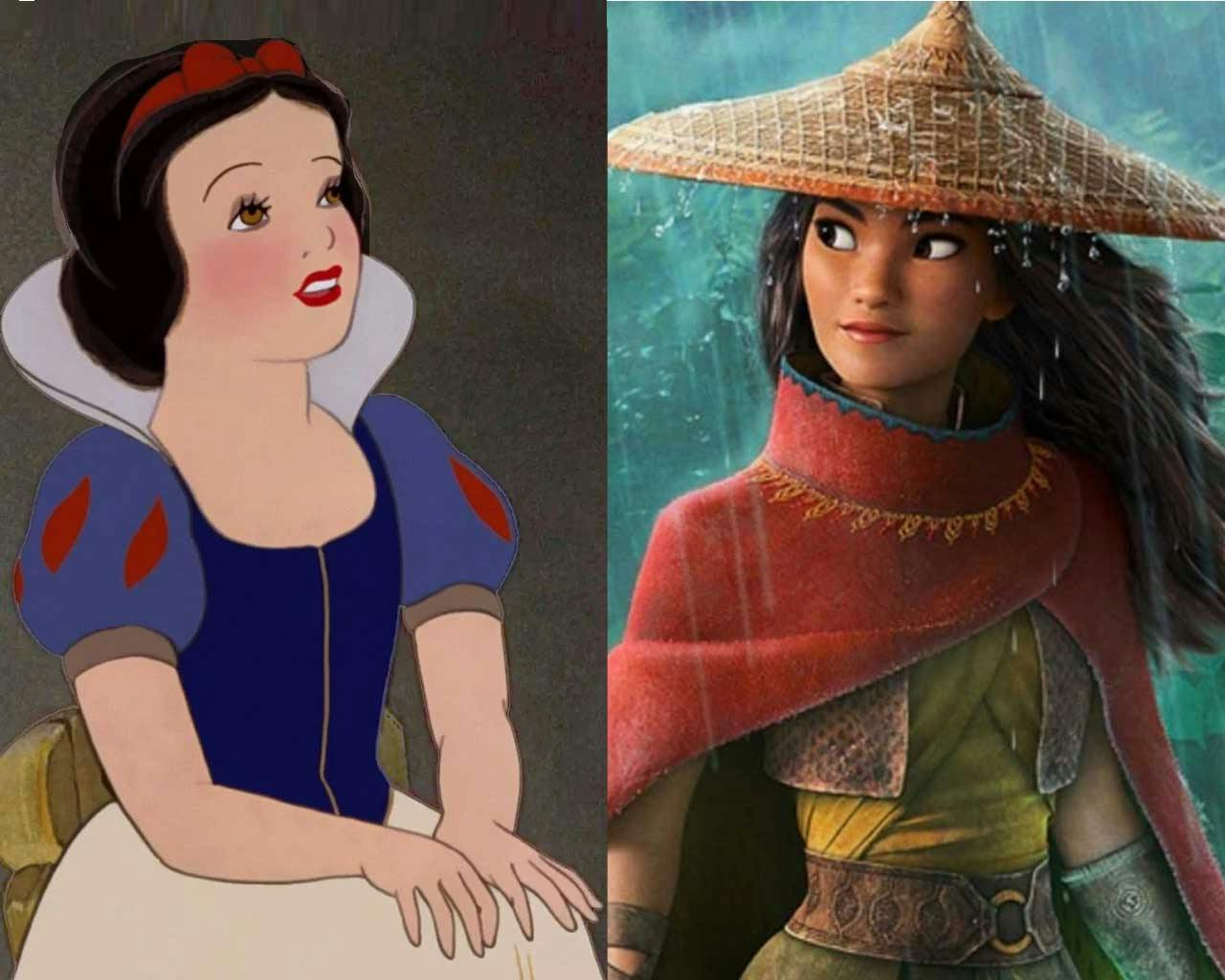
Classic fairy tales, with all their magic potions and fairy godmothers, may have been a delight to watch as a kid, but viewed with different eyes now that we’ve grown and become aware of the world around us, the messages they carry may sound alien in our modern world.
The good news for the younger generation is that these animated classics have always been a depiction of reality. Snow White from the 1930s and Moana in 2016 may seem like Disney princesses who share the same story, but look more intently and you’ll see that it took more than 75 years for feminism in children’s films to evolve. Allow us to illustrate:
Snow White and the Seven Dwarfs (1937)
This movie was a technological accomplishment during the ’30s, as it is the film that put Walt Disney on the map. Through “Snow White and the Seven Dwarfs,” the famous production company received 8 Academy Awards, and set the tone for animation for decades to come.
To put it simply, the movie is about a beautiful girl with an evil stepmother who is jealous of her looks, decides to poison her, which is why she needs a true love’s kiss to bring her back. Aside from the non-consensual kiss that happened at the end of the movie, this knight-in-shining-armor trope inspired future films for all the wrong reasons. It taught children that you need a prince in order to be saved, a plot that will then be used for several more fairy tales.
Cinderella (1950)
The first mainstream adaptation of this folktale is through Walt Disney’s 1950 animated film. You know her story: a woman with an abusive stepmother and stepsisters attends a prince’s ball with the help of a fairy godmother. The prince falls in love with her, she rushes home before the clock strikes 12, leaving her glass slipper behind which will then be the reason for the prince to find her.
Just like Disney’s first animated film, Cinderella was swept off her feet by Prince Charming, and suddenly all her problems go away with a ring on her finger. It clung to the traditional view of gender and domesticity, concealing it as a “happy ending.”
Sleeping Beauty (1959)
This 1959 film raised several conversations about consent (or lack thereof). Watching the Disney and The Brothers Grimm versions of “Sleeping Beauty” as a child, you may have questioned how it was okay for a prince to kiss an unconscious woman who had no say in the matter.
However, this was horribly justified as the prince’s non-consensual kiss was the “cure” to break a hundred-year-old curse, in effect saying that princesses should just be “grateful.”
The Little Mermaid (1989)
“The Little Mermaid’s” Ariel was the first Disney princess who rebelliously took big risks for the life she wanted. Jodi Benson, the voice actress who played Ariel, said, “Yes, we do have a romance story, but ultimately her desire was to reach for a world that was outside her own.” Ariel made some questionable choices, but it was one of the first films that taught young children to dream bigger, that they do not need to settle for something that they feel isn’t enough.
Mulan (1998)
Released during the third wave of feminism, “Mulan” encourages women empowerment by stepping out of the usual “damsel in distress” plot. However, this does not mean that the film is free from gender stereotypes, as it also reinforces an understanding that men are more privileged than women. In the movie, masculinity is defined by power and strength, which was further developed when “I’ll Make A Man Out Of You” was sung by the characters: “Let’s get down to business to defeat the Huns. Did they send me daughters when I asked for sons?”
Brave (2012)
“Brave” features a strong female lead named Merida, whose story focused on healing a mother-daughter relationship, and was the first Disney Princess that did not have a romantic subplot. She was independent and courageous, and instead of having a Prince Charming, Merida became her own savior.
Frozen (2013)
According to a 2014 study, Elsa is the first Disney princess that acknowledged mental and psychological health for women. In the movie, she is not portrayed as “selfish” or “crazy” for being scared that she almost killed her sister, or for being unable to control her power. Instead, she was a human being who was struggling, but doing her best. This is progressive because it negates the Disney princess stereotype of being “a perfect girl,” or, as described by researcher Juliana Garabedian, the “good girl complex.”
Moana (2016)
Oftentimes, strong women are pitted against each other through the evil stepmother vs. good stepdaughter storyline. In this film, however, it is Moana’s good relationship with the female characters in her life that made her successful in saving her people. She is powerful, self-reliant, and did what her father and Maui feared to do.
Moreover, Moana’s Polynesian heritage and realistic body proportions raised conversations about cultural representation. It was a step in eliminating unrealistic expectations when it comes to a woman’s body.
Raya and the Last Dragon (2021)
Raya redefines what a “strong female character” should be. She is called Disney’s most genuine depiction of strong women, because she is flawed, complicated, imperfect, and capable of making decisions without a male side character. Culture critic Jeva Lange describes the movie best: “’Raya and the Last Dragon’ isn't great because it's a glittery story of female empowerment that shows young girls that they can grow up to be heroes, too. It's great simply because it never expected them to be anything else.”
This article originally appeared on OneLife.PH