



Economic Team Cool To VAT On Goods Suspension
***
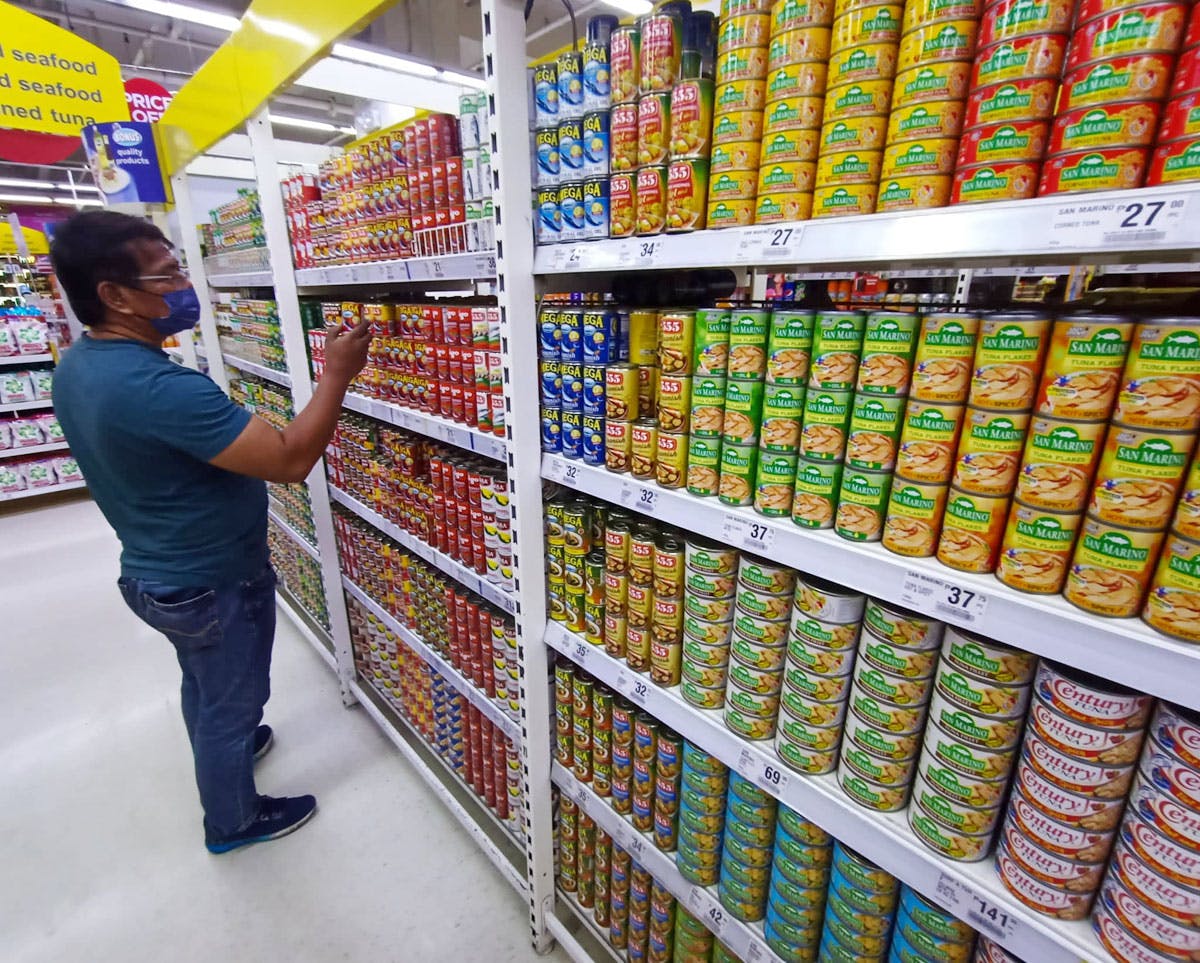
Inflation remains a top concern of the Marcos administration, but suspending the value-added tax (VAT) on goods is not among the options being eyed by economic managers to ease the impact of rising commodity prices.
President Marcos met with his economic team yesterday to talk about the administration’s economic policies for the rest of the year and the first quarter of 2023 as well as matters including inflation, interest rates and foreign exchange.
The meeting was held as transport groups are renewing calls for the government to review taxes on petroleum products such as the expanded value-added tax (EVAT) and excise taxes due to recent oil price hikes.
Some lawmakers have filed bills seeking to suspend fuel taxes if Dubai crude based on the Mean of Platts Singapore hits $80 per barrel.
While sustained increases in inflation this year and in 2023 are seen to cause a slowdown in growth, the suspension of EVAT on goods is not among the measures being considered by the economic team.
Before assuming the presidency, Marcos rejected a proposal to suspend the excise tax on fuel, saying he prefers to focus on sectors whose livelihoods are at risk due to rising oil prices.
“I prefer to handle the problem on the other side of the equation and provide assistance to those who are in need because if you reduce the excise taxes that does not necessarily help those who are most in need,” Marcos said at a press briefing days before his inauguration as President.
At a Palace press briefing, Socioeconomic Planning Secretary Arsenio Balisacan said the government aims to soften the impact of continuing inflation by providing assistance to vulnerable groups. He cited the cash subsidy programs designed to help farmers, fisherfolk and public transportation drivers affected by rising oil prices.
“No, we’re not considering a suspension of the 12 percent EVAT on goods,” Balisacan told The STAR in a text message yesterday.
“We are looking at the short-term issues, the continuing inflation and ensuring that as we address these short-term issues, we are mindful that we’ll not abandon the medium-term goals and we will make sure that we are on track toward economic recovery. So, yes, the intention is to address this, particularly providing assistance to the most vulnerable and poverty groups by continuing the subsidy programs,” he said.
“But again, as we do seek solutions to the short-term challenges, we are very careful that we do not compromise our medium-term goals. We just have to put the economy (on) a higher growth trajectory so that we can achieve more jobs, high quality jobs and reduce poverty rapidly. That’s the overall architecture of the plan,” he added.
Balisacan said officials are monitoring economic developments closely so that they can deploy monetary tools like the interest rate and determine how they can intervene in the financial markets and tame the depreciation of peso.
‘Phl still doing better’
In a social media post, Marcos said the Philippines is “still doing better” compared to other countries.
“Number one priority is still inflation. We will continue to use interest rates to mitigate the effects,” the President tweeted yesterday.
“We may have to defend the peso in the coming months, but the overall forecast is that we are still doing better than other countries in terms of inflation, though economic developments are still anticipated,” he added.
Balisacan gave assurance that the recent developments did not distract the government from its short-term and medium-term goals.
“We believe we are on the right track with the right plans and policies. With your trust and our government’s greater sense of urgency, we are confident that we can weather today’s economic challenges,” Balisacan said.
“The Marcos administration assures the Filipino people of its vigilance and steadfast commitment to monitoring and managing these risks,” he added.
Balisacan said essential commodities and inputs for food value chains are experiencing “substantial supply constraints.”
He mentioned the ongoing conflict between Russia and Ukraine and the natural calamities that have dampened agricultural production in many countries, including the Philippines.
Inflation, the socioeconomic planning chief said, has remained persistently high globally, driven by rapid price increases in food, transportation and energy.
“The Philippines and our Asian neighbors are not spared from these trends – major economies in the ASEAN (Association of Southeast Asian Nations), such as Thailand, Singapore, Indonesia and Malaysia have seen their inflation rates accelerate in the past year,” Balisacan said.
Balisacan said the US has also been trying to rein in inflation at a 40-year high, with its Federal Reserve engaging in aggressive monetary tightening by raising interest rates to slow down spending and demand for goods and services.
The developments have given rise to predictions of slowdowns or possible recessions in major developed economies and trading partners of the Philippines such as the US, members of the European Union and China, he added.
“Global supply disruptions have made our imports, including essential inputs for food production, more expensive, contributing to widening trade deficits,” Balisacan said.
“As a small, open economy, the Philippines cannot escape the effects of these global headwinds. The Marcos administration is indeed mindful of these challenges. We are particularly concerned about higher inflation,” he added.
The socioeconomic planning chief said sustained increases in inflation in 2022 and 2023 would cause a slowdown in the country’s economic growth, translating into a gross domestic product level lower by 0.6 percent in 2023 than its expected level had there been no sustained inflation shock.


