


DOE: Fuel Supply May Last Until Mid-May
Manila is racing to secure supplies, as Iran continues to block the Strait of Hormuz, through which one-fifth of the world’s oil passes.
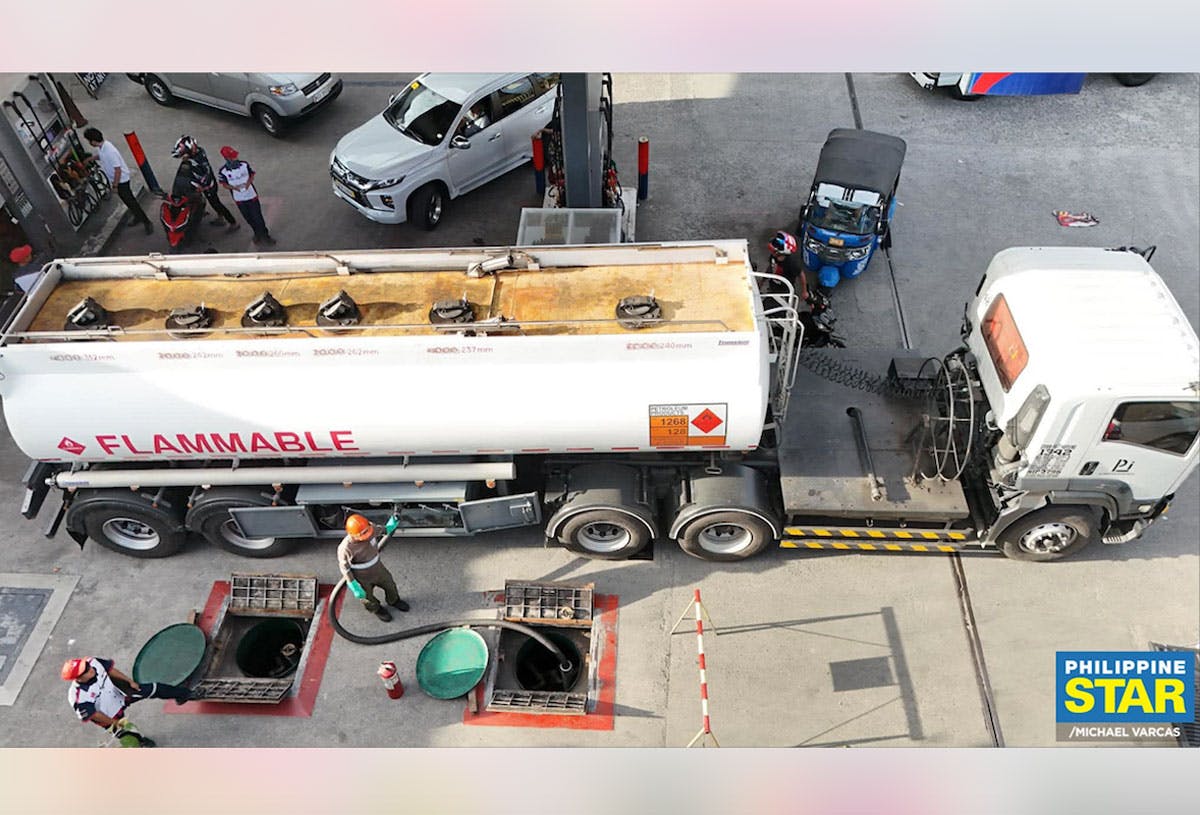
With one million barrels of fuel expected to arrive in the coming weeks, Philippine fuel supply may last until the second week of May, according to the Department of Energy.
DOE Secretary Sharon Garin said on Tuesday, March 24, the country has contracted 400,000 barrels of fuel from a Southeast Asian nation.
Negotiations are being finalized this week for the procurement of 600,000 more barrels from outside the region, she said.
State-run Philippine National Oil Co. (PNOC) is leading the negotiations. It will use the incoming supplies to beef up the country’s buffer stock.
Fuel companies have been authorized by the DOE to purchase from PNOC if their stocks run low.
Garin said the government will spend P10 billion for the one million barrels, estimated to last for about five days.
The PNOC is planning to spend P20 billion to buy two million barrels of reserve fuel.
Manila is racing to secure supplies, as Iran continues to block the Strait of Hormuz, through which one-fifth of the world’s oil passes.
Almost a month has passed since the United States and Israel attacked Iran.
The DOE and PNOC are working with the Department of Foreign Affairs and Department of Trade and Industry to connect with oil-producing countries through diplomatic channels and ensure fuel supply beyond the second week of May.
If fuel shortage occurs, the government should plan which sectors to prioritize, Makati Business Club chairman and Amber Kinetics chief executive officer Edgar Chua said.
Garin maintained that fuel stocks remain at a “comfortable level.”
The Philippines is expected to rely more on coal-fired power plants, as Garin said they have been in talks with coal power producers to assess how much they can temporarily increase their generation output.
In a worst-case scenario, local diesel prices could jump by 176 percent and inflation could reach double-digit levels if the Middle East conflict is prolonged, according to the Department of Economy, Planning and Development.
Senators urged the government on Tuesday to use its chairship of the Association of Southeast Asian Nations to push for the ASEAN Petroleum Security Agreement.
DMCI raises alarm over potential fuel shortage
With no end in sight to the conflict in the Middle East, the DMCI Group of the Consunji family has expressed concern about the impact of a potential fuel supply shortage.
“I think the major threat really is no fuel. And that could possibly happen,” DMCI Holdings chairman and president Isidro Consunji said on Tuesday.
The Department of Energy (DOE) said the Philippines has sufficient fuel supply for 45 days as of March 20.
Consunji said the risks of a fuel shortage could be worse than those of the pandemic, with the transport industry heavily affected.
“Imagine if no trucks are running, how can people in Manila eat? Transport is the issue. Electricity, I think, we can survive since there is coal, hydro, geothermal, solar,” he said.
“Pandemic was not a supply issue. This is a supply issue,” Tulsi Das Reyes, president and COO of DMCI Mining, said separately.
For Semirara Mining and Power Corp. (SMPC) president and COO Maria Cristina Gotianun, fuel is the single biggest cost of the company’s operations, which is why it has always been very cautious and diligent in implementing programs to conserve fuel.
However, she said there is really no guarantee of supply at present.
Asked about a contingency plan, Gotianun said, “We cannot do anything. We exert all efforts to be able to get the supply.”
“Nobody would want to guarantee the supply. So we’ll see. The strategy is whatever is available, we get it,” she said.
Gotianun said some suppliers have already backed out, leaving SMPC with “just a little less than what we used to have.”
“April is already booked, but whether it can be delivered is also another thing,“ she said.
SMPC is the country’s largest domestic coal producer and a vertically integrated energy company. By integrating its mining and power operations, the company contributes meaningfully to national energy security and economic development.
“If we cannot operate the trucks and excavators, we’ll have to go to the DOE because this is about energy security. Through that avenue, I am hopeful that the government can help us source the fuel, if that happens. Because with no coal, we have no electricity,” Gotianun said.
DMCI’s property development arm, DMCI Homes, may push back its planned project launches this year due to the impact of ongoing tensions in the Middle East.
“We have three projects slated for this year. We don’t know when we will launch those three. We are still studying what will happen in the next few months,” DMCI Homes president Alfredo Austria said.
“There is a possible delay for our launches. But for existing projects, we have to push through because those are committed,” he said. – With Richmond Mercurio, Marc Jayson Cayabyab, Brix Lelis, Louella Desiderio