DepEd: Time For TV Networks To Comply With Law On Airtime For Children’s Programs
Section 9 of Republic Act No. 8370 or the Children’s Television Act of 1997 states that at least 15 percent of the daily total air time of a broadcasting network shall be allotted for child-friendly shows.
The Department of Education (DepEd) may invoke a law requiring television networks to air child-friendly programs to ensure that its distance learning program will reach as many students as possible during the pandemic.
DepEd Secretary Leonor Briones, who is aggressively pushing for blended learning to ensure learning continuity while the country is under quarantine, said the use of television is “attracting a lot of attention” from other countries.
“Right now, there are many programs already on television because the law requires that 15 percent of airtime for television should be devoted for children. Sisingilin natin ito (We will invoke this),” Briones said during a meeting of the government’s pandemic task force on Monday, June 15, at Malacañang.
Section 9 of Republic Act No. 8370 or the Children’s Television Act of 1997 states that at least 15 percent of the daily total air time of a broadcasting network shall be allotted for child-friendly shows. The requirement is one of the conditions for the renewal of broadcast licenses and is “part of the network’s responsibility of serving the public.”
The government had forged partnerships with television networks to produce educational programs that made learning accessible and interesting.
Notable programs include Sineskwela, which sought to simplify science concepts; Bayani, which featured the lives of national heroes; Hiraya Manawari, which taught values using stories; Epol/Apple, which delivered English lessons; and Pahina, which promoted appreciation for Philippine literature and its icons. All these shows were products of collaborations between ABS-CBN Foundation and the Department of Education, Culture and Sports, now DepEd.
Lopez-owned ABS-CBN Channel 2 was forced to go off air last May 5 due to a cease and desist order issued by the National Telecommunications Commission.
The broadcast giant’s franchise expired on May 4 without the House of Representatives acting on bills for its renewal. Various sectors have blamed the Duterte administration for the shutdown and described it as an attack on press freedom. Officials have countered that President Duterte had nothing to do with the shutdown.
In a recent report to Congress, Duterte said the Presidential Communications Operations Office is working with DepEd to use state-run Intercontinental Broadcasting Corp. (IBC) Channel 13 as an alternative learning platform.
However, presidential spokesman Harry Roque said in a press briefing on June 9 that the reach of IBC 13 is limited.
He said Briones “is looking at forging contracts with community radio stations, because there are remote areas that can only be reached by community radio and cannot be reached by (state-run radio station) Radyo (Pilipinas).”
“DepEd will use all these means and I think we have enough budget for that because we cannot hold face-to-face (classes). We will be able to save a lot of money now that we cannot hold face-to-face classes,” Roque added.
A study by Kantar Media Philippines published in 2017 revealed that television remains the “top touchpoint” among media consumers, with daily TV viewership increasing to 96.6 percent of the total population in 2016 from 91.2 percent in 2014.
‘It’s better manual’
The government is also planning to buy transistor radios to facilitate learning as it remains unclear when the public health crisis spawned by coronavirus disease 2019 will end.
Duterte, who prohibited the holding of face-to-face classes until a COVID vaccine is developed, noted that some provinces still do not have access to television and the internet.
“We will try to come up with something in the next few days. Maybe before the end of the week, I would be able to look for the money. We don’t have money for now. I would look for the money to buy transistor radios to be distributed all throughout the country,” Duterte said.
“Radio is not that expensive. Secretary Briones said we (would) buy 300. If this (crisis) drags on... we might buy the radios and give them to barangays so even the poor will have a means of communicating with their teachers,” he added.
Briones noted that DepEd would also take advantage of the fact that a large number of Filipinos have mobile phones.
“There are 179 million cell phones – more cell phones than humans in the country. And I see a lot of Cabinet members, I cannot match them, attending IATF (Inter-Agency Task Force) meetings from their smartphones,” the education chief said.
Briones said DepEd is negotiating with two telecommunications firms for free telecom services.
“I just talked with one of them. And at the regional level, the regional directors are also negotiating with the local radio stations...so that we can reduce the cost,” she said.
DepEd also has a plan for remote areas without internet, television or radio.
“Pero talagang kung walang-wala talaga, Mr. President... walang ano internet, walang cell phone, walang TV, walang radio, ’yung sinasabi nating IBM – that it’s better manual (If there is really no access to these gadgets, Mr. President, no internet, no cell phone, no TV, no radio, we can use what we call IBM – it’s better manual),” Briones said.
“So we are producing also learning modules, but the children should not be going out to get the learning modules,” she stressed.
Briones assured the public that the DepEd would work closely with local governments to distribute the modules to parents.
‘We don’t want our children to wait’
While some parents are hesitant to send their children back to school because of the risks posed by the COVID-19 pandemic, Briones said more than 10.6 million students have enrolled as of June 15. This, however, is only about a third of the total student population last year.
The enrollment was done online to prevent the spread of the virus, which has so far infected 26,000 people in the country.
“At the same time also, those who are most vocal and about their concerns on the opening of school, Mr. President, are of course the LGUs (local government units), because education takes place in their territory,” Briones said.
“So now, LGU support has been coming in, and every day we get messages of support from local government units, because we have been aggressively informing them of what our learning continuity program is about,” she said.
Some local executives, however, are seeking a postponement, including League of Provinces of the Philippines president and Marinduque Gov. Presbitero Velasco Jr., who noted that some students cannot afford to buy computers, laptops or tablets. He suggested that the opening of classes be moved to either October or November.
As of June 18, Briones said preparations were continuing for the start of a new school year on Aug. 24.
“Mr. President, our appeal is to allow us to continue our preparations based on the roadmap because our target is Aug. 24. No face-to-face (during the) Aug. 24 opening... If suddenly we pull to a stop, then we might trip,” she said.
“John Michael Greer said, ‘The future is under no obligation to wait patiently while we get ready.’ The future will not wait and we don’t want our children to wait and be left behind,” she added.
Millions to be left behind
On June 14, the Alliance of Concerned Teachers (ACT) Philippines expressed concern over the slowing down of the enrollment rate, “indicating that millions of learners will be left behind” in the coming school year.
As of June 13, DepEd said a total of 10.5 million students had enrolled and registered for school year 2020 to 2021, marking a 33 percent slowdown in the enrollment rate – from 6.3 million enrollees on June 6 to an additional 4.2 million after a week.
“If this enrollment rate decline persists, we can only expect 4.7 million more to enroll in the remaining two weeks, coming to a mere 15.2 million total enrollees in four weeks. That’s an alarming 44 percent drop from last year’s 27.2 million enrollment data. Where then is education continuity for 12 million learners who will likely be left behind this school year?” ACT secretary general Raymond Basilio asked.
Even the estimate of 27 million learners is “conservative,” according to Basilio, as he noted that the population of school-age children grows yearly.
ACT attributed the dismal enrollment turnout to the health and socio-economic crisis, as well as the poor infrastructure for remote school operations. While ACT perceives that physical enrollment may boost these figures due to its relative accessibility to poor families, especially in rural areas, the group raised concern about health safety in schools.
“Despite wanting to enroll their children, many parents find this difficult due to the lack of material government support to enable remote enrollment – such as sufficient aid for poor families, establishment of needed infrastructure, among others. In fact, reports from parents indicate that many are awaiting the permission for face-to-face enrollment so they may enlist their kids for the coming school year. It bears noting, however, that no mass testing has been done among education workers, nor have health and safety measures been placed at the school level in preparation for such,” Basilio stressed.
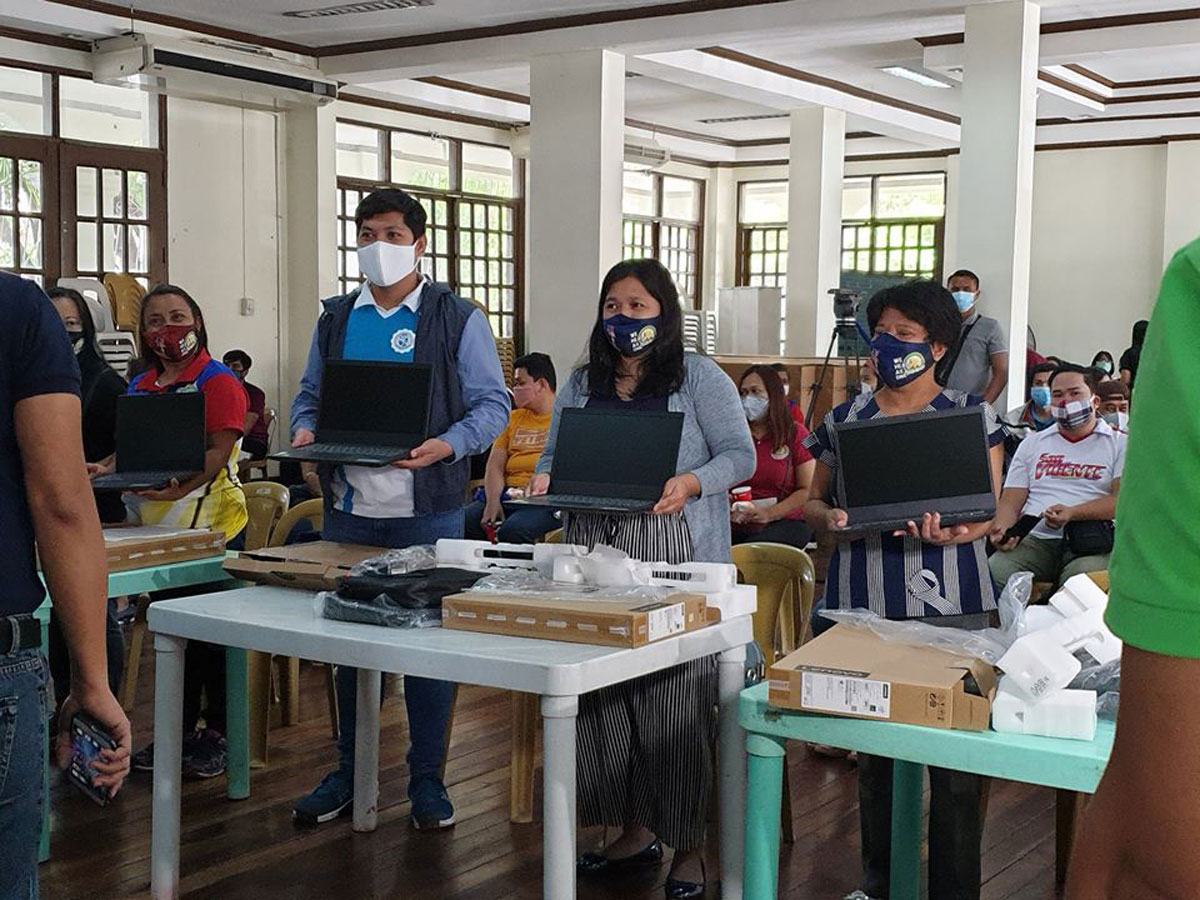
Manual enrollment started this week in several schools, with physical distancing measures implemented.
ACT challenged DepEd officials to approach the situation with “strong minds and hearts,” by forgoing what the group described as a “myopic” learning continuity plan and instead implementing a comprehensive, scientifically grounded and compassionate approach to ensuring a safe return to schools and inclusive quality education.