



DA May Back Down On Fish Sale Ban
Department of Agriculture deputy spokesperson Rex Estoperez said a moratorium is being considered on the ban on the sale of imported pompano and salmon in wet markets.
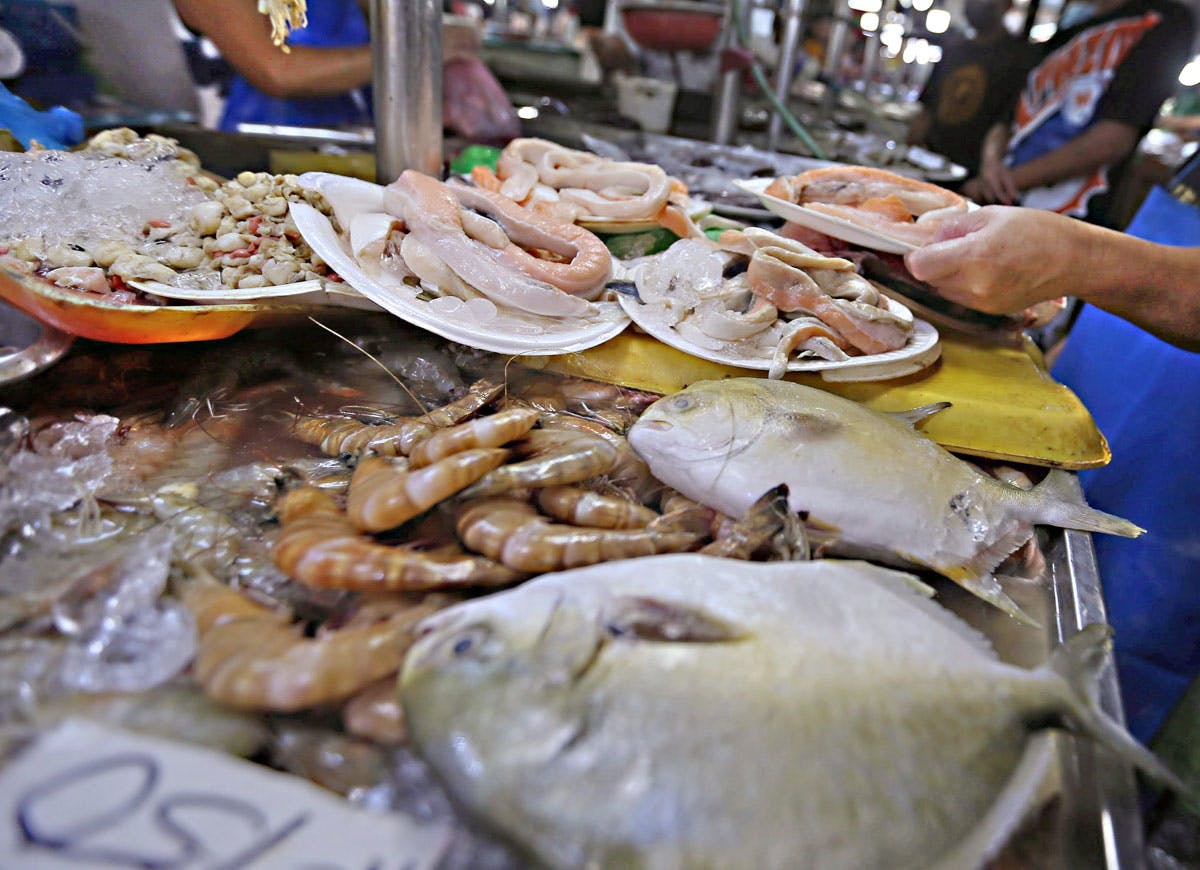
The Department of Agriculture (DA) is considering allowing the sale of imported specialized fish such as pompano and pink salmon in wet markets amid an uproar from lawmakers and consumers.
In an interview with reporters on Thursday, Dec. 1, DA deputy spokesperson Rex Estoperez said a moratorium is being considered on the ban on the sale of imported pompano and salmon in wet markets.
“The Bureau of Fisheries and Aquatic Resources will meet with stakeholders this afternoon and tomorrow, before the Dec. 4 confiscation order, we will announce if this is confirmed,” he said. “To assure you, BFAR has considered already recalling the implementation of the ban on the sale of salmon and pompano.”
Estoperez said the moratorium is in consideration of the clamor from legislators and consumers, as well as the timing of the intensified campaign of BFAR on unauthorized, undocumented and unregulated imported fish sold in wet markets.
“The timing is wrong since it’s Christmas season. Retailers are willing to comply, but consumers are complaining. So we have to balance the clamor of consumers and those affected by the importation,” he said.
Earlier, the Office of the Ombudsman said it is investigating BFAR’s belated implementation of the Fisheries Administrative Order (FAO) No. 195.
Lawmakers are also calling for a probe on the BFAR’s planned crackdown on vendors in local wet markets found selling imported fish such as pompano and salmon.
In implementing the moratorium, the DA said it will be revisiting FAO 195, which bans the sale of imported pompano and salmon in wet markets and allows importation only for “canning and processing purposes” or institutional buyers like hotels and restaurants.
“BFAR has been doing the inspection in markets way before, but it was not as hyped as today. These specialized fish like pompano and salmon, under the order, are for industrial users only to be used in canneries and processing,” Estoperez said.
“But now, these specialized fish are being sold in wet markets. What we observed is, before the pandemic, these were not sold in markets. But now we received feedback that these are rampant in markets, and it hurts the bangus and tilapia industry,” he said.
Earlier, the BFAR said it is compelled to implement the crackdown on imported fish products sold in wet markets unless the order is amended or revoked. It said the amendment of FAO 195 should go through the National Fisheries and Aquatic Resources Management Council (NFARMC).
The NFARMC is the highest policymaking, advisory and recommendatory body in Philippine fisheries, being consulted by the DA in all matters pertaining to fisheries policies and fisheries management programs.
“For me, it’s the timing of the ban. We need to amend or review the provisions under the order,” Estoperez said.
Closed fishing season
The BFAR was upbeat on the increasing supply of sardines next year as the annual three-month closed fishing season for it started Thursday in southern Philippines.
The closed fishing season, now on its 12th year, kicked off with the ceremonial send-off and deployment of two BFAR Monitor and Control Surveillance patrol ships jointly manned by its personnel and personnel of the Philippine Coast Guard (PCG) from Majini Pier of Romulo Espaldon Naval Station.
The deployment is to ensure the implementation of the fishing ban on the fishing grounds in East Sulu Sea, Basilan Strait and Sibugay Bay, said BFAR-9 regional director Alzath Kunting.
The fishing ban – internally imposed by the group of fishing operators in 2011 – was adopted and implemented in 2014 through BFAR Administrative Order No. 255 which established the closed season for the conservation of sardines every Dec. 1 to March 1.
Kunting said the closed fishing season is a conservation measure to protect valuable fish species during their spawning period. It allows juveniles to grow and mature, and fish stocks to replenish, and ensure abundance and productivity of marine resources.
“This is for the long term solution in preserving the stock for the next generation to come,” Kunting said in a brief program held at the officer’s club of the Naval Forces Western Mindanao.
DA Region 9 executive director Dennis Arpia said the closed fishing season is one of the successful programs for the preservation of marine resources in southern Philippines.
“The preservation of the sardines supply is one that saved us during the pandemic because it ensured the food supply of the country,” Arpia said.
According to Kunting, data showed the closed fishing season has been effective not only in conserving sardines, but also in enriching the waters of Zamboanga peninsula, east of Sulu Sea and Basilan Strait.
Kunting said that according to the monitoring of the DA-BFAR National Stock Assessment Program of at least 33 landing sites in the Zamboanga peninsula from 2016-2020, total volume of monitored landed catch has continually increased by around 10.75 percent growth per year, with the highest increase observed in 2020 — composed mostly of the sardine species Sardinella lemuru (locally known as tamban).
During that time, catch grew 28 percent, resulting in total volume of 357,804.41 metric tons, of which 1,398,342.40 MT were landed catch, and about 989,029.13 MT or 70.73 percent were sardines.
The BFAR executive said the trend of sardines species landed in Zamboanga peninsula increased from 2016 to 2020 with an average of 19.66 percent a year, and the highest in 2020 with 42.87 percent or 298,306.89 metric tons.
Meanwhile, the Navy and Philippine Coast Guard vowed to support the monitoring in the implementation of the fishing ban even as the coastguard deployed two of its additional patrol ships, including one from Davao and the other based in this city.
PCG District Southwestern Mindanao commander Commodore Marco Antonio Gines said the closed fishing season was a success as supply continuously increased and considerably boosted workers’ salaries.
Gines, however, suggested to find livelihood programs for the workers affected by the three-month closed fishing season.
Unfortunately, none from the Department of Labor and Employment representatives was present during the program to address the fishing ban’s effect on labor.
Approximately 48,000 workers employed in the commercial fisheries and the allied canning industries will be affected by the closed fishing season. – With Roel Pareño


