



Asean Foreign Ministers Flag Mideast, US-Iran Conflicts
The foreign ministers emphasized the immediate and long-term effects of the Middle East crisis on people and warned of further implications of continued tensions on regional trade, energy and food security.
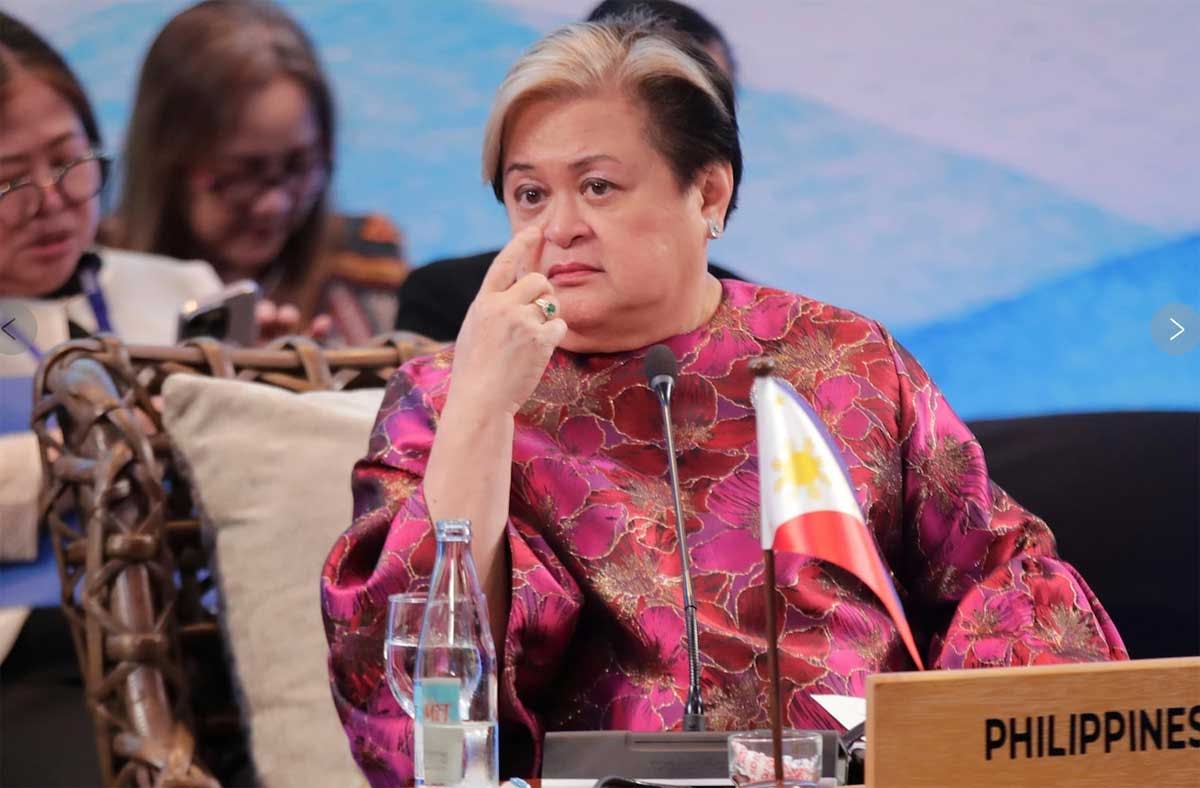
Foreign ministers of the Association of Southeast Asian Nations (ASEAN) are concerned over the evolving situation in the Middle East and renewed hostilities between the United States and Iran.
At the 59th ASEAN Foreign Ministers’ Meeting plenary session at the Philippine International Convention Center in Pasay City on Tuesday, July 21, top diplomats called on the US and Iran to exercise self-restraint and avoid acts that may further aggravate the situation.
Diplomats emphasized the immediate and long-term effects of the Middle East crisis on people and warned of further implications of continued Middle East tensions on regional trade, energy and food security.
Ministers reaffirmed the importance of maintaining maritime safety and security and upholding freedom of navigation, in accordance with international law and the 1982 United Nations Convention on the Law of the Sea.
They expressed “deep concern over any discriminatory or unilateral measures that may impede or obstruct vessels passing through the Strait of Hormuz, or any straits used for international navigation.”
The statement was released ahead of the foreign ministers’ meeting with US Secretary of State Marco Rubio today, July 22.
Foreign Affairs Secretary Theresa Lazaro said “this is of such urgency that we have to release the document as soon as possible.”
“There is serious concern on the developments in the Middle East. If you notice, this is the only document that involves geopolitics in our discussions,” Lazaro said.
Rubio to meet his Chinese counterpart
Rubio arrived in Manila on Tuesday morning, July 21, for an annual meeting with his ASEAN counterparts on Wednesday, where the Middle East crisis will be high on the agenda along with other security and economic issues.
Rubio plans to join regional security talks called the ASEAN Regional Forum, which also will include the European Union, Russian Foreign Minister Sergey Lavrov and Chinese Foreign Minister Wang Yi.
Rubio will meet Wang on the sidelines today, the State Department said. It will be the highest-level contact between the US and China since President Donald Trump flew to flew to Beijing in May for talks with Chinese President Xi Jinping that focused on the US-Israel war on Iran, trade and the status of Taiwan, among other issues.
Rubio, Wang and Lavrov will attend a final forum Thursday, July 23, called the East Asia Summit, where 18 Western and Asian countries, including the 11-nation ASEAN, will tackle geopolitical, economic and security concerns.
Tensions have grown in the South China Sea
ASEAN ministers were scheduled to meet Wang on Wednesday with an agenda that includes a discussion on the status of negotiations between China and the regional bloc on a proposed pact called a “code of conduct,” which aims to prevent territorial disputes in the South China Sea from spiraling out of control.
A new clash in the disputed waters underscored the urgency of the proposed nonaggression pact, which has been negotiated by the two sides for about two decades. They aim to conclude talks within the year.