



Aquino: Ideally, EJK Cases Should Be Tried In Philippine Courts; Lacson Says He’s Not Protecting Senators
Sen. Bam Aquino said he respects the ongoing International Criminal Court processes even if it is also ideal for the victims of alleged extrajudicial killings during the Duterte administration’s bloody drug war to seek justice in the Philippines.
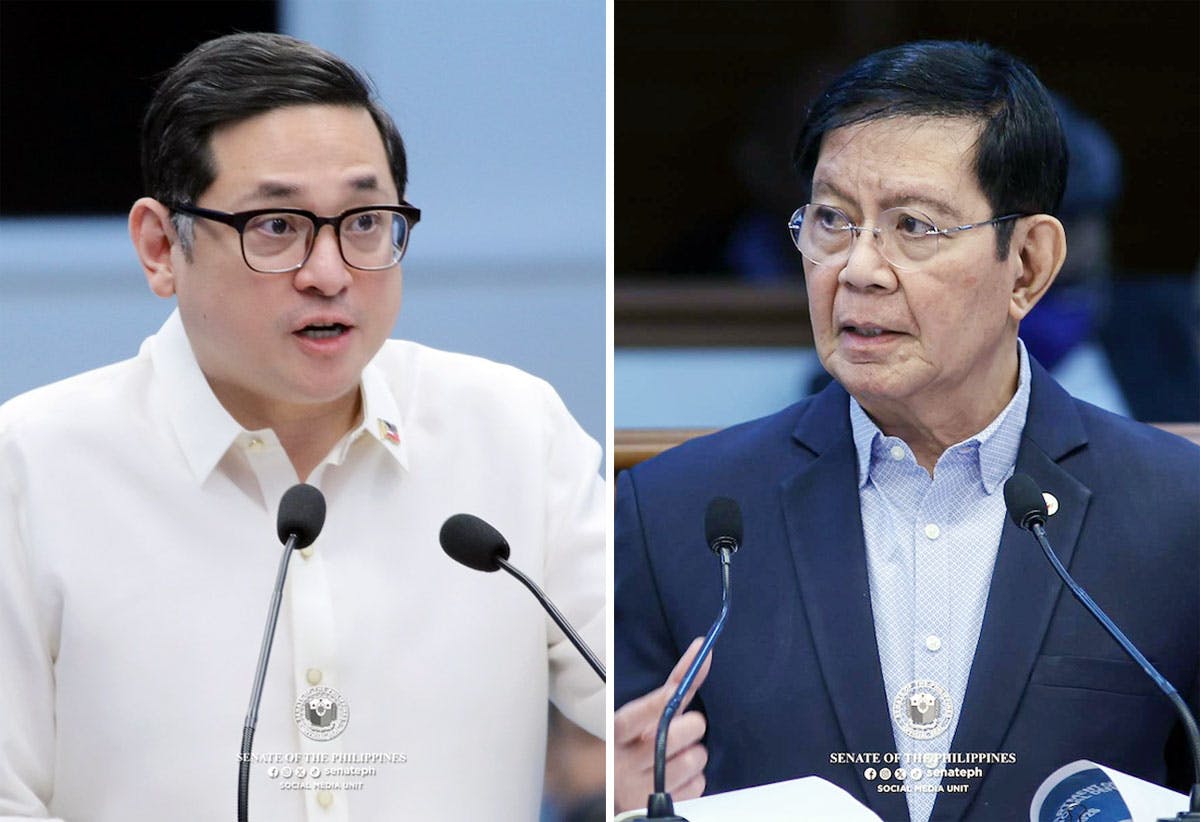
Sen. Bam Aquino expressed belief on Tuesday, Feb. 17, that “ideally,” cases involving alleged extrajudicial killings (EJKs) during the Duterte administration’s drug war should be tried in Philippine courts.
This developed as Senate President Pro Tempore Panfilo Lacson clarified also on Monday, Feb. 16, that he was not protecting his colleagues as he addressed criticisms about his stand that local Philippine courts must be respected in whatever course of action the International Criminal Court would take here in the country.
In an interview with “Unang Hirit” on GMA News, Aquino was asked about Senators Bong Go and Ronald dela Rosa being named by the ICC as co-perpetrators in the previous administration’s drug war along with other former officials.
Aquino stressed that the cases of killings during the previous administration must be faced.
“Kailangan po nating harapin na nagkaroon talaga ng extrajudicial killings sa ating bansa. Eh dapat po ‘yung mga trial po niyan, ideally, ay dapat dito po talaga sa Pilipinas. Kasi ‘yung mga biktima po ay nandito rin po sa Pilipinas, ‘no,” Aquino said, noting that he had a meeting last week with mothers of some of the victims of drug war killings during an exhibit presented at the Senate.
Aquino said he respects the ongoing ICC processes even if it is also ideal for them to seek justice in the Philippines.
“At siguro po ‘yung hustisya sa mga bagay na nangyari dito, eh maganda rin pong mangyari dito ‘yung paghahanap ng hustisya. Pero siyempre po nirerespeto natin ‘yung proseso na nangyayari po sa ICC doon po sa ibang bansa,” Aquino said.
Aquino disclosed the Senate will have a caucus on the situation of Go and Dela Rosa once the ICC’s course of action is announced.
The ICC is scheduled to begin confirmation of charges in Duterte’s case on Feb. 23, with subsequent hearings on Feb. 24, 26, and 27.
For his part, Lacson said he was protecting the country’s legal processes as enshrined in the Constitution in response to those who criticize his opinion on the need for a corresponding domestic court order before the ICC warrants of arrest against his fellow senators and others may be implemented.
“Let me be clear: what I am protecting is our country’s legal processes as enshrined in Article III Section 2 of the 1987 Constitution, not Senators Ronald de la Rosa and Bong Go," Lacson said on X.
“Despite contrasting legal opinions on the matter, at the proper time, it is only the Supreme Court that will interpret the constitutional provision and legal procedure in this regard,” he added.
Lacson pointed out that Article 3 Section 2 of the Constitution upholds the right of the people from deprivation of liberty.
Under Article 3 Section 2 of the Constitution, “(t)he right of the people to be secure in their persons, houses, papers, and effects against unreasonable searches and seizures of whatever nature and for any purpose shall be inviolable, and no search warrant or warrant of arrest shall issue except upon probable cause to be determined personally by the judge after examination under oath or affirmation of the complainant and the witnesses he may produce, and particularly describing the place to be searched and the persons or things to be seized.”
“(Thus) it does not matter if the warrant is issued by a foreign jurisdiction where extradition is in effect. Article III Section 2, which deals with protection from deprivation of liberty of our citizens, must be respected,” Lacson said.
Lacson reiterated the Senate may discuss possible options on the matter, as early today, Feb. 18. He pointed out the Senate's lawyers will also look into possible courses of action.
On Saturday, Feb. 14, Lacson said Dela Rosa and Go should have the chance to avail of all legal options, “because our local courts and processes must be respected.”