



Antipolo Cathedral Formally Elevated To ‘International Shrine’
The elevation of the cathedral’s title is a recognition and affirmation of Pope Francis’ and the Catholic Church of the Filipino people’s devotee to the image of the Blessed Virgin Mary, according to rector and parish priest Fr. Reynante Tolentino.
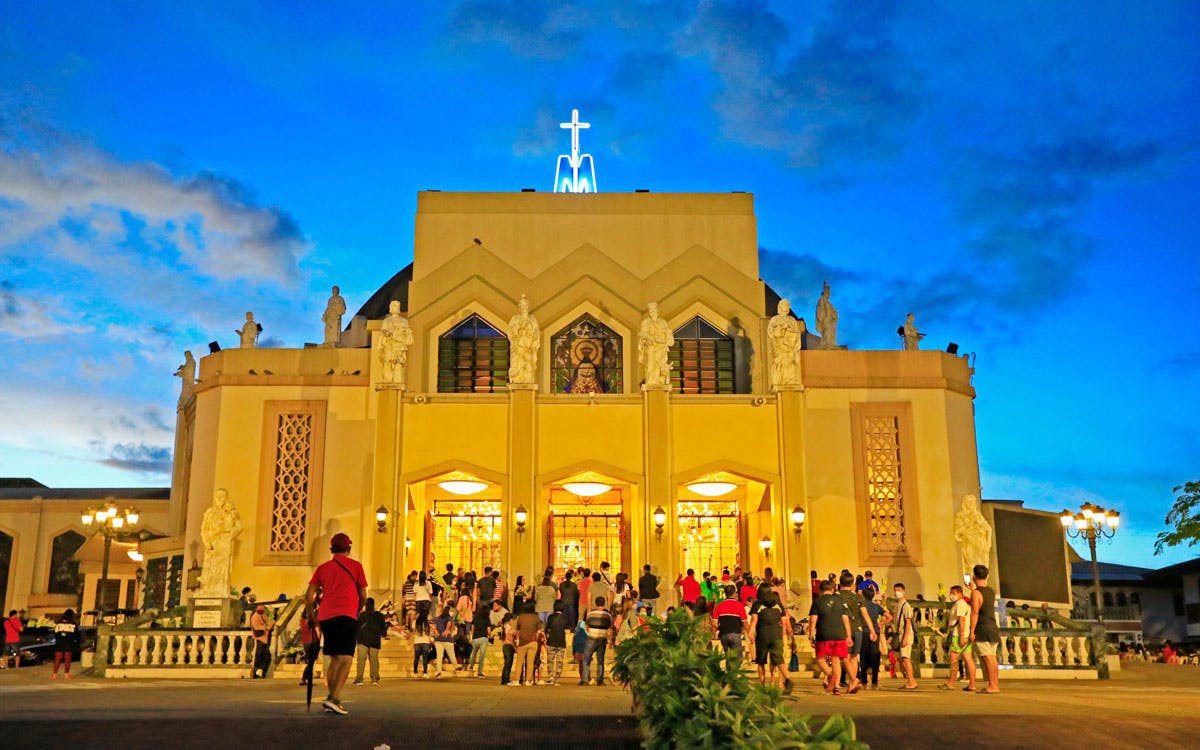
The National Shrine of Our Lady of Peace and Good Voyage, popularly known as the Antipolo Cathedral, was formally elevated to an international shrine on Saturday, March 25, making it the Philip-pines’ first international shrine, the third in Southeast Asia and the 11th in the world.
With the new declaration, the cathedral will now be known as the “International Shrine of Our Lady of Peace and Good Voyage.”
In his homily, Antipolo Cathedral Rector and parish priest Fr. Reynante Tolentino said the elevation of the cathedral’s title is a recognition and affirmation of Pope Francis’ and the Catholic Church of the Filipino people’s devotee to the image of the Blessed Virgin Mary.
“This is the Holy Father’s and the entire Catholic Church’s recognition that we are ‘Pueblo Amante de Maria’ (people in love with Mary) here in Antipolo and in the Philippines… This is a recognition and affirmation to all of us as devotees of the Blessed Virgin Mary,” Tolentino said in Filipino.
He added that the galleon carrying the image of the Blessed Virgin Mary arrived safely on Philippine shores on June 18, 1626.
“It has been with us for 397 years,” he said.
The prelate also announced that a solemn declaration of the International Shrine of Our Lady of Peace and Good Voyage is set to be held “sometime in July,” or during the meeting of the Catholic Bishops’ Conference of the Philippines (CBCP).
He disclosed that they have already sent a communication to the office of Pope Francis, inviting a Papal Legate who will preside over the solemn declaration of the cathedral.
“The Blessed Virgin Mary has given us a lot of graces and blessings, and it was no different during the time of the pandemic – Our Lady of Antipolo accompanied us to keep us away from the coronavirus and to save us from death due to the coronavirus,” he said.
“We all admit that in our lives, our Blessed Virgin is always with us,” he added.
Tolentino urged the Catholic faithful and the devotees of the Blessed Virgin Mary to continue their devotion and continue to visit the cathedral as she has always been present in every-one’s prayers, especially during difficult times.
“Let us keep coming to Our Lady of Antipolo. Let us continue with our devotion to her because it is true, Mary’s ‘yes’ to God, as His mother, is very sweet. Her ‘yes’ to us her children is very sweet, too,” he said.
“Our Blessed Virgin will never leave us until we get to her son Jesus. Let us not leave her, too; let us not turn our backs on her,” he added.
As part of the celebration of the cathedral’s elevation to international shrine, a procession was also held on Saturday, March 25.
In another development, Ginebra point guard basketball player LA Tenorio, who was recently diagnosed with colon cancer, paid a visit to the Antipolo Cathedral as “he pleaded for prayers for his steadfast recovery.”
“As one Catholic Church, let’s take a moment and solemnly ask to pray for the PBA basketball star’s recovery,” the cathedral said.
Tenorio has been a devotee of Our Lady of Antipolo since he was a young child, according to a Facebook post of the Antipolo Cathedral.
‘Rusty’ church
Meanwhile, advocates of heritage have appealed for the closure of the San Sebastian Church, which they described as already rusty, especially during the coming observance of the Holy Week.
The church, the only kind in the country and in Asia that is made entirely of steel, has been riddled with rust, particularly on its walls, columns, ceilings and rib vaults or arches, asserted a unified petition prepared by various groups and individuals that promote preservation of heritage items and sites.
“While the church structure itself is deemed stable, architects and engineers observed falling pieces of ornamental metal, heavy and rusty pieces from columns, walls, rib vaultings, which could have caused great harm or loss of life,” the petition said.
Organizations that signed the petition included Renacimiento Manila, Bakas Pilipinas, Bahay Nakpil-Bautista, Kapitbahayan sa Kalye Bautista and Advocates for Heritage Preservation.
The petitioners warned that if authorities do not do anything to fix the rusty parts of the church, parishioners and visitors – especially those who will practice customs and rites during the Holy Week, like Stations of the Cross and Visita Iglesia – could be in danger of getting hit by falling rusty debris or injured by eroded walls and columns.
“We are worried that the crowd volume that will come to worship, through their movements, might produce reverberations that could potentially trigger life-threatening weakened metal pieces to fall or detach from different areas of the basilica,” the statement said.
The groups appealed to the management of the church – also called the Minor Basilica of San Sebastian, which houses the image of Our Lady of Mount Carmel – to seal it off to the public “immediately.”
“It is especially important that the church be closed to visitors during this holy feast,” they said, referring to the Holy Week.
They also preferred for the church administration to hold masses and other Catholic rites outside the church, “where one can still be prayerfully surrounded by the grandeur of the basilica’s noteworthy exterior, from a safe vantage point.”
The San Sebastian Church was built in neo-gothic style, mostly of prefabricated steel manufactured in Belgium. It featured stained glass windows made by a German firm, and its walls, paintings and sculptures were made by Filipino artists, according to the United Nations.
It was opened in 1891, and was subsequently declared a National Historical Landmark in 1973 and a National Cultural Treasure in 2011. – With an additional report from Ghio Ong


