



4 Out Of 10 Learners Drop Out By Grade 10
Based on a survey, 41.9 percent of youth aged 12 to 15 and 28.3 percent aged 16 to 17 identified the lack of personal interest as a primary reason for not attending school.
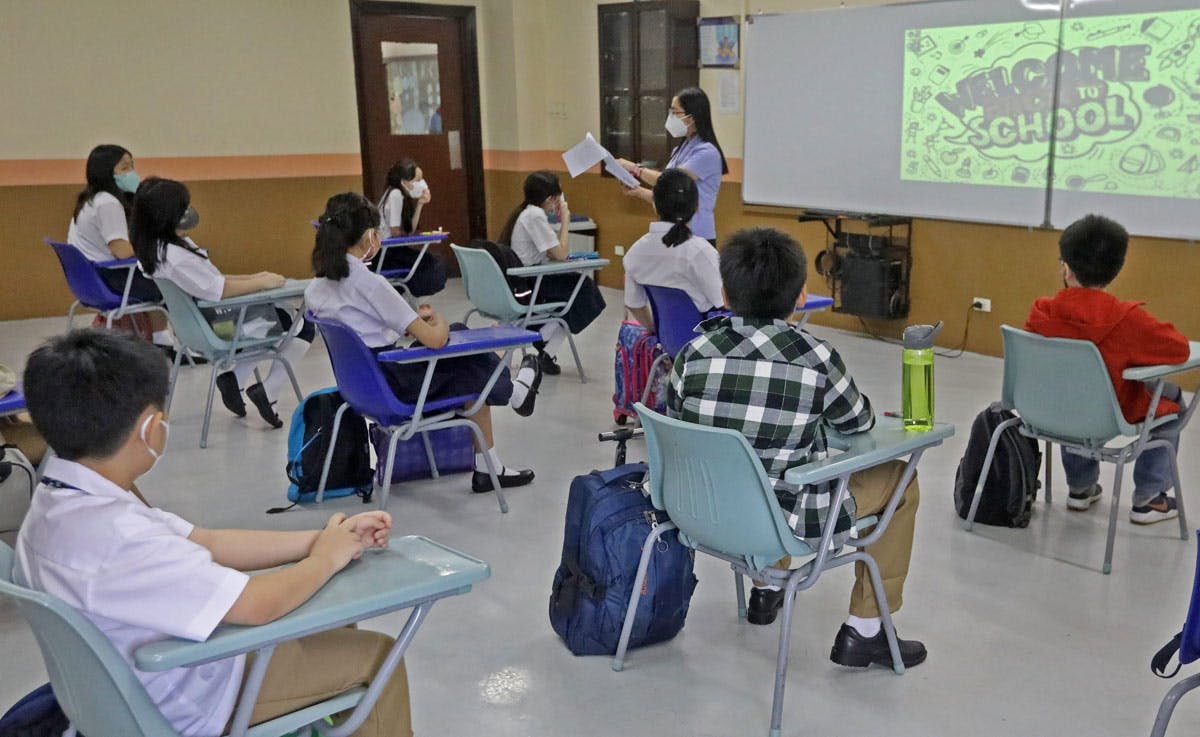
Four out of 10 learners who enter Grade 1 end up leaving school by Grade 10, Sen. Sherwin Gatchalian said on Wednesday, June 21, amid ongoing efforts by the Second Congressional Commission on Education or EDCOM II to review the K-12 program.
“The challenge for us is how do we save the 40 percent that disappear by Grade 10. This is something for us to think about because I think we should focus on how to keep kids in school from Grades 1 to Grade 10,” said Gatchalian, chairman of the Senate committee on basic education.
Data from the Department of Education (DepEd) and analysis from the senator’s office showed that out of the 100 learners who entered Grade 1 in School Year 2010-2011, only 60 went to Grade 10 and 58 completed junior high school.
Based on the Philippine Statistics Authority’s 2019 Functional Literacy, Education and Mass Media Survey, 41.9 percent of youth aged 12 to 15 and 28.3 percent aged 16 to 17 identified the lack of personal interest as a primary reason for not attending school.
The same survey also showed insufficient family income as a secondary reason for not attending school among 14.4 percent of youth aged 12 to 15, and 15.4 percent of those aged 16 to 17.
Meanwhile, education reform advocate group Philippine Business for Education (PBEd) has reiterated its opposition to the practice of mass promotion of students, saying it may lead to an education crisis.
In a statement issued on Wednesday, the PBEd said many public school teachers were resorting to “mass promotion” of their students to the next grade level just to comply with the “no child left behind” policy of DepEd.
The group cited the result of its recent roundtable discussions and consultations with education stakeholders, including public school teachers, wherein it was revealed that 10 to 30 percent of students who are endorsed to proceed to the next grade level do not have the required basic competency and mastery of subjects under their current grade level, thus were not qualified for a level up.
“We found out from the teachers – and this has no formal data as it was not reported – on the ground through conversations with them that they are passing their students to the next grade level even when the students are not yet ready. This is happening in some schools,” PBEd executive director Justine Raagas said.
The Alliance of Concerned Teachers (ACT) said the practice of mass promotion of students seems to be an offshoot of miscommunication or misinterpretation by some teachers of the DepEd policy.
“There seems to be varying interpretations of this ‘No Child Left Behind’ policy which leads to some teachers resorting to mass promotion of students,” ACT chairman Vladimer Quetua said.
Quetua said there are instances wherein teachers are being blamed or reprimanded for flunking their students, hence many teachers are now opting to just pass all their students.
Both PBEd and ACT stressed that the practice would have an adverse impact on the learning capacities of students in the next grade level and that the practice of mass promotion could have an adverse impact on students when they go to college and could “ultimately limit their employment capabilities.”
Raagas said that to stop the practice, the DepEd should lessen the workload of teachers so they can focus on teaching and assessing the competencies of their students.
“We need to address this issue. We have started showing one of the manifestations of this unacceptable practice: the learning poverty rate in the country has been rising,” Raagas said.
DepEd spokesman Michael Poa said earlier said that the agency has no policy on mass promotion of students.
“The DepEd has no issuance that allows for mass promotion. We understand that in the field, such practice may be happening. And that’s why that is something we are looking into,” Poa said.
Mother tongue
Educators’ group Teachers Dignity Coalition (TDC) has opposed the proposal to suspend the implementation of the Mother-Tongue-Based Multilingual Education (MTB-MLE) in the primary level.
“Children, especially those in the early grades of education, learn better if the language used in teaching is the language they know and use on a daily basis, a fact that is undeniable. This is why the (MTB-MLE) was incorporated in Republic Act 10533, or the Enhanced Basic Education Act of 2013,” the TDC said.
The group yesterday issued the statement as the House committee on basic education continues its deliberations on the proposals to completely drop the implementation of MTB-MLE.
Last February, the House of Representatives approved on third and final reading House Bill 6717 which seeks to suspend the implementation of mother tongue as the medium of instruction for kindergarten to Grade 3, citing the lack of learning materials written in mother tongue languages in a majority of schools nationwide.
The TDC said that while it acknowledges the difficulties in implementing MTB-MLE, “particularly in light of the fact that our nation has a far larger population,” halting the program altogether is not the best solution.
“Again, we acknowledge that the MTB-MLE implementation may have some flaws and limitations, and we advocate for an open discussion of these concerns... But an outright suspension is not the sole option, as it would serve as a handy justification for not carrying out a program with good intentions,” the TDC said.
“The cultural identity that is primarily represented in our mother tongue is an important part of our individual personality and collective identity as Filipino people,” it added.
Gaps
DepEd has a “centralized” system of implementing the MTB-MLE by using 19 key languages as mediums of instruction despite the country’s hundreds of languages and dialects, Gatchalian said after presiding over the committee inquiry into the proposal to suspend the mother tongue school system.
Gatchalian cited the experience of Cordillera Administrative Region (CAR), where learning materials are in Ilocano – the lingua franca there – despite the mountain region’s diverse indigenous languages, such as Ibaloi, Kankanaey and Ibaloi.
The situation in CAR is similar to that in Davao city, where Sinugbuanong Binisaya is used as medium of instruction, even when the Bisaya language variety spoken is Davao Bisaya, the senator added.
The problem lies with expecting that children learn better using their native tongue but failing to implement it on the ground due to lack of materials in different languages besides the 19 assigned mediums of instruction, Gatchalian said.
“There is a disconnect between policy and implementation on the ground,” he said.
Teachers in CAR were given the prerogative of using English, Filipino or their native tongue as medium of instruction, but not Ilocano, DepEd CAR regional director Estela Cariño said during the Senate hearing.
Students should be taught with the native language they most understand, and not with a mother language assigned as medium of instruction, she added, as she expressed support for a return to English and Filipino as primary medium of instruction, and regional languages as “auxiliary” or supporting languages.
Even as DepEd recognizes 19 mediums of instruction, there are as many as 245 languages nationwide, according to the Philippine Statistics Authority’s Census of Population, Gatchalian said.
The 19 mediums of instruction under the MTB-MLE are Tagalog, Kapampangan, Pangasinan, Iloko, Bikol, Ybanag, Sinugbuanong Binisaya, Hiligaynon, Waray, Bahasa Sug, Maguindanaoan, Maranao, Chavacano, Ivatan, Sambal, Akianon, Kinaray-a, Yakan and Sinurigaonon.


