



AFP Chief Backpedals On Social Media Regulation; 27th Petition Versus Anti-Terror Law Filed
AFP chief of staff Lt. Gen. Gilbert Gapay clarifies his earlier proposal to regulate social media using the recently enacted Anti-Terrorism Law. Another petition is also filed against the highly contentious measure.
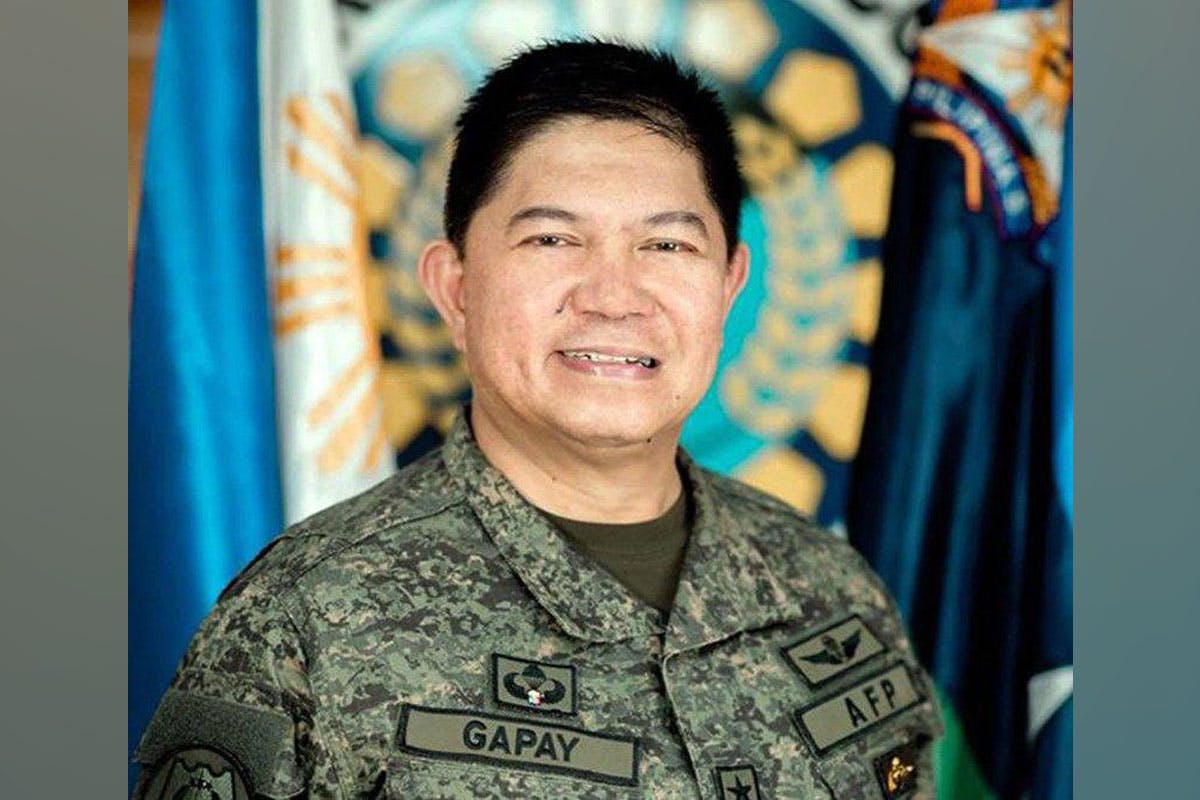
Now saying he does not want to impinge on the freedom of Filipinos, newly installed Armed Forces of the Philippines (AFP) chief of staff Lt. Gen. Gilbert Gapay appears to have backtracked on his proposal to regulate social media users using the recently enacted Anti-Terrorism Law.
What he really meant, Gapay said over the weekend, is for social media companies to practice self-regulation to prevent terrorists from using their platforms.
“What we’re saying – we’re proposing or suggesting the idea, through the Department of Information and Communications Technology – is if they could coordinate with these social media platforms to somehow regulate (their) platforms,” Gapay said in a television interview. “What we are suggesting is for these social media platforms to really regulate what they are uploading in their respective sites.”
On Monday, Aug. 10, Defense Secretary Defense Lorenzana offered a different explanation of what the new AFP chief meant.
“No, the Anti-Terror Law should not regulate social media. It is not part of its mandate and it would violate freedom of speech and discourse,” Lorenzana stressed.
He said what Gapay was referring to was the “dark net,” a clandestine network that uses cyberspace for illegal activities such as human trafficking, drug dealing and terrorism.
Lorenzana admitted, however, that such regulation could be a long shot given the nature of the dark web.
Read More: Can The IRR Of The Anti-Terrorism Act Regulate Social Media and Ammonium Nitrate?

Social media regulation
Gapay issued the clarification after drawing criticisms on his first day as the 54th head of the AFP.
In his first press briefing as military chief last week, Gapay raised the possibility of including social media regulation in the implementing rules and regulations of Republic Act No. 11479 or the Anti-Terrorism Act.
“We’ll be providing some inputs on countering violent extremism and, likewise, maybe regulating, even regulating social media because this is the platform now being used by terrorists to radicalize, to recruit and even plan terrorist acts,” he said.
The remark drew criticisms from various sectors, with presidential spokesman Harry Roque stating that Gapay’s statement was a personal opinion as social media regulation is not covered by the new law.
Gapay explained that his premise is that social media is being used by local and global terrorist organizations to radicalize people.
He said what the AFP wants are more mechanisms to ensure that social media will not be used as a tool for terrorism, such as in recruitment, financing and logistical support for terrorist acts.
Gapay cited the AFP’s experience with outlawed armed groups, including the Mautes in the Marawi siege and communist rebels, as the reason for his suggestion on social media regulation.
Self-policing
The proposed self-regulation is something that is already being undertaken by the social media platforms that he specifically identified.
For instance, Facebook’s community standards specifically prohibit content from organizations or individuals that proclaim a violent mission or are engaged in violence.
These include terrorist activities, organized hate, mass murder, human trafficking and organized violence or criminal activity.
“We don’t allow content that praises, supports or represents individuals or groups engaging in terrorist activity or organized hate,” the social media company declared.
Its latest Community Standards Enforcement Report showed that 4.1 million content involving terrorism and organized hate have been taken down in the first quarter of the year, up from the 1.6 million in the preceding quarter.
Facebook noted its expanded use of technology to detect and remove additional instances of violating content, including those that were identical or near identical to existing violations in its database.
As for micro-blogging site Twitter, it categorically stated that it is no place for terrorist and violent extremist groups and the promotion of illegal activities.
It said those found violating this policy were immediately and permanently barred from the platform.
Google and its subsidiary YouTube also prohibit content that promotes terrorism, including those that glorify terrorist acts or may incite violence.
Google said over 250,000 videos have been removed from its platform in the first quarter of the year for violating this policy.
Impact on freedoms
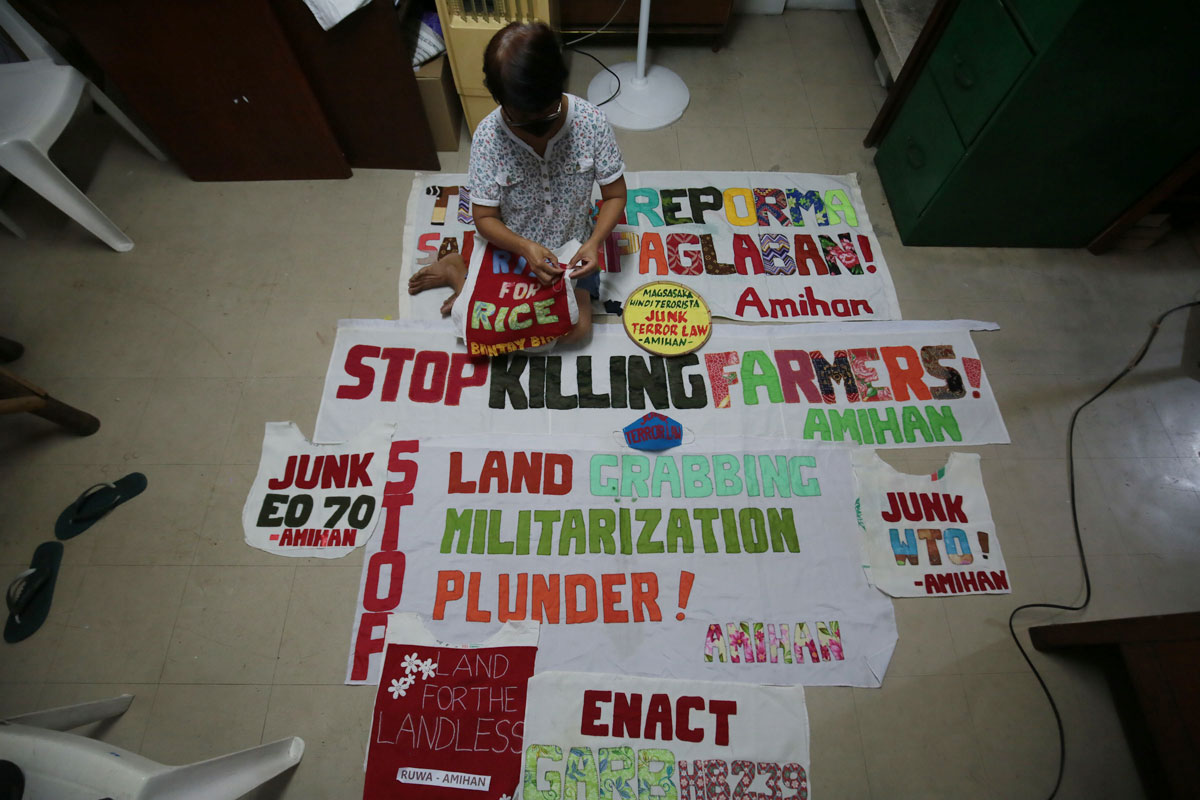
The proposal to regulate social media has drawn criticisms from various groups, with some noting how it justifies concerns over the Anti-Terrorism Act.
The Commission on Human Rights (CHR) warned that regulating social media poses a threat to fundamental freedoms guaranteed in the Constitution, including the right to privacy and free speech.
“Not only is the current proposal vague, it is also broad and susceptible to overreach in terms of guaranteeing the right to privacy and right of individuals to freely express their ideas,” CHR spokesperson Jacqueline de Guia said.
“The threat of restraint posed by the inclusion of a provision to regulate social media may constitute a bar for individuals to continue voicing out their opinions and ideas, curtailing fundamental freedoms,” De Guia added.
She noted that there is nothing in the law that provides for the regulation of social media, and pushing for it would go beyond the legislative intent of the law.
Such a move, De Guia said, justifies the fears of opponents of the law, which is facing over 20 petitions before the Supreme Court.
“While the freedom of expression and the right to privacy are not absolute rights, permissible interference is only allowed upon lawful order of the court or when the exercise of the aforementioned rights are proven to be injurious to the right of the community or society,” she emphasized.
“A free democratic society accepts and welcomes the free exchange of ideas,” she said, noting how freedom of expression enables people to speak truth to power and in support of one’s conviction or advocacy.
De Guia pointed out redress for wrongdoing must not target legitimate dissent and honest opinions, saying criticism should be taken with an eye toward reforms.
“As development and nation-building is a collective effort, let us remember that the protection of fundamental freedoms is important to ensure that all voices are heard,” De Guia said.
“In the end, the protection of the freedom of expression is not about protecting our sense and sensibilities from criticism. It is protecting the right of all individuals to freely express themselves without fear – with the goal towards a better tomorrow and dignity for all,” she added.
27th petition
Lawyers, professors and media workers were among those who filed the 27th petition asking the SC to declare the Anti-Terror Law unconstitutional.
The petitioners include the Center for International Law represented by its president Joel Butuyan, Foundation for Media Alternatives Inc. represented by its executive director Liza Garcia, Democracy.net.ph represented by its trustee Carlos Adrian Nazareno, Vera Files Inc. represented by its president Ellen Tordesillas, and Lyceum of the Philippines-College of Law professors led by dean Ma. Soledad Deriquito-Mawis.
The petitioners asked the SC to issue a temporary restraining order on the implementation of the law while the petition is being heard.
They also asked the High Court to restrict the Department of Budget and Management from releasing public funds that would support its implementation.
In a 131-page petition for certiorari and prohibition, the petitioners questioned the constitutionality of the law.
They argued that eight out of its nine penal provisions violate constitutionally protected rights such as freedom of speech, the right to peaceably assemble and petition the government for redress of grievances, and freedom of association.
“There is no question that the State, under the law and the Constitution, has a bounden duty to protect everyone within its jurisdiction from the horrors of terrorism and its many contemporary forms,” the petition read.
“But the method by which the State seeks to repress terrorism must not be repressive in itself. Else, the State ironically transforms into a hideous principal terrorist itself, in violation of the Bill of Rights,” it added. – With Janvic Mateo, Evelyn Macairan