



Youth Activism And The Continuous Fight For Freedom
“I think the level of (consciousness) of the people should never be overestimated,” former Commission on Human Rights chairperson Etta Rosales says.
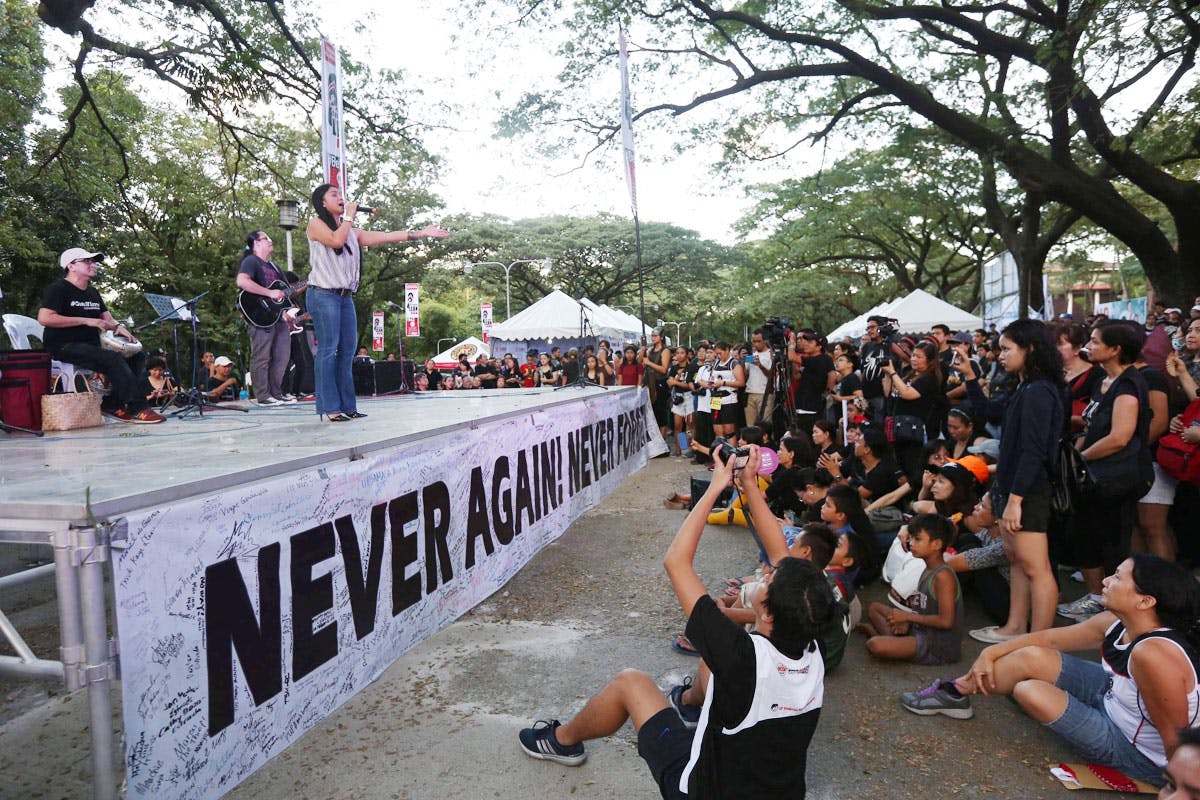
The need to remember the past and keep resisting abuses by public officials marked the 50th anniversary of Lakasdiwa, one of the first groups to have spearheaded the student movement years before dictator Ferdinand Marcos placed the country under martial law in 1972.
Alumni of the University of Santo Tomas social democratic group celebrated the milestone at the Commission on Human Rights office on Monday, Feb. 17 – one of the events to be held by the agency along with the Human Rights Violations and Victims’ Memorial Commission throughout the year to commemorate the 50th anniversary of the First Quarter Storm, or the period of civil unrest in the Philippines during the first quarter of 1970.
Lakasdiwa was founded on Feb. 17, 1970, also the Gomburza Day or the death anniversary of secular priests Mariano Gómez, José Burgos and Jacinto Zamora. The three were executed on Feb. 17, 1872 for leading an uprising against the Spanish colonizers.
Stories and Struggle (SocDem Narratives), an anthology of 40 stories of activists who fought the dictatorship, was also launched during the event. CHR chairman Chito Gascon said the launching of the book was aimed at imparting the lessons of martial law to the youth of today.
“The manner in which the society remembers its past influences our public lives at the present and in the future,” Gascon said. “Remembering serves as society’s bulwark against tyranny.”
He stressed the need to “push back against historical revisionism and the denial of public accountability.”
“We will push back one day at a time, we will push back where we are, with what we have, and we will pound the rock,” he said.
On the sidelines of the event, Gascon told reporters: “Importante na ipaglaban natin sa panahon ngayon ang katotohanan, dahil nandiyan ang usapin ng mga kabataang hindi nakaranas nito. Mahalaga rin na ipagpatuloy nila ang paglaban para sa kalayaan, paglaban para sa demokrasya, para sa karapatang pantao (It is important for us in these times to fight for the truth, because there’s the issue of the youth not experiencing it. It is also important to continue the fight for freedom, the fight for democracy, for human rights).”
Specifically, he saw Solicitor General Jose Calida’s ongoing quo warranto case against ABS-CBN Corp. to be an example of why activists find the need to keep fighting.
“Sa aming pananaw, itong ginawa ni Solicitor General na quo warranto ay isang paraan ng pag-intimidate, pag-harass, pagpuwersa sa malayang pamamahayag na dapat hindi nangyayari sa isang malayang lipunan (In our view, the quo warranto case that the Solicitor General did is a method of intimidating, harassing, applying force against the exercise of free speech that should not be happening in a free society),” Gascon said.
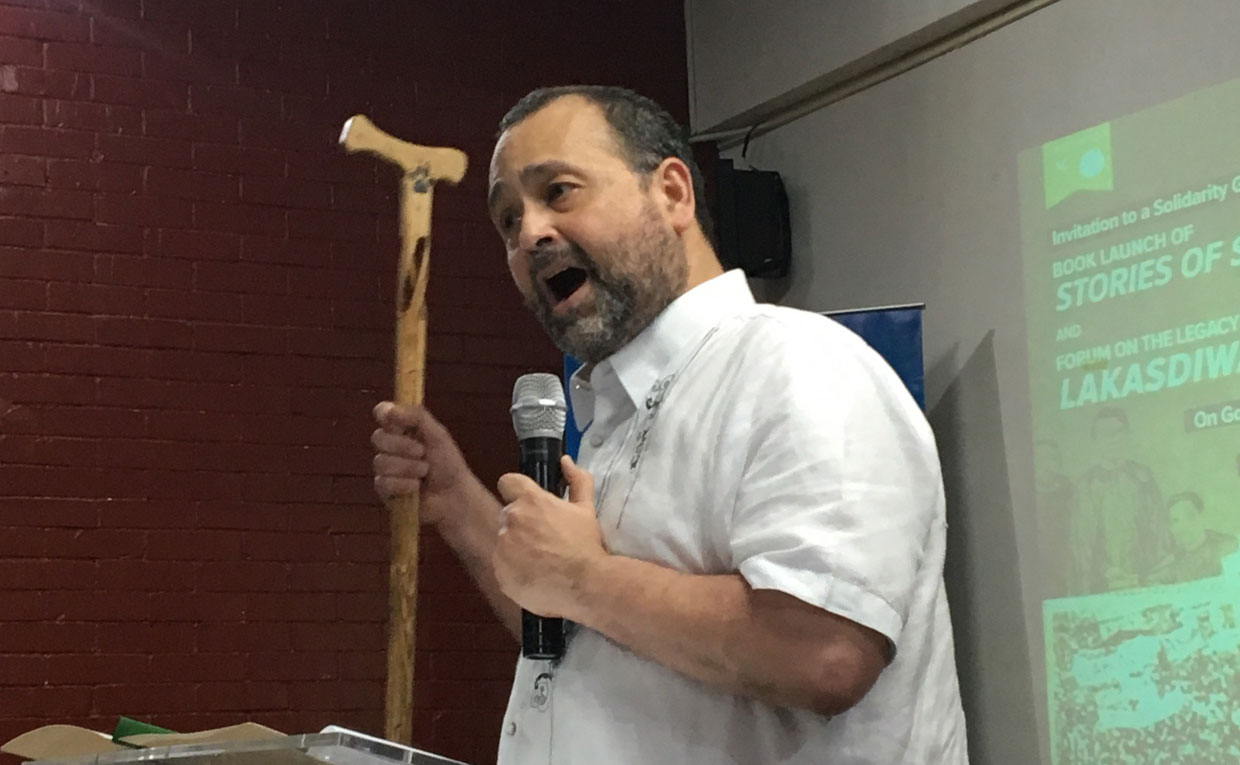
“Unti-unting may chilling effect, at ang mamamayan mismo ang dapat tumindig para sa pagpapahayag hindi lamang ng ABS-CBN kundi bawat mamamayan, sapagkat tayo, mayroon po tayong kalayaan sa tamang impormasyon tulad ng binibigay ng ABS-CBN (Little by little, there is a chilling effect, and the people themselves should stand up for the freedom of expression of not only ABS-CBN but of every person, for we have the freedom to correct information like that given by ABS-CBN),” he added.
Gascon fought the Marcos dictatorship as a student leader and helped mobilize protest actions in schools demanding justice for all and radical political change when former senator Benigno “Ninoy” Aquino Jr. was assassinated on Aug. 21, 1983. In 1985, Gascon was elected chairman of the University of the Philippines student council and led the youth movement that actively participated in the bloodless people’s uprising.
The country will celebrate the 34th anniversary of the EDSA people power revolution on Feb. 22 to 25, 1986 that ousted Marcos and forced his family into exile. The Cultural Center of the Philippines on Wednesday, Feb. 19, held a screening of the documentary The Kingmaker, centering on the political rehabilitation efforts of former first lady Imelda Marcos and her family, to commemorate the EDSA revolution.
Read more: Documentary on Imelda Marcos to be shown anew for EDSA people power anniversary
Asked about it during the event, former CHR chairperson Loretta “Etta” Rosales said that in one of her classes, only one of her students saw what was wrong with the former first lady giving away money during the failed campaign of her son Ferdinand “Bongbong” Marcos Jr. for the vice presidency.
“I think the level of (consciousness) of the people should never be overestimated,” Rosales said.
She lamented that the “ideological values that have to be broken… had been maintained up to now… (by) the people holding the economic power, the political power” and Marcos is being “idolized right now by the Palace” itself.
Like Gascon, Rosales said, “All we have is our voice, but that’s what’s important – our voice and our empowered citizenry.”
“I keep saying this over and over again: it all boils down to an informed, an empowered and a committed citizenry that is ready to act... when their human rights are being violated,” she added.
Rosales was an activist who was jailed, beaten and sexually abused during the Marcos regime.
May Rodriguez, another activist and campus journalist during martial law, said she was sure that the Marcoses were behind the ongoing historical revisionism. In the documentary, it was shown that thousands of accounts identified with the Marcoses were shut down by Facebook. Critics of the Marcoses allege that millions of funds are being utilized to change the true historical accounts and feed them to the young people through social media.
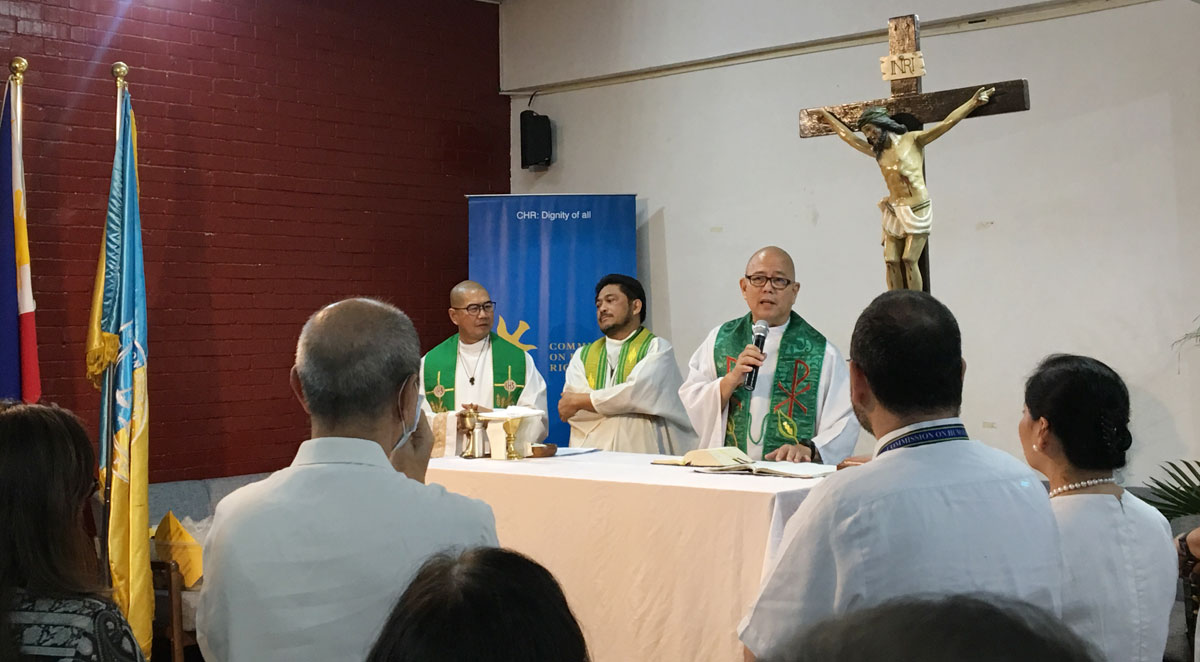
During the CHR event, the mass marking the Lakasdiwa anniversary was celebrated by three priests critical of President Duterte’s war on drugs and were accused by authorities of inciting to sedition.
Although renowned “running priest” Fr. Robert Reyes was spared by the Department of Justice from indictment, prosecutors found probable cause to file charges against Fr. Flavie Villanueva and Fr. Albert Alejo before the Quezon City Metropolitan Trial Court. They are currently out on bail.
Fifty years since the rise of student movements under Marcos, Reyes lamented that “the prevailing political culture has changed drastically and disappointingly in the wrong direction.”
“He has mastered the art of destroying the institutions, destroying morality, destroying the truth, destroying genuine dialogue, consensus-building, destroying decency. I don’t know what he has not yet destroyed,” Reyes said, referring to Duterte.
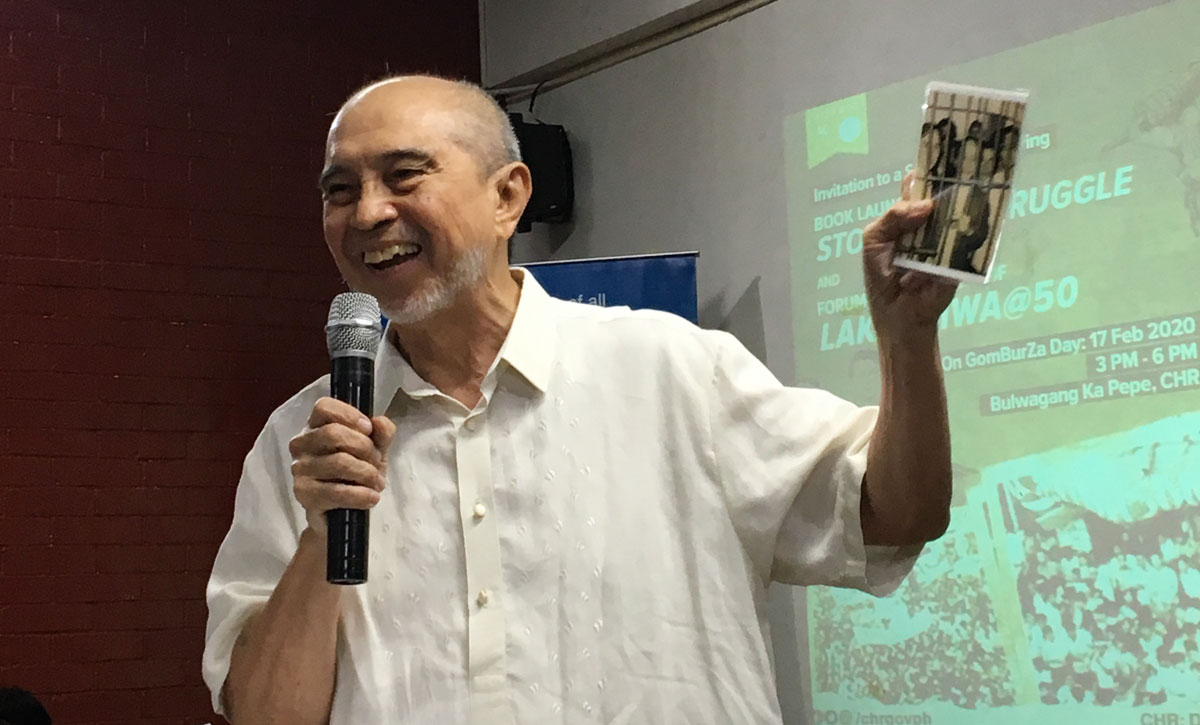
One of the founders of Lakasdiwa, Edmundo Garcia, believed in nonviolent social change and became a pioneering and inspirational leader during the First Quarter Storm.
“Sent by his Jesuit superiors to Latin America for theology studies in 1972, he spent the martial law period grappling with the challenges of defending human rights and fostering democratization in an authoritarian context,” according to an article posted on the Ateneo de Manila University’s website as it conferred on Garcia the Parangal Lingkod Sambayanan in 2015.
The conferment was “in recognition of a lifetime advocating peace, and championing human rights and social justice for the marginalized in the Philippines and in various parts of the world; for leaving a legacy of lessons in building peace which can be used and built on by future generations; for being the quintessence of the socially committed and politically engaged Filipino global citizen; at a time when our country and the world yearn for peace and peacemakers.”
“He (Garcia) renewed his active involvement in the ‘parliament of the streets’ and engaged with a new generation of activists in the aftermath of the Aquino assassination in August 1983. This struggle for creating and expanding democratic space against the Marcos dictatorship culminated in the victory of people’s power at EDSA in February 1986,” the article read.


