


‘Walk This Way’ Into The Life Of Cultural Activist Carlos Celdran
Examine the life of Manila’s popular albeit controversial performance artist and cultural activist Carlos Celdran who died on Tuesday, Oct. 8.
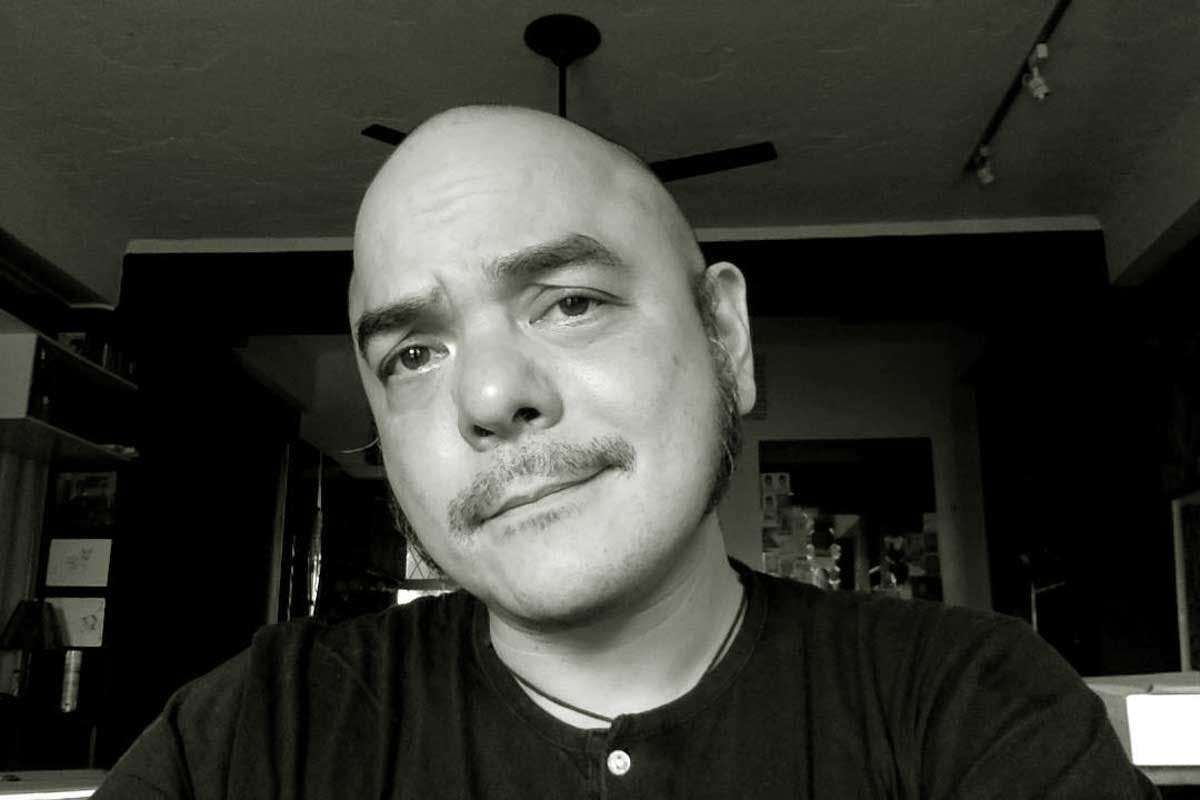
As shown in how he lived his life, artist and cultural activist Carlos Celdran was a person who truly loved the city of Manila.
Even when he spent the final months of his life in Spain's capital Madrid, the “Distinguished and Ever Loyal City” was always in his mind, as shown in the tagline of his Wordpress blog — A Manila Man in Madrid.
Celdran left Manila in January following a Supreme Court decision in August last year that upheld his conviction for “offending the religious feelings” - a violation of Article 133 of the Revised Penal Code.
His departure from the city that was his home for decades was heartbreaking for Celdran.
“I didn’t want to leave Manila, but I must admit the decision to ditch all of the toxins created by the times we live in is the best thing I’ve ever done,” Celdran wrote in an Instagram post in Madrid on March 19.
Manila was where his artistry was developed and honed, beginning with his career at age 14 as a young political cartoonist for Manila’s Business Day (now BusinessWorld) newspaper right after the 1986 EDSA people power revolution.
“It taught me how to laugh at things,” Celdran told ArtAsiaPacific Magazine in 2012.
The University of the Philippines Diliman Fine Arts graduate further fine-tuned his artistry at the Rhode Island School of Design in 1991, where he also began working on performance art. His experience as a production assistant for the Blue Man Group gave him added insight to its development and execution.
Manila’s Pied Piper
Art and history were Celdran’s primary tools — whether in popularizing Philippine history and culture, providing commentary about Philippine politics and society, and campaigning for LGBTQIA+ and reproductive health rights.
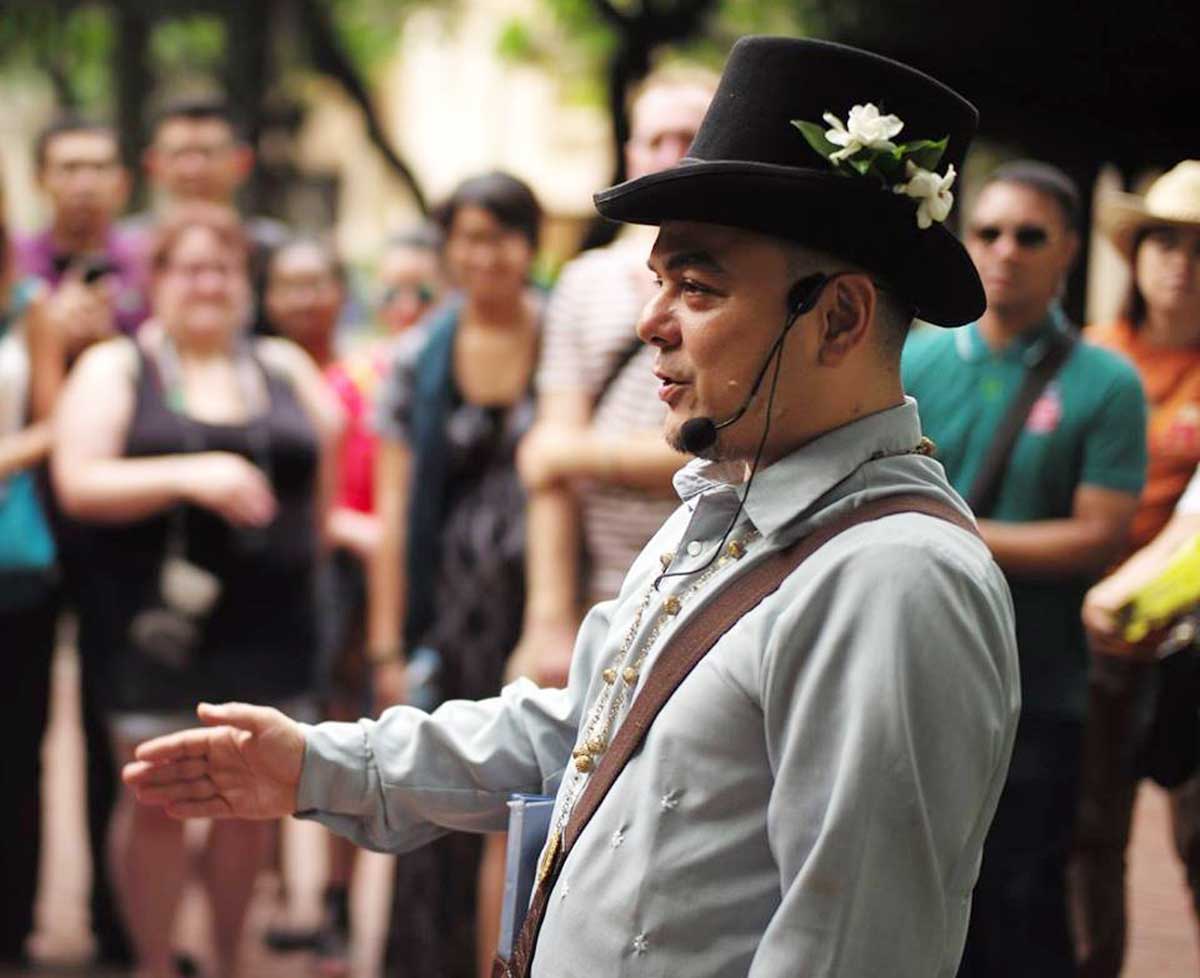
His performance art as a tour guide for his company “Walk This Way” helped generate renewed local and foreign interest in Manila’s historic districts.
Garbed in period clothing and equipped with a lapel microphone, flashcards and music, Celdran immersed tourists in what life was like during the Spanish and American colonial periods particularly in the districts of Intramuros, Binondo and Quiapo.
His performance attracted tourists from far and wide and helped revive tourism and business in what was a slowly dying corner of the country’s capital, earning him the moniker, “The Pied Piper of Manila.”
He also ran a local gift shop, La Monja Loca (The Crazy Nun), at Plaza San Luis Complex, that sold all sorts of Filipino souvenirs, including his signature bowler hat that he used to impersonate Filipino reformist and nationalist Dr. Jose Rizal.
It was also his impersonation of Rizal that he used to assail the Archdiocese of Manila on Sept. 30, 2010.
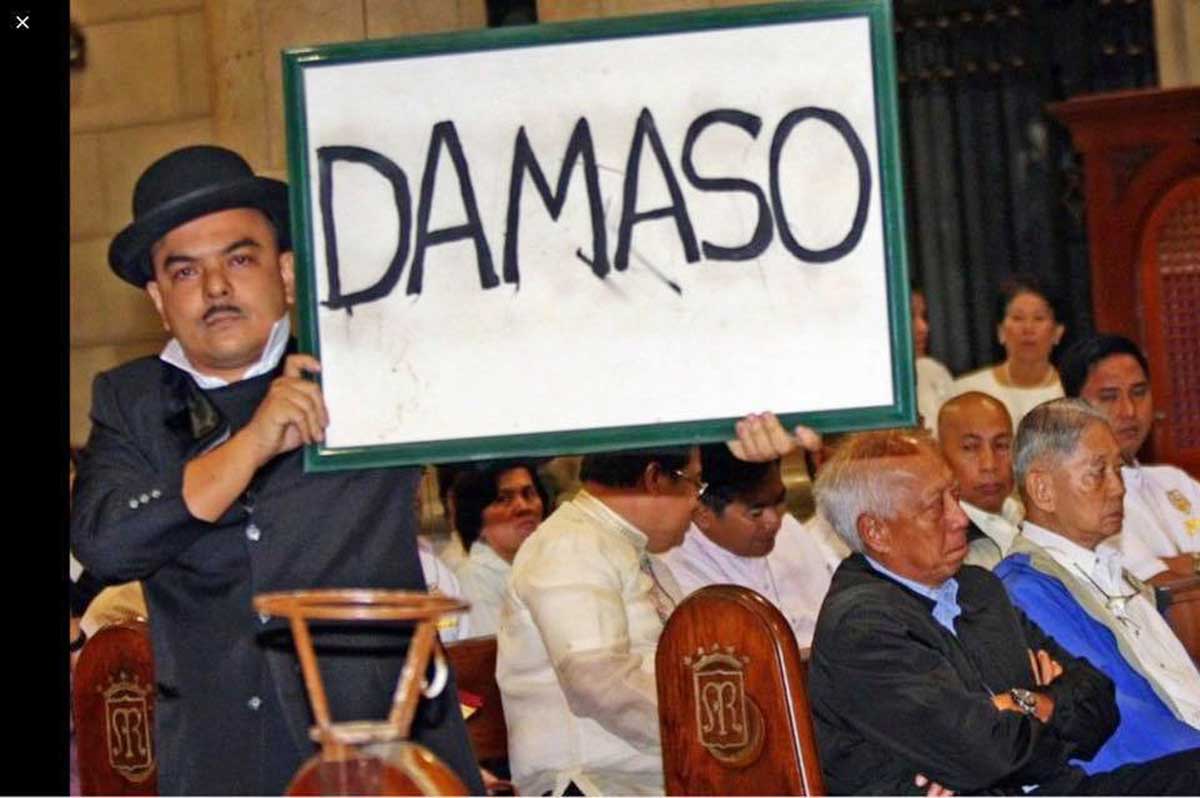
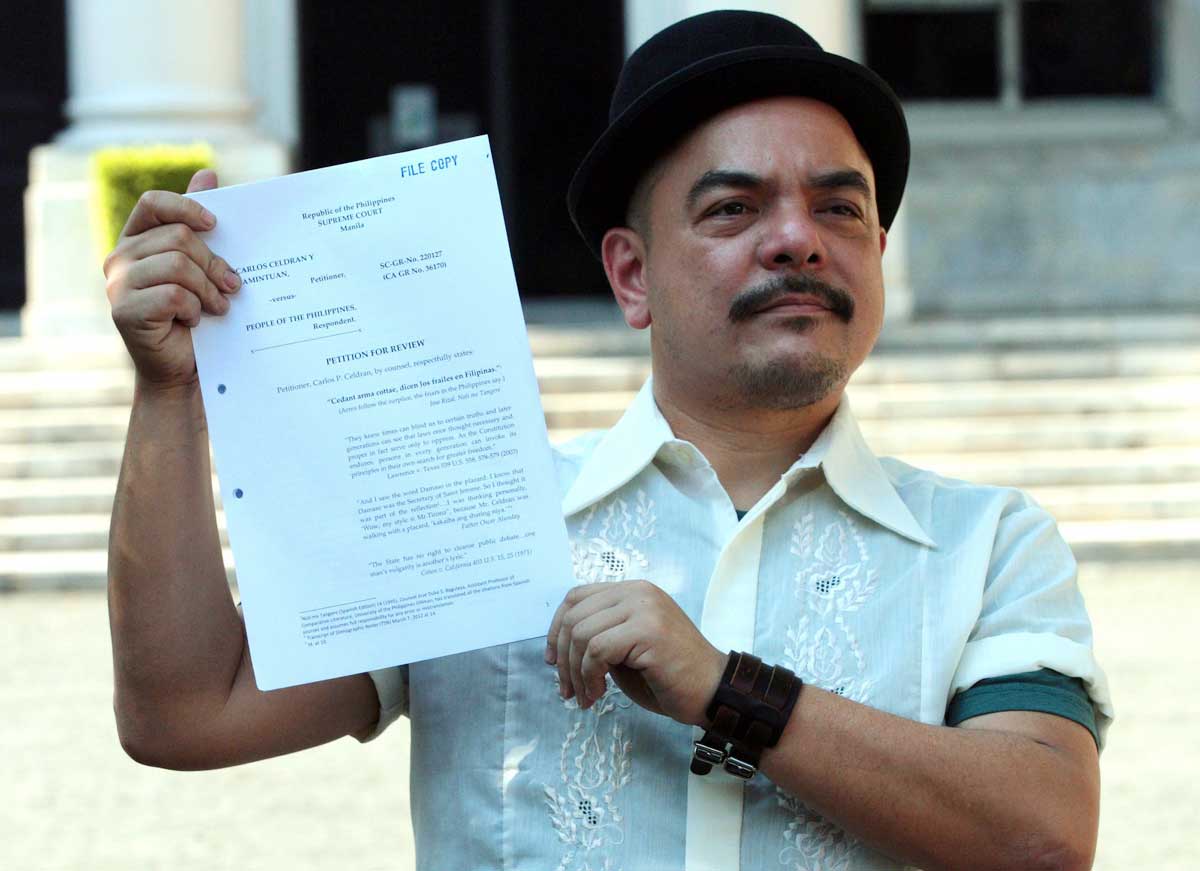
Part performance, part protest — Celdran entered the Manila Cathedral while mass was being celebrated and held a placard with the word “Damaso” written on it, referring to the evil Spanish friar who was the antagonist in Rizal’s novel Noli Me Tangere.
A lifelong supporter of LGBTQIA+ and reproductive health rights, Celdran’s performance was in protest of the Catholic Church’s opposition to the passage of the reproductive health law, a landmark legislation that would grant millions of Filipinos easy access to contraceptives and other family planning methods, as well as other RH services.
The protest underscored the influence that the Catholic Church still wields in Philippine politics, as it did during the Spanish colonial period although on a diminished scale, even as many Filipinos contract HIV yearly and the country's population swells due to the inaccessibility of RH services.
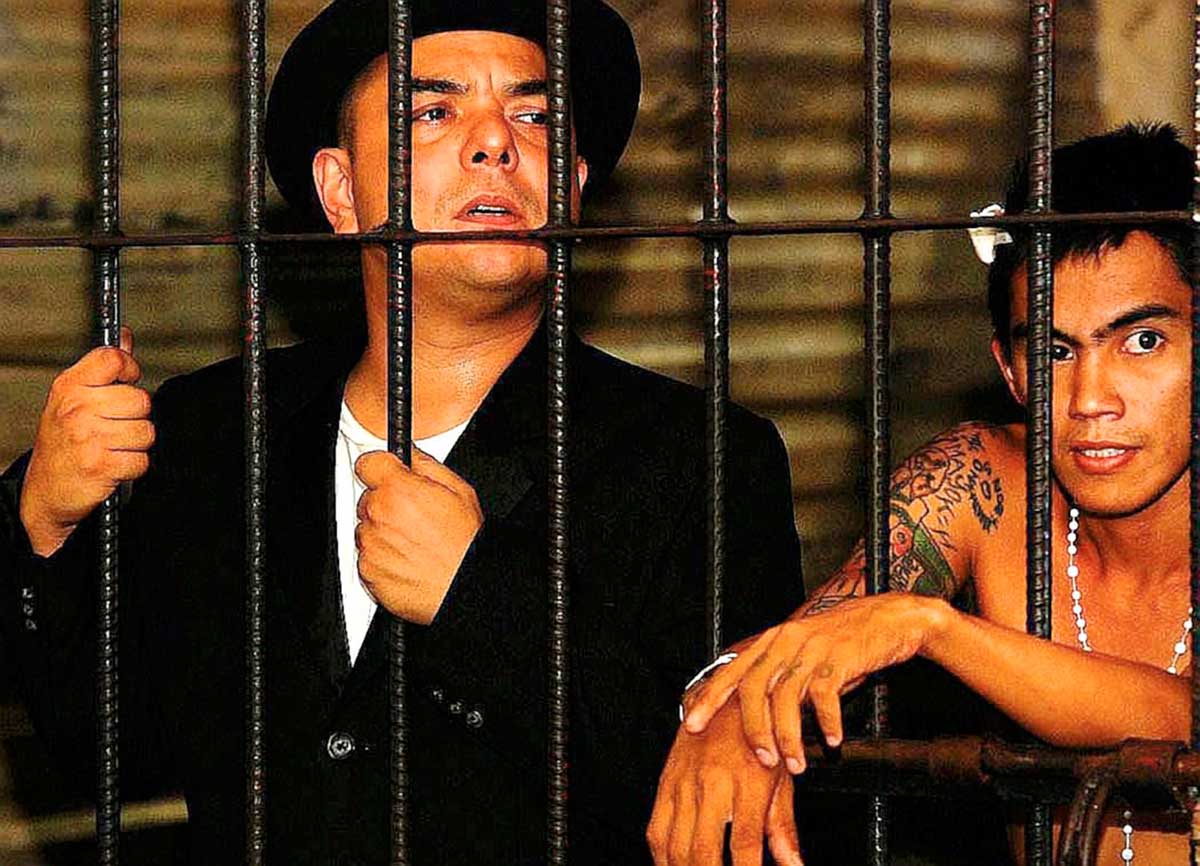
Like the national hero he impersonated, Celdran was put behind bars and charged with offending religious feelings — the first person in the country to be charged under the archaic provision of the Revised Penal Code — which to his supporters all the more proved his point.
Wielding art and history as weapons
Aside from the Catholic Church, Celdran also wielded his weapon against the corrupt and powerful such as former first lady and now Ilocos Norte Rep. Imelda Marcos.
In 2009, his one-man show Livin’ La Vida Imelda premiered, derived from his walking tour of the Cultural Center of the Philippines.
Part performance, part history lesson, his show underscored the excesses of the Marcos regime as shown in the opulent lifestyle of the former first lady.
Following its premier, Celdran has performed the show around the world, in cities like Manila, Cebu, New York, Toronto and Dubai.
“If you examine it closely, you’ll see that it’s mostly just a lecture with black-and-white slides, but Mr. Celdran’s charm and showmanship turn it into genuine theater,” theater critic Anita Gates wrote in The New York Times in 2014.
As with his cathedral performance, Livin’ La Vida Imelda also stoked controversy.
A portion of the show that depicts an imaginary conversation between Marcos and Libyan dictator Muammar Gaddafi using passages from the Koran led to Celdran being questioned by Dubai authorities mid-performance.
Whether it involved offending religious authorities or unsettling powerful rulers, Celdran’s art open many eyes to the both past and present. His guided tours reminded visitors and locals alike of Manila's rich history. His performance art displayed chronic problems in his city.
Before his death, he had just launched Camino Rizal, a guided tour of the different places in Madrid associated with Rizal. Even in this tour, one can see the dedication and commitment that Celdran had for Filipino history and performance art.
With his passing, the city he loved so much lost a glimmer of light.