



VP Leni Robredo In The Firing Line
Officials concerned hit Vice President Leni Robredo for calling the government’s drug war a massive failure. But after the smoke clears, the kin of those who died in the drug war hope that the problem will be dealt with beyond data.
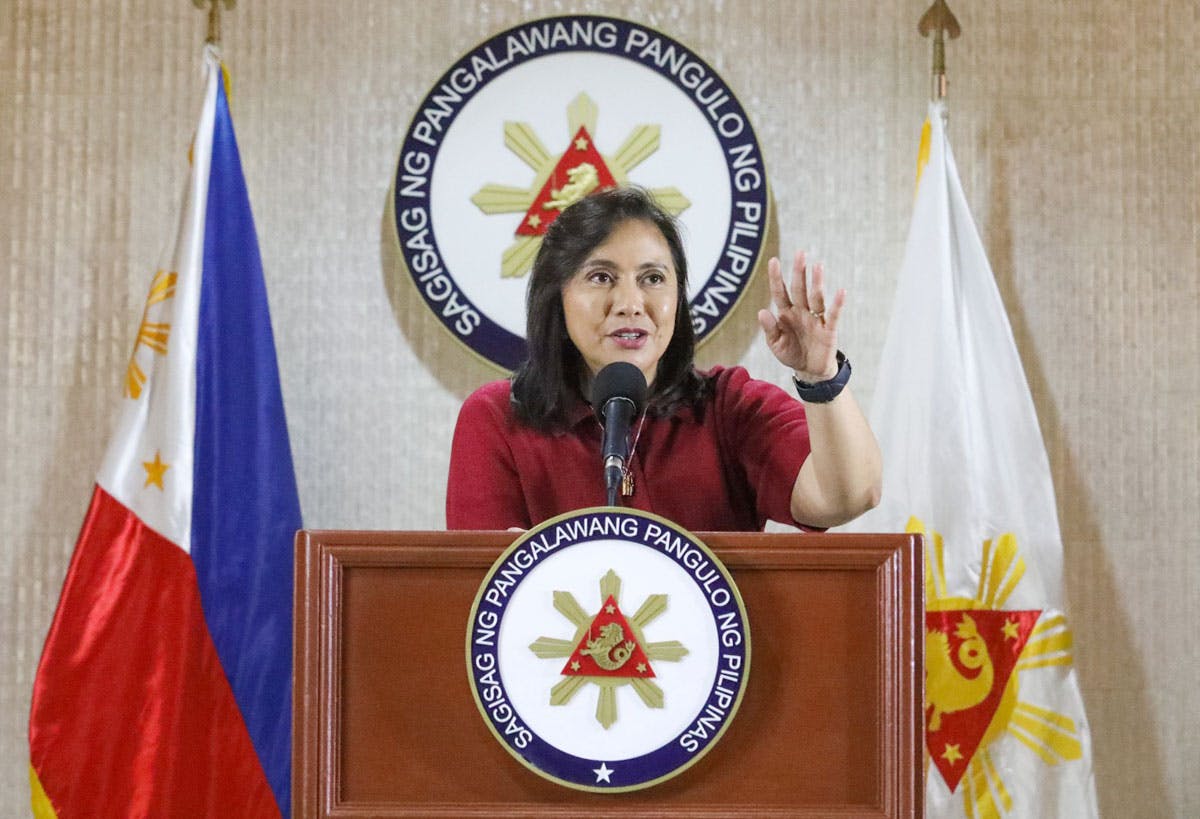
Malacañang and other concerned officials have lashed out at Vice President Leni Robredo for concluding, based on her interpretation of available data, that the government’s bloody war on illegal drugs has been a massive failure.
In a 40-page report that she made public on Monday following her 18-day stint as co-chairperson of the Inter-agency Committee on Anti-Illegal Drugs, Robredo cited these numbers: the Philippine Drug Enforcement Agency (PDEA) was able to haul in a mere 1,344.87 kilograms of shabu last year when approximately 3,000 kilos of the illegal substance worth P25 billion are consumed per week.
Robredo noted that the figures were even lower in 2017 and 2018, at 1,0593.91 and 785.31 kilos, respectively. She added that the Anti-Money Laundering Council reported P1.4 billion worth of frozen assets related to the illegal drug trade from 2017 to 2018, or merely one percent of estimated profits from the scourge.
The Vice President said most of the funds were spent on neutralizing small-time pushers and users instead of constricting the supply. Pushers and users are also detained in the same facilities, she pointed out, and recommended that the ICAD chairmanship be transferred to the Dangerous Drugs Board (DDB). “If you liken it to an exam, the government’s score is one out of 100,” she declared.
The rebuke from the Vice President raised strong criticisms from PDEA director general Aaron Aquino, Interior and Local Government Secretary Eduardo Año, Philippine National Police (PNP) officer-in-charge Lt. Gen. Archie Francisco Gamboa and the DDB. Presidential spokesman Salvador Panelo said Robredo’s long-awaited report was “a dud.”
According to Aquino, the PDEA has seized an estimated P45 billion worth of illegal drugs since 2016, conducted over 162,000 anti-illegal drug operations that led to the arrest of 225,284 suspects, and cleared 49 percent of the 33,381 barangays of the menace. The government has also been trumpeting the surrender of more than a million drug pushers and users since the start of the drug war, which remains popular among the majority of the Filipinos based on surveys.
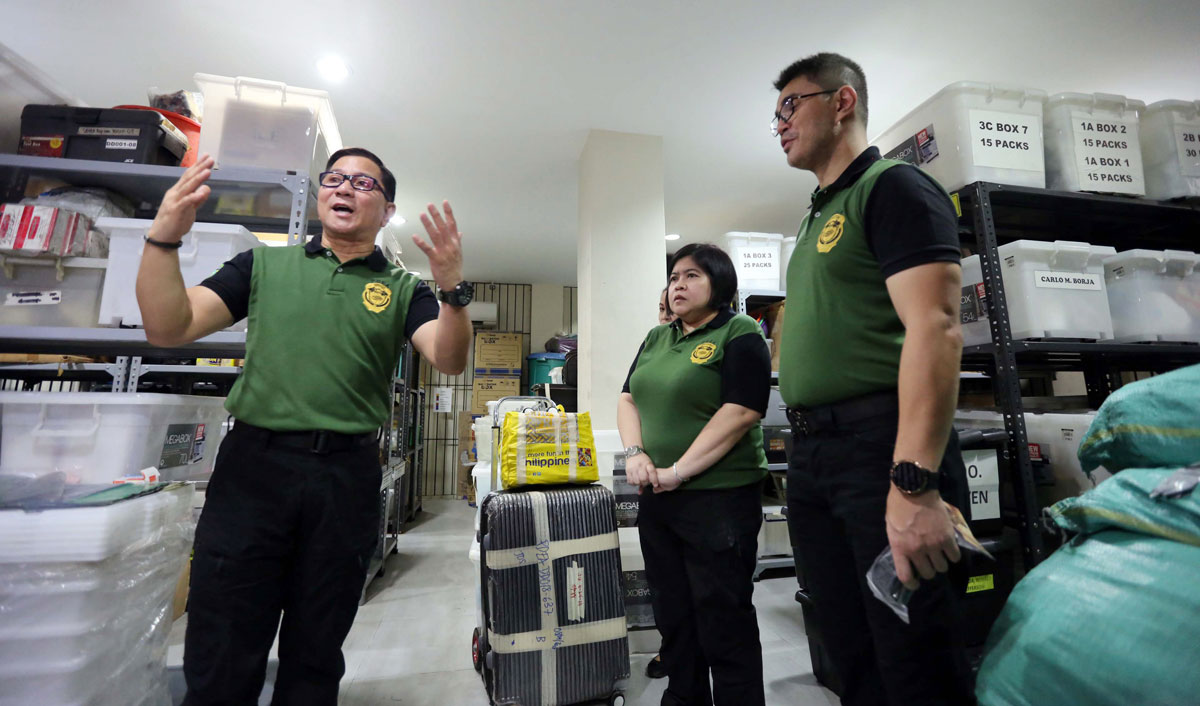
The DDB, which rejected Robredo’s suggestion that it lead the ICAD, said it would come out with a unified data on the number of drug users in the first half of the year as it stressed the importance of having a unified data and scientific basis in the implementation of the government’s policies and programs.
“The DDB is set to release the results of this research initiative within the first semester of the year,” the board said in a statement.
The DDB is conducting the data gathering together with the Department of Social Welfare and Development to determine the extent of drug use in the country.
The policymaking body said the latest assessment would address questions on the actual number of drug users in the country.
From 1.8 million drug users in a survey conducted by the DDB in 2015, the figure being used by President Duterte has grown to three million and then to eight million, prompting critics to say that from these conflicting figures alone, the drug war could be considered a failure.
The DDB also said Republic Act No. 9165 or the Comprehensive Dangerous Drugs Act specifically tasked the PDEA to serve as the lead implementing arm in the anti-drug campaign, thus the need for it to remain at the helm of the ICAD.
Año, for his part, said Robredo’s assessment is just an opinion “bereft of logic.”
“It’s like counting the chickens before the eggs are hatched,” he claimed.
Año said the Vice President merely used a working data and did not study the actual situation on the ground.
“If 3,000 kilograms per week, kapag ganun kadami baka tayo lahat tumitira,” he said.
The PNP declared that Robredo is wrong in her assessment and that she ignored the achievements of the police in the past three years.
“With all due respect, I beg to disagree with the public relations bombshell of Vice President Robredo,” Gamboa said in a press briefing at Camp Crame in Quezon City.
According to Gamboa, Robredo erred when she used figures from the PNP-Drug Enforcement Group that he described only as a theoretical assumption.
“If you have little knowledge on the statistics that you present, it could be very risky and that’s what she did,” he said.
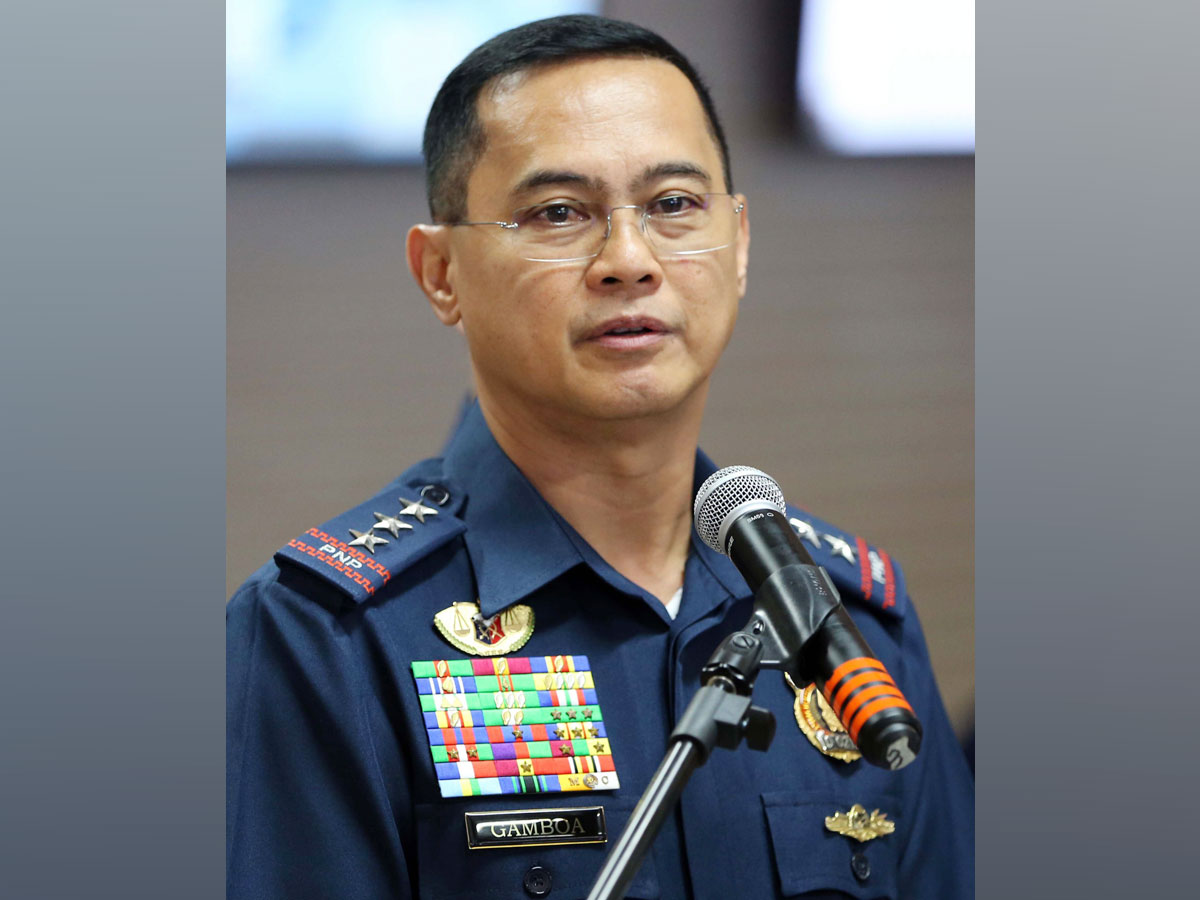
Gamboa said the anti-drug campaign is not a failure as law enforcement operations have resulted in the seizure of 7.8 tons of prohibited drugs worth P40.39 billion since July 2016, of which 5.1 tons are shabu.
The PNP also reported shutting down 14 clandestine laboratories and 419 drug dens across the country.
At least 5,552 suspected drug personalities were killed and 220,728 others were arrested in law enforcement operations in the past three years, the PNP said.
A total of 16,706 barangay were also cleared of the drug problem while
421,724 drug users have been rehabilitated, it added.
Gamboa said these accomplishments came at a price with the death of 55 police officers in alleged shootouts with lawmen.
“It would be the height of disrespect to say that they died a useless death because they failed to stop the drug problem,” he said.
Support for Leni
Amid the exchange of tirades, the mothers and other family members and relatives of those who were killed in the course of the drug war, expressed support for Robredo.
The rights group Rise Up for Life and Rights (Rise Up) said in a letter to Robredo that they were “so thankful” that the Vice President took a stand for the victims.
“Thank you for welcoming the year 2020 with such vigor to fight the drug war campaign,” Rise Up said.
Marissa Lazaro, a mother whose son was slain in the drug war, also expressed her gratefulness to Robredo in the letter released by Rise Up.
“My message for VP Leni is that we, the families of the victims of the extra-judicial killings, are with her; and we are the evidence that her information is true and that the drug war was a sham. There was no rehabilitation center that treats drug addicts as (Secretary) Panelo claims; rather, they are in prison along with criminals. And with the number of innocent lives killed, would they (Duterte administration) say it was a victory?” Lazaro's letter read.
Amy Jane, a mother of a drug war victim, also said the report “is a confirmation from the second-highest official” that “the war on drugs was indeed a failure.”
“She gave a report after more than three years, meaning it was well-researched, and it strongly goes against the problematic plans of the President,” Amy Jane wrote in another letter.
In a separate statement, Rise Up branded Duterte’s anti-drug campaign as a war against the poor, and demanded accountability.
“We fervently hope for President Duterte to be held accountable for the many lives lost, while only seizing (one percent) of the illegal drugs (shabu) by the PNP… We will not stop as long as President Duterte is not made accountable for the killings of the poor. Yes, we cannot bring back the dead, but justice, and justice alone, could give us peace and serenity,” the group said.
Rise Up for Life and for Rights is a network of families of the victims of drug-related killings and human rights violations as well as advocates – including professionals and church people – for an end to the killings and violations.

Holistic approach
Human rights alliance Karapatan also welcomed Robredo’s report, saying it “merely affirms what human rights groups have already reported based on work with grassroots communities – that the state policy of mass murder against the poor failed and has been ineffective in curbing the proliferation of illegal drugs and in resolving the root causes of such in the country – at the expense of millions of pesos in government funds and resources and thousands of lives.”
Karapatan secretary general Cristina Palabay declared that the organization supports Robredo’s recommendation to “abandon this policy that places a premium on the use of law enforcement methods that resulted in killings in favor of a policy that promotes and ensures accountability and transparency.”
She said the government “must reciprocate by implementing data-driven policies that not only focus on street-level enforcement, but on a holistic approach on ‘prevention, detention, prosecution, rehabilitation and reintegration’ that upholds people’s rights and basic human dignity.”
Palabay slammed the reactions from government agencies and officials dismissing the report as baseless or a mere political attack, saying that these “merely attempt to disregard the fact that her report shows data and details on how and where the drug war has failed.”
“State forces have only seized less than one percent of shabu in the past three years and yet they continue to operate with brazen impunity, even with the expose on the ‘ninja cops’ scandal and the deep involvement of the police and government officials in the distribution of illegal drugs in the country,” Palabay said.
“Karapatan enjoins Robredo to continue working with the families of drug-related killings and other victims of human rights violations of the Duterte regime in demanding for genuine accountability and justice, and an end to the killings,” she added.


