



Use ‘Pinggang Pinoy’ In Preparing Holiday Meals, Families Urged
“Pinggang Pinoy” uses a familiar food plate model to convey the right food group proportions on a per-meal basis, to meet the body’s energy and nutrient needs of Filipino adults.
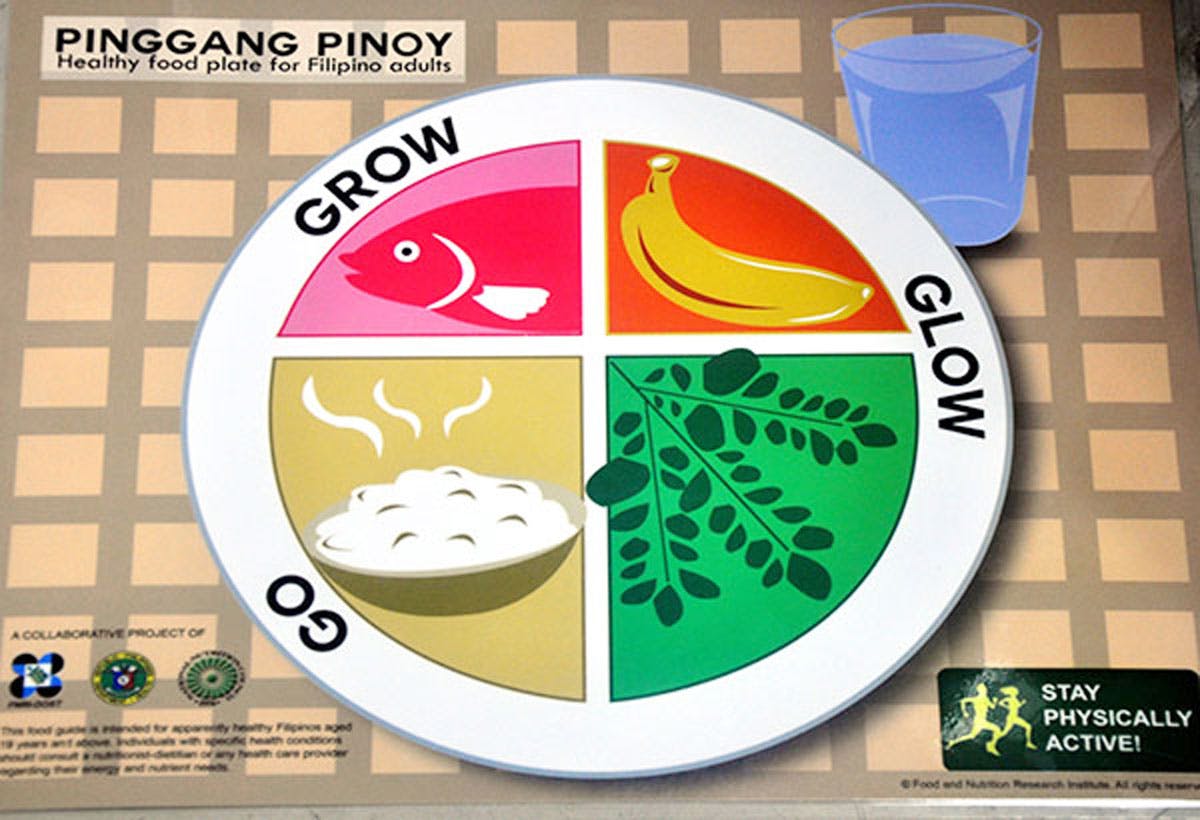
The National Nutrition Council (NNC) is urging Filipino families to use the “Pinggang Pinoy” as a guide when preparing meals for the holiday season.
“With Pinggang Pinoy, the greener your plate is, the better. Half of your plate should be fresh fruits and vegetables. The more vegetables, the better,” NNC Regional Nutrition Program coordinator Eileen Blanco said in a radio interview on Saturday, Dec. 20.
She also suggested preparing food with less fat and carbohydrates and to avoid processed foods such as ham.
“Ham is very, very high in sodium and preservatives. Noodles as well,” she said.
The Pinggang Pinoy, developed by the Department of Science and Technology’s (DOST) the Food and Nutrition Research Institute (FNRI) iin collaboration with the World Health Organization, Department of Health and the NNC, serves as a visual guide to a balanced meal.
It recommends that half of the plate should be filled with vegetables and fruits, one-fourth with protein sources such as meat, fish and beans, and the remaining one-fourth with carbohydrates like rice or pasta.
Blanco also recommended healthier cooking methods such as roasting or baking, instead of frying.
The DOH and the NNC launched Pinggang Pinoy in 2014 to promote healthy eating habits.
Pinggang Pinoy uses a familiar food plate model to convey the right food group proportions on a per-meal basis, to meet the body’s energy and nutrient needs of Filipino adults.
The FNRI said Pinggang Pinoy can be used to complement the FNRI Daily Nutritional Guide (DNG) Pyramid for Filipinos, but it will not replace it.
The FNRI said Pinggang Pinoy is a “quick and easy guide” on how much to eat per meal, while the DNG Pyramid shows at a glance the whole day food intake recommendation.
“Both the Pinggang Pinoy and the DNG Pyramid for Filipinos are based on the latest science about how our food, drink, and activity choices affect our health,” the DOST earlier said.
The Pinggang Pinoy is divided into portions, each of which has their equivalent sizes per meal.
Rice and alternatives include a serving of a cup of cooked rice, four pieces of pandesal, four slices of loaf bread, a cup of cooked macaroni or spaghetti noodles or a small piece of root crop.
Fish and alternatives include a piece of small-sized fish, a piece of small chicken leg or a matchbox size of meat, or a piece of small chicken egg.
The food guide also recommends at least three-fourths cup of cooked or raw vegetables, a medium-sized fruit or a slice of big fruit, and eight or more glasses of water daily.