



Shorter Curfews, WiFi And Airconditioning At Malls Sought Even As GCQ Eyed For Metro Manila Until December
Malacañang says while Metro Manila is under general community quarantine, “we have a wider reopening of industries, and that is what we need because it’s part of our message to protect our lives so we can continue with our livelihood.”
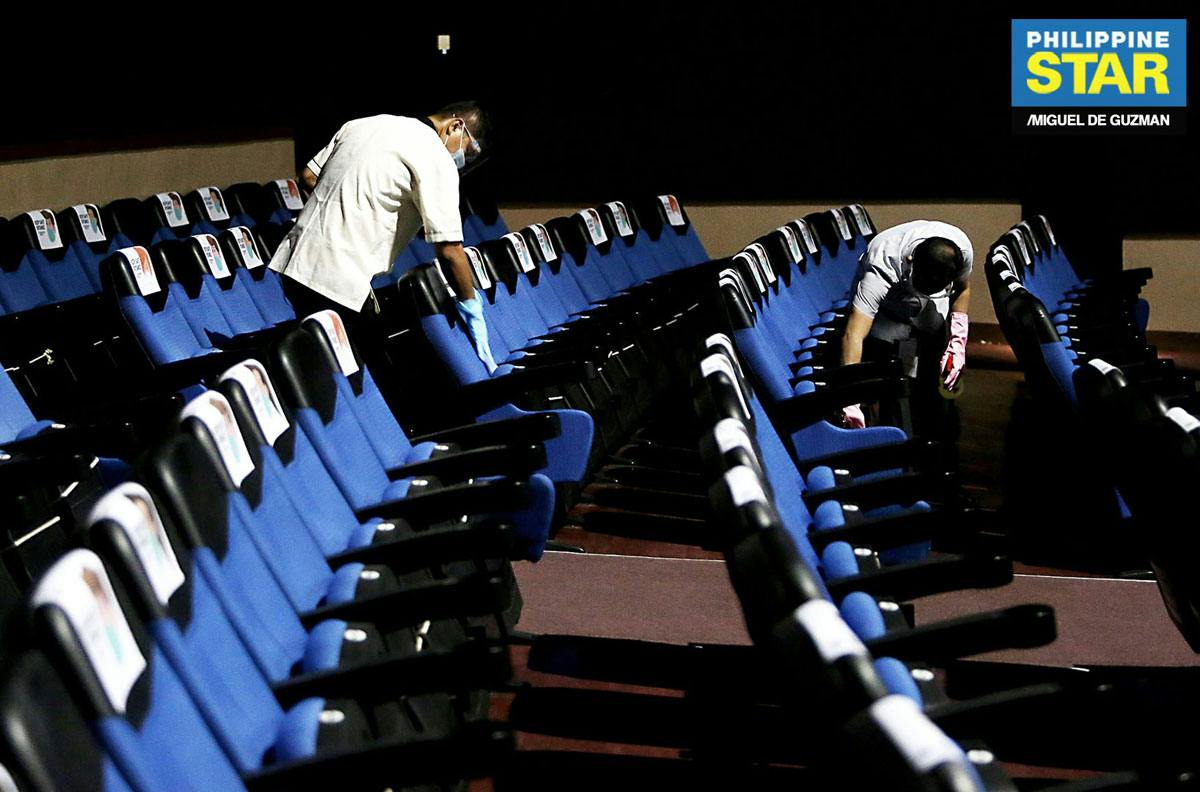
Guidelines continue to be adjusted seven months since lockdowns were imposed due to the coronavirus disease 2019 pandemic.
But there is an emerging consensus among national government officials to extend the general community quarantine (GCQ) in Metro Manila until the end of December.
The Metro Manila Council (MMC), a collegial body composed of the mayors of the 16 cities and a municipality in the National Capital Region (NCR), also wants to stick to GCQ until Dec. 31. This was disclosed by Metropolitan Manila Development Authority (MMDA) general manager Jose Arturo “Jojo” Garcia in an online press briefing on Monday, Oct. 19.
Despite this, Garcia said the MMC would recommend to the Inter-Agency Task Force for the Management of Emerging Infectious Diseases (IATF) that curfew hours be shortened except in Navotas City.
“The MMC planned to adjust curfew from 12 to 4 a.m., except in Navotas City wherein curfew will remain from 8 p.m. to 5 a.m.,” Garcia disclosed. “Shortened curfew hours could help the economy…establishments like restaurants can extend their business hours and accept more customers with the adjusted curfew hours.”
Navotas Mayor Toby Tiangco appealed to retain the city’s 8 p.m. to 5 a.m. curfew since the city is considered more of a residential area and the curfew would prevent residents from gathering for activities such as drinking and gossiping outdoors.
Once approved by the IATF, the local government units of Metro Manila can revise the ordinances mandating curfew hours and the age brackets of people allowed outdoors.
Department of Trade and Industry (DTI) Undersecretary Ireneo Vizmonte also announced on One News’ “Agenda” on Monday that malls would have WiFi connection and cool temperatures once again to encourage shoppers to stay longer and do more activities like eating in restaurants instead of going home after buying their essential needs.
Under stricter quarantine rules, people were discouraged from hanging out in the malls, thus the free WiFi was removed and air conditioning was adjusted to make the establishments warmer.
Vizmonte noted that malls have been open for sometime now and health and safety measures have been in place, but foot traffic remains low.
He said the DTI wants to bring back consumer confidence and improve spending especially this Christmas season.
The DTI is also looking at extending mall hours up to 11 p.m. or 12 midnight, but local government units (LGUs) must be consulted on this because of the existing curfew hours.
Vizmonte explained that longer mall hours would mean more workers to attend to the shops. People also have longer leeway to go to these establishments given the lack of public transportation.
Sale and other promo events have been allowed under the IATF’s Resolution No. 79 issued on Oct. 15 to attract mall goers.
15 or 18 years old?
There is conflict, however, on the age-based stay-at-home restrictions being eyed by the MMC and the one approved by the IATF.
Instead of persons 15 to 65 years old being allowed to go out, the MMC will propose 18 to 65.
MMC chairman and Parañaque City Mayor Edwin Olivarez said broadening the age group of authorized persons outside residence or APOR in the National Capital Region would encourage more activities and help businesses hit hard by the pandemic to recover.
But the council agreed to prohibit those aged 15 and younger than 18 from going out because they could potentially cause three million more COVID-19 infections, Garcia said.
He noted that “18-year-olds can go out since they are legally allowed to work.”
Interior and Local Government Undersecretary Epimaco Densing III explained on Agenda that the 15-to-65 age bracket was considered by the IATF not only to open up markets and boost consumption to revive the economy but also to improve the mental health of individuals during the pandemic.
“We can adjust the capacity (of businesses),” Garcia stressed. “The mayors want to open (the economy), but gradually.”
Garcia maintained that it would be better to slowly adjust while Metro Manila is still under GCQ, instead of shifting to modified GCQ (MGCQ) – the most lenient community quarantine level set by Malacañang, wherein businesses can operate at full capacity – and then suddenly reimpose restrictions if COVID cases surge again.
The MMC has seen COVID-19 cases dropping, he pointed out.
“We think the people have become more responsible in practicing minimum health protocols like wearing face mask and face shield and physical distancing,” Garcia noted.
The respective LGUs can still enforce localized lockdowns, which the IATF “supports,” he added.
Garcia reported that in a meeting last Sunday night, Oct. 18, the MMC also agreed to increase the seating capacity of places of worship to 30 percent to accommodate more people.
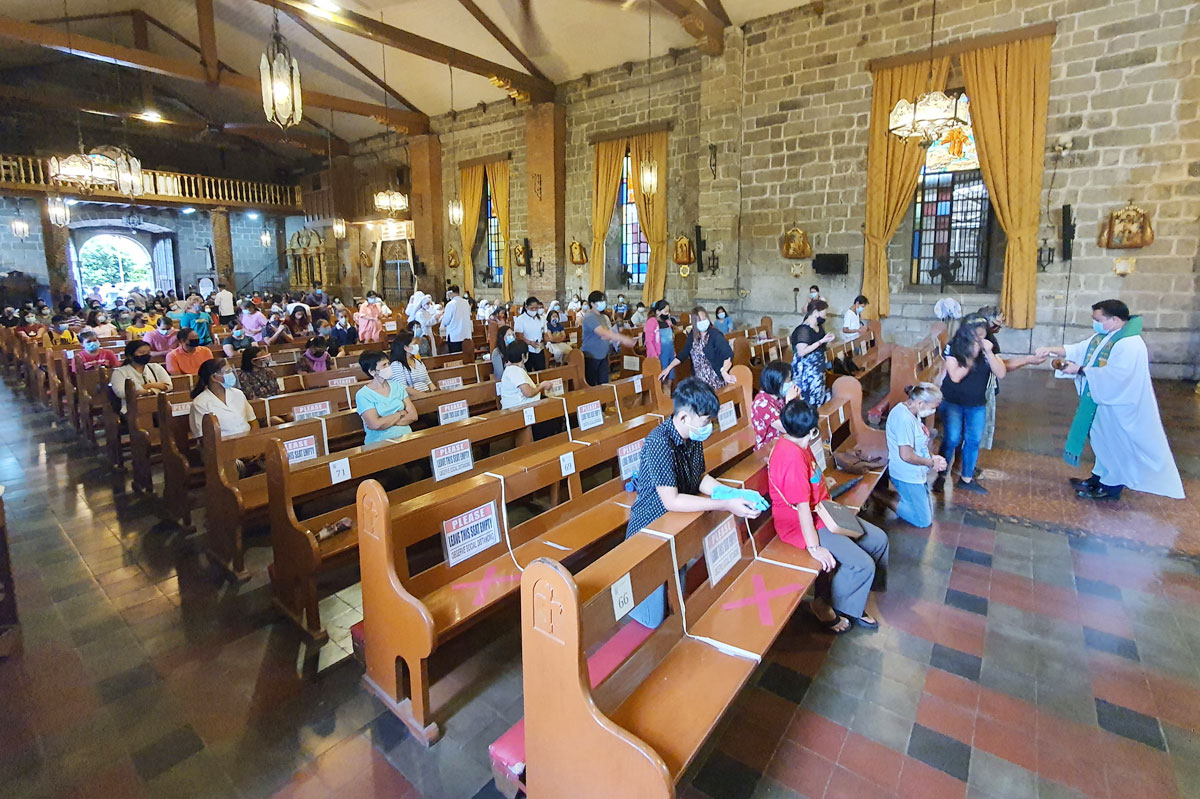
Under GCQ, most industries can partially operate, but restrictions against mass gatherings remain in place. Metro Manila, the Philippines’ economic center, has been under GCQ since the second week of August, save for the two weeks that it was reverted to modified enhanced community quarantine or MECQ after medical groups sought a “timeout” due to rising COVID-19 cases.
Metro Manila will be under GCQ until the end of the month, but President Duterte is expected to announce the updated quarantine classifications before this.
Presidential spokesman Harry Roque said the emerging consensus is to place Metro Manila under GCQ until the end of the year, “but I do not want to preempt it because it is a collegial decision.”
“But what we are seeing right now is, while Metro Manila is under GCQ, we have a wider reopening of industries, and that is what we need because it’s part of our message to protect our lives so we can continue with our livelihood,” he said.
According to Roque, the GCQ being implemented in Metro Manila is more lenient because of the move to increase the allowed capacities of businesses. Still, he reiterated that it is possible for the capital region to be downgraded to the most lenient MGCQ.
“Let’s see if it is possible, if the (COVID-19) numbers go down. We make decisions monthly and October has not yet ended. While we already have initial data, our experts are still studying them to determine the classifications for the month of November,” Roque, also the IATF spokesman, said.
“So let us just continue wearing face masks, washing our hands, and observing physical distancing and I think anything is possible. But what is non-negotiable is we need to work regardless of the (quarantine) classification,” he emphasized.
Roque admitted that one of the reasons why the IATF is hesitant to talk about a downgrade to MGCQ is the possibility that people might be complacent with regard to health protocols. He said Metro Manila mayors expressed belief that economic activities could be restarted without relaxing quarantine classifications too much.
“That’s part of it, but I think the numbers are improving because our countrymen are following health protocols,” Roque said.