


Politikal Ang Komiks! Artists Behind Entertaining Cartoons Want To Engage People On Social Issues
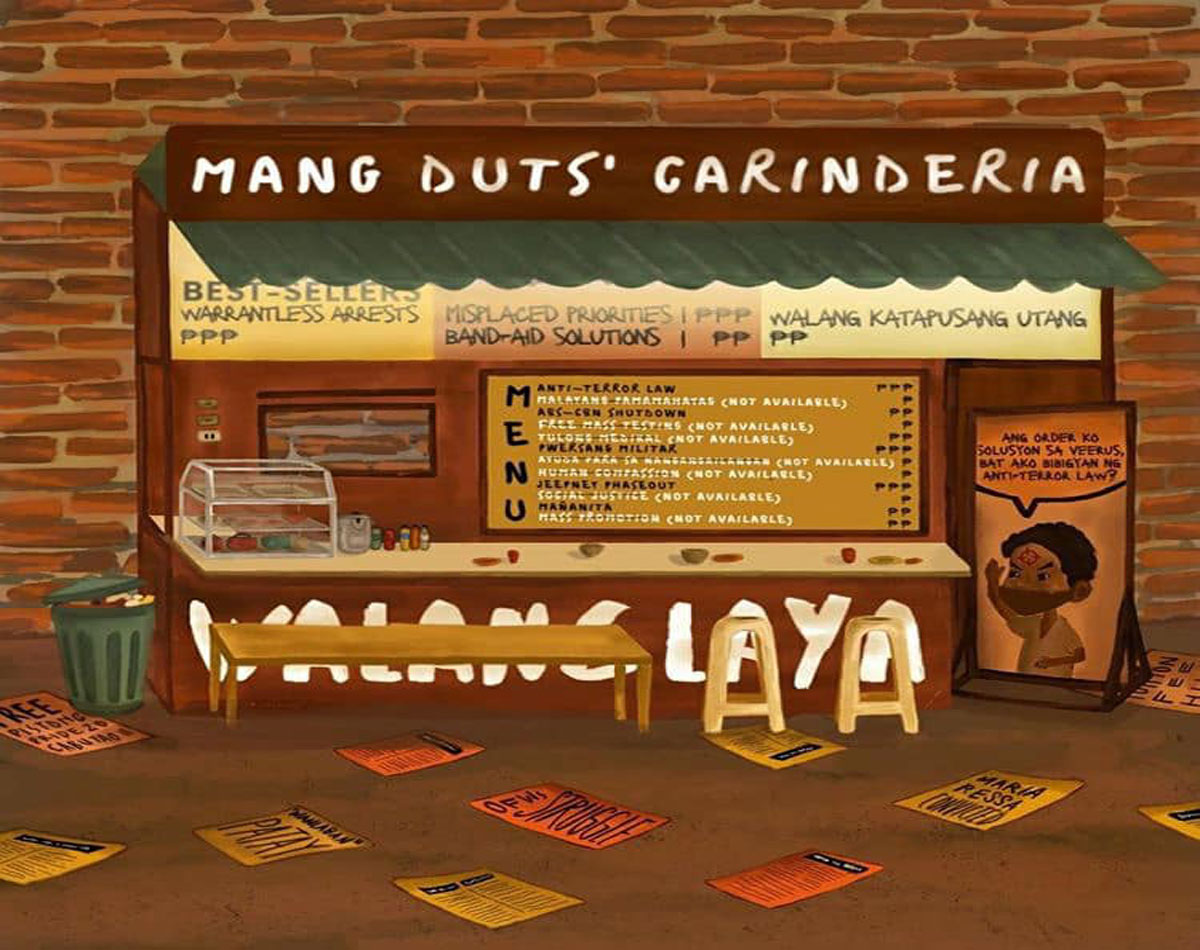
Online artists like Tarantadong Kalbo and MarxNotAHero use humor to get the attention of netizens first, so they are more willing to listen to important messages about the state of the nation.

Living in a world that he can sum up with the exclamation “p*****inang balita ’yan (what the f*** kind of news is that),” Tarantadong Kalbo started to “pivot to more political content” and braced himself to lose followers – only for the opposite to happen.
As Luzon approached lockdowns in March due to the coronavirus disease 2019 pandemic, he posted on Facebook a comic strip through which a character asked if he was not “afraid” that he would anger his family, friends, and the “trolls” that infest social media posts critical of the government.
His avatar, sporting a buzz cut like he does in real life, said: “’Yan talaga ’yung pinaka-ayaw ko sa lahat. Ang mabuhay sa takot (That’s really what I dislike the most. Living in fear).”
Speaking in the online discussion “Politikal ang Komiks!” held by story-oriented organization Active Vista, the artist named Kevin Raymundo in real life said he decided that he was ready to lose the audience when they pushed back against his increasingly political and satirical cartoons.
These were a departure from his earlier comics that depicted daily life situations, with the humor anchored on pop culture references. “Gusto nila light lang, happy-happy lang (They want to keep things light, just happy-happy),” he said.
Now known for his humorous take on news as they break, Raymundo’s comics are seen by roughly 80,000 Facebook users and another 16,000 on Twitter.
Political content has become his specialty. He describes himself this way: “Araw-araw, ako’y gumuguhit ng kung anu-anong kalokohan at pino-post ko ito sa social media para pagpiyestahan ng mga trolls (Every day I draw all sorts of craziness and post these on social media to be feasted upon by the trolls).”
Raymundo says he does not include the real-life context of his cartoons, and the characters are not identified even though they are clearly recognizable. He says he trusts that his audience will exert effort to be informed, and he wants to avoid being preachy.
“Importante kasi yung tiwala sa audience. Mas OK sa akin ‘yung kaunti lang ang naka-gets, pero du’n sa kaunting yun, bentang-benta sa kanila kasi nagbabasa sila ng balita (Audience trust is important. It’s more OK for me if only a few would get it, but among those few, they find it really funny because they read the news),” he said.
“Kaysa ’yung todo-explain ka sa punchline, naintindihan ka ng lahat pero panis na ’yung joke (Unlike if you explain the punchline so much, everyone understands you but the joke is already stale),” he added.
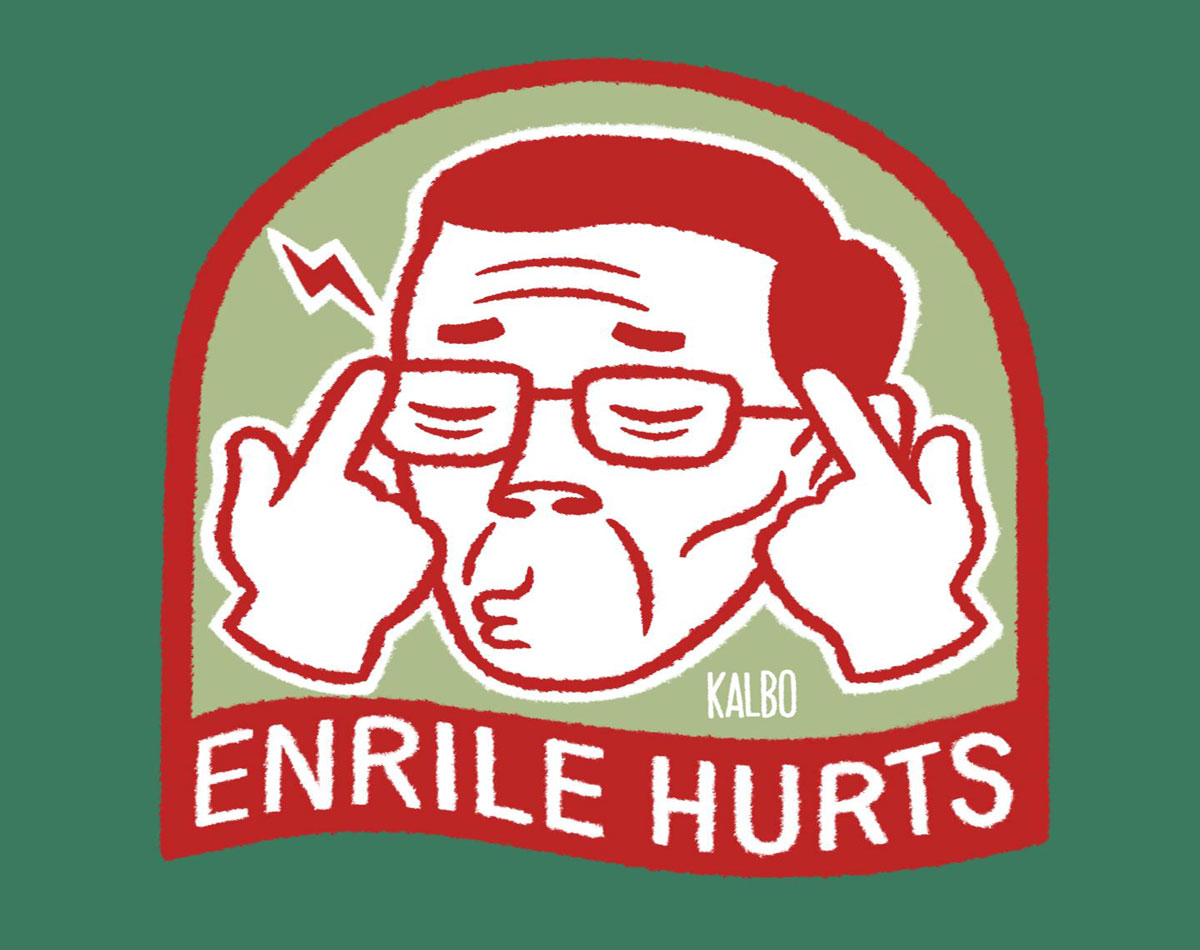
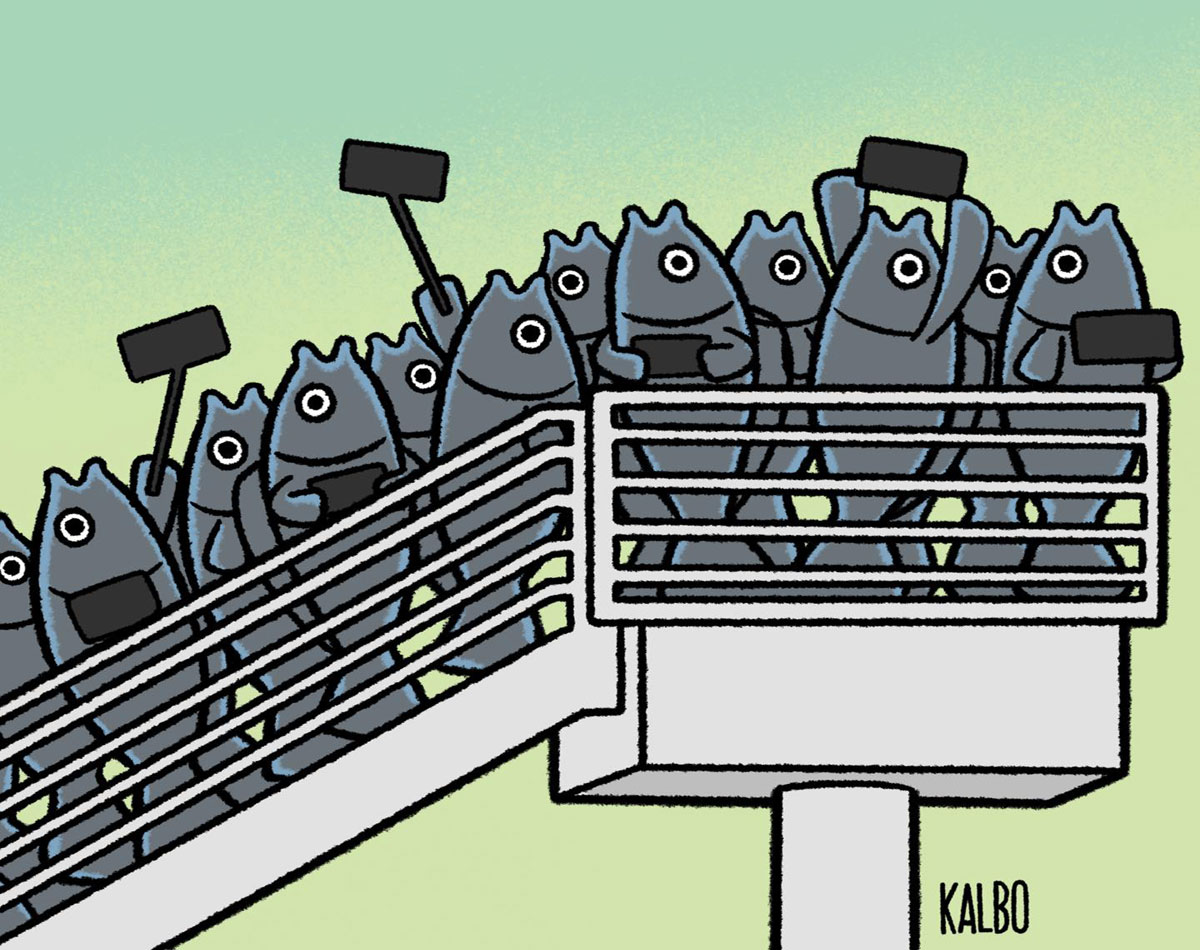
Raymundo’s emphasis on humor is intentional. He says he wants to get his readers laughing first so they will be more willing to listen to the true message of his comics.
“Kung dinidiktahan mo sila na mali sila, nagiging reactive o defensive agad ang reader nu’n. Nire-reject nila agad kung ano man ang gusto mong sabihin sa umpisa pa lang (If you dictate upon them that they are wrong, the reader becomes reactive and defensive right away. They will immediately reject whatever you want to say at the onset),” he said.
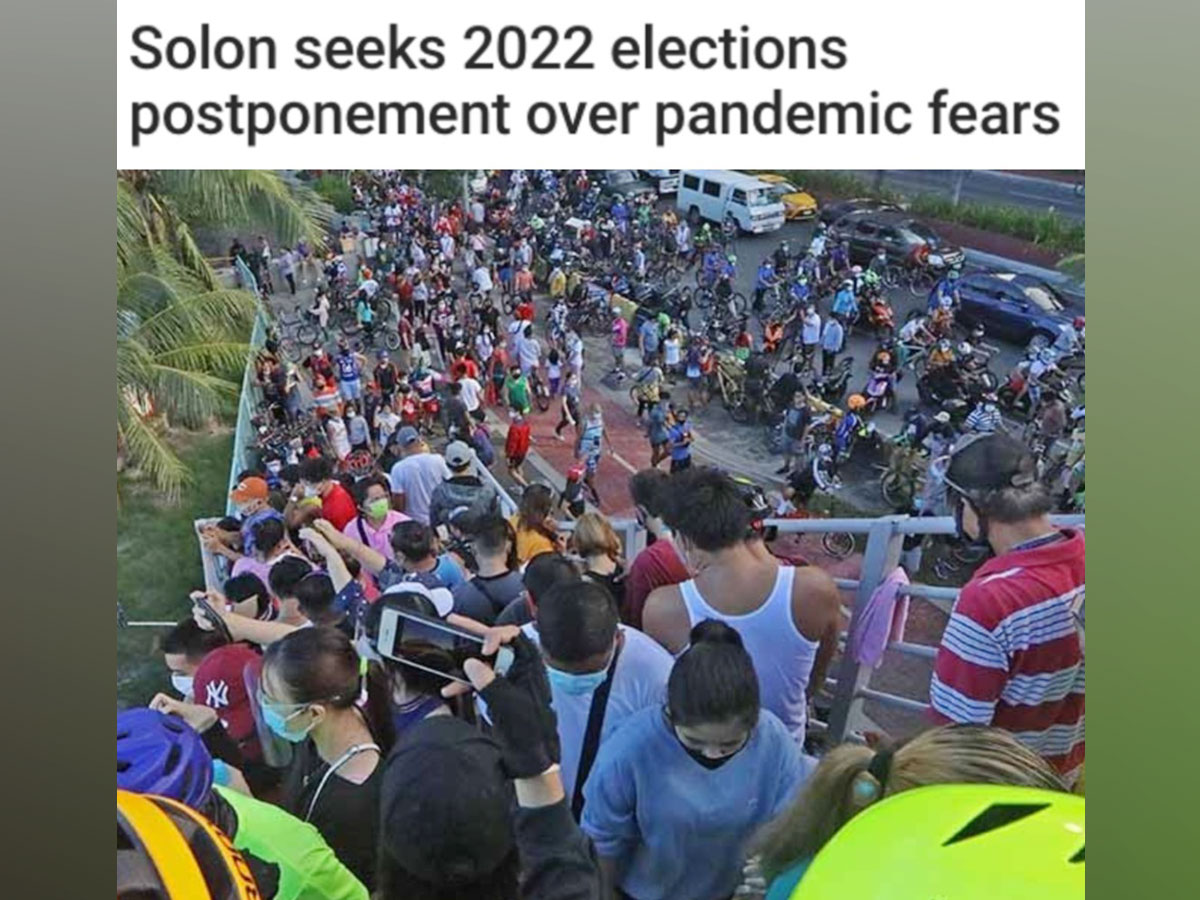
Thus, Raymundo chooses to depict President Duterte’s usual late-night messages through nonsensical scenarios. This helps him channel his frustration regarding his “quotable quotes na nakakainis (that are annoying).”
“Kaya nilalagay ko sa mga weird situations, para ma-emphasize kung gaano ka-absurd ’yung sinasabi niya (This is why I put them in weird situations, to emphasize just how absurd his statements are),” he said.
In one cartoon, he lifted verbatim Duterte’s recorded address that aired on the early morning of June 5. The cartoon did not have any other dialogue, as if simply quoting the President’s own words was enough to poke fun at him.
In one comic strip, Raymundo depicted himself doing an interview with an elderly man who admitted to having no experience in the field of public health. Asked why he was appointed to his position, the elderly man said he was only trying to buy pan de sal from the corner store. This was seen as a thinly veiled allusion to the appointment of Dante Gierran as president of the Philippine Health Insurance Corporation.
Sometimes, Raymundo’s characters are inanimate objects, like the waves of Manila Bay and the crushed dolomite used to create the fake beach along Baywalk.
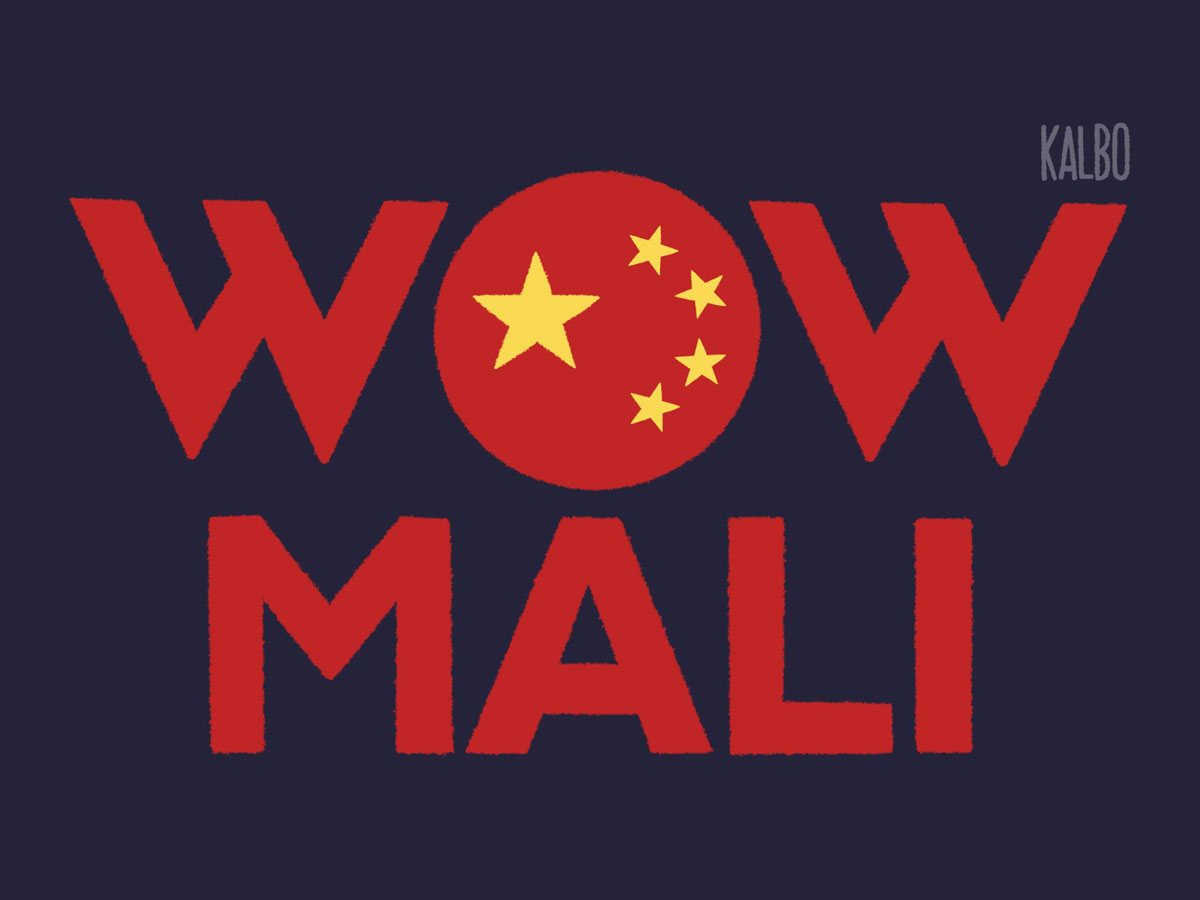
There are also analogies, like in a comic strip that compared China’s “Iisang Dagat” musical tribute (celebrating friendship with the Philippines as it encroaches upon the latter’s waters) to a man showing unity with the neighbor who had been snatching his underwear from the clothesline.
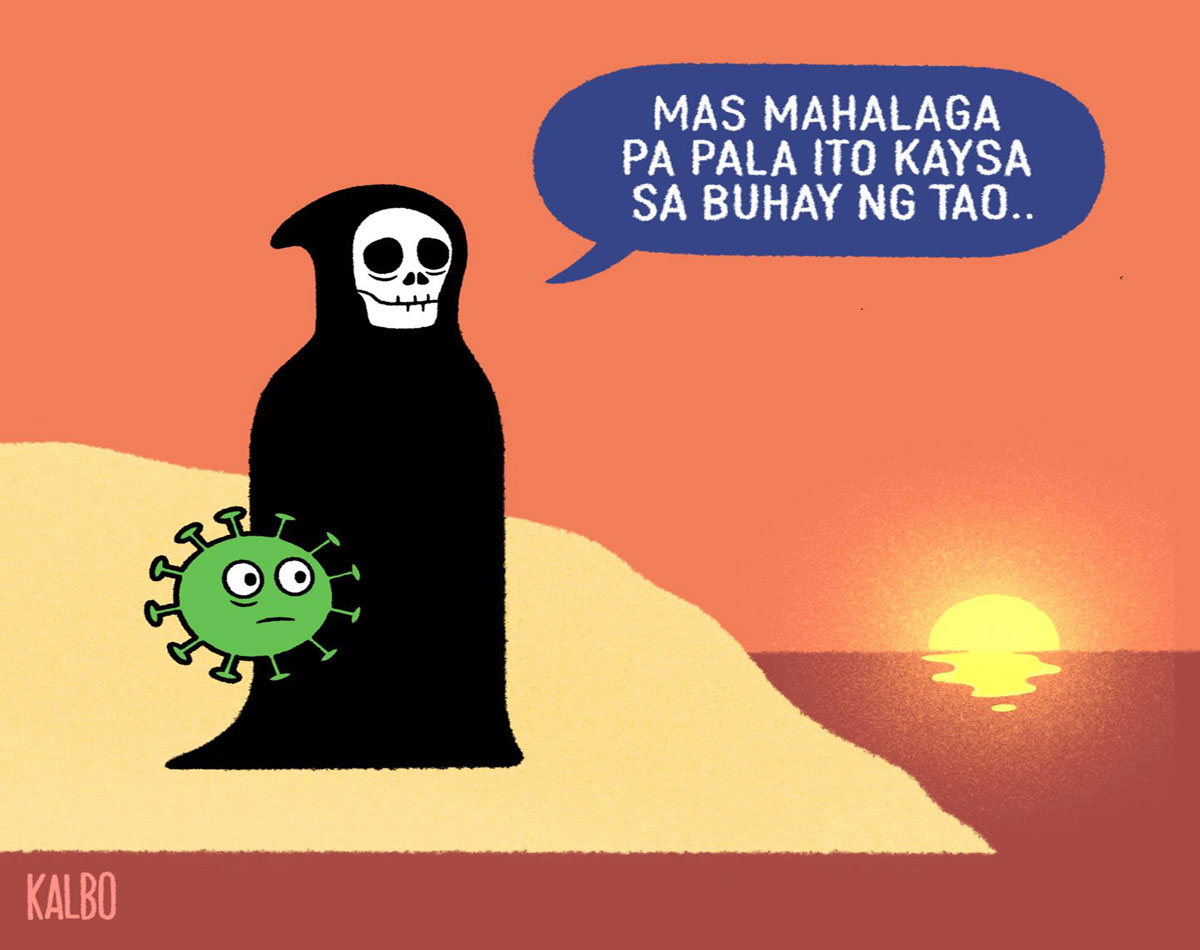
These tactics are an attempt on Raymundo’s part to separate the society’s issues from the country’s political coalitions. Even then, he noted that certain cartoons – like one depicting the Grim Reaper hanging out with the coronavirus on the fake beach and lamenting that “mas mahalaga pa pala ito kaysa sa buhay ng tao (this is apparently more important than people’s lives” – drew more violent reactions from trolls.
Marx Reinhart Fidel, using the alias MarxNotAHero and creating art for youth-oriented page We the Pvblic, also shared similar experiences even when the cartoon does not mention any movement or public figure.
In one comic strip, he parodied the usual script of trolls telling people not to complain about the government’s response to problems and challenging the people instead with the question of what they have done for the country.
Fidel depicted a wolf pretending to be a shepherd. A black sheep tried to warn the flock about the predator, but the rest bleated lines like “puro ka reklamo (you’re full of complaints),” “sumunod ka na lang (just follow along),” “ ’wag ka kasing negatib (stop being negative),” “wala ka namang ambag (you have contributed nothing),” and “ano ba’ng alam mo (what do you know about anything)?”
“It doesn’t have any hint of political kemeruth, but sobrang inatake ako ng mga sympathizers (It doesn’t have any hint of political stuff, but I was severely attacked by the sympathizers),” he laughed.
Fidel finds comics to be an “effective” medium. “It exposes the issues, it spits facts and it is entertaining as f*** – sometimes, that is,” he said. “One of the most powerful thing about it, about political comics, is it is a call to action.”
In the end, their expression is connected to something that Raymundo deeply believes: “To shame other people for speaking out, that’s where I draw the line.”