



PNP On Human Rights Record: Look At The Good, Not Just The Bad
The Philippine National Police is defending its implementation of the enhanced community quarantine, saying it is not forgetting to be humane in trying to contain the spread of the coronavirus disease 2019.
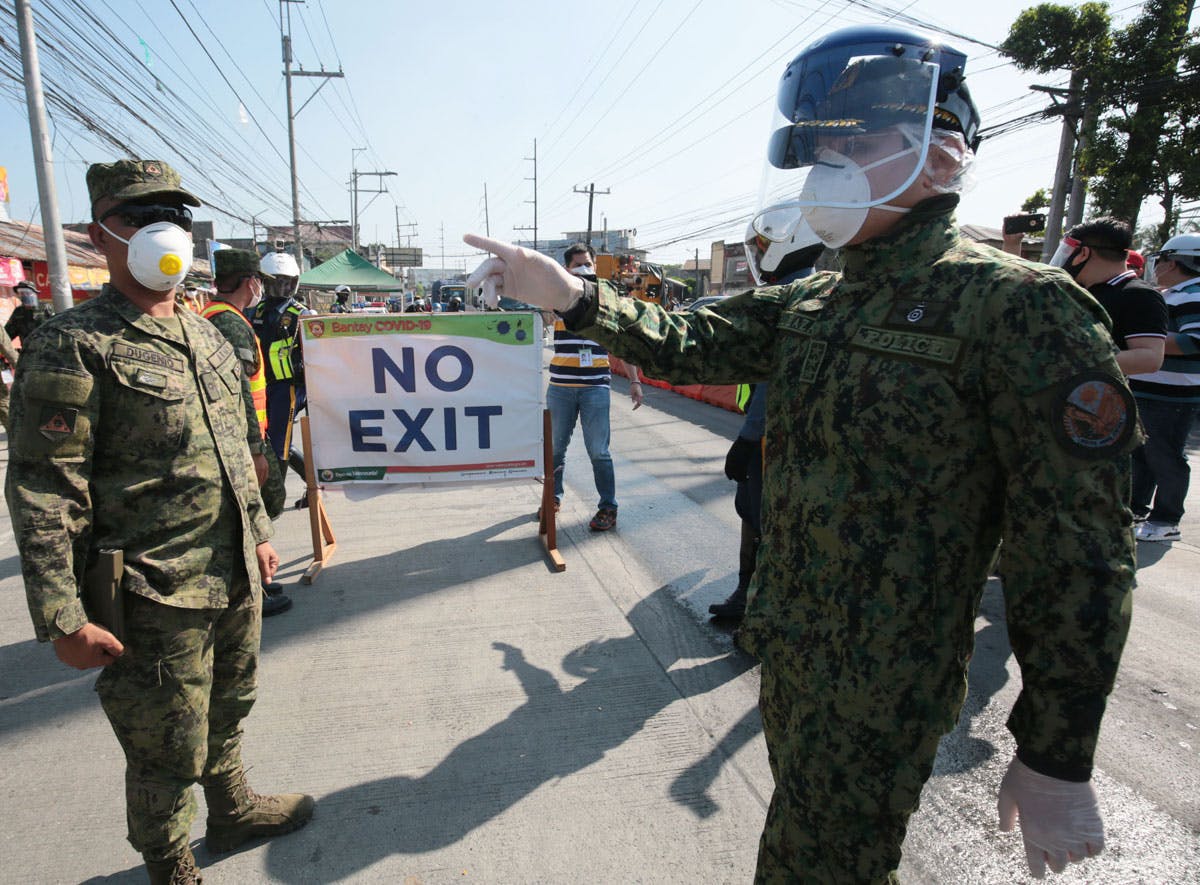
Even before the enhanced community quarantine was enforced in various areas to prevent the spread of the coronavirus disease 2019 (COVID-19), authorities had to assure the public that no abuses would be committed amid conflicting statements on how they would deal with those violating the guidelines, curfews and other local ordinances passed in line with the ECQ.
Law enforcers resolved not to make arrests but only send people home if they were not supposed to be out as mandated by the government.
On Saturday, May 2, Philippine National Police deputy chief for operations Lt. Gen. Guillermo Eleazar said during the “Laging Handa” virtual briefing that 156,000 violators of ECQ and related local laws had been accosted, a majority of whom were asked to go home.
“Ilan ba naman po iyong nangyari na isolated cases na nagkaroon ng problema?” Eleazar asked.
Eleazar vowed that the violations of the police were not being tolerated. He stressed that PNP members were also doing good deeds daily, although they did not expect these to be recognized or appreciated.
“Ito pong mga araw-araw na nangyayari na nakikita natin na mga small, good deeds na ginagawa ng ating mga kapulisan, hindi naman po kami nag-e-expect na ma-recognize o ma-appreciate iyan,” Eleazar said, noting that the violations committed by authorities would get more focus.
Read more: Despite conflicting statements, authorities vow no abuses in enforcing community quarantine
Eleazar made the comments as human rights concerns emerged not just in the Philippines but also in other countries dealing with the COVID-19 pandemic.
On April 27, Georgette Gagnon, director of field operations of the United Nations Human Rights Office, said a highly militarized response such as that of the Philippines has resulted in a “toxic lockdown culture” affecting the most vulnerable sectors of society.
“We’ve received reports of disproportionate use of force by security officers, particularly in poor and informal settlements,” Gagnon said.
Citing cases reported in South Africa, she added: “Rubber bullets, tear gas, water guns and whips have been used to enforce social distancing in shopping lines… and outside their homes.”
In the Philippines, Gagnon noted how the government’s response has resulted in the arrest of people for violating curfew measures.
Similar reports have been received from countries such as Sri Lanka, El Salvador and Jordan.
On April 23, UN Secretary General António Guterres warned that the COVID-19 pandemic “is fast becoming a human rights crisis.”
“We see the disproportionate effects on certain communities, the rise of hate speech, the targeting of vulnerable groups, and the risks of heavy-handed security responses undermining the health response,” he said.
“Against the background of rising ethno-nationalism, populism, authoritarianism and a pushback against human rights in some countries, the crisis can provide a pretext to adopt repressive measures for purposes unrelated to the pandemic,” he added.
Guterres said emergency measures should be legal, proportionate, non-discriminatory, and must take the least intrusive approach possible to protect public health.
“The message is clear: people – and their rights – must be front and center,” the UN chief said. “A human rights lens puts everyone in the picture and ensures that no one is left behind.”
“And in all we do, let’s never forget: the threat is the virus, not people,” he stressed.
Michelle Bachelet, UN High Commissioner for Human Rights, said in a statement on April 27 that emergency powers should not be a weapon that governments can wield to quash dissent and control the population.
“They should be used to cope effectively with the pandemic – nothing more, nothing less,” she stressed.
Bachelet cited reports of excessive, even lethal, actions taken by the police and security forces to make people abide by lockdowns and curfews.
“Such violations have often been committed against people belonging to the poorest and most vulnerable segments of the population,” she said. “Shooting, detaining, or abusing someone for breaking a curfew because they are desperately searching for food is clearly an unacceptable and unlawful response.”
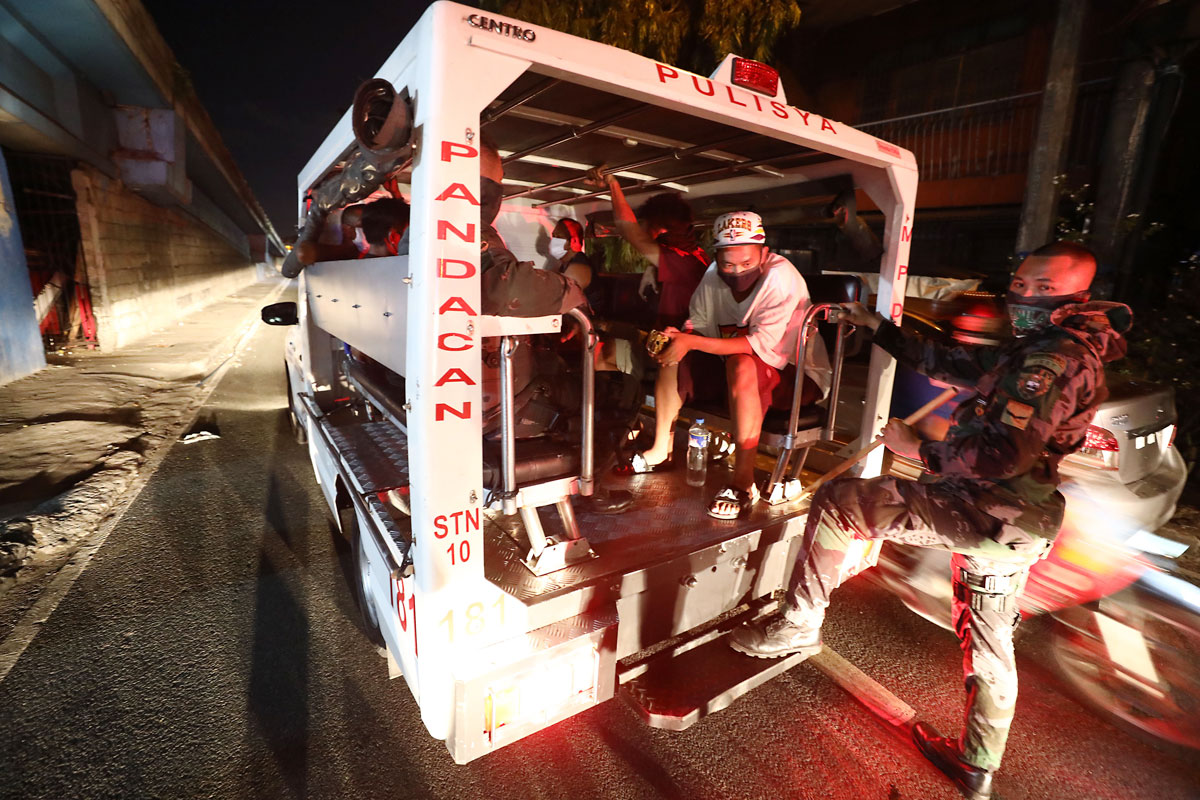
The former Chilean president also warned against detaining curfew violators, describing it as a practice that is both unnecessary and unsafe. “Jails and prisons are high-risk environments, and states should focus on releasing whoever can be safely released, not detaining more people,” she explained.
According to Guterres, the best response to the pandemic is one that proportionately addresses immediate threats while protecting human rights and the rule of law.
“Human rights responses can help beat the pandemic, putting a focus on the imperative of healthcare for everyone,” Guterres, a former prime minister of Portugal and UN high commissioner for refugees, said. “The virus threatens everyone. Human rights uplift everyone.”
‘People not the enemy’
From the deadly implementation of quarantine measures to the continuing plight of the vulnerable sectors, the Commission on Human Rights (CHR) in the Philippines has repeatedly called for a human rights-based approach in dealing with the pandemic.
The CHR said the implementation of quarantine measures should not encroach on human rights, stressing that people are not the enemy in the fight against COVID-19.
“The quarantine is being implemented as a health and safety measure – this is the rationale and the perspective that the must be applied when enforcing and interpreting the provisions and guidelines,” CHR spokesperson Jacqueline de Guia said.
“Arrests, including warrantless arrests, must be strictly done within the legal standards inscribed in the law,” she added.
The CHR has since initiated investigations of various incidents, such as the fatal shooting of former Army soldier Winston Ragos in Quezon City on April 21.
“We stress since the start of the implementation of quarantines and lockdowns that law enforcers must always remain respectful of human rights, even in the face of a national health emergency,” De Guia said of the incident.
She cited procedures of the PNP that prohibit the use of excessive force during police operations.
Other violations have been reported, such as those involving the rights to privacy and freedom of speech.
The human rights body has also called for support to vulnerable sectors, including women, children, persons with disabilities, indigenous peoples, migrant workers, healthcare personnel, farmers and fishermen.
It also pushed for programs to protect persons deprived of liberty as confirmed COVID-19 cases inside detention facilities continue to rise.
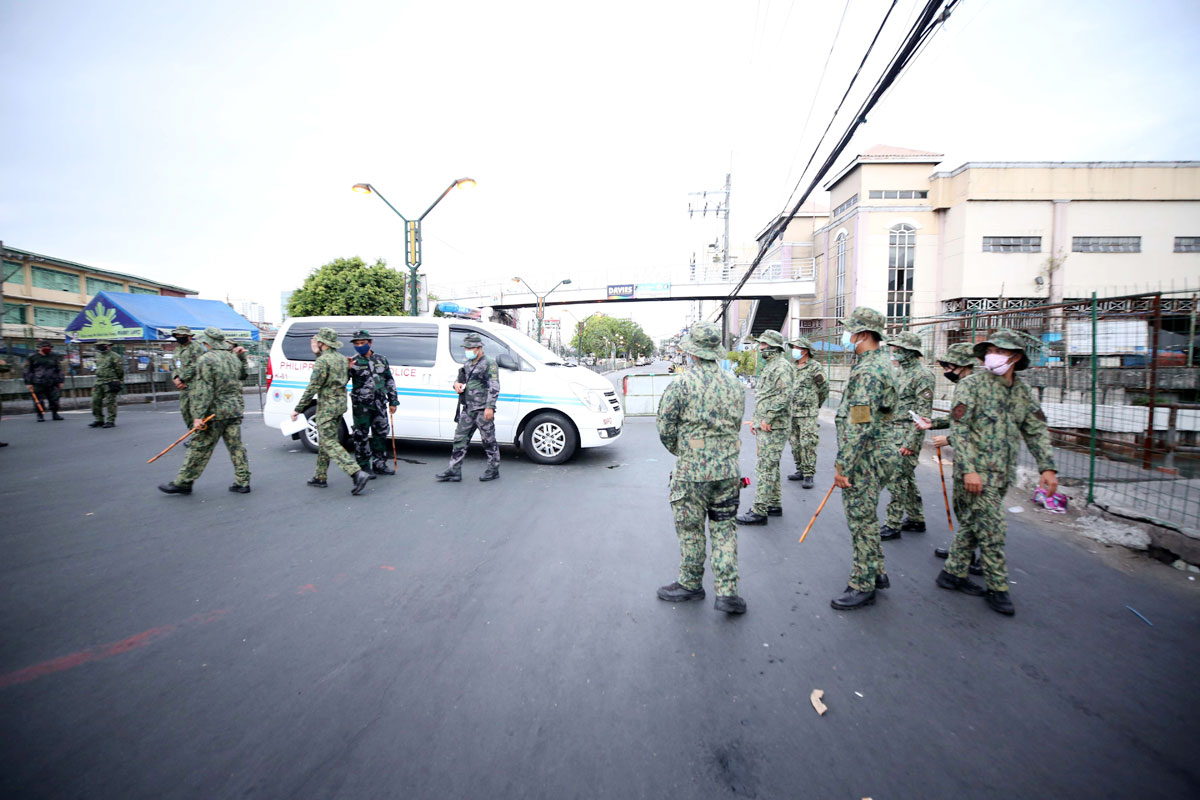
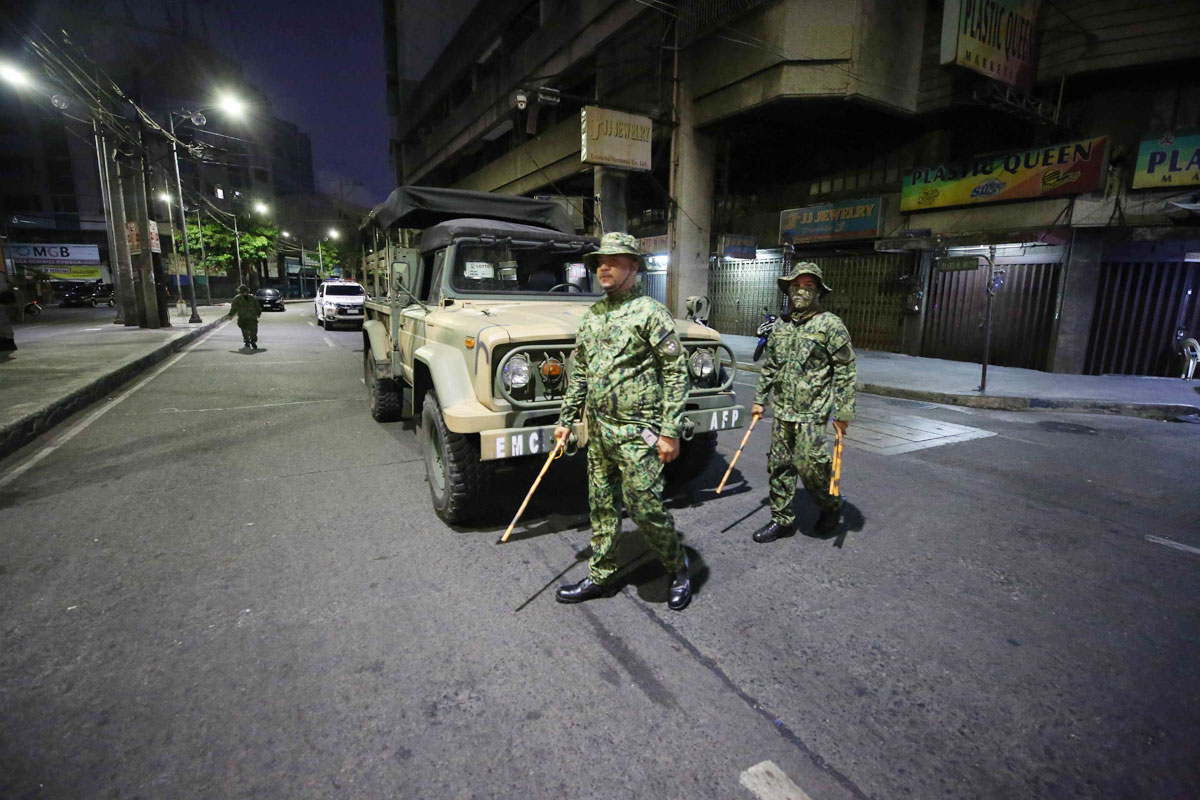
For the CHR, human rights should not be seen as an obstruction in implementing quarantine measures.
“At the center of this crisis is the human person whose fundamental right to life and enjoyment of the highest attainable standard of health must be preserved regardless of his or her status in life,” the CHR said.
“In tackling the pandemic, human dignity should not be diminished nor compromised. Our society’s health and wellbeing is only as strong as that of our most vulnerable members. Hence, we must put human rights at the forefront while implementing what is necessary,” it added.
Open to probe
PNP chief Gen. Archie Gamboa said all those accusing the police of human rights abuses can launch an investigation.
“We are open for you,” Gamboa declared during a virtual press briefing on Thursday, April 30.
“On our part, we keep on reminding our policemen and whenever na merong incidents na mangyari, eh kami naman ay nagkakaron ng impartial investigation, and we update the public kung ano ang nangyari sa mga investigation na ito,” Gamboa said.
He underscored that the police had been humane in implementing the ECQ guidelines.
Gamboa said the Inter-Agency Task Force for the Management of Emerging Infectious Diseases listed the exemptions from the ECQ guidelines.
“I am happy to announce na nung bumaba nga ’yung violations ng ECQ, it made things easier for the PNP,” Gamboa said.
He pointed out that it is better for the police if there are fewer cases where they need to exercise discretion on who should be punished or simply given a warning. He said police must always strike a balance.
Eleazar said there is a simple formula to avoid heated confrontations between law enforcers and the public: “Obey these community quarantine guidelines and respect the authorities enforcing them.”
On the part of the PNP, he said its members are constantly reminded to exercise maximum tolerance and respect human rights: “At sa amin naman po, ang paulit-ulit naming sinasabi is to observe maximum tolerance and ganoon din, respetuhin ngayon ang human rights.”


