



Philippine Navy Undergoes Re-Fleeting As South China Sea Tensions Escalate
The Philippines, one of six claimant-states in the South China Sea, has been upgrading its naval capability to assert its maritime interests, retiring ships transferred by the US after World War 2 and the Vietnam War in 1975.
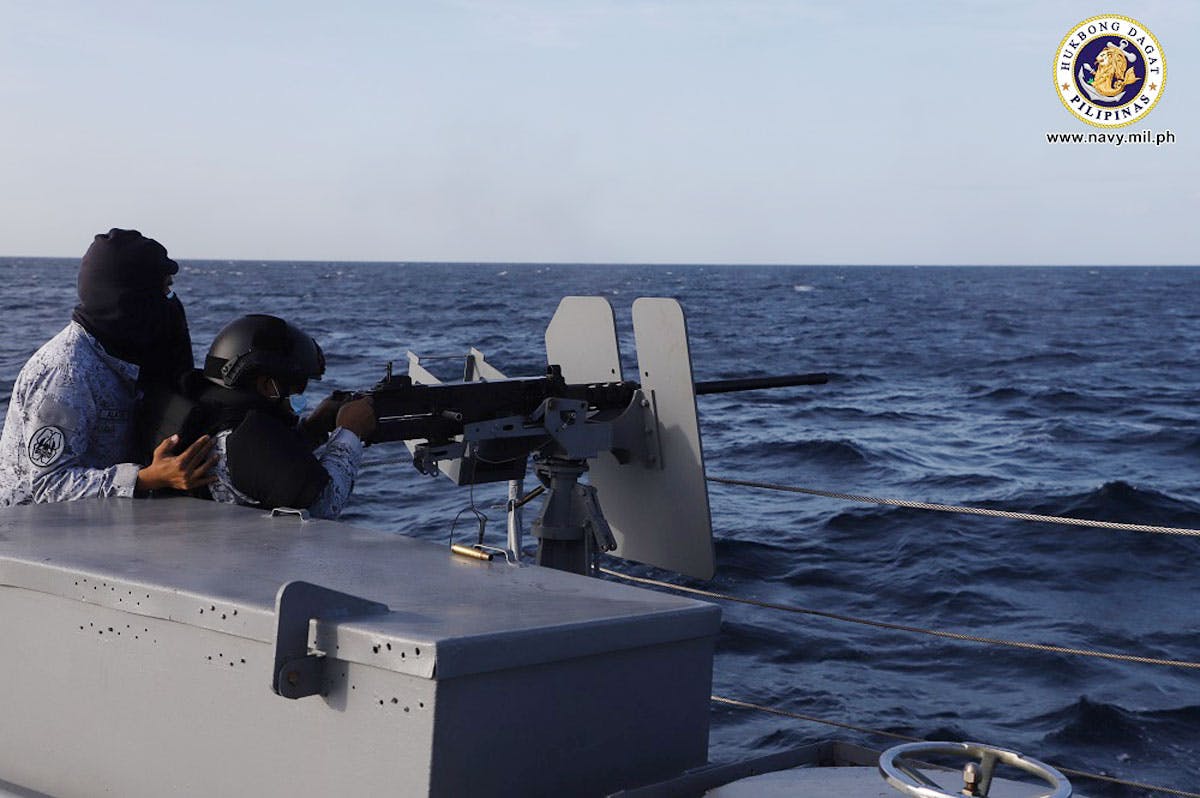
The Philippines plans to decommission more than a dozen aging platforms within the year, replacing them with newer, faster and more lethal warships to guard the country’s national maritime interests, including West Philippine Sea claims.
The Philippine Navy’s re-fleeting program comes at time when tensions rise in the disputed areas in the South China Sea, a regional flashpoint, as the United States and its allies – Australia, India, Japan and European powers – have been ramping up “freedom of navigation” operations, challenging China’s influence in the region.
Just days after Joseph “Joe” Biden took his oath as the 46th president of the United States, the US Navy’s nuclear-powered aircraft carrier, USS Theodore Roosevelt, sailed into the South China Sea, indicating Washington’s continued pressure on Beijing despite a change in administration.
Biden’s intelligence chief has identified China as a threat to US global dominance as it steps up its military presence in the disputed sea. Avril Haines, a former top Central Intelligence Agency official nominated to be director of national intelligence, said on Jan. 19 that the US should take an “aggressive stance” toward the threat posed by the aggressive and assertive China that it faces today.
A week ago, China passed a law authorizing its coast guard ships to fire on foreign vessels, a move that could also increase tensions in the strategic waterway believed to have rich deposits of energy resources.
The Philippines, one of six claimant-states in the South China Sea, has been upgrading its naval capability to assert its maritime interests, retiring ships transferred by the US after World War 2 and the Vietnam War in 1975.
The Navy chief, Vice Admiral Giovanni Carlo Bacordo, said they would prioritize the acquisition of six offshore patrol vessels (OPVs) under a revised modernization plan to replace World War 2-vintage vessels and the old Patrol Killer Medium or PKM vessels donated by the South Korean government in the 1990s and 2000s.
“We will prioritize the acquisition of six brand-new OPVs to replace 26 ships we intend to retire this year,” Bacordo said in a recent interview with The Philippine STAR, adding the old vessels are too expensive to maintain and operate and are no longer fuel efficient.
“We will need ocean-going vessels to increase coverage of our patrols in the South China Sea. These newer ships have longer endurance than the old ships with better firepower and communications systems,” he noted.
The new OPVs will replace the Malvar-class patrol craft escorts, which were transferred by the US as part of military assistance after World War 2. Eleven ships were donated, including five ex-Vietnamese Navy vessels which escaped after Communist victory in 1975. Three remained in active service – Pangasinan, Miguel Malvar and Magat Salamat.
The military has allocated P30 billion for six brand-new OPVs based on its modernization program. A total of 18 OPVs will be needed to effectively patrol the country’s maritime borders.
The Philippines has six existing OPVs - three Del Pilar class ships acquired from the US a decade ago – the former US Coast Guard Hamilton class weather high endurance cutter – and three Jacinto class vessels transferred in the late 1990s by the British Royal Navy before Hong Kong was turned over to China – the former Peacock class patrol boats.
Six will be acquired under the second horizon phase of the modernization plan until 2022 and additional six in the third horizon until 2028.
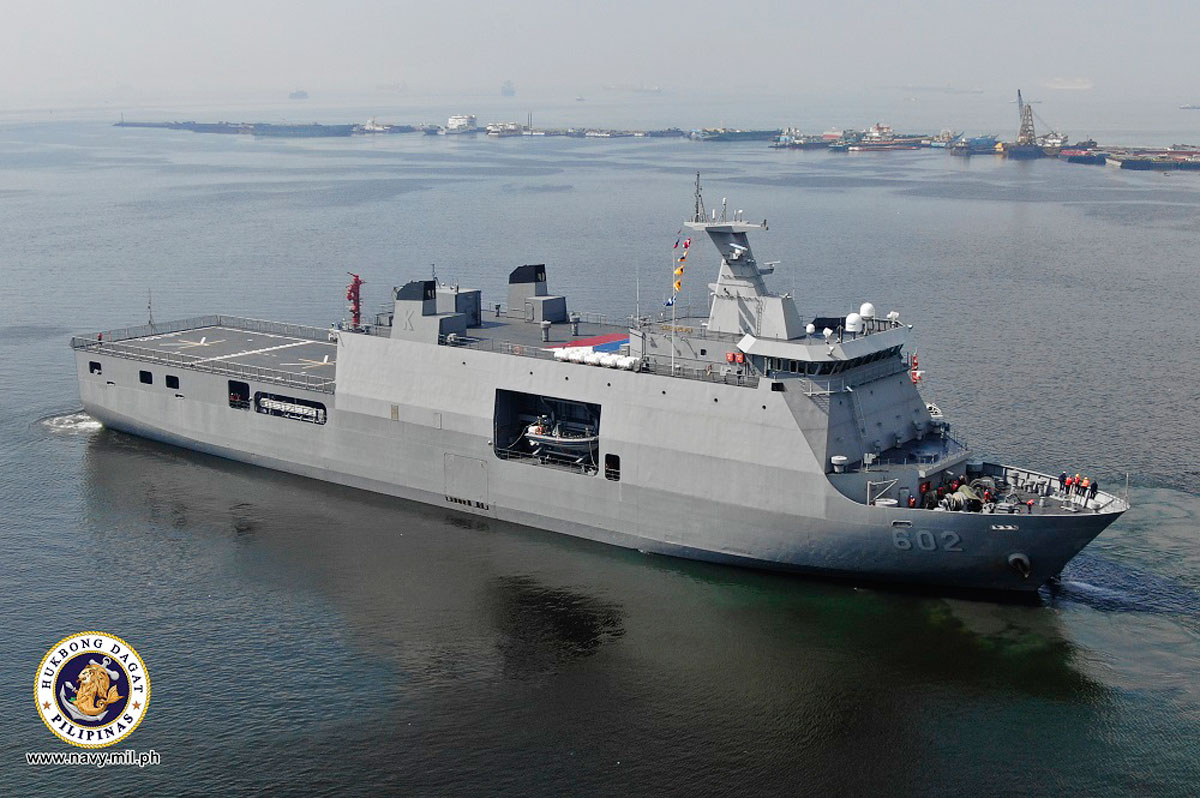
Bacordo said several shipbuilders from Australia, South Korea and a Southeast Asian state, have offered to build the Navy’s OPVs based on its own specifications and requirements.
He added the Navy is also expecting Israel to deliver nine missile-capable fast attack interdiction craft (FAIC) this year, replacing the Tomas Batilo-class patrol boats, which were donated by the South Koreans. Only four of eight PKM ships remained in active service.
Bacordo disclosed the Philippines is getting an additional boat from Israel from an original contract of eight missile-armed FAICs worth P10 billion.
The second Hyundai Heavy Industries-made semi-stealth guided missile frigate, BRP Juan Luna, is also scheduled to be delivered in the first quarter this year but was again delayed due to the coronavirus disease (COVID-19) restrictions in South Korea.
For coastal defense, the Navy is discussing with PropMech, the only Filipino shipbuilder which won a navy contract, to deliver 36 units of multi-purpose attack craft or MPAC for an unspecified amount in the third horizon phase of the modernization.
Like the FAIC, these smaller and faster coastal patrol boats will be armed with short-range surface-to-surface missiles with a range of up to 25 kilometers.
By the time President Duterte steps down in June 2022, the Navy hopes to gradually replace its old vessels with faster, more agile boats armed with missiles to build a modest credibility to guard its national maritime interests.
Fishermen at risk
As this developed, Sen. Francis Tolentino warned on Tuesday, Jan. 26, that fishermen in the country’s western coastal communities will be more vulnerable to harassment and their livelihood badly-hit by the new law passed by Beijing authorizing its coast guard to fire on foreign vessels and dismantle structures in the disputed South China Sea.
Read more: Senators: Phl Should Reject China Law Authorizing Coast Guard To Fire On Foreign Vessels If Needed
Tolentino, who is vice chairman of the Senate committee on foreign relations, said the law passed by the National People’s Congress last week explicitly allows its coast guard – under certain circumstances – to fire on foreign vessels, including fishing boats, coast guard and naval ships “or any peace-seeking non-government organizations to defend China’s maritime rights and interests.
“Some of our fishermen, including those from Zambales, Mindoro, Palawan, Batangas, and Cavite, will go fishing not knowing the existence of this newly passed law by the National People’s Congress of China, allowing its coast guard to take, and I quote, ‘all necessary measures including the use of weapons when national sovereignty rights and jurisdiction are being illegally infringed upon by foreign organizations or individuals at sea’,” he said in his privilege speech.
“I worry for our fishermen…who will venture out into that coast. The law further provides that the Chinese coast guard is empowered to set up temporary exclusion zones. These are lockdown zones as needed to stop other vessels and personnel from entering,” he stressed.
Tolentino also pointed out the law was very specific of the circumstances under which the different kinds of weapons – handheld, ship borne missiles, or airborne coming from planes – can be used.
The law also allows the Chinese coast guard personnel to demolish other countries’ structures built on Chinese-claimed reefs and to board and inspect vessels in waters claimed by China, he said.
Tolentino admitted he was still unsure on his recommendations on how the country should deal with the disturbing development.
“What will be the solution, Mr. (Senate) President? I really do not know. The diplomatic front? The ASEAN (Association of Southeast Asian Nations), perhaps? The new Biden presidency? A direct engagement with the President of the People’s Republic of China? I do not know, Mr. President,” he said.
Tolentino wished that all those who are engaged in the West Philippine Sea “are to be treated and be considered as brothers.”
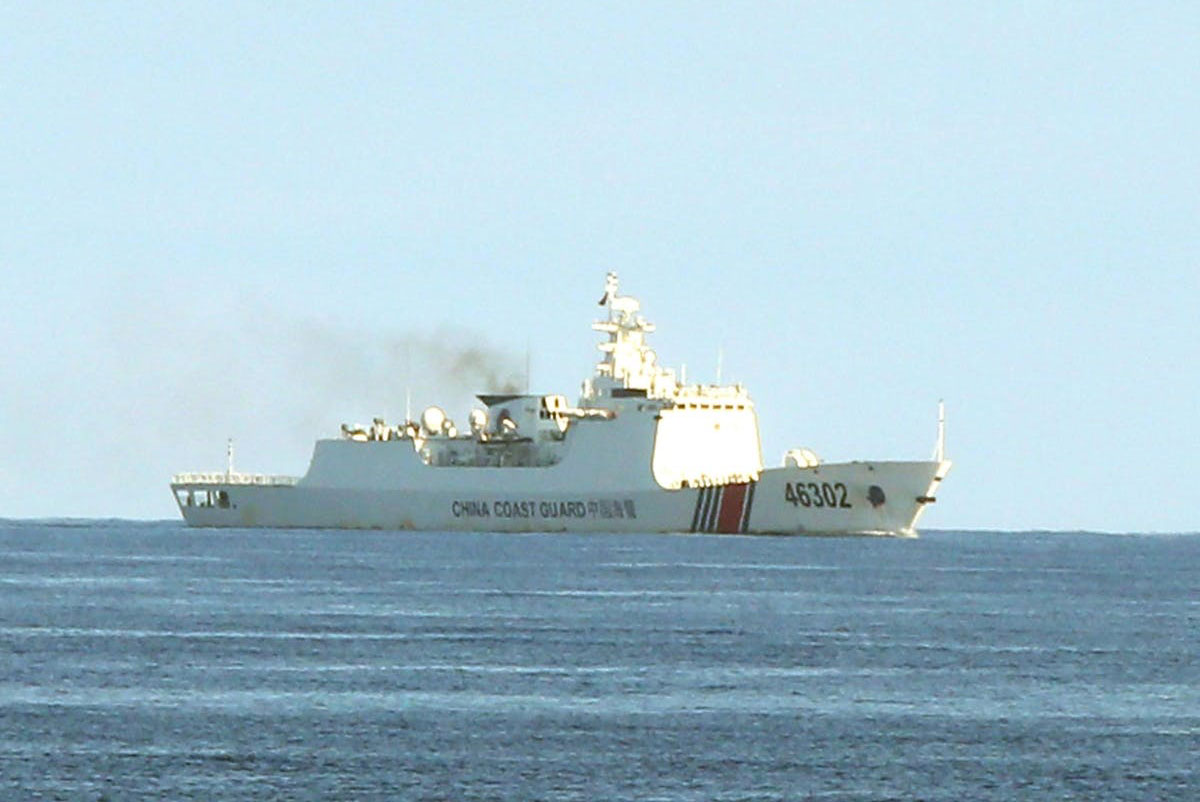
The Philippine claims part of the South China Sea that it calls the West Philippine Sea. China claims the entire South China Sea as its own and has already put up several artificial islands in West Philippine Sea that serve as military installations.
The Senate committees on foreign relations; and national defense and security are set to hold a joint inquiry – possibly in executive session – into the implications of the law and make recommendations on possible courses of action.
Senate President Pro Tempore Ralph Recto earlier said the government should reject the law and raise the new threat from Beijing to the region’s stability before the international community.
China has also a territorial dispute with Japan in the East China Sea that was also covered by the new law.
The government should also study the filing of a diplomatic protest if applicable, Recto said.
Sen. Francis Pangilinan said Beijing has been bullying the country’s fishermen and maritime authorities in the past before the new law was passed.
China has declared an air defense identification zone (ADIZ) in a large portion of the East China Sea in 2013 to allow its air force to challenge other aircraft entering the space it declared as its territory.
Experts warn that Beijing will soon also declare an ADIZ in the South China Sea.
Sen. Risa Hontiveros urged Malacañang to denounce the law and defend the welfare of the country’s fishermen.
Hontiveros cited an incident where a China Coast Guard ship with bow number 5103 tried to drive away Filipino fisherman Larry Hugo by blocking his fishing boat’s path on its way to one of the sandbars near the Philippine-occupied Pag-asa (Thitu) Island in the West Philippine Sea on Jan. 24.
“This is the arrogance of a country that still considers itself the Middle Kingdom and an empire. This is an unacceptable encounter,” Hontiveros said.
“The next thing we know, Chinese coast guards might not only block, but also shoot at our own boats. We must have a plan already in place in case, hopefully not, this happens,” she added.
She also called on countries in the ASEAN to reach a consensus and to take multilateral action “to stop China’s incessant adventurism.”
Hontiveros explained that the Chinese game plan is to isolate and divide the countries around it so it can deal with them individually through bilateral talks, maximizing its relative advantage in resources and power against any one of its neighbors.
“China should stop its bullying tactics. ASEAN member-states should band together and show China that we will not be bullied into deference,” she said.
Use of force prohibited
On Monday, presidential spokesman Harry Roque said the government does not intend to make any “diplomatic moves” against China following the passage of the measure.
“It’s their law,” Roque declared.
Roque said it was Foreign Affairs Secretary Teodoro Locsin Jr. who did not see the need to file a diplomatic protest.
But Locsin backpedaled and decided on Wednesday, Jan. 27, to file a diplomatic protest with China over its new law.
“After reflection I fired a diplomatic protest,” Locsin tweeted, days after initially saying it was “none of our business.”
“While enacting law is a sovereign prerogative, this one – given the area involved or for that matter the open South China Sea – is a verbal threat of war to any country that defies the law; which, if unchallenged, is submission to it,” he said.
Former foreign affairs secretary Albert del Rosario also slammed the new law.
“In the wake of the new US administration and Foreign Minister Wang Yi’s recent visit to the Philippines, the decision of the Chinese leadership to authorize its coast guard to fire on its neighbors’ vessels is a sobering reminder to the world that China remains adamant in pressing its illegal claims in the South China Sea, now with force and probably with violence,” Del Rosario said in a statement.
Roque also underscored that while sovereign countries can pass laws, it should comply with its obligations in the United Nations Convention on the Law of the Sea, of which China is a signatory.
"Under general international law, the use of force is generally prohibited except for two well-defined exceptions. By way of self-defense, there should be sending of armed troops into the territory of China and the use of force should be necessary and proportional; and when authorized by the UN Security Council," Roque said in a press briefing.
Roque also expressed hope that no country would do something that could worsen the tensions in the South China Sea.
"The declaration of our President is we should finish the Code of Conduct and all claimants in the West Philippine Sea should follow the Code of Conduct," the Palace spokesman said.
In 2016, a Hague-based arbitral court invalidated China's maritime claim in the South China Sea and affirmed the Philippines' sovereign rights over its exclusive economic zone. The Chinese government has refused to recognize the ruling, calling it "illegal" and dismissing it as a "mere piece of paper." – With Paolo Romero, Pia Lee-Brago, Alexis Romero,