



Partner Of 21-Year-Old Student Killed In Malabon Drug Sting Seeks Justice
The live-in partner of Aries Suva vows to hold her partner’s killers accountable despite the risks she has to face. She said a CCTV footage would show that Suva did not fight back during a police operation on April 16.
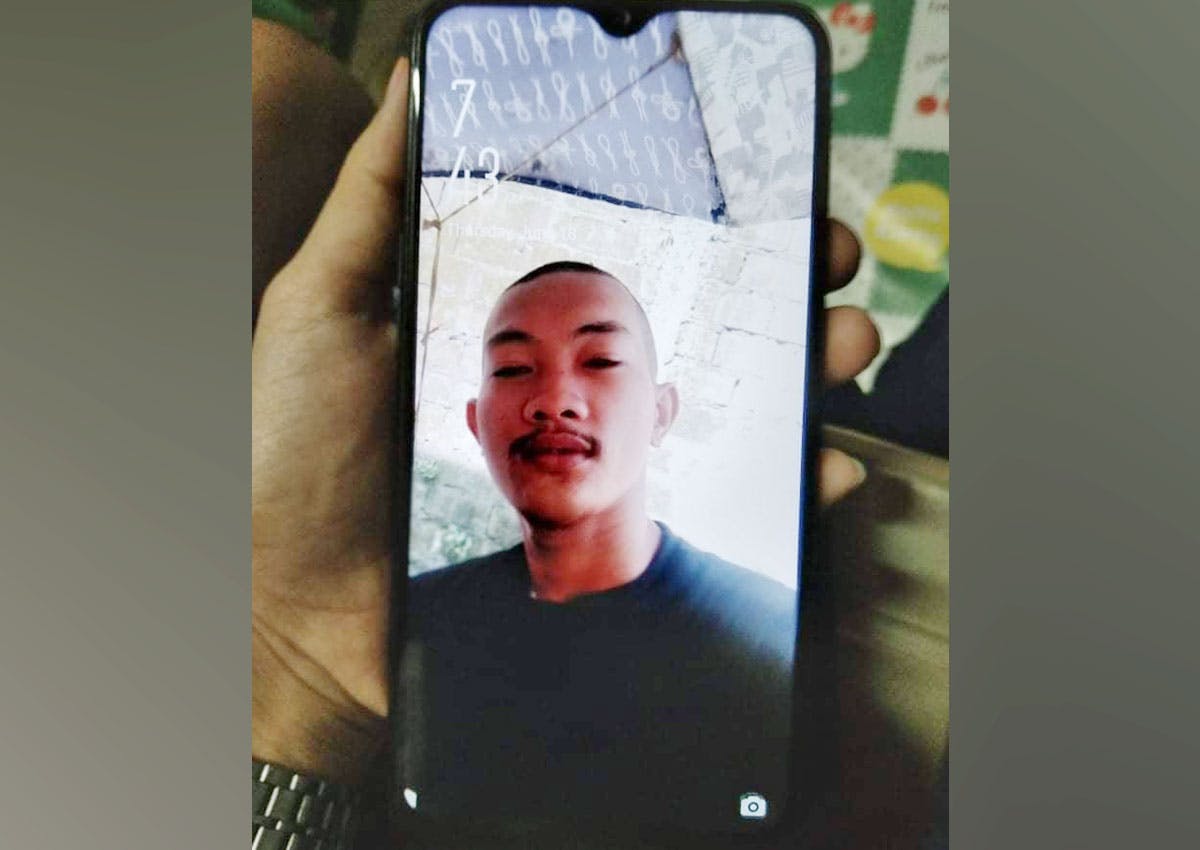
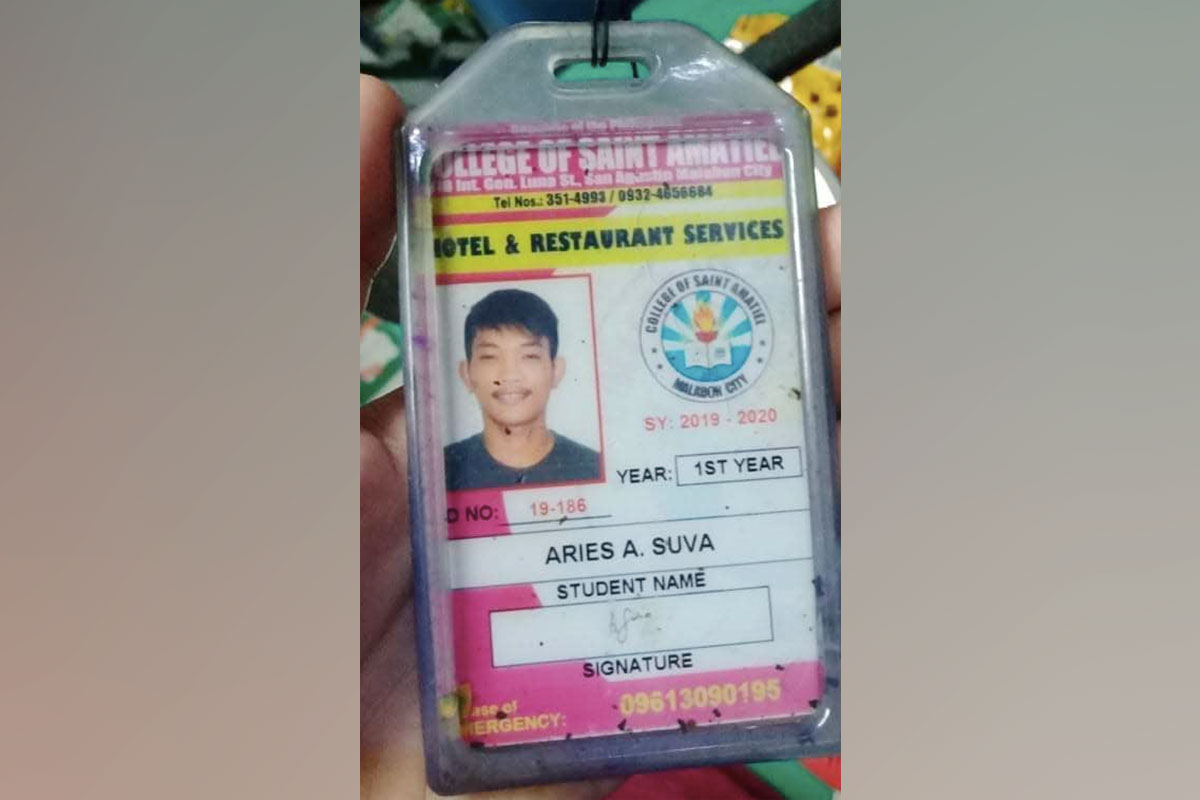
UPDATED: Mika (not her real name) is seeking justice for her live-in partner Aries Suva who was killed during a drug sting in Malabon on April 16.
Mika, 18, also wants to clear the name of her slain partner. She vowed to fight until the end.
“Gusto ko linisin ang sinirang pangalan niya…Gusto namin makuha ang hustisya. Hindi Diyos ang kumuha ng buhay niya. Tao ang pumatay sa kanya. Lalaban kami hangga’t makakaya namin,” Mika said.
In its report, the Northern Police District (NPD) said Suva fought back and carried seven sachets of shabu worth P136,000 and a Colt caliber .45 firearm during the buy-bust operation.
Police also claimed that one of the operatives involved in the sting suffered a gunshot wound due to the encounter.
But Mika said she got proof that the police officers’ version of the story was not true.
Suva, a 21-year-old hotel and restaurant services student, was never involved in any wrongdoing, and was just meeting with a friend before the killing happened, Mika stressed.
On Nov. 25, Mika showed The Philippine STAR a closed circuit television (CCTV) footage that would dispute claims that Suva fought back or nanlaban.
Based on the footage, Suva was running away from the police officers, not engaging them in a firefight.
Mika decided to use the evidence to file a complaint before the Commission on Human Rights (CHR) against the two police anti-drug operatives in July.
She recalled she had to take a taxi to go to the CHR in Quezon City because of lack of transportation due to the community quarantine.
The CHR summoned the police officers but they were no longer at NPD, Mika said.
In her sworn affidavit, Mika told CHR investigators that a witness relayed to her that a wounded Suva was asking for help during the incident.
But the anti-drug operatives told the residents in the area to stay inside their houses and lock their doors, Mika said.
The police threatened to throw a grenade at the house where Suva was seen close to dying because they thought Suva had a companion who went inside to hide.
Bleeding to death, Mika disclosed Suva was heard by the witness pleading to the policemen to take him to the hospital. A concerned citizen shouted at the police officers to stop and help Suva.
“Nagsalita pa ang ka-live-in ko na may tama na po siya pero hindi pinakinggan ng pulis at may sumigaw na concerned citizen na, ‘Tama na sir! Dalhin niyo na ‘yan sa hospital’ kaya lang sabi ng pulis na isarado ninyo ang pinto at ‘yung sinasandalan ng asawa ko na bahay ay akala ng pulis na may pumasok dun. Tinakot ng mga pulis ang mga tao na lumabas at ang sabi ay, ‘Lumabas na kayo diyan kung hindi hahagisan ko kayo ng granada,” Mika’s affidavit read.
Suva was left bleeding for hours before he was taken to the hospital, Mika said, citing witnesses. She noted that Suva fell on his knees twice while running away from the policemen but nobody responded to his cry for help.
“Siyempre hindi kami naniniwala na nakipagbarilan si Aries. Nung napanood ko ‘yung CCTV, sobrang (naawa) ako. Dalawang beses po siyang napaluhod. Tumatakbo siya at walang tumulong nung may tama na siya,” Mika said.
Mika described Suva as a hardworking student who did odd jobs in factories just to make a living.
Asked why she had the courage to file a complaint despite possible threats to her life, Mika said she wanted to hold those who killed the man she loved accountable because he was innocent of the accusations against him.
Suva’s death last April, when Metro Manila was under enhanced community quarantine, was borne out of policemen’s continuous operations against the illegal drug trade amid the coronavirus pandemic.
Fr. Flavie Villanueva told The STAR in an interview that the pandemic was an opportunity for the police to intensify anti-drug crackdowns as communities were paralyzed.
“This also an opportune time (for them) to create and to continue to pursue the climate of fear because (in a) pandemic, everybody’s afraid,” Villanueva said.
Villanueva – who wore a face mask to protect himself from the coronavirus –anointed the dead and visited the wakes of victims allegedly killed either by police or by vigilantes.
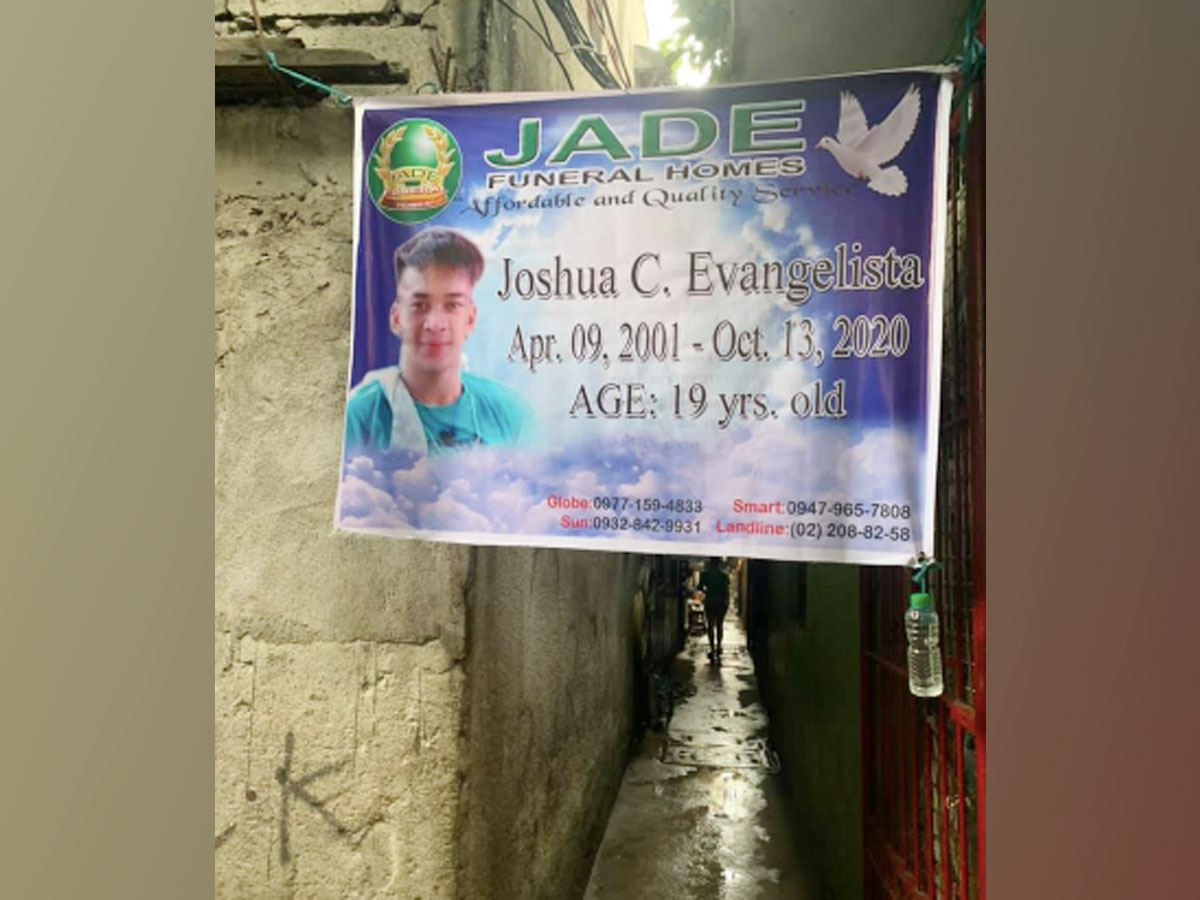
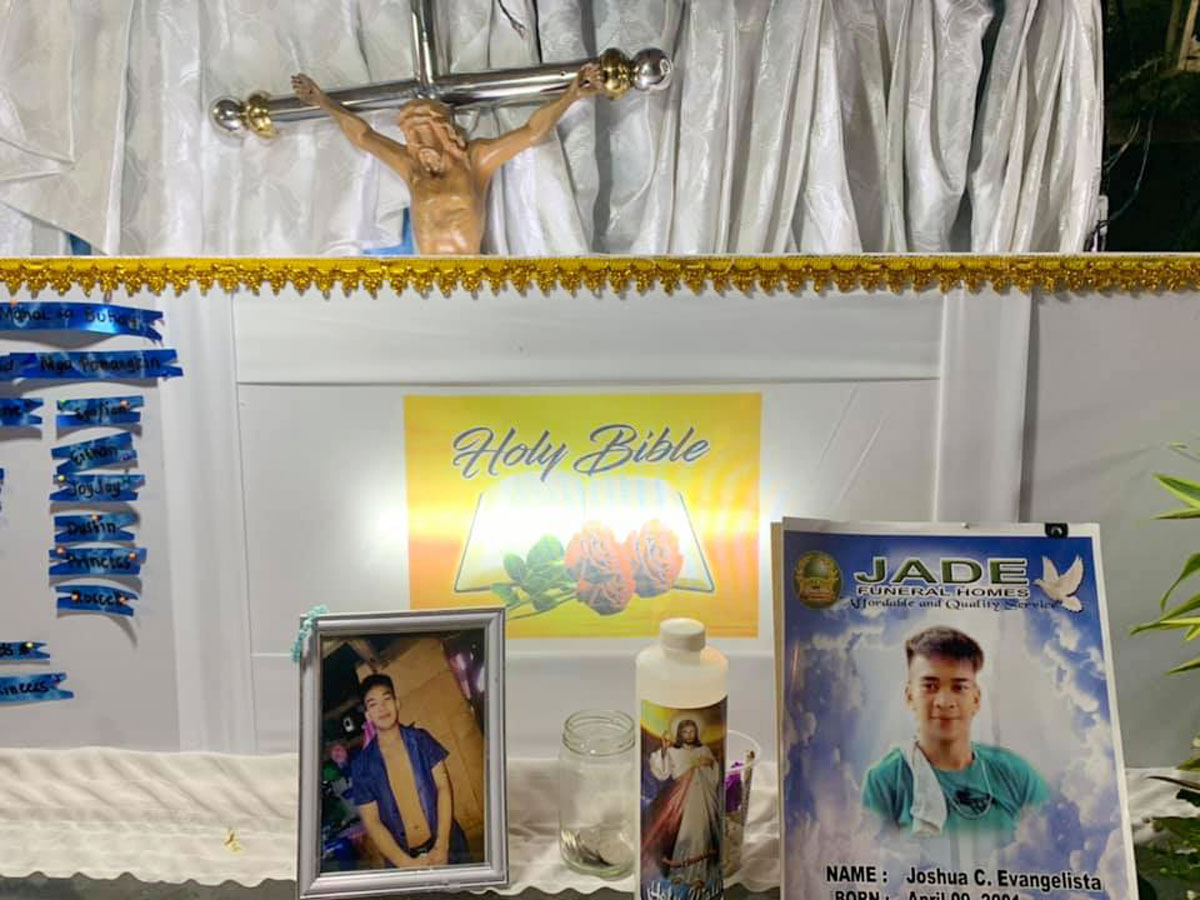
Last October, Villanueva visited the wake of 19-year-old Joshua Evangelista, who spent three years in juvenile detention center when he was a minor, and then shot dead by still unknown motorcycle-riding suspects at a corner of C-3 Road in Barangay 28, Caloocan City last Oct. 13.
Evangelista suffered six gunshot wounds to the back, arm, groin area, chest and hip. His body also bore bruises indicating that he was dragged and tortured by the assailants.
The then 15-year-old Evangelista was among those rounded up in 2016 during the early years of “Oplan Tokhang” and charged with illegal possession of drugs.
Oplan Tokhang is the house-to-house “knock and plead” operations conducted by policemen, is the government’s main strategy to curb the drug menace. The campaign has turned bloody, with alleged extrajudicial killings perpetrated by the police, vigilantes or hitmen and those involved in the illegal drug trade themselves.
Villanueva said Evangelista’s death continued the pattern of killings of persons who had just been released from prison only to be gunned down in the streets.
Jocel Sales, 28, was killed by riding-in-tandem suspects in Barangay Tangos, Navotas last Oct. 25. He was playing a numbers game with friends along the road when the armed suspects chased him and gunned him down.
Sales was a drug suspect who was released on plea bargaining agreement before he was killed, Villanueva said.
Ronaldo Aguinaldo, 42, was killed in an alleged police encounter in Bagong Silang, Caloocan last Oct. 23.
Aguinaldo’s family said he was only having breakfast outside their house and was chased by policemen for not wearing a face mask when he was shot.
Aguinaldo was killed upon reaching the rooftop of a house as he tried to escape from the police officers. Villanueva said the lawmen also claimed that Aguinaldo fought back.
“You reinforce the climate of fear by continuously killing, and tragically, killing has been accepted by a wounded and callous society such as ours,” Villanueva said during the interview on Oct. 21.
Villanueva vowed to continue blessing the dead and condoling with the victims of the war on drugs.
Villanueva said new batches of loved ones of extrajudicial killing victims continue to find solace in the therapy sessions offered by the St. Arnold Janssen Kalinga Center in Manila under its “Paghilom” or healing program.
“We have never ceased helping them since [the lockdown started] in March. We have provided various means for them to survive this pandemic, from food to finances and medicines,” Villanueva added.
Bloody reign of state terror
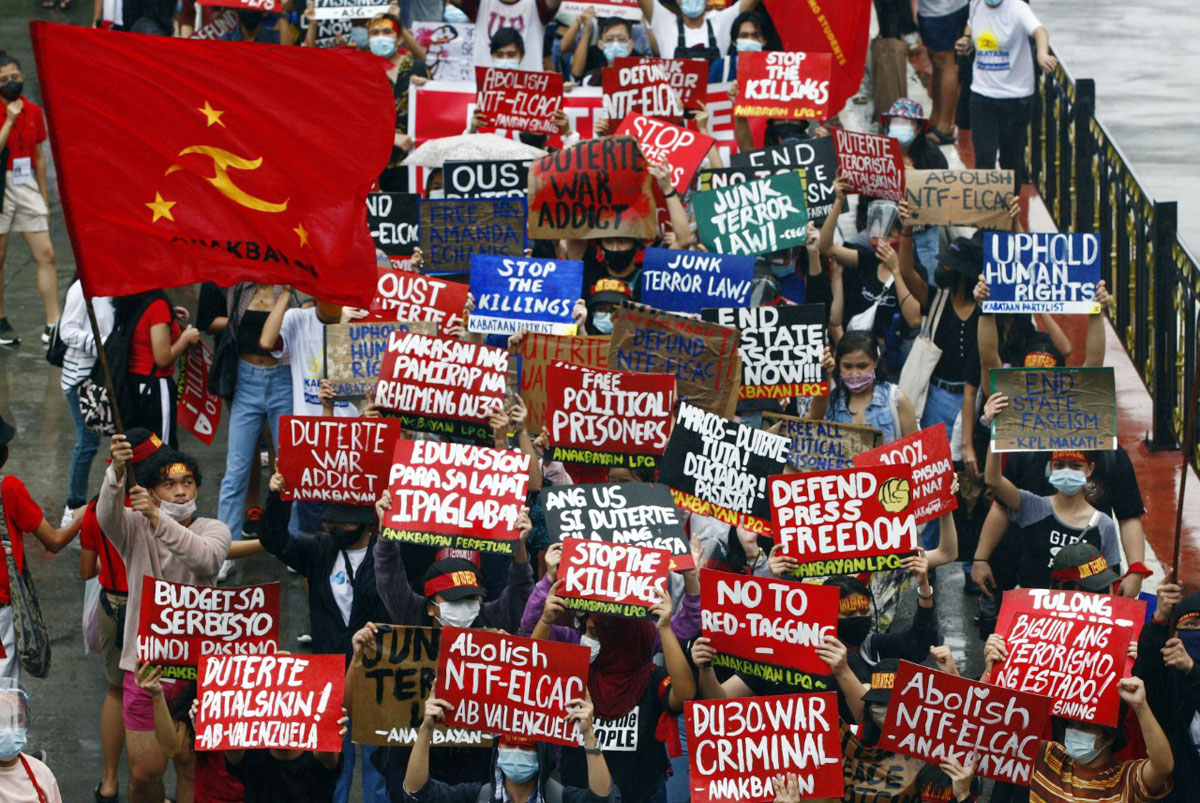
On International Human Rights Day on Thursday, Dec. 10, various groups marched from España Boulevard to Mendiola Street to protest against various forms of human rights abuses under what they described as President Duterte's “bloody reign of state terror.”
Cristina Palabay, secretary general of human rights advocate group Karapatan, and Bagong Alyansang Makabayan secretary general Renato Reyes said the Duterte administration was plunging the country deeper into a human rights crisis with rising cases of extrajudicial killings – including of drug suspects – enforced disappearances, illegal arrest and detention of activists and human rights defenders, militarization of communities, red-tagging of progressive organizations, cold-blooded murder of political dissenters and human rights defenders, and attacks on the media.
“We reiterate that activism is not a crime. State terror is. The people are justified in resisting tyranny,” he said.
Former CHR chairperson Etta Rosales accused Duterte of unleashing "a pandemic of human rights violations" and called him the "main enemy" of human rights in the Philippines.
International watchdog Human Rights Watch, meanwhile, said Duterte's disowning of the narco list on Monday, Dec. 7, following the killing of one of the mayors tagged in illegal drugs trade is the "height of hypocrisy." Such lists were used by law enforcers to violate civil liberties, the group added.
Malacañang shrugged off the criticisms and maintained that the Duterte administration is upholding human rights in its law enforcement operations.
Presidential spokesman Harry Roque said human rights groups have been issuing such statements even before Duterte became president.
"I've been a colleague of (Rosales) for a long time. Human rights advocates say those things to all presidents and the reason is they want to prompt (the) government to still improve their level of compliance with human rights law," Roque said in a press briefing.
"The moment human rights organizations cease to castigate governments for their alleged violations of human rights is the time when we have less effective human rights organizations. So, it's really the job of human rights defenders to call the attention of government," he added.
With regard to Duterte's distancing from the narco list, Roque said Duterte was being "candid" when he said that it was based on information provided by intelligence sources.
"The list is from intelligence sources – not from one, but many intelligence sources and the President was addressing the concern of the family of the mayor of Los Baños that he may have been killed because of the list," the Palace spokesman said.
"But the President said the case would be investigated. Until now, we do not know the reason behind the killing of the mayor of Los Baños," he noted.
Duterte previously said he has nothing to do with the killing of Los Baños mayor Caesar Perez, who was shot dead inside the municipal hall last Dec. 3.
Perez's eldest son Aldous said the killing may be related to his father's inclusion in the narco list. Aldous has also claimed that his father had repeatedly tried to reach out to government agencies to clear his name.
According to Roque, government agencies have been working with various local and international groups, including United Nations bodies, to improve the efficiency of law enforcers in solving crimes.
"It is really important to improve the capabilities of our police to bring criminals to justice and at the same time respect everybody's rights," he said.
Meanwhile, Roque remains optimistic that the Philippines can become drug-free within Duterte's term after the Dangerous Drugs Board (DDB) admitted that the problem may not be totally eradicated just like other crimes.
Speaking during the “Kapihan sa Manila Bay” forum last Wednesday, Dec. 9, DDB chairman Catalino Cuy said the anti-narcotics campaign is a "tall order" that requires a sustained effort.
Roque, however, said the goal could still be achieved if local governments participate in the anti-narcotics campaign. He claimed that out of 42,045 barangays in the Philippines, 20,538 are now drug free.
"We are confident that if local governments cooperate, the remaining 14,308 barangays would also become drug-free by the time the President's term ends," Roque added.
When he was still running for president, Duterte promised to wipe out illegal drugs within the first six months of his term. He later on admitted that the target is not doable because several government officials are into illegal drugs trade.
Last year, Duterte said his presidency would be a "total failure" if he fails to control the drug problem.
CHR launches e-lawyering service
The CHR has launched an e-lawyering service to provide virtual legal assistance amid physical restrictions imposed due to the pandemic.
The e-lawyering service, which seeks to expand the assistance provided by the commission to the marginalized sector, was launched in time with the annual commemoration of the International Human Rights Day on Thursday.
The initiative will be implemented in partnership with the Office of Legal Aid of the University of the Philippines College of Law (UP OLA), the Governance in Justice Programme of the European Union and various civil society organizations.
CHR commissioner Roberto Cadiz said the e-lawyering service seeks to provide quick legal assistance to immediately address possible violations of human rights.
“This project seeks to provide a real-time legal assistance to our citizens whose rights are under threat or being violated either by government or being abused by private parties,” he said.
“Our services are especially needed by the poor, those who are uneducated, those who cannot afford to hire lawyers, the vulnerable sector,” he added.
Cadiz highlighted the importance of partnering with UP OLA and civil society organizations for the initiative, noting the huge amount of pleas for assistance that they receive.
“We often find ourselves stretched to our full limits,” he said. “The number of EJK (extrajudicial killing) cases alone that have been filed before us are already more than we can handle. So it makes good sense for us to reach out to all believers in human rights.”
For CHR commissioner Gwendolyn Pimentel-Gana, the e-lawyering program is an innovation that will expand the reach of the commission’s monitoring, investigative and reporting mandates.
“It is a mechanism whereby the voiceless and the marginalized sectors of society can easily – hopefully, without fear – reach out to the CHR,” she said. “It will provide wider access to justice for the vulnerable groups out there.”
She earlier said that the program can also cater to Filipino migrants abroad, as well as their families here in the country.
Those who need virtual legal services may reach out to the CHR through its official social media pages and public complaints desk hotlines. – With Alexis Romero, Elizabeth Marcelo, Janvic Mateo


