



‘Overly Deferential’: Dissenters Score SC Majority’s Decision Not To Require Duterte To Disclose Health Condition
Associate Justices Marvic Leonen and Alfredo Benjamin Caguioa questioned why the Supreme Court dismissed a lawyer’s petition without even directing President Duterte to answer it when it involved the Chief Executive’s health condition.
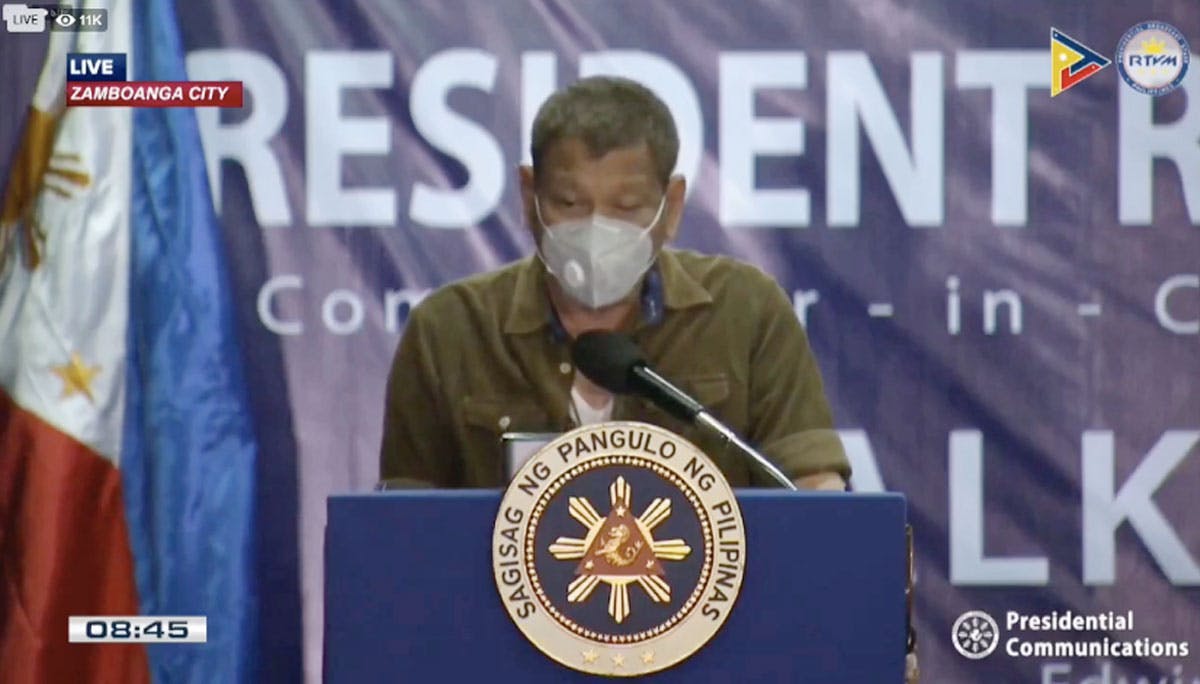
The newly released dissenting opinions of two Supreme Court justices shed light on how the majority of the magistrates argued against a case seeking to require President Duterte to disclose his health condition – without directing the Chief Executive or government lawyers to defend him first.
Associate Justices Marvic Leonen and Alfredo Benjamin Caguioa each penned a 30-page and a 31-page dissenting opinion, respectively, on the issue. These were published online only this week, along with the majority’s seven-page unsigned resolution, nearly two months after they dismissed the petition of lawyer Dino de Leon on May 8.
Leonen said throwing out De Leon’s petition outright “undermines our independence,” while Caguioa echoed that it “unnecessarily and unfortunately impacts on the public’s perception of the Court’s impartiality.”
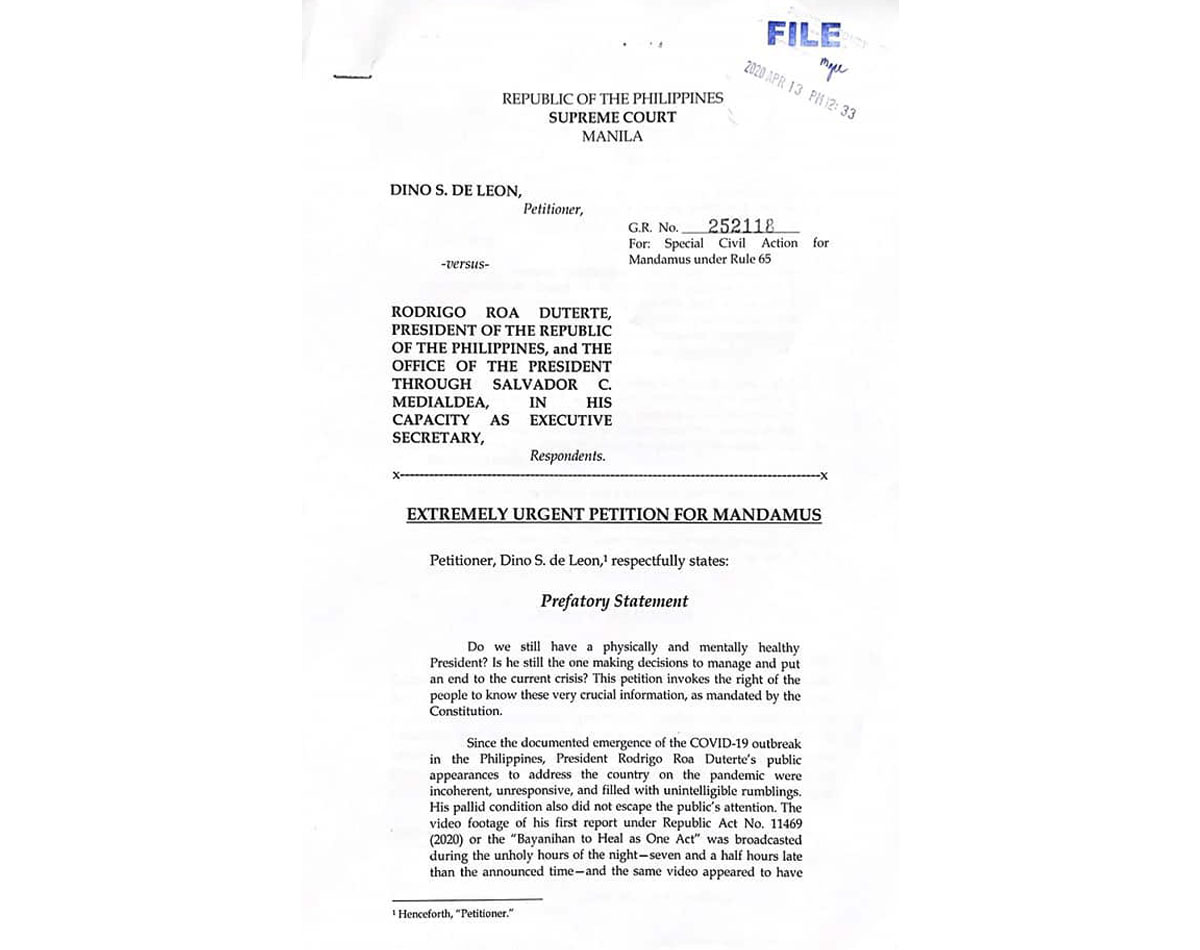
De Leon’s petition for mandamus – filed on April 13 – was supposed to be a test case for Article 7, Section 12 of the Constitution, which states that “in case of serious illness of the President, the public shall be informed of the state of his health.”
The lawyer cited Duterte’s absence from several engagements and prolonged absence from public view.
He also cited the President’s apparent incoherence during his March 12 press conference in which he announced the impending imposition of community quarantine measures. De Leon then filed a freedom of information request, but it was not of much help, as the Malacañang Records Office replied that it did not have the records sought.
De Leon also cited Duterte’s public statements acknowledging that he has Buerger’s disease that affects blood vessels in the body, Barrett’s esophagus (a condition where the lining of the esophagus changes), gastroesophageal reflux disease or GERD (a digestive problem where acid from the stomach comes up into the esophagus) and myasthenia gravis (neuromuscular disorder that causes weakness in the skeletal muscles), aside from migraine and spinal issues.
De Leon likewise cited the psychological report used in the proceedings for the declaration of nullity of Duterte’s marriage to Elizabeth Zimmerman.
What the majority said
The petition of De Leon was dismissed outright. The named respondents, Duterte and the Office of the President, were not asked to comment.
The SC decision stated that the petition and its annexes “fell short of making a prima facie case for mandamus by failing to establish a legal right that was violated” by Duterte and his office.
The majority noted that De Leon’s own citation of the deliberations of the Constitutional Commission worked against him. Then commissioner Blas Ople was cited as saying: “We are called upon to be more trusting with respect to the Office of the President that they will know what appropriate means to take in order to release this information to the public in satisfaction of the public’s right to know of the presidency.”
The SC also said Duterte’s admissions of serious illness were only sourced from news articles, which “are, as the Court has consistently ruled,” characterized as hearsay evidence “twice removed, and are thus without any probative value.”
It said claims of weak health were “belied” by the fact that “the President has been visibly holding regular (Cabinet) meetings.” It added that “the President’s regular televised addresses to the nation… show that the President has been actively performing his official duties.”
The SC noted in an unsigned resolution that “apparently,” De Leon’s petition was “unsubstantiated and… based merely on petitioner’s surmises and conjectures regarding his perception of the declining health of the President.”
Unsigned resolution
The dismissal of De Leon’s petition came in the form of an unsigned resolution. None of the justices were identified as the ponente or writer; only the signature of en banc clerk of court Edgar Aricheta was affixed.
Rule 13, Section 6(c) of the Internal Rules of the Supreme Court provides that such an unsigned resolution “is essentially meaningful only to the parties, has no significant doctrinal value, or is of minimal interest to the law profession, the academic, or the public.”
This is similar to the recent question on whether an Aug. 6, 2018 unsigned resolution – which pronounced a 15-year prescription period in the case of a Facebook user charged with cyberlibel for complaining about a seller of wellness products – is a binding precedent applicable in similar cases in the future.
‘Overly deferential’
Caguioa issued a 31-page dissenting opinion that called out his colleagues for a move that “clearly signals an overly deferential attitude to a sitting President.”
He bemoaned that the SC seemed to have declared the controversy “moot solely because the President had already narrated to the public the ailments he suffers from.”
Caguioa questioned the SC’s “preemption of the normal process” and stressed that the petition “unquestionably presents novel issues.”
He said the ongoing coronavirus disease 2019 pandemic should not be an excuse to spare Duterte from scrutiny. On the contrary, he wanted to give the government more credit “than merely assuming that filing a Comment in these trying times would be too burdensome.”
In a rare peek into the internal deliberations of a tribunal that has highly valued confidentiality, Caguioa revealed details that were not shown by the text of the unsigned resolution.
Caguioa said some of the justices found that requiring the executive to comment would be “antithetical to the respect, civility, cordiality and cooperation owed to a co-equal branch of government.”
Giving consideration to the government’s convenience was “an overstretch and totally unfair to the Court as the final arbiter of all disputes,” he said.
As for the merits, Caguioa said some justices opined that Article 7, Section 12 was neither a self-executing provision nor a matter for which a person may seek “judicial compulsion.”
A non-self-executing provision – like Article 2, Section 26, which provides for the prohibition of political dynasties “as may be defined by law” – cannot be enforced without the aid of enabling legislation to be passed by Congress, since the nature and the extent of the right is not fixed by the Constitution itself.
The argument that an enabling law or executive issuance is needed first before the President can be required to disclose his health condition ended up not being included in the resolution.
Caguioa also bared that some justices did not want to treat the disclosure of the President’s health to be a fundamental constitutional right of the public.
Internally, the justices considered this to be a “sui generis responsibility falling within the sole discretion of the Executive,” he said.
Moreover, Caguioa divulged that some justices wanted to invoke on Duterte’s behalf the right of an individual to keep sensitive personal information confidential under the Data Privacy Act of 2012.
Caguioa disagreed with the above arguments. He insisted that the President has the “duty” to inform the public of the state of his health – contrary to the majority view that this is a matter of discretion.
On the Constitutional Commission’s discussions, Caguioa noted that Ople characterized this mandate by saying “we put the burden on him to tell a lie to the people in derogation of his duties.”
Ople was quoted as saying that a president’s failure to comply with the mandate would be “a perfectly censurable act,” although he was “not inclined to say at this point that it attains to the level of a culpable violation” that would serve as a ground for impeachment.
Arguing on the President’s behalf?
Meanwhile, Leonen, in his 30-page opinion, said the fact that his colleagues did not find the need to require the government to comment “makes this Court vulnerable to a charge that we have ceased to be a sentinel of the fundamental rights of the sovereign people and enrobed ourselves with the garments of servility.”
He said that the majority acted “as if this Court itself supplied the arguments for the ease and convenience of the government.”
“Such a posture is procedurally unacceptable and may leave an impression that the Bench has lost its independence,” Leonen argued. “We must never take the position of an active combatant and must refrain from arguing for any party involved.”
Leonen also disclosed that despite concurring in the dismissal of the petition, Associate Justices Estela Perlas-Bernabe and Amy Lazaro-Javier were at least of the opinion that the government should have been directed to file a comment first.
He insisted that De Leon “has the clear legal right to the relief he seeks since he is deemed part of the general public which possesses that right” – echoing the stance of Caguioa that the mandate of the President to disclose his health condition should be appreciated hand-in-hand with the people’s right to information on matters of public concern.
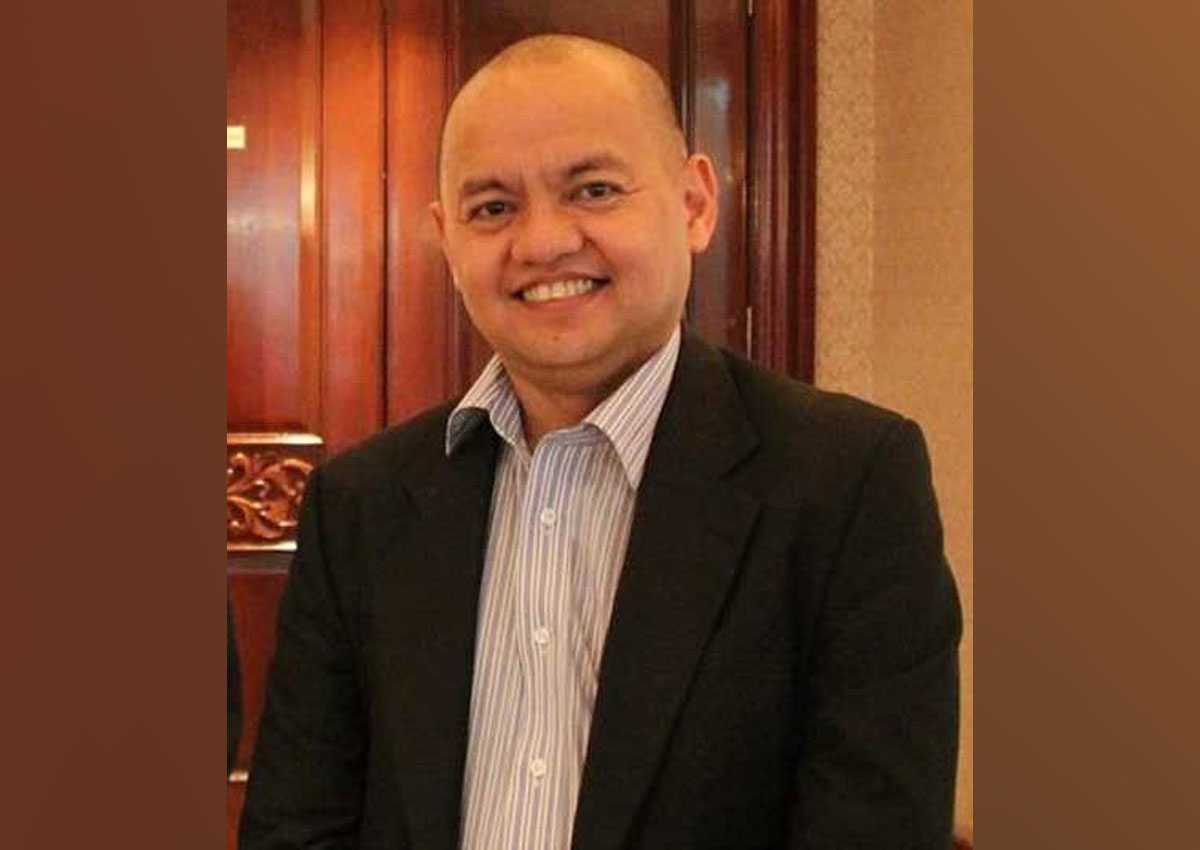
De Leon took refuge in the dissenting opinions. In a Facebook post, he said: “While I have not yet formally received a copy of the resolution, my team and I will definitely file our motion for reconsideration to give the Court a chance to correct its reversible error.”
A full copy of De Leon’s petition may be found in his April 13 post on Facebook.


