Nothing Personal? Congressmen Spend 10 Hours To Air Gripes About ABS-CBN Reporting, Dramas
“We are not doing this job for our personal reasons,” Cavite 3rd District Rep. Jesus Crispin Remulla said, as he and his colleagues unloaded their gripes against the news coverage and entertainment shows of ABS-CBN Corp.
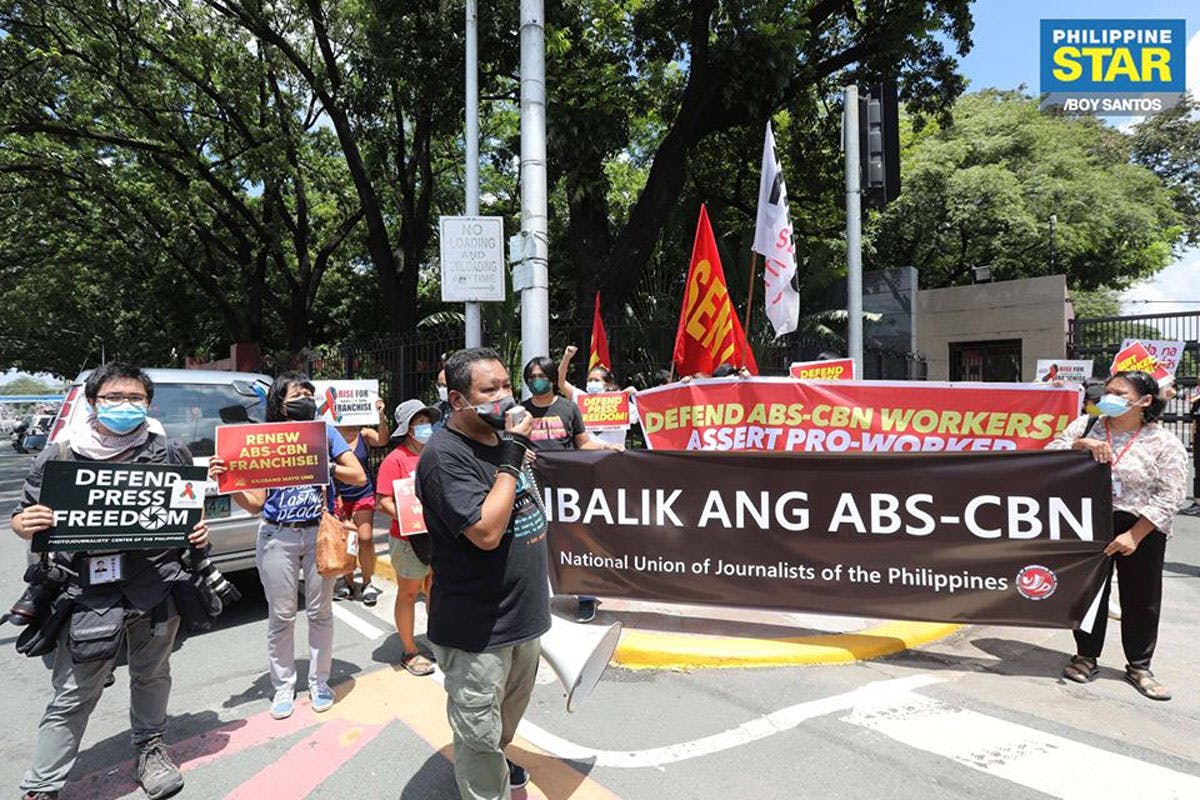
It wasn’t the last hearing on the legislative franchise of ABS-CBN Corp. as some expected, but it seemed like the House of Representatives had no other time to voice out their grievances against the network.
The topic was media bias or how journalists present the news – a good topic of extensive discussion as Speaker Alan Peter Cayetano put it. Congressmen obviously agreed with Cayetano, who is seeking a conscience vote on ABS-CBN’s franchise renewal, as the hearings lasted 10 hours beginning Monday afternoon, July 6.
During the 12th hearing being conducted by a House joint panel, 1-SAGIP party-list Rep. Rodante Marcoleta even expressed contempt for the democratic notion of the media regulating itself and staying free of intervention by the government.
When ABS-CBN News head Ma. Regina Reyes explained that the company has its code of ethics, Marcoleta complained: “Paano na ang mga hinanakit ng ating mga kasama (What about the grievances of our colleagues)?”
“Code of ethics lang ito. It is a self-imposed regulation na kayo lang naman ang pwedeng sumunod (This is only a code of ethics. It is a self-imposed regulation that only you can follow),” he said.
Cavite 8th District Rep. Abraham Tolentino claimed: “Alam ng Panginoong Diyos na mali ang lahat ng nire-report nila (The Lord God knows that everything they report is false).” He did not provide any specific details for his sweeping allegation.
‘Uphold freedom of the press’
Occidental Mindoro Rep. Josephine Ramirez-Sato called out her colleagues for using their personal disagreements with ABS-CBN’s news coverage as an indirect way of regulating and restricting its freedom of speech by putting its franchise application on the line.
She reminded her colleagues that freedom of speech is something they “are legally and morally bound by our oath to protect, in all our legislative processes.”
Sato said discussion of the alleged “bias” in ABS-CBN’s news coverage would be “improper” for being “tantamount to prior restraint on press freedom, and… violative of what is enshrined in our Constitution, in the long line of jurisprudence and in international convention.”
“Prior restraint,” according to the Supreme Court’s Feb. 15, 2008 decision on Chavez versus Gonzales (concerning the “Hello Garci” tapes or alleged election cheating of former president Gloria Macapagal-Arroyo), refers to the restriction of the press or other forms of expression even before publication or dissemination. The closure of offices is deemed “previous restraint or censorship.”
Sato said that if her colleagues had legitimate grievances, they should go to the courts that “can calibrate, weigh and declare that those private rights overturn, overweigh the preferred status of our freedom of speech, expression and freedom of the press.”
She stressed that such freedoms are given a “highly preferred status” and cannot just be overturned by flimsy reasons for the sake of the survival of democracy.
Albay 1st District Rep. Edcel Lagman echoed Sato, saying press freedom “is accorded primacy in the constellation of civil liberties which are protected by the Bill of Rights.” He stressed that ABS-CBN’s franchise did not prohibit it from taking sides.
“In other countries of the same democratic heritage, media outlets are given that opportunity to express their views or even to have their own biases with respect to political events, as well as during elections,” Lagman said.
Lagman quoted the Chavez decision, which stated: “To be truly meaningful, freedom of speech and of the press should allow and even encourage the articulation of the unorthodox view, though it be hostile to or derided by others; or though such view ‘induces a condition of unrest, creates dissatisfaction with conditions as they are, or even stirs people to anger.’”
Bayan Muna party-list Rep. Carlos Isagani Zarate stressed: “Hindi papel ng Kongreso ang pagtatakda kung ano at paano ang gagawing pag-uulat at pagbabalita ng mga mamamahayag o miyembro ng media (It is not Congress’ role to assign to members of the media what or how to report).”
On the contrary, he said it is the lawmakers’ role to ensure that members of the press are free to do their job in reporting or scrutinizing what is happening in society, and that there is no killing or suppression of their freedom to report.
Agusan del Norte 1st District Rep. Lawrence Fortun expressed belief that “the allegations of biased reporting and meddling in elections appear to have all been refuted.” He reminded his colleagues that the concerned government agencies have already attested to ABS-CBN’s compliance with the laws, rules and regulations.
Under pressure
In her opening statement, Reyes stressed: “Every reporter, writer, producer, anchor, every editor in the newsroom knows that what we do is not just a job. It is a response to a call to tell the truth and work for a cause greater than ourselves.”
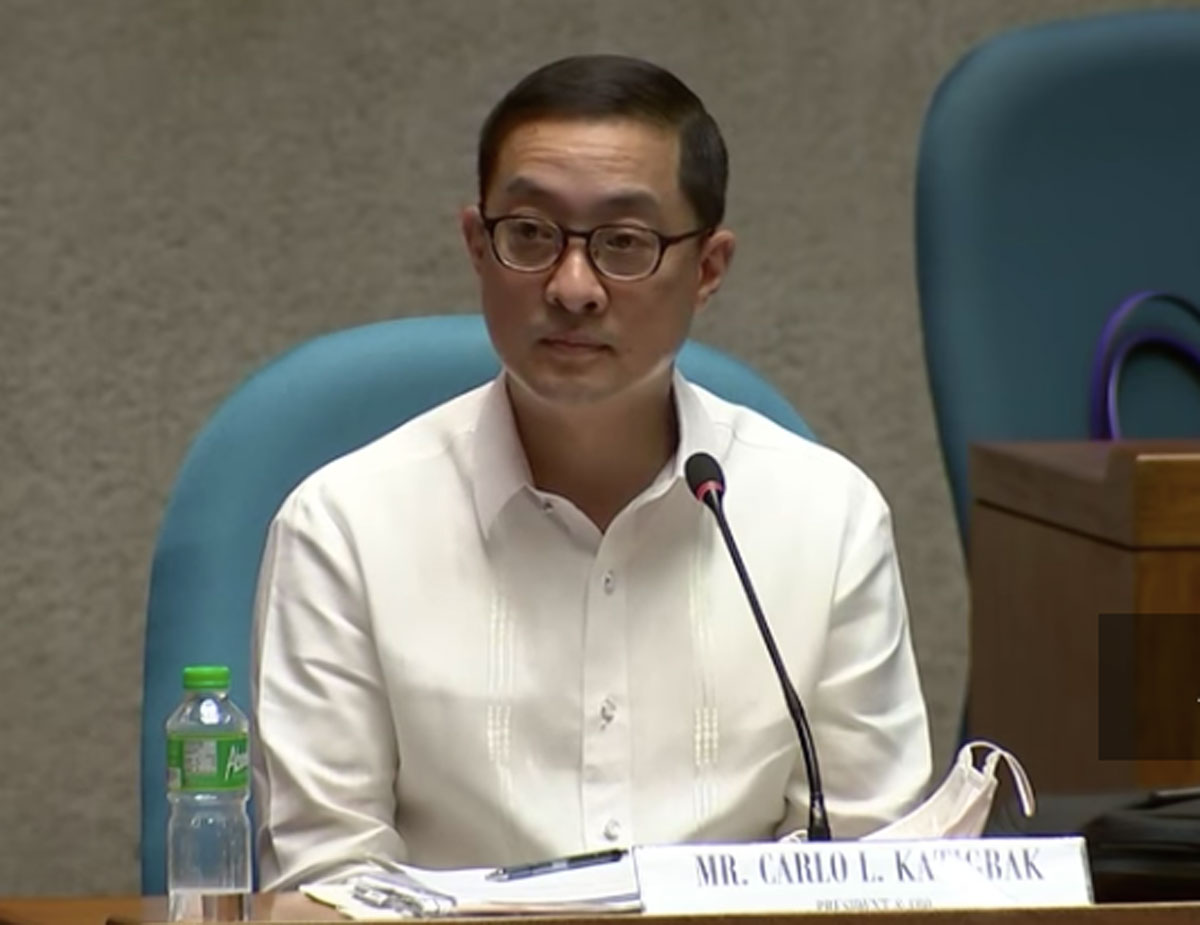
ABS-CBN president and chief executive officer Carlo Katigbak assured the congressmen of airtime for public officials who want to air their side.
“That is a commitment by the owners, the management, and we are instructing our organization today to take note of this instruction,” Katigbak said.
This was similar to the “right of reply” bills that politicians in the past attempted to push in order to mandate an equal treatment of their statements regardless of truth value and relevance. Marcoleta accused ABS-CBN of being behind the “natural death” of such proposals.
Journalist Inday Espina Varona commented that most media organizations were actually against the right of reply proposal. “It was a blatant attempt to manage the news – demanding that journalists ignore the elements of news, or context, or nuance, or fact-checking by running statements and releases en toto (for starters),” she said.
Here are some of the other personal grievances raised by the congressmen throughout the hearing, which will continue on Thursday, July 9.
Free press conferences and rice giveaways
Marcoleta rehashed his complaints against lawyer and ABS-CBN court beat reporter Mike Navallo, despite having already raised them during the committee’s June 8 hearing.
Navallo reported that Marcoleta authored a bill allowing dual citizens to run for public office, amid the congressman’s assertion that ABS-CBN chairman emeritus Eugenio Lopez III, who has dual citizenship, should not be running a media company, which is off-limits to foreign ownership. Lopez has maintained that he is “a natural-born Filipino.”
Navallo also reported that Marcoleta was a co-author of bills on the applications for the franchise renewal of several broadcasters, including GMA Network Inc., which also faces some of the issues that are now being hurled against ABS-CBN.
But Marcoleta continued to wash his hands of the previous franchise deliberations, citing the common practice of naming all the members of the legislative franchise committee as co-authors whenever such measures hurdle the committee level and get transmitted to the plenary.
He complained that “instead of just relying on the official website,” Navallo should have gone in person to the House index division to get the “initiatory copy of the bill,” in which his name would not have appeared as a co-author since he only joined the credits after it was taken up in the committee.
Marcoleta also harped on Navallo’s disregard for his instruction to set up an interview with other reporters on his behalf – something that is a function of a media relations officer and not a legitimate journalist.
The reporter-lawyer stood by his story in a Twitter post. “We gave the party-list representative enough time to respond to our queries. Documents and entries from the House of Representatives website bear us out,” Navallo said.
Marcoleta also criticized the headline used in ABS-CBNnews.com’s story on the death of former foreign affairs secretary Perfecto Yasay: “Ex-DFA chief Yasay, who led Duterte’s China pivot, dies.”
“Lalagyan pa ninyo kasi ng flavor. Lalagyan ninyo pa ng palabok (You’re putting flavor. You’re using additives),” he said, as he compared it to the “simpler” headlines used by other news outlets. Reyes, however, stressed the importance of providing context to headlines.
Marcoleta further assailed news outlets prioritizing the coverage of crimes instead of highlighting projects that make him look good in the public’s eyes.
“Patayan dito, patayan doon. Wala man lang ibinalita na, ‘o, ‘yung Sagip Party-list ni Cong. Rodante Marcoleta, nagbigay po ng… bigas (Killings here, killings there. There’s no report at all that the Sagip Party-list of Cong. Rodante Marcoleta gave away rice),” he groused.
Dengvaxia backlash
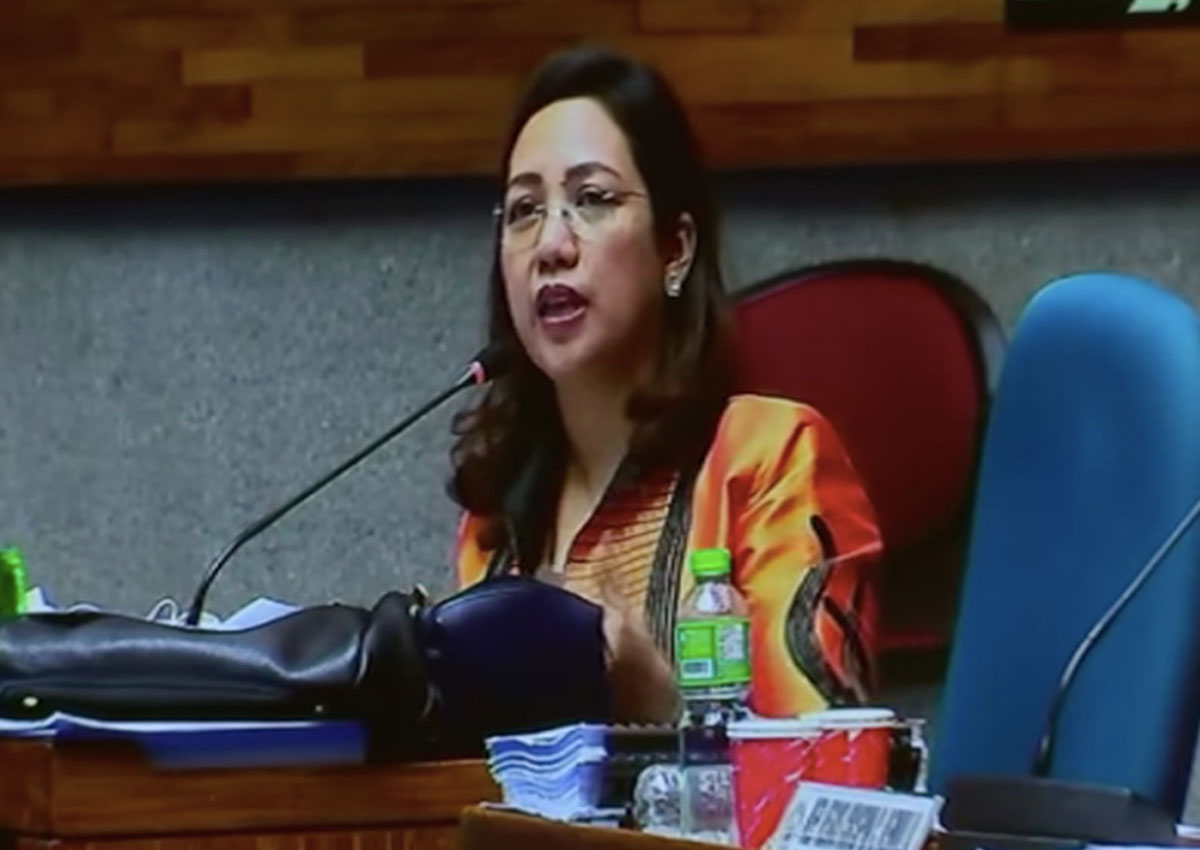
Former health secretary and now Iloilo 1st District Rep. Janette Garin joined in, blaming ABS-CBN for the backlash she drew in connection with the Dengvaxia vaccine controversy. She called ABS-CBN a source of “public health misinformation.”
The Department of Health halted the P3.5-billion immunization program in December 2017, after manufacturer Sanofi Pasteur announced new analysis that showed the vaccine worsened symptoms in people who were seronegative, or had no previous exposure to the mosquito-borne virus.
The controversy then triggered anti-vaccine hysteria that discouraged parents from having their children inoculated with tried-and-tested vaccines against easily preventable illnesses. At the same time, Public Attorney’s Office (PAO) chief Persida Rueda-Acosta filed a slew of lawsuits on behalf of the parents of children whose deaths she linked to the Dengvaxia vaccine despite an absence of scientific backing and its touted experts’ lack of credentials.
Speaking about the anti-vaccine hysteria that followed the Dengvaxia controversy, Garin lamented that it brought back all the infectious diseases that the country had already eradicated: “Tulong po ba ’yung ibinalik niyo yung lahat ng mga infectious diseases na natanggal na ng ating bansa?”
She noted that PAO’s “forensic consultant” Erwin Erfe was a “favorite” of the network. Abigail Valte, who served as deputy presidential spokesman under the Aquino administration, previously wrote that Erfe obtained his credentials from the American College of Forensic Examiners Institution, which she described as a “certification mill” where one could get “expertise on the go” in as little as two hours.
Garin called out ABS-CBN for featuring “fake experts” on matters of public health and medicine. It accused the network of having “sacrificed public health simply because of the fight to be the first one to come out with the news.”
“If you cannot perceive the real experts in the country, how can you have responsible journalism? How can you convey the real public health information? How can you deny that you have unknowingly and unconsciously become a part of that virus that’s creeping on our public health?” Garin asked.
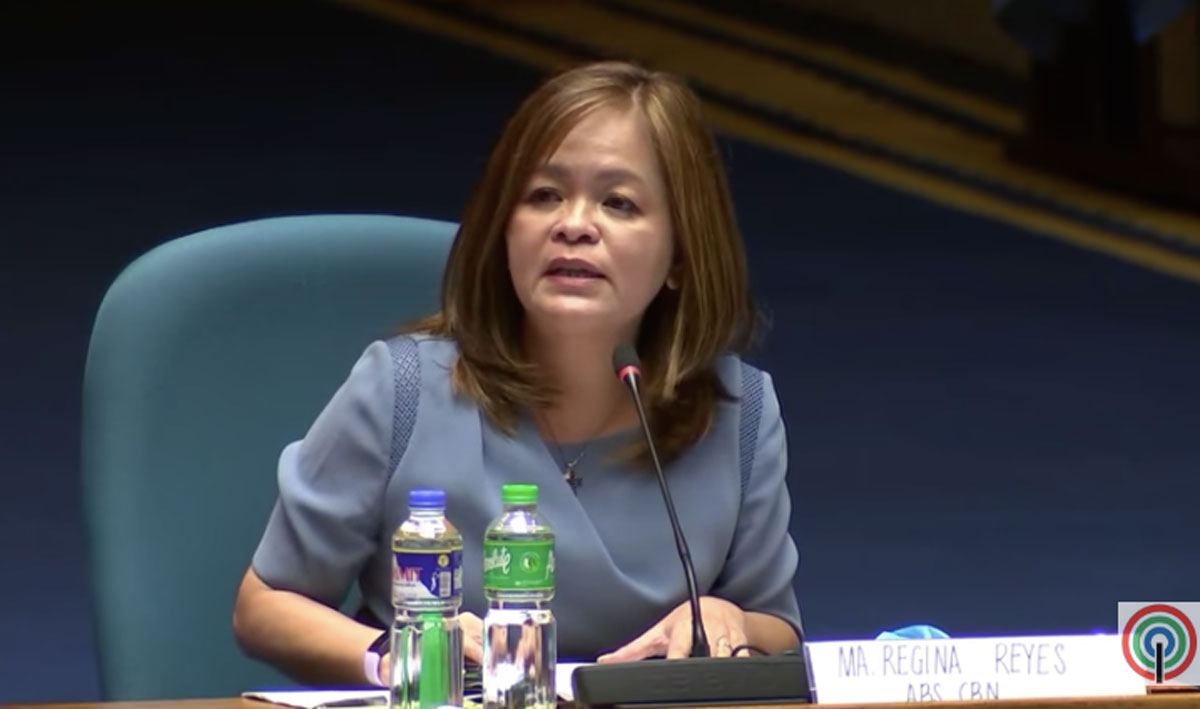
Reyes acknowledged Garin’s criticism. “We tried our best to do our stories in a fair and balanced way. But I do understand and acknowledge your concern about the use of non-experts,” she said.
Reyes admitted to receiving feedback that “some of our commentator interviews with non-experts tended to alarm people.” She said ABS-CBN “put an end to stories on Dengvaxia that tended to cause alarm among the general public.”
Garin also questioned ABS-CBN for having Dr. Susan Pineda-Mercado as its resident medical expert: “Kung may personal siyang kalaban, magkakaroon ka ngayon ng pag-aaway-away among doctors (If she has a personal rival, you will now have bad blood among doctors).” She said the network should have gone through the Philippine Medical Association for its medicine-related features.
Garin took issue with how an interview with ABS-CBN’s radio affiliate dzMM Teleradyo was aired as part of a news report on the television network’s primetime newscast TV Patrol.
She also brought up the “mysterious flesh-eating illness” hoax aired by ABS-CBN’s late-night newscast Bandila in February 2014. She said this served to worsen discrimination against psoriasis patients.
The show had long apologized for the report, and Reyes noted that the reporters involved had been meted “severe disciplinary sanctions” in connection with the “erroneous airing of that story.”
Pastor not so entertained
Metropolitan Bible Baptist Ekklesia International senior pastor and Manila Rep. Bienvenido Abante Jr., who also serves as House minority leader, criticized several of ABS-CBN’s entertainment programs for not being up to his moral standards.
He flagged the supposed foul language used in the 2015 remake of soap opera Pangako Sa ’Yo, the strip tease scene by actor James Reid in the 2015 soap opera On The Wings of Love, and the nude painting “task” in the late-night reality show Pinoy Big Brother.
“Do you have a morality issue?” Abante asked ABS-CBN chief operating officer Cory Vidanes. She replied that the network complies with all the program classifications recommended by the Movie and Television Review and Classification Board.
But Vidanes said that the network would “continue to be responsible content producers that make a positive influence in the lives of the Filipino.” She claimed that the noontime show It’s Showtime, specifically its host Vice Ganda who relies on insult-based comedy, did not have “deliberate intention to hurt anybody” and said “they have to be responsible and self-regulate.”
“We tell stories that teach life lessons. Our stories embody Filipino values like hard work, honesty, respect, resilience, and love for family, country and God,” she said.
Speaker’s ax to grind
Cayetano, who was President Duterte’s unsuccessful running mate during the 2016 elections, skipped the hearing but submitted a list of complaints alleging “partiality and favoritism.”
Cayetano cited the airing of an advertisement funded by then senator Antonio Trillanes IV, featuring children who questioned Duterte’s penchant for cursing in public.
The House Speaker said he did not want to personally appear during the hearing to avoid influencing the decision of his colleagues.
Media experts, artists appalled
Media experts expressed dismay over the congressmen’s lack of knowledge of how news reporting by an independent press is supposed to work. Former University of the Philippines College of Mass Communication dean Luis Teodoro said the “ignorance… means the franchise power should be removed from government.”
“Media criticism is a special field in communication studies. And yet some congressmen without the most basic understanding of the ethical and professional standards of the news media pretend to be experts on how best the media should cover events and issues,” Teodoro added.
The 1987 Constitution only mandates a franchise requirement for public utilities under Article 12, Section 11. The practice of securing a franchise from Congress for broadcast frequencies comes from Republic Act 3846 (the 1963 law regulating radio stations) and RA 7925 (the Public Telecommunications Policy Act of 1995).
National Union of Journalists of the Philippines chair Nonoy Espina noted that the grievances arose from this mistaken belief: “To Filipino politicians, a critical report is ‘biased’ while a praise release is ‘objective.’ ”
Edre Olalia of the National Union of People’s Lawyers asked: “Do they want to legislate the standardization of opinion?”