


No Student Left Behind: Teachers Use Kolong-Kolong to Educate Aeta Students Amid Pandemic
Since Aeta students lack gadgets and internet access for online classes, this modular distance learning on wheels aims to meet the education needs of Aeta students from kindergarten to senior high school amid the pandemic.
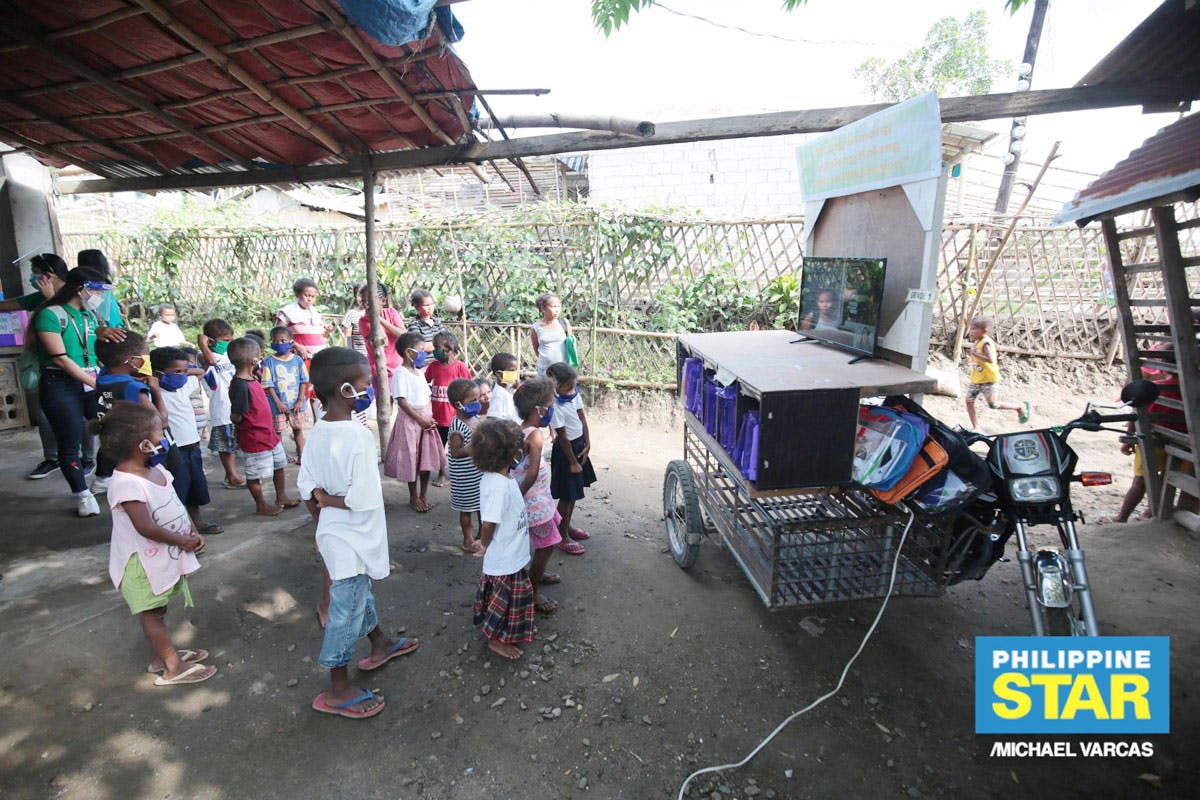
Every Monday at 7:00 a.m., Christopher Semsem, a junior high school teacher from Porac, Pampanga, walks more than one kilometer to go to an upland Aeta community. He brings along a kolong-kolong, or a motorcycle with a flat sidecar, loaded with education materials to teach students amid the pandemic.
Semsem has been teaching English to indigenous children of Villa Maria Integrated School for 16 years. He wakes up early and takes only a quick sip of coffee to prepare himself for the distance he has to travel just to reach his students.
"A DepEd (Department of Education) teacher assigned in a far-flung school has to be mindful of time and the amount of effort he/she has to allot on a daily basis. More so if the school is an upland school or [in a] coastal [area] for that matter," Semsem told The Philippine STAR / OneNews.PH on Friday, June 18.
To save on transportation costs, Semsem travels from Angeles City to another municipality where he waits for his fellow teachers, who also live in the province's lowlands. "Traveling together with colleagues is one way of conditioning ourselves for the day ahead,” he said.
According to Semsem, it usually takes around 30 minutes for them to arrive at the school.
"There, warm and innocent smiles greet us as we huddle in the faculty room for the early morning turn-in of attendance. A little chitchat with colleagues then off to meet the anxious Aeta learners as they wonder what's in store for them on the day ahead," he said.
Semsem is assigned to assist and distribute learning modules to Aeta students living in Sitio Tarik, Barangay Villa Maria, using an improvised utility tricycle colloquially referred to as kolong-kolong.
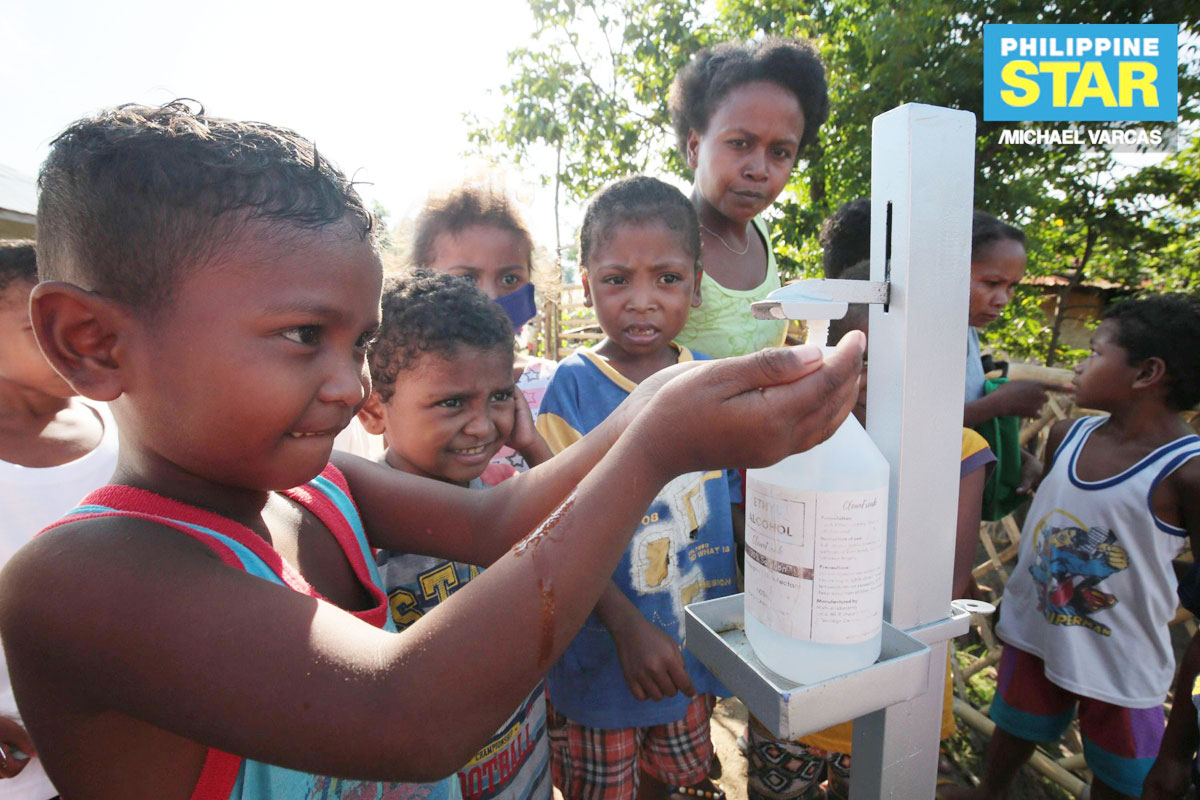
At 8:00 a.m., Semsem and the other teachers begin to set up the kolong-kolong, including the alcohol stand for sanitation. Students come according to their schedule to avoid congregation during the activity.
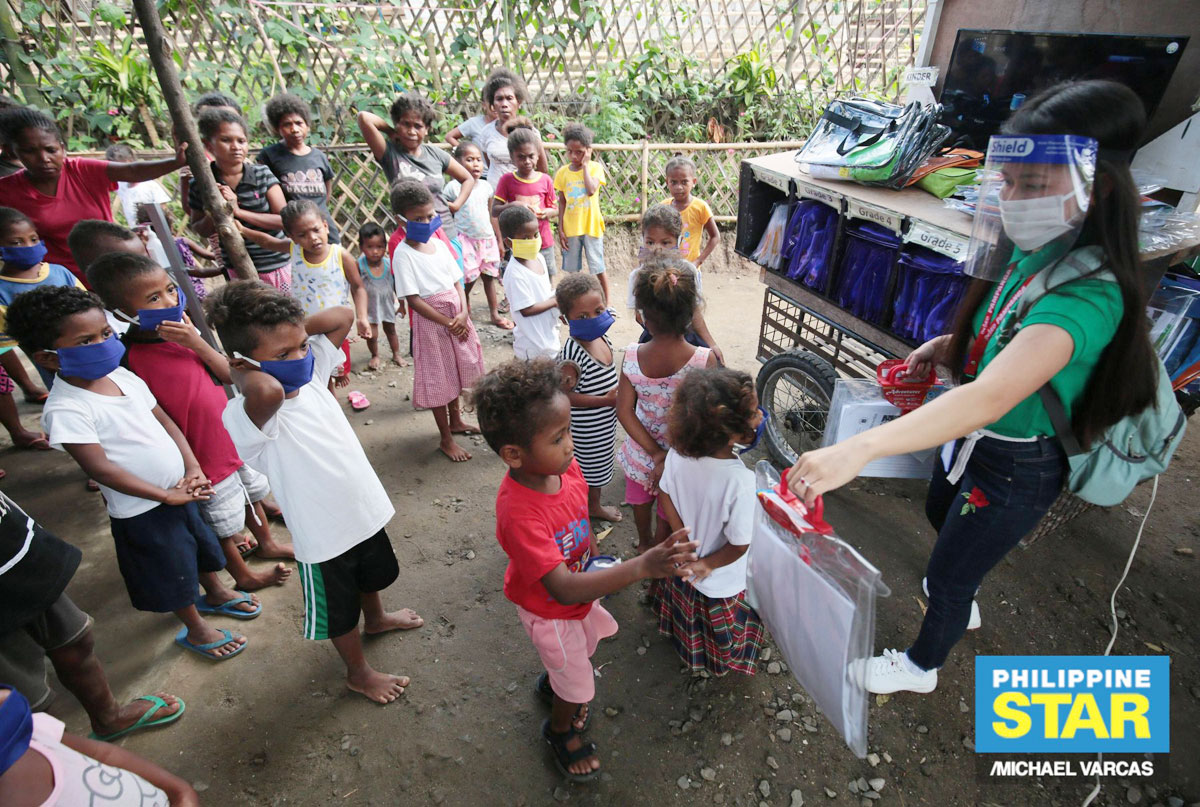
Dubbed as “Sulong Dunong sa Kolong-Kolong para sa Edukasyon,” the program is part of the school's intervention following the basic education learning continuity plan of DepEd in deference to COVID-19 protocols.
Since Aeta students lack gadgets and internet access for online classes, this modular distance learning on wheels aims to meet the education needs of Aeta students from kindergarten to senior high school despite the ongoing challenges of the pandemic.
"With the help of the community, we made four cabinets, and we borrowed four (kolong-kolong),” Semsem said. A kolong-kolong is a common mode of transportation for Aeta communities in Porac.
The four improvised motorized trikes have televisions on top where pre-recorded lectures of teachers and instructional videos on how to answer the modules are being played on screen. Those moving learning centers are designated to four sitios in two barangays in Porac, where the students reside.
Challenging learning set-up
Semsem clarified that the teachers are there primarily to assist in implementing minimum health and safety protocols and not to conduct lectures themselves. The students watch their lessons on television and receive their modules. He said they only allow students to stay for a maximum of 10 minutes.
"Following the given schedule, an array of activities is set, which should suit the needs and understanding of an Aeta learner – that is contextualization and indigenization as mandated by the Department of Education," Semsem explained.
After the morning session, they take a break to eat their lunch, and talk about their experiences and expectations halfway through the day. They usually finish conducting the program at 5:00 p.m.
"As the day comes to a close, everyone is excited to go home and look forward to another day. The trip home is as dangerous as the trip going to the community, but this time we leave with feelings of fulfillment and accomplishment," Semsem said.
But beyond the determination to impart knowledge on Aeta students during the pandemic, their situation – including those of other indigenous communities – remains challenging, considering the problems they continue to face.
Internet connectivity has been a prevalent issue in implementing distance learning in the country, especially in far-flung communities and rural areas.
Semsem cited the lack of network signal and internet connection among their primary challenges when educating Aeta students, aside from the long distance between the school and the indigenous communities. He said those issues hinder them from communicating well with the students.
"There is no available or any source of signal for cellphone or internet that has at least a low bandwidth to support online class… As much as we want to catch up with the education situation in the lowland, we cannot do so because we don't have the capability of such technology," he said.
But with the help of their partner stakeholders, such as the Simbahayan Community Development Office of the University of Santo Tomas, they still managed to implement the Sulong Dunong sa Kolong-Kolong para sa Edukayon program. They provided needed materials such as bond papers, ink for printers, and stipends for the kolong-kolong drivers.
Like other homeschooled students in the urban areas, Semsem revealed that the Aeta pupils feel chronic fatigue as well from answering their modules, making them lose interest in their studies. Helping their parents look for food so their families can survive another day is also a bigger priority for some children.
'No student should be left behind'
On Fridays, the students are expected to return their answered modules on the kolong-kolong. But when they have trouble understanding the lessons, the mobile learning facilities are deployed again to the communities every Tuesday to Thursday so the students can rewatch the instructional videos.
Semsem said they are continuing the distribution of learning modules to the Aeta children because they want no student to be left behind in this challenging learning set-up.
Until now, the program is still being implemented by the teachers of Villa Maria Integrated School. It is their only way to ensure that the education needs of Aeta students are not totally disrupted amid these difficult times.
“The smiles and enthusiasm that we see on their faces every time they hold a module, every time we go to their communities, the acceptance and the excitement whenever they see us are the significant for us. It's a positive feedback [implying] that they really want to learn," Semsem said.
The ongoing school year under the pandemic will end in July. The education department ordered its extension due to the "learning gaps" that need to be addressed to meet its expected learning competencies.


