



Nearly 3.5 Million Workers Nationwide Lose Jobs, Suffer Pay Cuts Due To COVID-19 Crisis
Despite the high number of displaced workers, Labor Secretary Silvestre Bello III says the country’s employment situation is now showing signs of improvement, with more companies resuming operations.
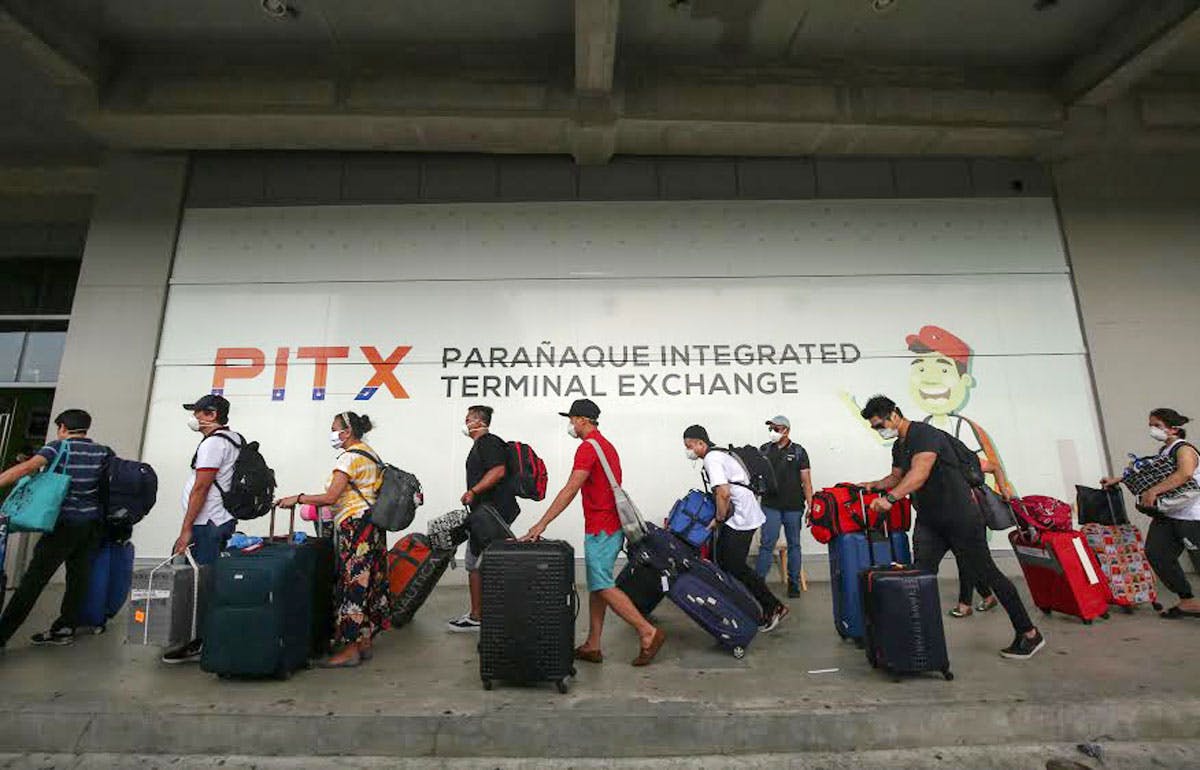
Close to 3.5 million workers nationwide lost their jobs or suffered reduction in pay due to the crisis spawned by the coronavirus disease 2019 pandemic, the Department of Labor and Employment (DOLE) disclosed on Wednesday, Oct. 7.
Despite the high number of displaced workers, however, DOLE Secretary Silvestre Bello III said the country’s employment situation is now showing signs of improvement, with more companies resuming operations.
Bello noted that most of the displaced workers nationwide were affected by temporary closures, meaning they will be rehired when the companies reopen.
DOLE’s regular job displacement monitoring report showed that from January to Oct. 4, the number of workers affected by the pandemic has reached 3,492,534.
Of the total figure, DOLE said 2,039,662 workers were affected by temporary closures of 85,438 commercial establishments while 1,357,619 were affected after 32,929 establishments resorted to flexible work arrangements or FWAs.
Firms were encouraged to adopt FWAs such as reduction of workdays, rotation of workers, forced leave, compressed workweek and partial closure to enable them to cope with the economic impact of the pandemic.
DOLE reported that 225,643 workers were displaced as a result of shutdowns and retrenchment in 13,127 establishments nationwide.
Ninety percent of the 13,127 establishments opted to reduce their workforce while 10 percent decided to shut down for good, DOLE said.
The National Capital Region accounted for the biggest number of displaced workers with a total of 116,089 followed by Calabarzon with 38,507 and Central Luzon with 23,824.
Job displacement nationwide peaked in June when a total of 50,589 workers were affected by the pandemic. Since then, the number of displaced workers has dropped to a monthly average of over 37,000.
In the first four days of October, DOLE recorded a total of 9,494 workers displaced in 781 establishments nationwide.
To address the high unemployment rate, Bello said DOLE is backing the Department of Trade and Industry’s move to allow companies under general community quarantine to operate at 100 percent capacity.
On Monday, Oct. 5, the Social Weather Stations (SWS) released its Sept. 17 to 20 National Mobile Phone Survey, which found adult joblessness dropping to 39.5 percent in September or around 23.7 million people.
The SWS said adult joblessness fell six points from the record-high 45.5 percent or an estimated 27.3 million in July, but the figure remains staggering.
While joblessness dropped slightly in other areas, it rose to a new record-high in the Visayas.

Work from home scheme
As this developed, Sen. Joel Villanueva warned employers on Wednesday against violating labor laws in giving lower salaries or compensation to their employees under a work from home scheme.
Villanueva, who chairs the committee on labor and employment, said it was clear in Republic Act No. 11165 or the Telecommuting Act and its implementing rules and regulations that workers must receive in full their salaries and benefits even if they are working from home.
“We crafted the Work From Home Law to give ample flexibility to both our workers and employers to continue operating even in the midst of a disaster or emergency, like the COVID-19 pandemic we’re experiencing now,” Villanueva stressed.
He said the same law also guarantees social protection to workers.
Villanueva also lamented the delays in the disbursement of the cash aid meant for public utility vehicle (PUV) operators and drivers whose livelihoods have been affected by the COVID-19 pandemic. He noted that the aid was specified under the Bayanihan to Heal as One Act and the Bayanihan to Recover As One Act.
At the budget hearing of the Department of Transportation last week, Villanueva pleaded with the DOTr officials about the plight of the public transport sector, particularly drivers of traditional jeepneys, most of whom continue to be banned from plying their routes. In certain areas, their dire situation has forced them to beg for alms.
“We have pointed out numerous times why the disbursement of assistance to affected PUV and TNVS (transport network vehicle service) drivers has been consistently slow. In fact, in our comments on the Bayanihan report, we have consistently pointed out that the target is always 100,000 drivers only. We wrote a letter to the IATF and the DOTr but unfortunately, we didn’t receive any response,” he said, referring to the Inter-Agency Task Force for the Management of Emerging Infectious Diseases.
Villanueva also expressed his dismay over the inability of the DOTr to provide the committee with actual figures on the impact of the pandemic on the operations of the transportation industry, particularly the fate of PUV drivers who have yet to resume work due to quarantine restrictions.
Healthcare workers
Meanwhile, around 10,000 nurses and other healthcare workers (HCWs) have been able to leave the country for jobs abroad despite the government’s suspension of deployment since April.
Philippine Overseas Employment Administration (POEA) chief Bernard Olalia said among the 10,000 HCWs allowed to leave were those who spent the Christmas holidays in the country and were stranded here because of the lockdowns imposed due to COVID-19.
“They were allowed to leave the country because they are returning or classified as Balik Manggagawa workers,” Olalia said in a virtual forum on Wednesday.
He said the POEA also exempted the nurses hired under a government-to-government agreement and those who have perfected contracts as of Aug. 31.
“On the average, about 500 to 600 HCWs are able to leave for overseas work monthly while there is still suspension in deployment,” Olalia said.
The POEA suspended the overseas deployment of HCWs to ensure that there are enough medical workers in the country during the pandemic.
The public health crisis brought about by COVID-19 resulted in a massive decline in overseas deployment. But Olalia said hiring of Filipinos abroad is slowly improving, with some countries lifting travel restrictions.
Olalia admitted that overseas deployment is not expected to return to normal with the global pandemic still far from being over.
“We cannot say when our overseas deployment will go back to the usual business, but what is important is that our government is doing everything to assist the affected OFWs (overseas Filipino workers),” he said.
Last month, the DOLE projected that as many as 700,000 OFWs may lose their jobs as a result of the pandemic-induced global recession. – With Helen Flores


