



‘More Than A Public Health Concern, ASF A Food Security Issue’
Experts say the African swine fever may spread to healthy pigs or wild boars through different means, including consumption of contaminated materials such as food waste, feeds and even processed meat products.

Various meat products have recently tested positive for the African swine fever (ASF), alarming consumers who have raised concerns on the safety of the processed meat sold in the markets.
But the Department of Health was quick to clarify that the meat tainted with ASF is safe for human consumption.
“It is completely safe. It has no effect on human health. It is safe for human consumption,” Health Undersecretary Eric Domingo said. “Those threatened by (ASF) are only hogs, and not humans. ASF has no health hazards to humans.”
This is backed by experts from around the world, including the World Organization for Animal Health (OIE), which declared that “ASF is not a risk to human health.”
So if it’s not dangerous for humans to consume meat tainted by the virus, why should we be concerned by its presence on processed meat products?
Because ASF, more than being a public health concern, is primarily a food security issue.
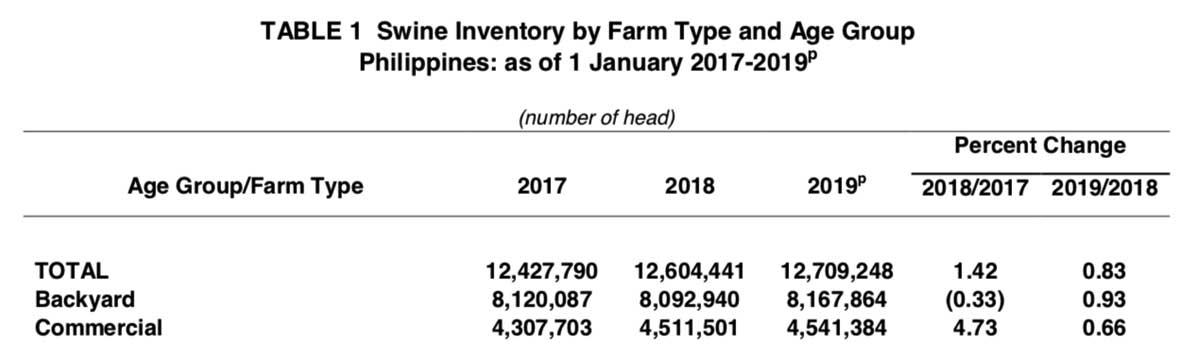
Data from the Philippine Statistics Authority showed that stocks in backyard and commercial piggeries in the country have continuously increased in recent years.
As of the beginning of the year, the swine population in the country stood at 12.71 million, higher by more than 100,000 heads from the start of the previous year.
Most of the hogs are in Central Luzon and Calabarzon, where cases of ASF have already been recorded.


With the pandemic, this industry is in peril.
According to OIE, the ASF is a viral animal disease affecting domestic pigs and wild boars with up to 100 percent case fatality rate.
Meaning, in almost all cases, swine affected by the disease die within two to three weeks after contracting the disease.
Experts say the virus may spread to healthy pigs or wild boars through different means, including direct contact with infected hogs and consumption of contaminated materials such as food waste, feeds and even processed meat products.
ASF may also be spread through fomites or inanimate objects that can transfer the disease to new hosts, as well as through biological vectors such as soft ticks belonging to a certain genus that can carry the virus.
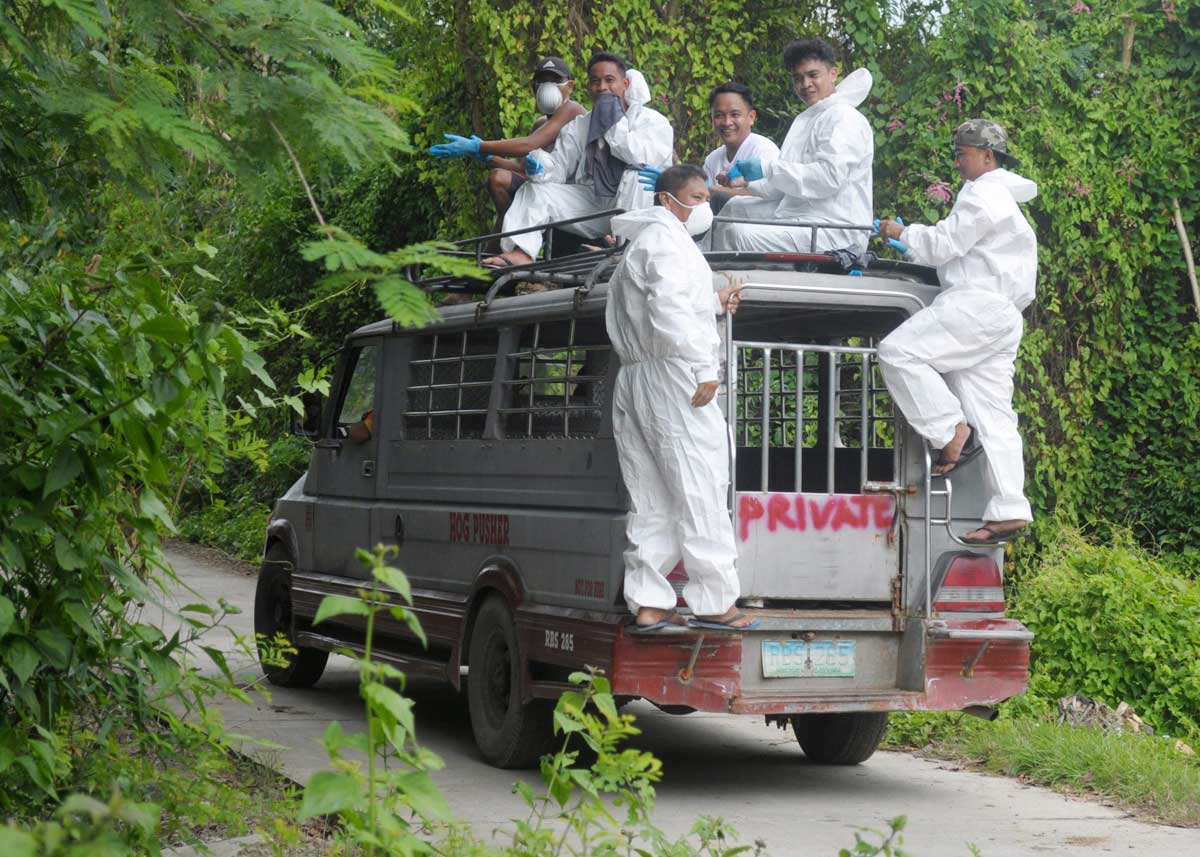
Three months after ASF was confirmed to be present in the country, more than 62,000 pigs have already been culled as part of efforts to contain the disease.
Yet the swine pandemic continues to spread throughout Luzon, so far affecting piggeries in Quezon City and the provinces of Bulacan, Cavite, Nueva Ecija, Pampanga, Pangasinan and Rizal.
Noel Reyes, spokesman for the Department of Agriculture, said “there are opportunity losses for the hog industry estimated at about P1 billion ($19.5 million) a month.”
Economic impact
The OIE said ASF, which has spread to countries in Africa, Europe and Asia, is responsible for serious economic and production losses.
Josef Schmidhuber, deputy director in the Trade and Markets Division of the Food and Agriculture Organization (FAO), said the outbreak of ASF “is likely to have a noticeable impact on meat and feed markets worldwide.”
“The unabated spread of ASF poses a number of questions, relevant beyond the confines of East Asia and its pig meat market,” he wrote in a special report published along with FAO’s Food Outlook in May this year, months before ASF presence was confirmed in the Philippines.
“These include the impacts on global markets, challenges to maintaining adequate meat supplies in affected countries, impacts on other types and sources of meat and protein, as well as the opportunities arising for pig meat producers in ASF-free areas,” he added.
Schmidhuber noted that, along with the impact on the meat supply in affected countries, ASF may also have an impact on the trade of products used as animal feed, including soybeans, grains and their alternatives.
He also warned against the spread of ASF in other countries, noting the trade of pork products such as sausages, cured meats and other processed pig meat products.
“They may all contain the ASF virus, which is highly resistant to temperature and other treatments (salting) and can persist for months or years. This means that the chances of ASF to spread far and fast are not only high, but the disease may resurface in the region even years after the initial outbreak,” he wrote.
Impact on Phl
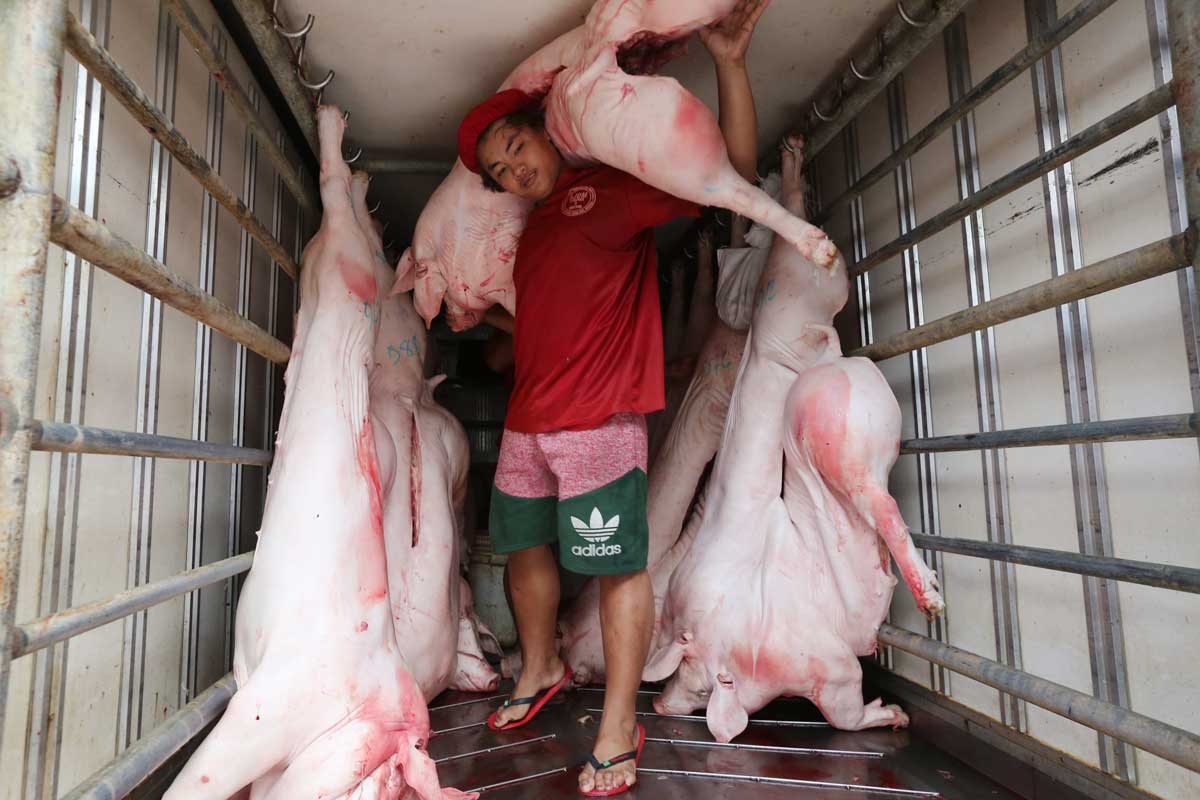
The presence of ASF in the Philippines is already expected to make a dent on the swine industry in the country.
Fitch Solutions Macro Research, a unit of international credit rating agency Fitch, said pork output in the Philippines is expected to decline to 1.6 million tons next year, down 1.5 percent year-on-year, due to the ASF.
“Farmers are unlikely to begin rebuilding herds in these countries while the epidemic is still ongoing, and even when monthly outbreaks subside, it can take up to a year for new animals to be ready for slaughter,” Fitch said in its forecast on the performance of the hog industry in China and Southeast Asia.
Last year, the gross value of hog production in the Philippines was at P268 billion, PSA data showed. This was 10 percent higher than the gross receipts of P241.9 billion in 2017.
The local meat processing industry said it may lose P50 billion in sales this Christmas season due to difficulties in transporting products to provinces that are still free from ASF.
For consumers, the swine pandemic could mean more expensive pork-based products and, in some areas, shortages due to a ban on transportation of products from Luzon.
The Bangko Sentral ng Pilipinas said the ASF outbreak, along with volatile oil prices, may contribute to higher inflation next year.
Jerome Ong, vice president of the Philippine Association of Meat Processors Inc., warned that the total ban imposed by some local governments in the Visayas and Mindanao on pork products from Luzon may have an impact on the supply of ham this Christmas season.
“While Cebu and Cagayan de Oro have their own ham production capabilities, their total production will not cover the needs of the region unless the ban on Luzon-produced pork-based processed meats is rationalized,” he said.
The group earlier called on the national government to draft rules governing the movement of pork products in the country amid the ASF outbreak.
This may prove to be more necessary now following the confirmation that some processed meat products in the market have tested positive for ASF.
Not a risk to human health
Health Secretary Francisco Duque III has been reiterating that the ASF poses no risk to human health.
“We want to dispel the fears of consumers by reiterating that, as long as pork and pork products are bought from reliable sources and are cooked thoroughly, pork meat and products are safe to eat,” he said. “Processed meat products are still safe for consumption.”
According to Dr. Edsel Maurice Salvana, director of the Institute of Molecular Biology and Biotechnology at the University of the Philippines-Manila’s National Institutes of Health, ASF does not infect humans.
He explained there are some influenza viruses that can jump from pigs to humans, just like when the novel influenza A (H1N1) or swine flu emerged in 2009, but this has not been documented to happen in ASF.
Salvana underscored that from a “food standpoint, ASF does affect us.”
“Humans can’t carry ASF…(But) the spread of ASF should also alert us to the possibility of the spread of pig to human diseases such as swine influenza. We need to be more vigilant,” he told The Philippine STAR.
More than 70 countries have reported cases of H1N1, prompting the World Health Organization to declare on June 11, 2009 a global pandemic of this novel influenza. It was first detected in the United States.
The Atlanta-based Centers for Disease Control and Prevention has estimated that around 151,700 to 575,400 people worldwide died from H1N1 infection during the first year that it circulated. Some 80 percent of the fatalities were younger than 65 years old.
Salvana said the country must make sure that “biosafety protocols” are strictly followed to protect both animals and humans against ASF.
These biosafety protocols include proper reporting, vaccination, screening and surveillance.
“If we have trouble containing ASF, it means that we need to do a better job at monitoring pigs for diseases in general, particularly those that can infect humans,” he said.


