


More Defense Cooperation And Increased Defense Spending For Phl As US Fades Away
Manila has to act really fast to fill the vacuum to be left behind by US troop presence because there are external powers and non-state actors that could take advantage of the security situation, as shown in the past.
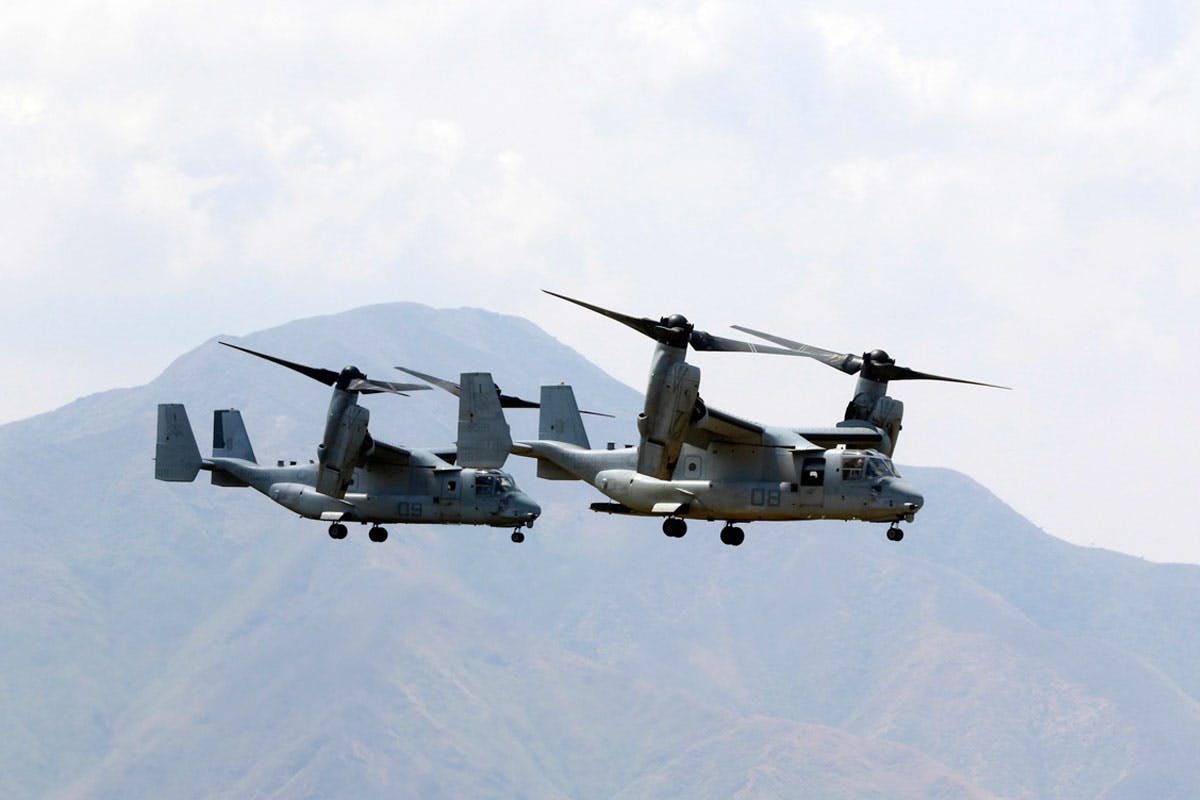
The Philippines has many options to offset the expected loss of United States military support to local armed forces as well as its deterrence through active presence in the country after the termination of the Visiting Forces Agreement (VFA) later this year, security officials and analysts said.
But Manila has to act really fast to fill the vacuum to be left behind by US troop presence because there are external powers and non-state actors that could take advantage of the security situation, as shown in the past.
The Philippines has to start looking for an alternative and more reliable security partner with which it shares a common interest in the region, Rommel Banlaoi, an international relations and security expert, said.
“The Philippines has broader options,” Banlaoi told The Philippine STAR.
He said countries that share maritime borders with the Philippines are excellent security partners, like Indonesia, Malaysia and possibly Singapore.
Japan is also another potential partner as Tokyo is eager to sign a VFA with Manila, but the treaty would be modeled after an agreement signed by the Philippines with Australia.
There had been initial talks with Japan for a status of forces agreement, a senior defense department official, who requested anonymity, disclosed. “It started during the previous administration and we expected to accelerate the process as Japanese troops have started joining annual Balikatan exercises with the Americans.”
The source said the sooner Tokyo and Manila agree on a VFA, the better because “it would legalize the participation of Japanese forces.” Japanese troops have been operating under the US military and no more than 100 soldiers take part in annual drills with the Philippines.
“If we have a VFA with Japan, they can send more soldiers and eventually replace the Americans,” Banlaoi noted.
Japan has donated five maritime patrol aircraft, which the Philippine Air Force (PAF) and Philippine Navy use to enhance maritime domain awareness in the South China Sea as well as in the Philippine Rise in the Pacific Ocean.
Tokyo has also transferred P5 billion worth of helicopter parts and air frame, which extended the life cycles of Bell UH-1H helicopters, the workhorse of the PAF in transporting troops and supplies as well as supporting ground operations and medical evacuation.
Another potential partner is Singapore, which used to hold annual bilateral exercises with the Armed Forces of the Philippines, called “Anoa-Singa” in the 1990s. The exercises were suspended and eventually stopped when the Flor Contemplacion issue erupted during the Ramos administration. Contemplacion was an overseas Flipino worker executed for murder in Singapore in 1995 despite efforts by the Philippine government to save her.
“It’s about time to revive the exercise with Singapore,” an Army colonel said, noting that the tiny city-state is one of the closest security allies of both the US and the Philippines.
“It helped us a lot during the Marcos years when we ran out of munitions in fighting the Muslim rebellion in the south,” he said. “The US did not lift a finger then. Perhaps it was concentrating on Vietnam and the problem in the (southern Philippines) was not an external aggression that could trigger the Mutual Defense Treaty.”
Singapore also helped the Philippines in counterterrorism as it had better information and intelligence on Islamist militants operating in Southeast Asia, preempting the Jemaah Islamiyah attacks in major capitals in the region.
Singapore joined the counterterrorism cooperation among Indonesia, Malaysia and the Philippines to stop piracy and cross-border kidnapping in the Celebes and Sulu Seas in the latter part of the presidency of Benigno Aquino III.
Malaysia, meanwhile, is also a claimant-state in the South China Sea, resisting China’s aggressive activities in the disputed waters.
Indonesia has been asserting its own sovereignty in the Natunas Island, blasting Chinese fishing boats encroaching into its exclusive economic zone. Jakarta is also cooperating with Manila in fighting Islamist militants not only within its territory but also in Mindanao, where extremists have sought sanctuary as well as experience in waging guerrilla warfare.
Banlaoi said these web of security interests in fighting Islamist militancy and promoting maritime security are enough reasons for the Philippines to enter into closer cooperative arrangements to replace US military presence, which could be a magnet for attack from Washington’s rivals.
He said even China and Russia could become the country’s security partners as the departure of American forces from the Philippines could signal to China that Manila wants a peaceful and political resolution of territorial disputes.
Apart from forging alliances and defense cooperation with like-minded countries, another defense department official said they could ask both Malacañang and Congress to increase defense spending to offset expected losses in US military assistance.
For 2020, the US has allocated $160 million in foreign aid to the Philippines. About a third of the fund will go to military equipment, logistics and supplies, including fuel and lubricants.
Foreign Affairs Secretary Teodoro Locsin Jr. had told senators in a hearing on Feb. 6 that Washington is prepared to pour $200 million in 2020 and 2021 to boost Philippine military capability. On Feb. 11, however, the notice of VFA termination signed by Locsin was sent to the US embassy on orders of President Duterte.
It is possible that the military assistance would be withheld because of the termination of the VFA. This was indicated by US President Donald Trump in his reaction to the VFA termination, saying it meant savings for Washington.
“We have to increase our defense spending to about two percent of our gross domestic product (GDP) to be able to stand on our own feet, upgrade our capabilities and develop a modest defense posture,” the defense official said.
Defense Secretary Delfin Lorenzana has been calling for an increase in defense spending to about two percent of GDP.
With the country’s GDP of about $330 billion, the P192-billion defense budget for 2020 translates to only 1.1 percent of GDP. Other Southeast Asian countries are spending about 3 percent of their GDP on defense.
Banlaoi said the Philippines’ actual defense spending could be lower because 60 to 70 percent of the budget goes to salaries, allowances and pension of soldiers.
Only 20 to 30 percent is left for maintenance and operating expenses and less than 10 percent on capital outlay, Banlaoi added.
The source said there was also a need to double the modernization fund allocation in the annual budget from P25 billion to P50 billion to accelerate the modernization program.
“These are better pills to swallow, but we need to prioritize our national defense interests as we expect the departure of the Americans late this year,” the source added.