



Modern-Day Heroes? Medical Frontliners Struggle With Criticisms, Low Morale, Measly Pay, Discrimination, COVID-19 And Other Risks
Healthcare workers are not asking to be hailed as heroes, they only want proper treatment, compassion and kindness amid the difficulties they have to deal with due to the COVID-19 crisis.
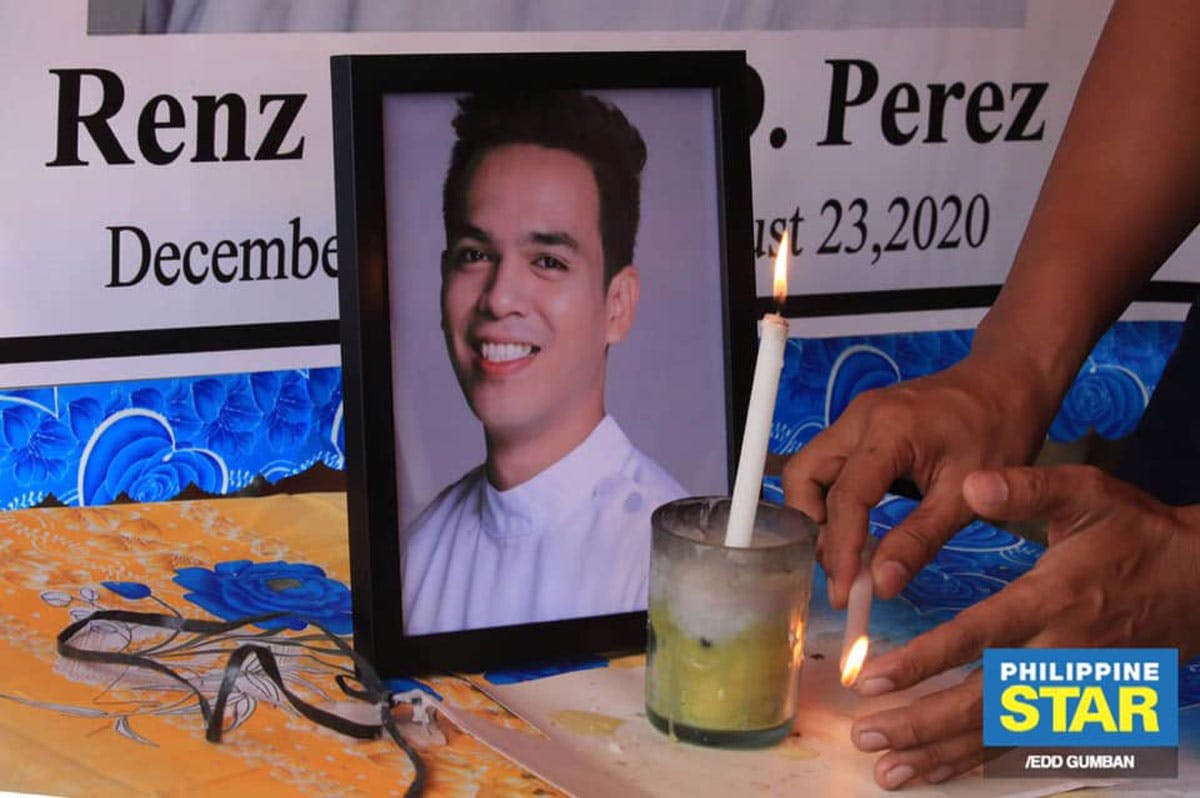
As the country commemorated National Heroes’ Day on Monday, Aug. 31, local and national officials were quick to hail medical frontliners as the country’s modern-day heroes in the time of coronavirus disease 2019 (COVID-19) pandemic for their service to the nation.
But despite the words of encouragement and praises for their “heroism,” the country’s health frontliners do not feel like being celebrated as heroes but as soldiers waging a war in which they are told to follow orders without complaint.
Amid their plight, health workers interviewed by The Philippine STAR appealed to government to be more compassionate and listen to their pleas, instead of taking it against them whenever they air their legitimate demands.
They remembered the start of the COVID-19 outbreak when people rallied behind them – complete with videos dancing to Rachel Platten’s “Fight Song.” From balconies, people under quarantine applauded the frontliners.
But now, apparently egged on by President Duterte’s tirades against the frontliners after medical groups pleaded for a “timeout” or stricter quarantine due to rising COVID-19 cases, internet trolls have started to hit them with threats, one frontliner told The STAR.
The timeout did not mean the medical groups wanted to take a break from work. Instead it was intended to give the government time to recalibrate its pandemic response to curb COVID transmission and ease the burden on overwhelmed health facilities. When Metro Manila and four provinces were reverted to the stricter modified enhanced community quarantine or MECQ for two weeks, the medical professionals continued working.
“Medyo nakakalungkot. Hindi naman humihingi ng timeout dahil napapagod lang ang frontliners. Nakadagdag pa sa pagod na sobrang puno na ng ospital. Sa timeout, hindi naman ’yun para magpahinga kami,” said a female nurse in Caloocan City who requested anonymity.
The nurse explained that as Metro Manila eased into general community quarantine (GCQ), more people went outside despite the risks of contracting COVID-19, overwhelming hospitals with a spike in cases.
When the two-week return to MECQ was announced by Duterte in Metro Manila and other areas on Aug. 2, the health workers started receiving harsh comments from the public instead of continuous support.
Duterte, in his nationally televised address, also assailed the medical groups for not telling him first about their complaints, and mistakenly linked them to what he said were moves to stage a revolution against his government.
The nurse tested positive for COVID-19 while on duty last April. She lamented that after the initial support they received, the public has become unmindful of the hardships endured by health frontliners in this pandemic: “Hindi nila alam gaano kahirap ang trabaho ng medical frontliner lalo ngayong pandemya. Sinasabi nilang bayani pero… Noong una, nakakatuwa kasi nararamdaman namin ang suporta ng gobyerno at ng tao. Tapos nung GCQ na, parang nabalewala na naman ang frontliners, [kahit na] kung tutuusin mas lalong tumatagal, mas humihirap ang trabaho.”
Comparing themselves to soldiers in a war only makes them feel that they are being left to die in the line of duty. And unlike the military and police, health professionals are not properly equipped to fight an unseen enemy in this pandemic, the nurse said.
“[’Pag sa pulis at sundalo], alam nila kung sino ang kalaban nila. Sa aming medical frontliners, ’pag may sandata lang kami lalaban kami. Pero hindi namin alam kung sino ang kalaban namin. Ang hirap. Mahirap ang trabaho sa bawat profession, pero iba ang hirap ng trabaho sa panahon ngayong pandemya,” she said.It did not help that the President misconstrued the frontliners’ cry for help with an artist group’s call for action amid the pandemic, singing the Filipino rendition of the Les Miserables revolutionary song “Do You Hear the People Sing?”
“Now, if you think that this can be solved by revolution, then by all means, we start it. Mas gusto ko. Kung magsabi kayo, nagtaas na kayo, revolution, revolution, go ahead because I would be calling all people who love their country to come forward and work for the people,” Duterte said.
“Iyong mga health workers na hindi connected sa gobyerno, we will try to help. But there is no need for you and for the guys ng ano ng 1,000 of you telling us what to do publicly. You could have just wrote us a letter,” he added.
For the nurse, there was nothing encouraging at all from the President’s comments to make her feel like a hero.
“Medyo nakakalungkot [marinig ’yun] dahil noong una, ang ganda ng tingin sa mga medical frontliners. Tapos nitong napapagod na kami, makakabasa kami ng negative [comments] na ‘Eh ’di magpahinga kayo’ o ‘Trabaho niyo ’yan, huwag kayo magreklamo,’ ” she lamented.
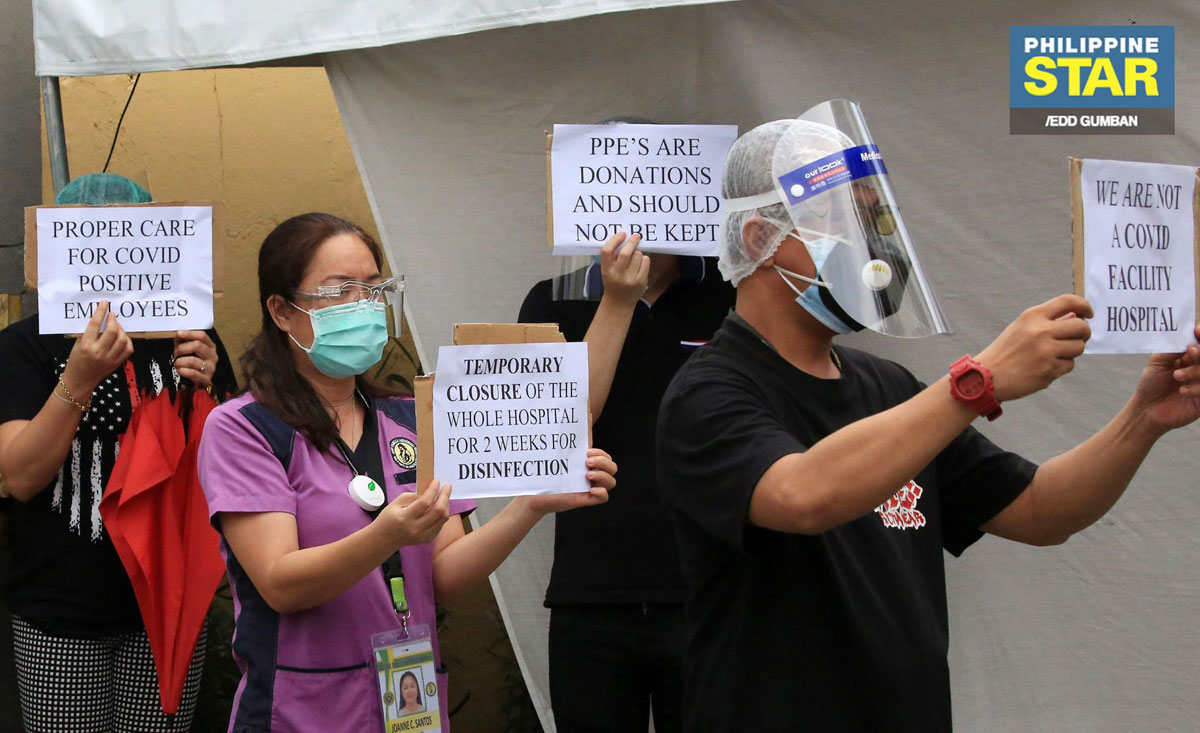
A male nurse and supply officer, for his part, told The STAR how he lost his officemate in the hospital to COVID-19.
His officemate, whom he described as his “buddy and partner” at work, started feeling symptoms last July and died just five days after he was intubated.
The male nurse remembered his moments with his buddy during medical missions in Caloocan and at the emergency room in the hospital before they turned to administrative work. Not long after his officemate was infected, the male nurse also started feeling symptoms and tested positive for COVID.
The spread of infection in the hospital dampened their spirits, he admitted.
“Sobrang bagsak po talaga ng morale [sa hospital],” he said while also requesting anonymity.
He disclosed that hospital personnel, including security guards, laundry persons, caterers, nurses and doctors have started feeling COVID-19 symptoms. This prompted him to comment that there must be “something in the air of the hospital.”
Hearing negative comments about them only makes them want to quit, he said. News such as the shutdown of media giant ABS-CBN Corp. in May was also frustrating for him as the government seemed distracted by other matters such as politics instead of prioritizing the response to the pandemic.
“Nakakasama talaga ng loob. Halos gusto mo nang mag-resign. Sisihin nila na pasaway ang mga Pilipino, na nagrereklamo ang mga frontliners. Puro pulitika ang inuuna nila. Bakit uunahin mo pagpapasara sa ABS-CBN? Medyo masama ang loob ko kaya nasasabi ko ito,” the male nurse noted.
* * *
The deaths of health workers due to COVID-19 could have also been avoided had there been prompt emergency response, at least in the case of Judyn Bonn Suerte, an elevator operator for COVID-19 patients at the Jose R. Reyes Memorial Medical Center (JRRMMC) who died of the disease on July 31.
Cristy Donguines, a nurse and the president of the JRRMMC Employees Union-Alliance of Health Workers, relayed to The STAR the unfortunate series of events that led to Suerte’s death.
A week before his death, Suerte started to feel symptoms and was confined at the JRRMMC. But as his condition worsened, Suerte had to be transferred to the COVID referral hospital in Tala, Caloocan, in keeping with a department order that severe, critical patients be taken there.
Due to logistical problems, the ambulance that was supposed to transport Suerte was delayed for two hours. Donguines said Suerte was gasping for breath as he waited at the hospital lobby.
Suerte arrived at Tala Hospital at 4 a.m. on July 31, was admitted at 6:30 a.m. and died around three hours later.
“Tingnan mo ang span of time. Hindi na-treat nang dire-diretso ’yung pasyente. Walang proper coordination. Ang isa pa naming grievance, panawagan sa kanila, dapat ’yung hospital na-equip na. Five months na ’yung pandemya. Nandoon pa rin kami, naiipit, wala pa rin kaming mga gamit pang-emergency, kahit [para] sa mga empleyado lang namin,” Donguines said.
The union also felt that the hospital only wanted to shy away from the responsibility of taking care of its own employee by transferring Suerte to Caloocan, even though it did more harm than good.
“Ang pakiramdam namin, pinasa ang responsibilidad sa ibang hospital na dapat ikaw ang umako doon kasi empleyado mo ’yun. Bakit kailangan pang may magbuwis bago pa tayo magising sa katotohanan?” Donguines pointed out.


* * *
It’s not just the virus that claims the lives of healthcare workers. They also risk their lives even on their way to work.
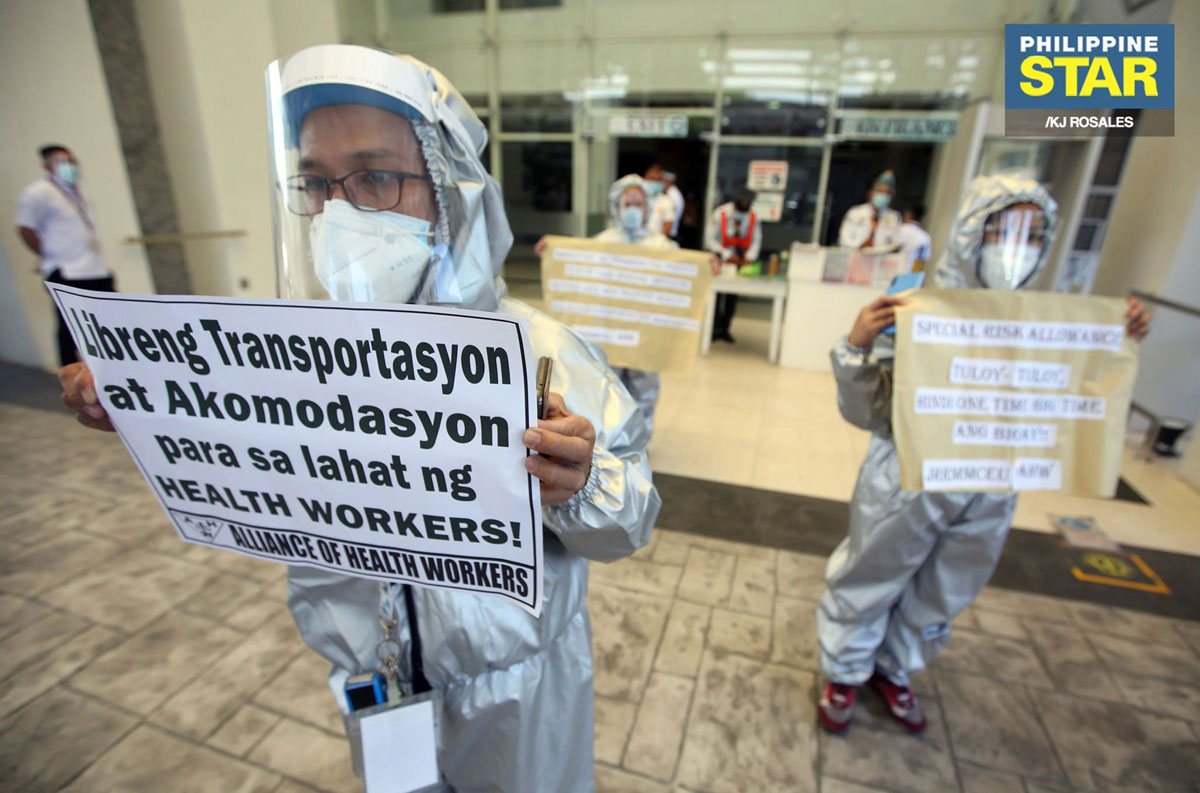
Renz Jayson Perez, a 23-year-old nurse at the Justice Jose Abad Santos General Hospital in Binondo, Manila, was killed in a hit-and-run accident as he was biking home along Padre Burgos Avenue in the city on Aug. 23.
The suspect – the owner of the black pickup truck that struck Perez – was arrested by the Manila police on Aug. 27.
Vilma Paguio, the victim’s grandmother, narrated to The STAR the struggles of frontliners like Perez to go to work amid the suspension of public transportation as part of the measures to prevent COVID-19 transmission, and the discrimination they suffered just by wearing their uniforms in public.
Paguio recalled that Perez used to change his nurse’s uniform before biking home from the hospital for fear of being discriminated against by the public wary of frontliners taking care of COVID-19 patients.
The nurse’s father Ricardo had just ironed his son’s uniform for duty the next day when the accident happened, Paguio said.
Perez’s uniform, which he was supposed to wear before his death, became a symbol for the family to commemorate his heroism and plight as a frontliner.
“Du-duty siya sana kinabukasan, off-duty siya nung nangyari [ang aksidente]. Plinantsa ng Papa niya uniform niya bago siya umalis. Sinabihan pa siya, ‘Anak, ’yan na ’yung uniform mo, plinantsa ko na. Isusuot mo na lang,’ ” Paguio recounted.
“[Ngayon], ’pag may nakitang naka-uniform, pandidirihan ka, iiwasan ka. Ang tingin sa iyo, may virus na ’yan sa katawan, [kinakatakot] ng mga tao na baka mahawa [sila]. ’Yun ang masakit para sa mga frontliner. Nagsisilbi na [nga] sila para sa ibang tao,” Paguio said.
Perez used to walk from their house in Tondo to the hospital in Binondo before he bought a bike so he could pedal to work as well as deliver goods ordered from him online. Perez had to do online selling to augment his income.
The place along the westbound lane of Padre Burgos Avenue and past Orosa street where Perez was struck did not have a bike lane, Paguio noted.
“Wala kaming sakit ng ulo sa kaniya. Puro magagandang ugali ang naipamalas ng apo ko. Well-loved siya ng buong community dito. Very good example ng kabataan. Kaya hindi namin matanggap na doon magwawakas ang buhay ng apo ko,” Paguio said of her grandson.
Perez is the second Manila frontliner killed while biking due to the lack of public transportation amid the pandemic.
Dr. Maria Teresa Dajao, a medical officer at the Manila Health Department, died after her bike was hit from behind by a truck in Pandacan, Manila last April.
Even after their deaths, frontliners received a measly hazard pay despite sacrificing their lives to the battle against the pandemic. On social media, the daughter of a nurse frontliner who died lamented that the life of her mother was only worth a few thousand pesos.
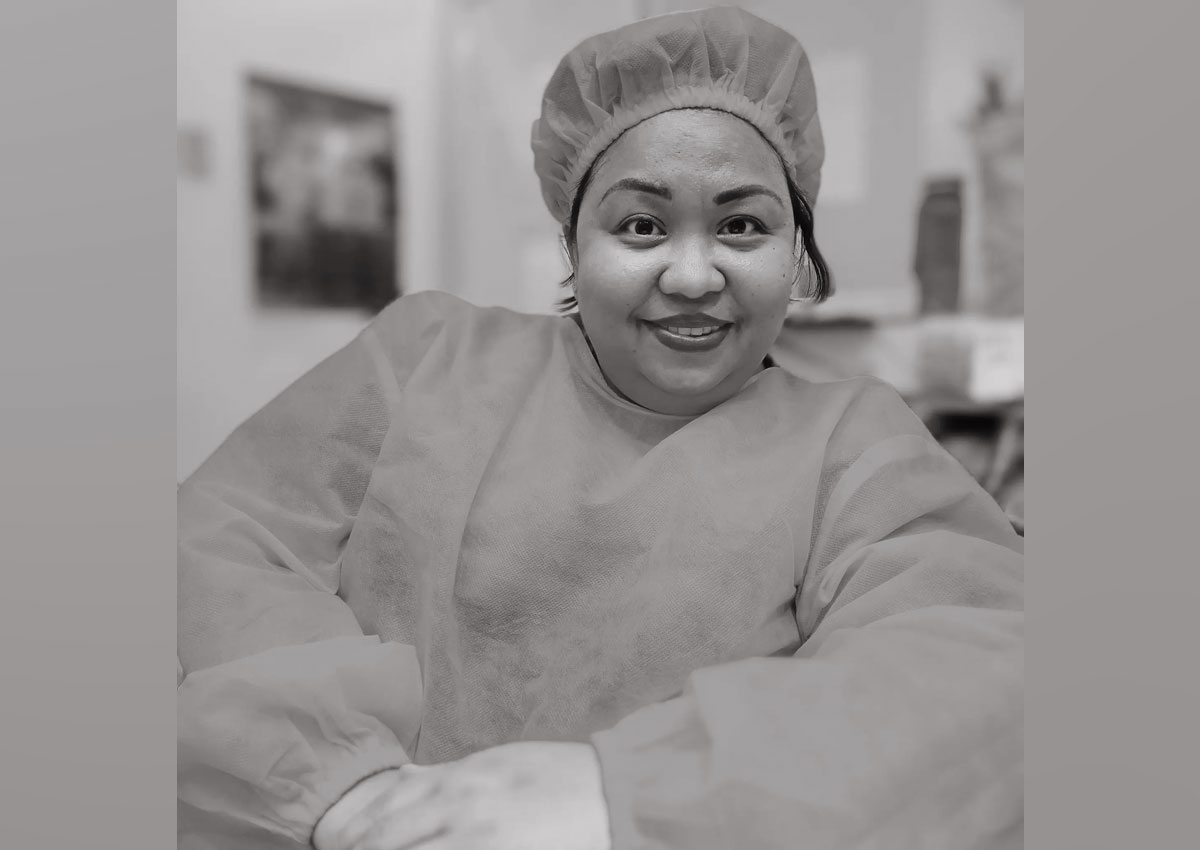
On Facebook, Joie Cruz said in a post on Aug. 11 that her mother Maria Theresa Cruz, a nurse in Cainta, Rizal, received only around P7,000 in hazard pay even though the family was expecting P30,000 or P500 for each of the 60 days her mother served at the hospital during the pandemic.
The amount was whittled down, according to the computations set forth by Duterte’s Administrative Order No. 26 that authorized the grant of hazard pay to government personnel physically reporting to work during the pandemic.
“Apparently, the COVID hazard pay of the nurses in their public hospital has been reduced to just P150 per day and on top of it were deductions that were not even properly explained by the hospital administration. In the end, it appears my mom was only given a freaking P64.18 ($1.31) per day for her COVID hazard pay for 41 days,” Joie wrote on Facebook.
“This issue is not about monetary value. This issue is about how some government agencies lie and how we take for granted and exploit our frontliners in the face of this pandemic…We're just going through our grieving process, but to the people who played a key role in denying my mom a swab test after she was exposed to a COVID-19 patient and who angrily cursed on my mom after I commented on a local politician's post last March that she and her co-workers were not given supplies and (personal protective equipment), we forgive you… but we will NEVER FORGET. We will hold you accountable. We will make sure that all appropriate actions will be taken to hold you accountable. You know who you are. Our mom's passing will not be in vain,” Joie stressed.
One nurse frontliner said they only received their hazard pay when Metro Manila was under ECQ, which was unfortunate because cases surged when the region eased to GCQ.
“Noong ECQ, doon lang nagka-hazard pay. Pero nung nagka-GCQ na, nawalan na kami ng hazard pay. Wala naman kaming magawa. Hindi naman kami makapagreklamo dahil wala namang mangyayari kung magreklamo lang kami,” said the nurse who works at a hospital in Caloocan.
She said she received P10,000 hazard pay during ECQ and nothing more followed starting June.
The dire conditions faced by the health workers – from low morale, measly pay, and threats to their life in the hospital and outside – have made them wonder if their sacrifices are all in vain.
“[Noong ECQ], parang nabigyan kami ng atensyon. Syempre nakaka-proud na [napapansin nila] ’yung mga ginagawa ng mga medical frontliners,” the Caloocan nurse said.
“Sa nangyayari ngayon, parang wala nang [inspirasyon]. Nakakalungkot dahil ang daming comment [tungkol sa amin], hindi nila alam ang nangyayari… Pero hindi ko na muna iisipin ’yung mga negative. Hindi naman ako tatagal sa serbisyo kung hindi ko gusto ang ginagawa ko,” she added.
Donguines of the JRRMMC union believes medical frontliners need not be hailed like heroes – they only need to be treated with compassion and kindness.
“Hindi namin kailangan ’yung papuri. Hindi namin kailangan na sasabihin mo na isa kang bayani. Ang kailangan namin sa kanila ay malasakit,” she emphasized.


