



Experts, Palace: Filipinos Not ‘Pasaway’; Confidence In Phl’s Handling Of COVID-19 Crisis Drops
President Duterte ordered the arrest of Filipinos who do not wear masks after issuing conflicting statements – that it is hard to implement health and safety protocols in the country, but the people generally follow and wear masks. Which is which?
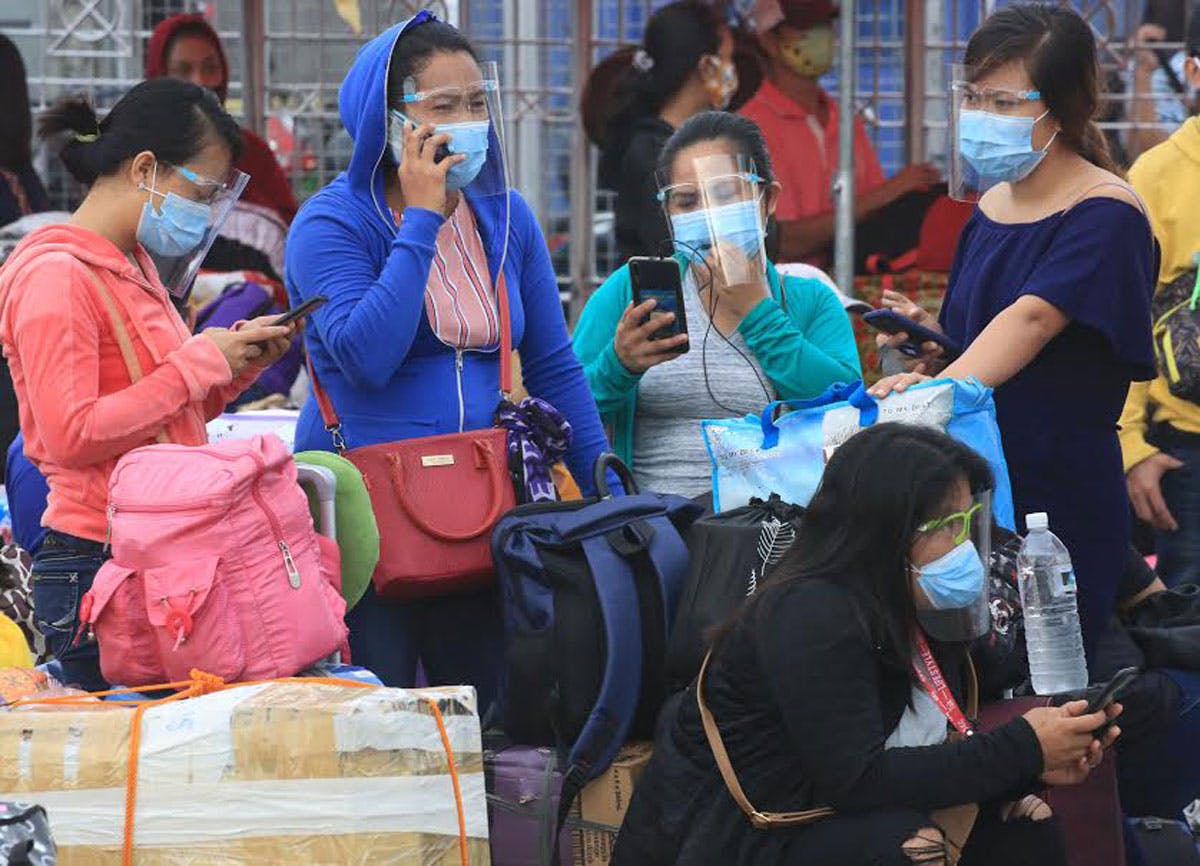
Filipinos are generally not “pasaway” or bullheaded, but the key preventive measures against coronavirus disease 2019 (COVID-19) can be truly difficult to practice, two experts on behavioral changes and public health said on Tuesday, July 21.
In an interview with “The Chiefs” on One News/TV 5, Jason Ligot, a behavioral change specialist and director of Organic Intelligence, said, “Filipinos are generally compliant with public health advisories put up by public health authorities.” He cited findings of YouGov, an international research data and analytics group headquartered in London.
“We are one of the highest in terms of people who say they are wearing masks outside the house… Hindi tayo pasaway,” he noted.
But Ligot added: “Whether you use the masks properly is a totally different matter altogether.”
This was echoed by public health consultant Troy Gepte, who pointed out that Filipinos “are standing by” the health and safety protocols issued by the Department of Health and the World Health Organization.
While many people comply with the advice to wear masks, Gepte observed that these are not worn properly.
“Masks would be an effective barrier to prevent infection of COVID-19,” he said. “It’s just that sometimes, they do not wear the mask correctly. Sometimes the mask is under their nose or chin…or it is loose-fitted or tight-fitted.”
Gepte said masks should be worn properly to serve their purpose of protecting people against the virus.
On Monday, July 20, President Duterte ordered local and police authorities to intensify the arrest of people who are not complying with health regulations, including the use of face masks.
But he also acknowledged that not everyone could afford to buy masks. He openly wished he could purchase enough to give away for free to all Filipinos.
Duterte acknowledged the difficulty of implementing health safety protocols in the country, but contradicted himself by noting that Filipinos are generally abiding by the rules, especially in terms of wearing masks.
Like Ligot, presidential spokesman Harry Roque cited the YouGov survey in partnership with the Institute of Global Health Innovation at Imperial College London showing that 91 percent of Filipinos wear masks when they go out of their homes. Screenshot below:
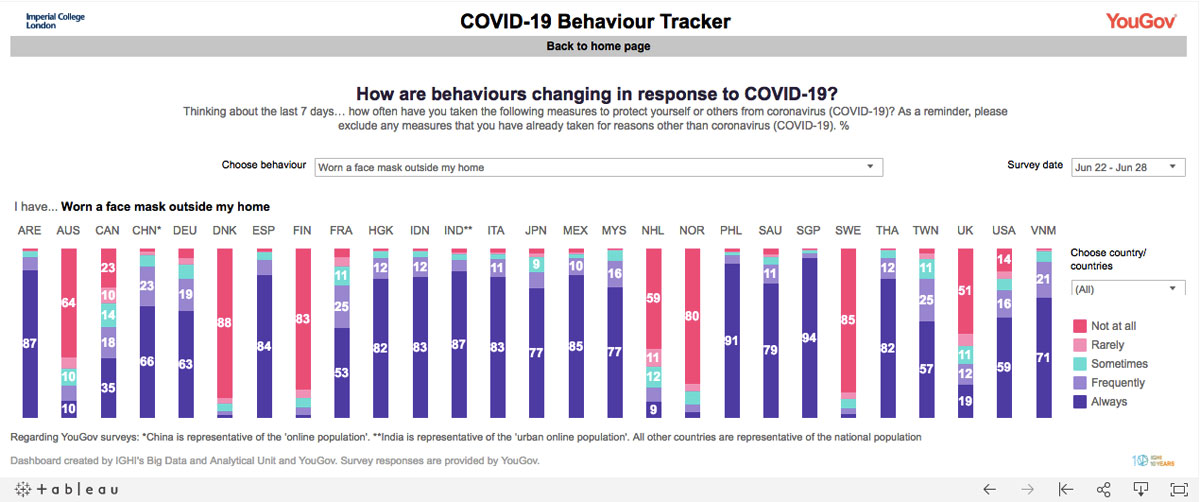
The Philippines ranked second in the survey taken from June 22 to 28, behind only Singapore where compliance was at 94 percent.
Based on YouGov’s tracker from Feb. 24 to July 6 and posted on its website, 84 percent of Filipinos wore face masks in public places. Screenshots below:
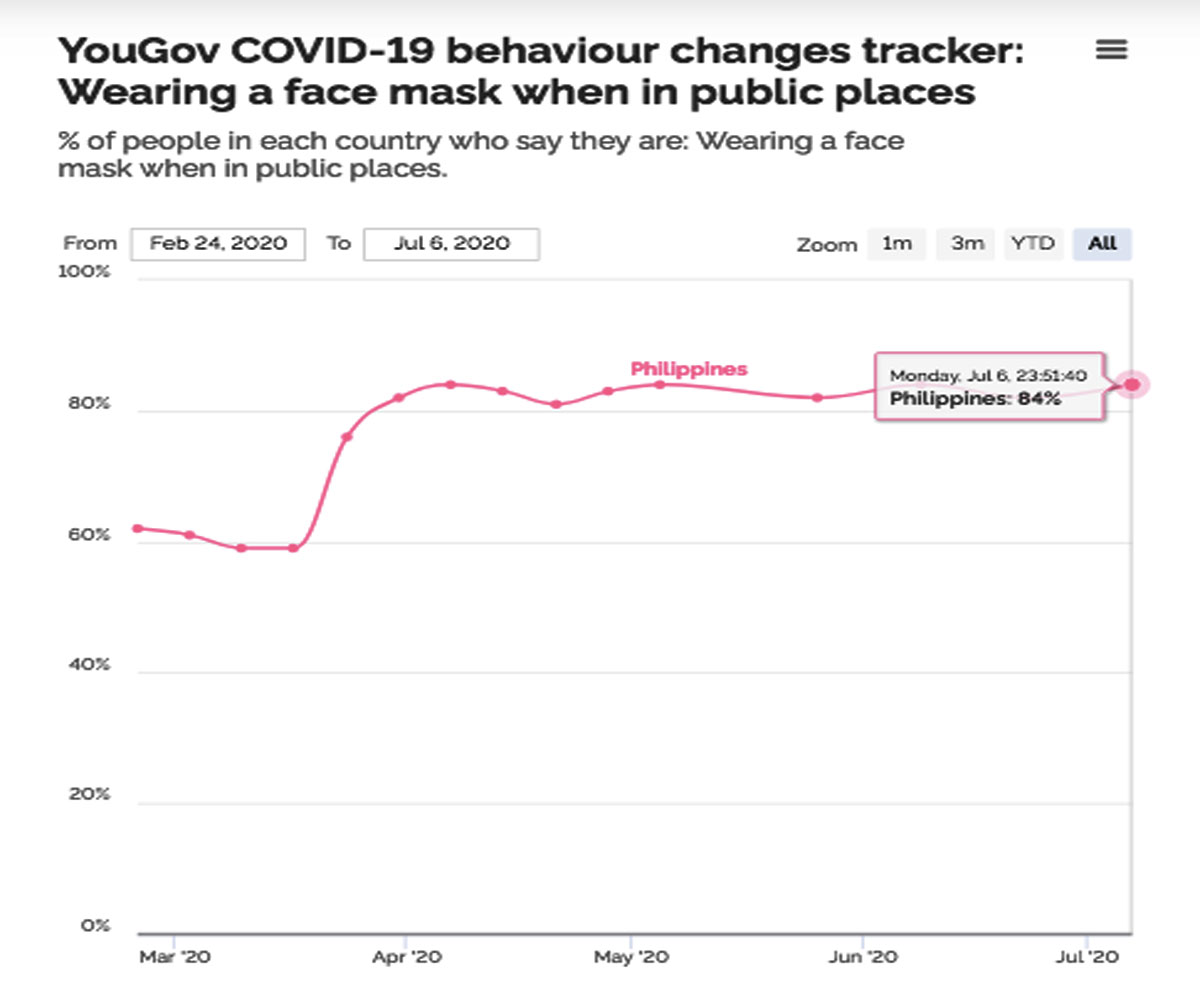
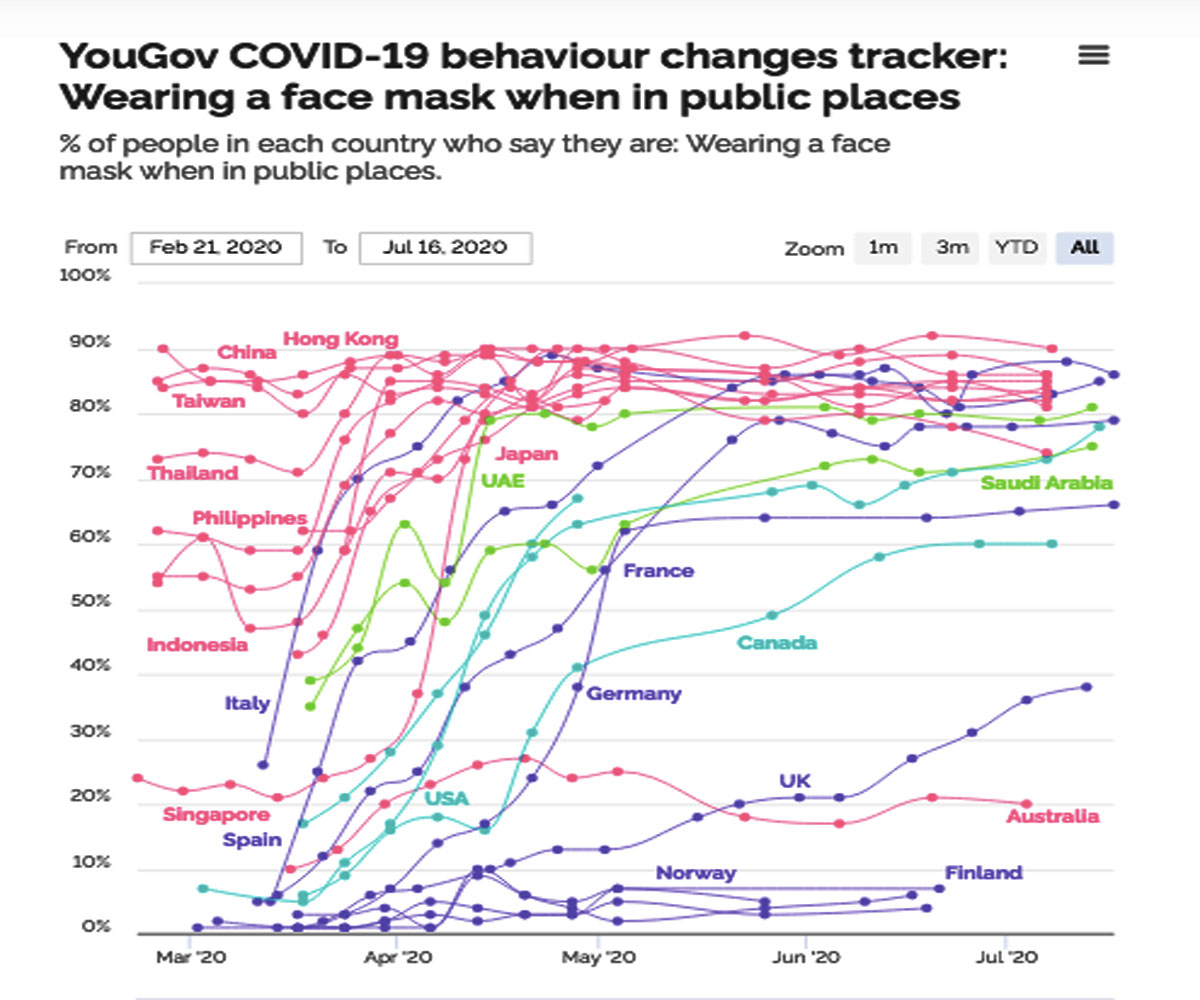
“The most recent survey shows 84 percent, but that is still relatively higher compared to other countries,” Ligot told The Philippine STAR on Wednesday, July 22.
Confidence declining
On the administration’s response to the pandemic, YouGov’s tracker dated May 11 to June 29 showed 51 percent of Filipinos believing that the government was handling the coronavirus issue “very or somewhat well.” This was down from 72 percent as of May 11. Screenshots below:
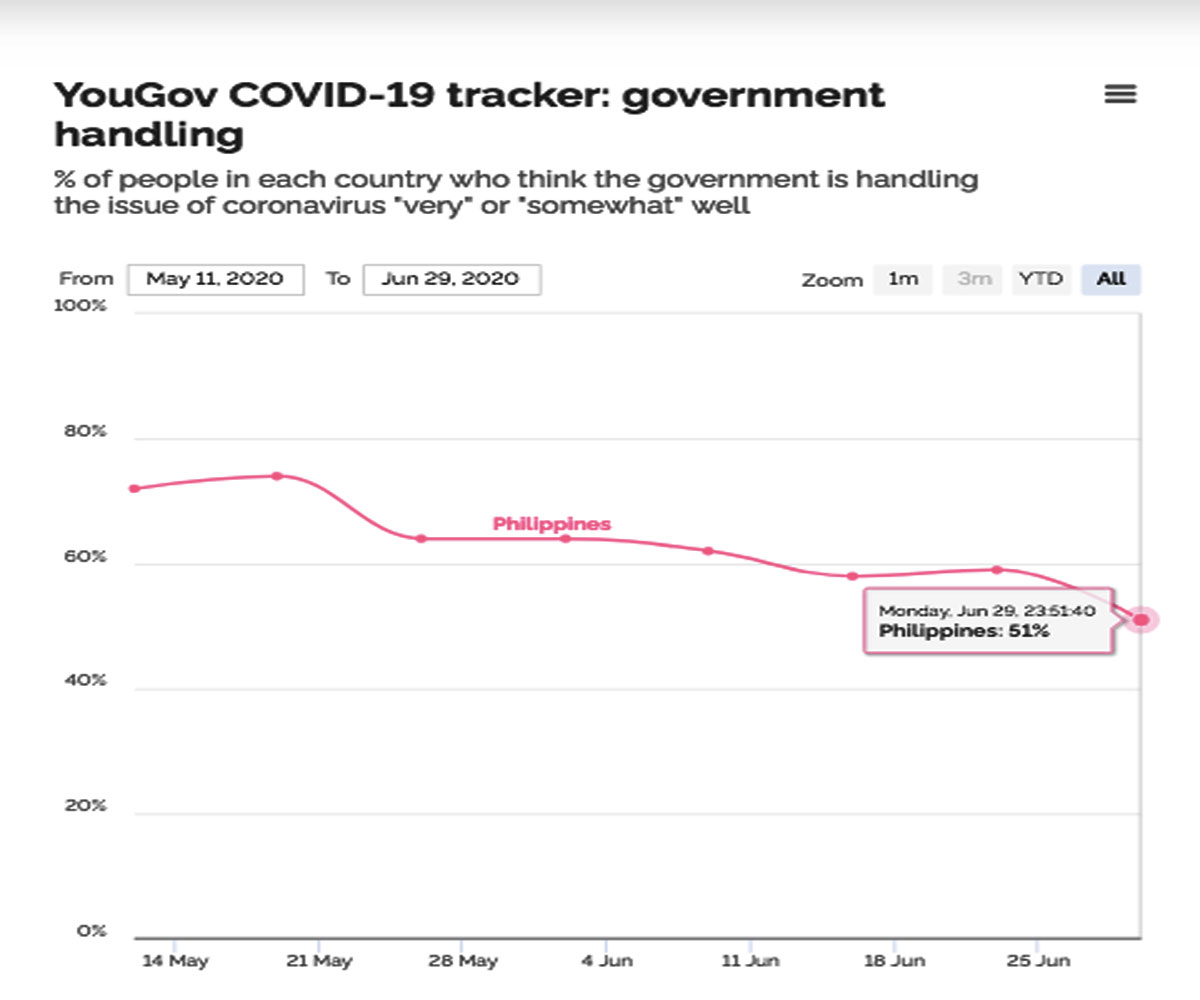
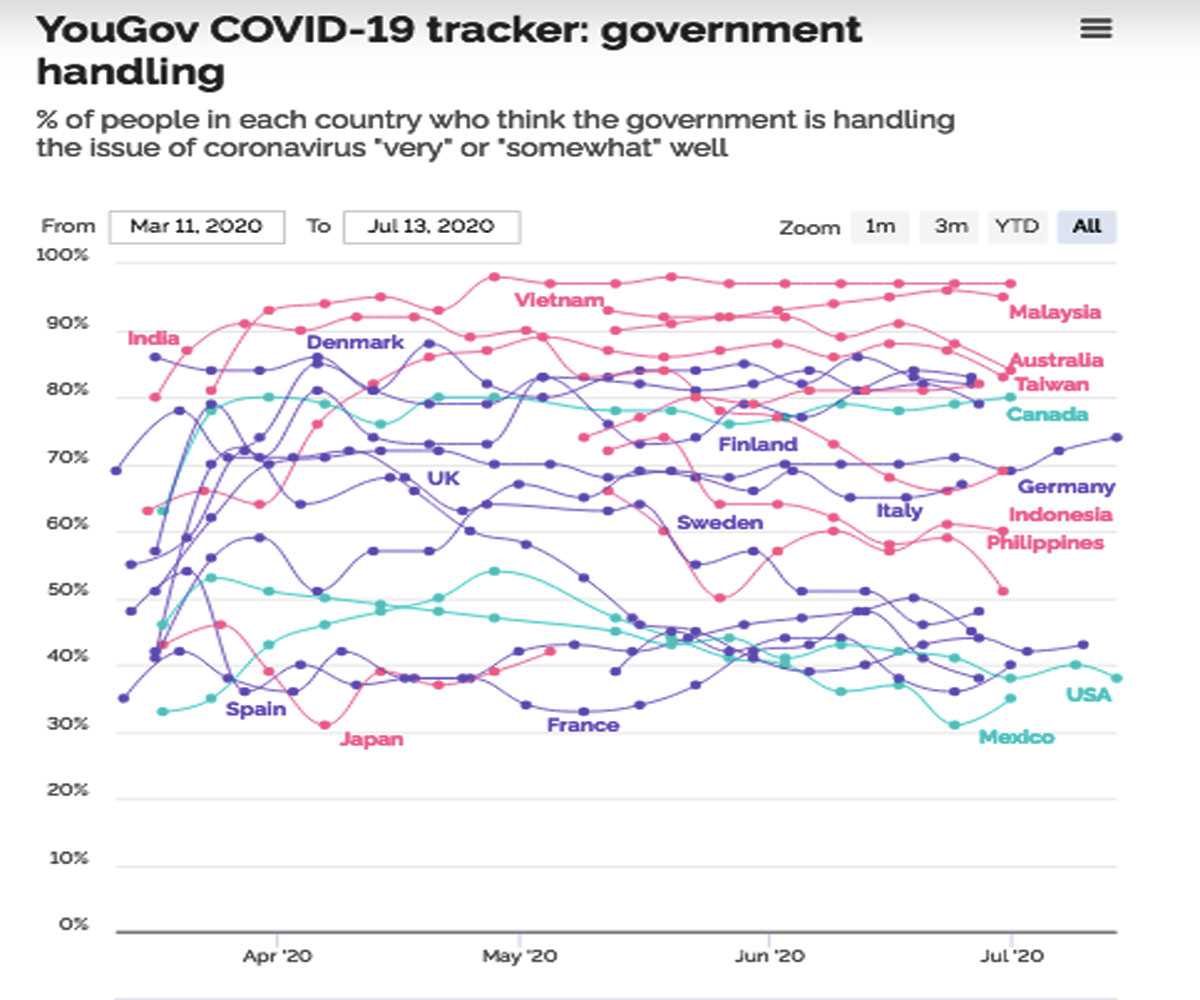
“Unfortunately, the Philippines (along with Indonesia and Sweden) registered the largest drops in public confidence in the government, according to the survey,” Ligot said.
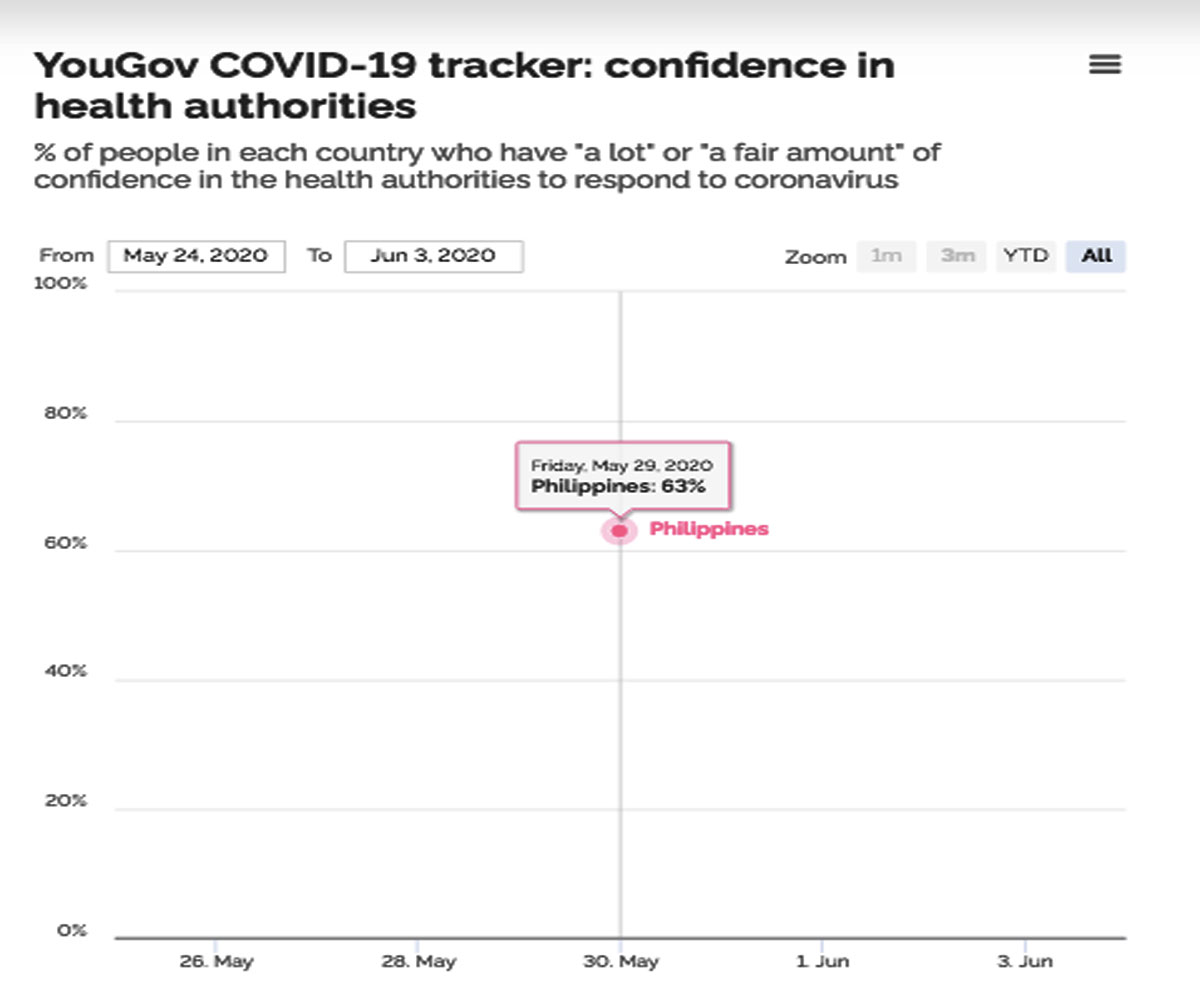
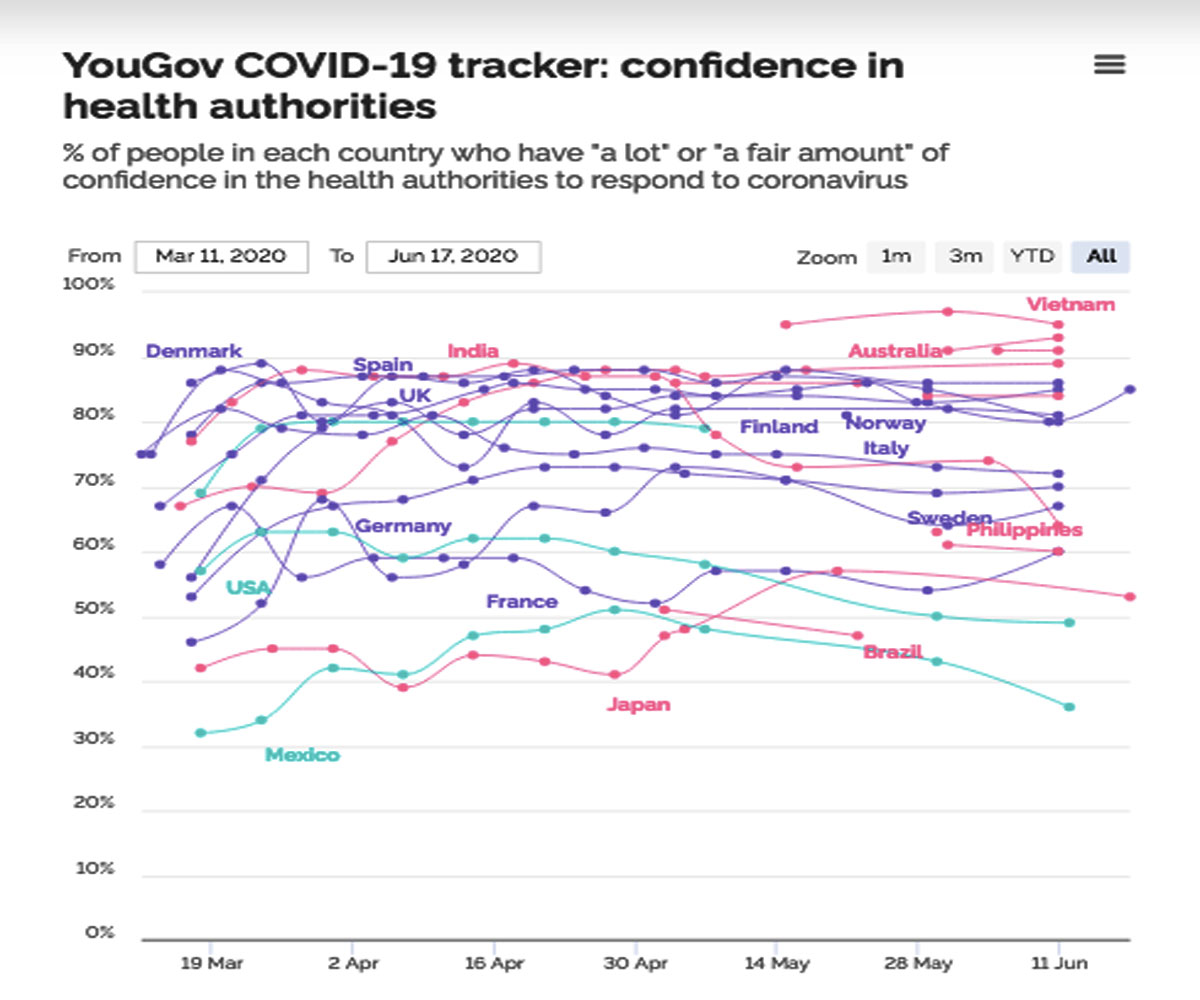
Another YouGov tracker dated Feb. 24 to July 6 showed 63 percent of Filipinos “have a lot” or a “fair amount” of confidence in health authorities to respond to the virus. Screenshots below:
Most difficult
According to Gepte, the preventive measure that is most difficult to comply with is social or physical distancing.
“I think social distancing is really the hardest to do. You have to keep a one-meter distance. People have the tendency to come close together, especially when you can hardly hear each other because you are wearing masks,” he said.
Ligot underscored that handwashing, maintaining social distancing and wearing masks may “sound simple to practice” as “these behaviors may protect yourself from COVID-19.”
“But in reality, they are difficult to master and make a habit in life,” Ligot noted.
Changing tune
Months after saying that Filipinos should be ashamed for the supposed lack of discipline, Roque on Wednesday, July 22, expressed belief that the people are not inherent violators.
Roque said he is confident that people will cooperate with quarantine implementers.
The Philippines now has more than 70,000 confirmed COVID-19 cases, the second in Southeast Asia after Indonesia, which has nearly 90,000. Officials have blamed violators of quarantine measures for the spike in infections, and have vowed to intensify the implementation of localized lockdowns, testing and contact tracing efforts along with treatment of those infected.
Roque said in an interview over CNN Philippines that looking back, programs like Oplan Kalinga should have been launched earlier.
The previous policy that allowed asymptomatics and mild cases to stay home was initially implemented, he said, “probably because at the time, we did not have enough isolation centers."
Roque is referring to the government’s policy shift, which now requires mild or asymptomatic COVID cases to isolate themselves in quarantine facilities outside their homes.
The move is called Oplan Kalinga, under which health and barangay workers backed by police trace all mild and asymptomatic cases under home quarantine. If the house lacks proper facilities for effective isolation, such as a room with its own toilet and bath for the sole use of the COVID case, the patient is made to transfer to a quarantine facility, using police power if necessary.
Game changer?
“This could be a game changer,” Roque said, referring to Oplan Kalinga. “I encourage all those concerned to proceed to the nearest isolating centers, and I promise you that the facilities are like, really, staying in a hotel. It’s like a two-week paid vacation, inclusive of three meals a day and Wi-Fi.”
Last April 16, Roque scolded violators of quarantine measures as he was presenting data showing the Philippines with the most number of COVID-19 cases in Southeast Asia, with 5,453 confirmed infections including 349 deaths.
“Ang dami pong pasaway sa atin. At dahil po diyan number one na naman po tayo sa ASEAN (Association of Southeast Asian Nations) sa dami ng COVID-19. Nakakahiya po yan (There are many violators among us and because of that, we are number one again among ASEAN countries in terms of the number of COVID-19 cases. That’s embarrassing),” he said in a press briefing.
Asked when the country might see a slowdown in coronavirus transmission, Roque replied: “I think it will come when we actually implement this more intense testing and isolation, and we will see it over a period of one month and not just one week."
“I think this will work,” he said, referring to Oplan Kalinga. “I’m confident it will work, but we just have to build the capacity of our testing centers first. Now that we have them, I think we can unleash the full capacity and concentrate in isolating the positives, to contain the further spread of COVID-19.”
Tighter measures possible
Roque reiterated that quarantine restrictions in Metro Manila could be tightened if more people catch the virus. Metro Manila, which already has more than 38,000 confirmed COVID-19 cases, has been under the lenient general community quarantine since June as the government seeks to revive economic activity while responding to the pandemic.
“That’s a distinct possibility, although it’s a possibility that I wish would not happen because we all know that while we have to contain the disease, we also need to re-start our livelihoods,” Roque said when asked whether Metro Manila would be under more stringent quarantine if infections reach 85,000 by July 31.
“We’ve come to a very crucial point where I think the economy can no longer afford to be shut down anew. But if we have to and there’s no alternative, we need to do it. But that’s why I’m confident that the Filipinos actually will cooperate to an even more greater degree than they have shown,” he added.
Despite the continuous rise in the number of infected persons, Roque maintained that the government’s response to the pandemic is not a failure.
“I don’t think we failed. For as long as we did not meet the 3.5 (million cases) projection of UP (University of the Philippines)... I think we would have succeeded. We will always have different points of view, particularly those coming from the opposition, and I think they’re resorting to politicking stories,” the Palace spokesman said. “I am confident that we will prevail.”
Joke only
Meanwhile, the Department of Health (DOH) said Wednesday that Duterte might have been simply joking when he advised the public to disinfect their face masks with gasoline before reuse.
In a press briefing, DOH Undersecretary Maria Rosario Vergeire noted that Duterte did not seem to be serious when he said that gasoline could be used as disinfectant for masks.
“When the President said that, he was mentioning reusable masks like the cloth masks. You know the President, maybe he was only joking especially on the gasoline part,” she said.
Vergeire added that cloth masks are really reusable.
However, these should be washed after every use and then dried under the sun before using again.
“But the N95 masks, it’s single use only, especially the surgical masks. You cannot wash them because if you do, its filtering mechanism will be destroyed. The filtering effect will be gone and they will no longer be effective in filtering viruses,” she stressed.
Vergeire also reminded the public to wear masks properly to ensure protection against COVID-19.
“It’s not just wearing masks. You have to make sure that you wear the masks properly by covering your mouth and nose,” she said.


