



Duterte Waits For ‘Perfect’ COVID-19 Vaccine As Some Members Of The Cabinet, PSG And AFP Get Inoculated
The Presidential Security Group says President Duterte is still waiting for the “perfect” or appropriate COVID-19 vaccine. But Malacañang does not see anything illegal about the use of COVID-19 vaccines from China even without regulatory approval.
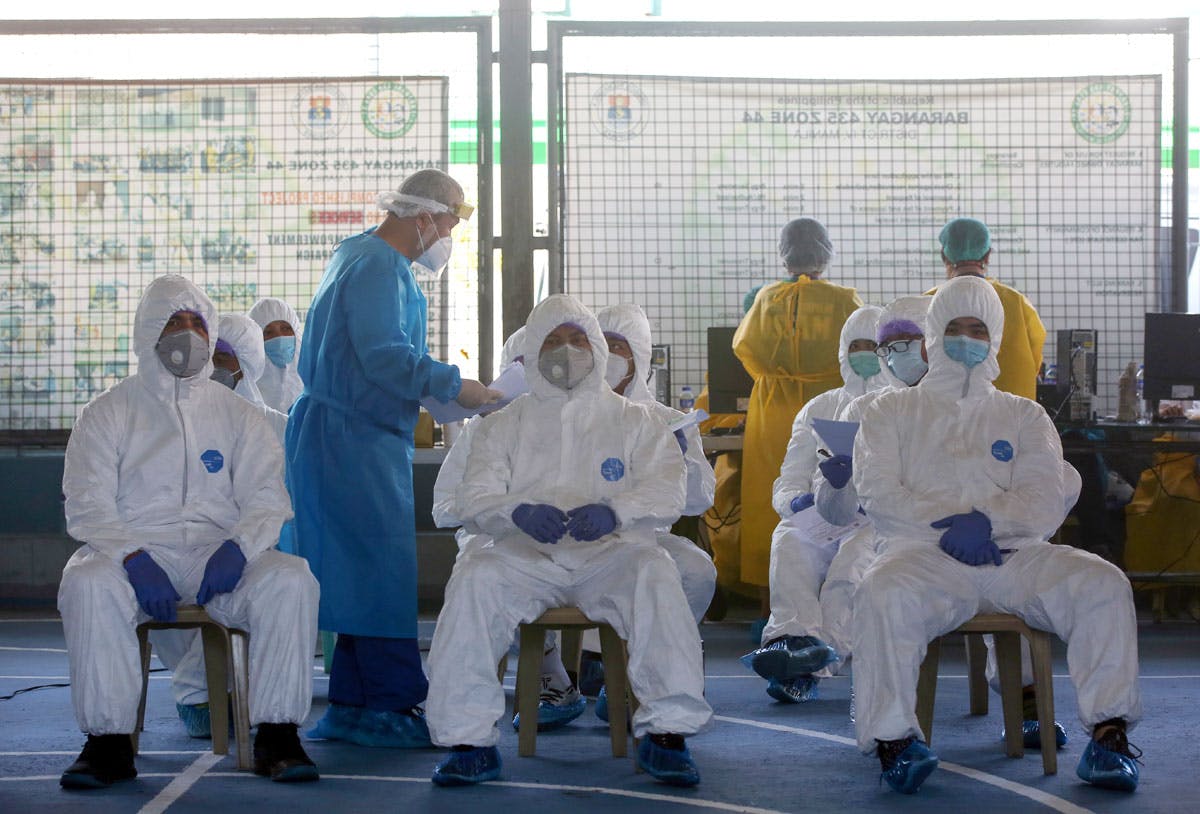
Interior and Local Government Secretary Eduardo Año bared on Monday, Dec. 28, that some Cabinet ministers have already received COVID-19 vaccine injections despite the absence of regulatory approval that Department of Health (DOH) was vital to ensure safety.
On Tuesday morning, Dec. 29, Año corrected himself and told ABS-CBN News Channel that he knows "just one member of the Cabinet" who was given the vaccine. He said it was not him and that he could not reveal the identity of the Cabinet member out of respect for privacy.
The Presidential Security Group (PSG) and the Philippine Army also confirmed that some of their members had been vaccinated against coronavirus disease 2019 or COVID-19.
But PSG chief Brig. Gen. Jesus Durante III said in a statement that President Duterte is still “waiting for the perfect or appropriate vaccine” amid questions on whether the Chief Executive himself had been inoculated.
"With the current pandemic, PSG needs to ensure that (its members) are not themselves (a) threat to the President's health and safety. As such the PSG administered COVID-19 vaccine to its personnel performing close-in security operations to the President," Durante said.
"National security imposes the protection of the President being the commander in-chief from all forms of threat, especially COVID-19, in order to preserve the stability of our nation. It is PSG's primordial task to ensure that we have a healthy President serving our fellow Filipinos everyday," he added.
Durante, however, clarified that his unit cannot speak on behalf of the vaccine and its effectiveness.
"PSG's decision to take the risk is a courageous step that greatly supports its mandate. We did it not for personal agenda but for a greater pursuit that is even way beyond our mission of protecting our President," he said.
Philippine Army chief Lt. Gen. Cirilito Sobejana said some troops had been vaccinated but the number was not large. Sobejana did not disclose the brand of vaccine that was administered to the soldiers.
Duterte announced on Saturday night, Dec. 26, that many people in the Philippines have already been given the vaccine developed by Chinese pharmaceutical firm Sinopharm. He said during the meeting of the Inter-Agency Task Force for the Management of Emerging Infectious Diseases that “almost all soldiers” were already immunized.
No approval yet
Food and Drug Administration (FDA) director general Eric Domingo said Philippine regulators have yet to approve any COVID-19 vaccine, making any importation, distribution and sale of one illegal.
According to the DOH, using “unregistered products poses harm to a person's health and safety.”
“The administration of approved vaccines is also accompanied by strict monitoring of all vaccine recipients in order to ensure proper management of possible effects,” the DOH said.
In a text message, Domingo said Sinopharm has not filed an application for emergency use authorization (EUA) with the agency to supply and market its vaccine.
Domingo assured that FDA has been investigating reports of underground vaccination against COVID-19 in Binondo, Manila, but no one has been arrested so far.
He added the public should report individuals offering to have them immunized against the disease because no vaccine manufacturers have been licensed to market or supply vaccines in the country.
Domingo, however, said the DOH or the government has the option to apply for EUA with FDA to import such vaccines. This option is not available to the private sector.
“Rest assured that the FDA is observing utmost diligence in the regulation of vaccines. Vaccines will only be approved if there is reasonable scientific evidence to show that benefit outweighs risk,” Domingo said.
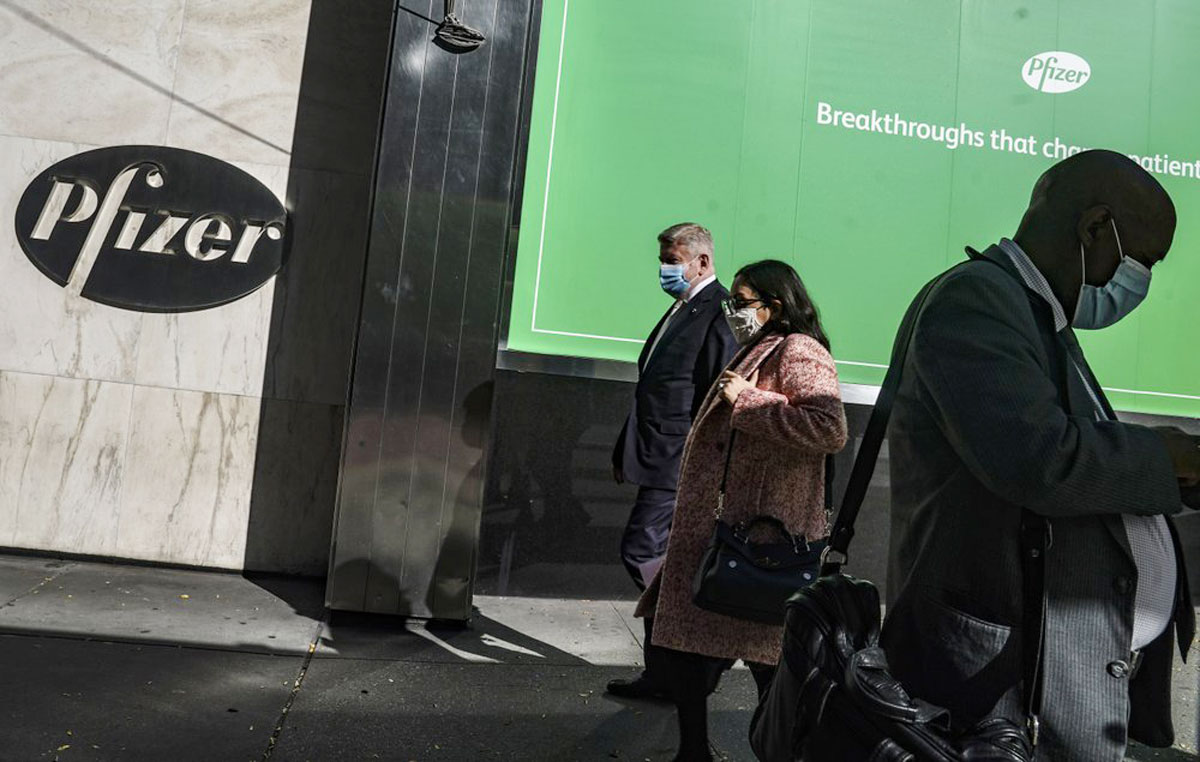
So far only Pfizer Inc., a pharmaceutical firm in the United States, has applied for emergency use approval of its COVID-19 vaccine in the Philippines.
DOH Undersecretary Maria Rosario Vergeire said the department had no information about the soldiers’ vaccination and Armed Forces of the Philippines’ spokesman Col. Edgard Arevalo said there had been no inoculation sanctioned by the military leadership. Defense Secretary Delfin Lorenzana and the military also claimed the President was referring to the members of the PSG when he disclosed that soldiers were already vaccinated.
Asked if the soldiers’ vaccination was authorized by the President’s office, Sobejana said: “Well of course, our President is our commander-in-chief.”
Nothing illegal
There is nothing illegal with getting unregistered vaccines, presidential spokesman Harry Roque said on Monday as he defended the inoculation of soldiers even before a vaccine has been authorized for use in the Philippines.
"The law does not prohibit getting vaccines that are not yet registered. What it prohibits are distribution and sale," Roque said in a press briefing.
"Do not deprive our soldiers of protection. Let us accept the fact that our soldiers are important and the ones looking after our safety should be safe from COVID so they can perform their duties," he added.
Roque said the vaccine doses given to soldiers were "donated" but could not say who provided them. He claimed the inoculation was not mandatory.
"This (decision to be vaccinated) must have been made by the soldiers and probably by their commanders. It won't reach soldiers without the go-signal of commanders. And I understand, this is voluntary," the Palace spokesman noted.
Roque could not say whether Dutere has been inoculated with a COVID-19 vaccine.
"I do not know if he has been vaccinated. Moreover, I don’t think the President will allow any vaccine to enter his system unless he has considered it. But as I said, I cannot confirm nor deny and I must say, as far as I know, he has not been vaccinated," he said.
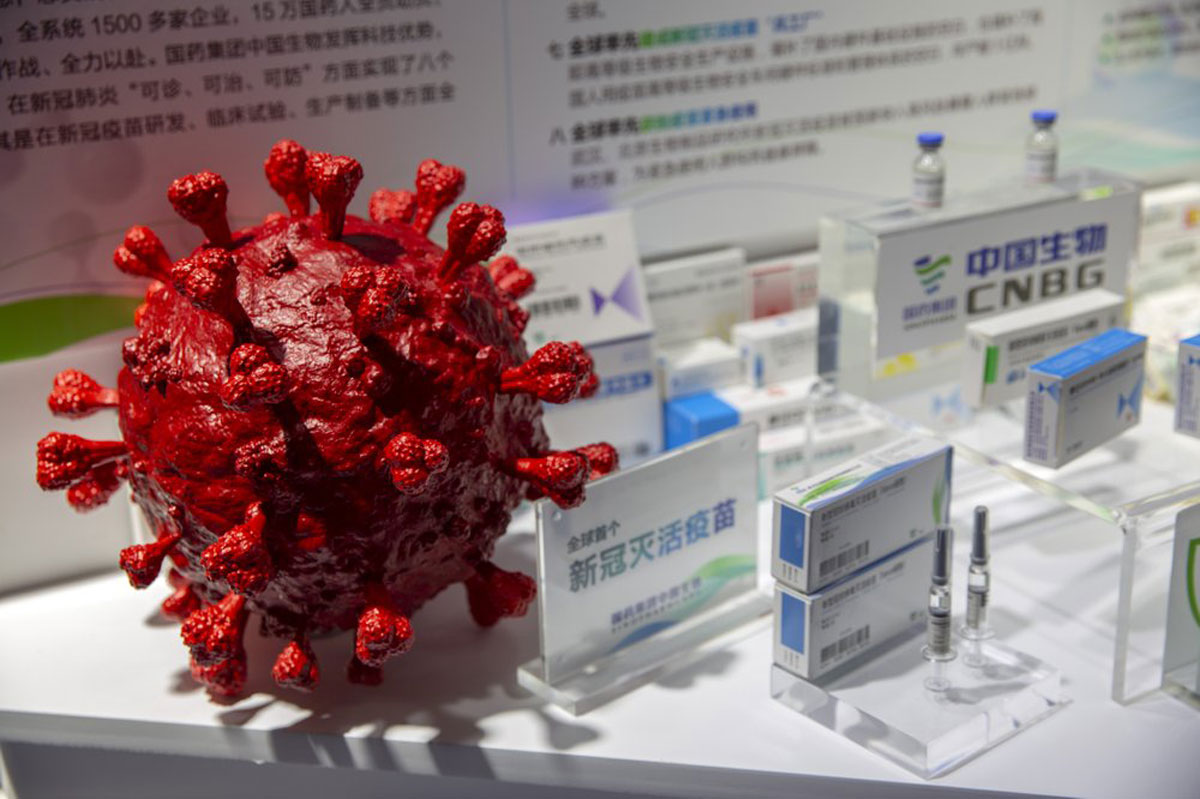
Roque expressed confidence that the vaccine manufactured by Sinopharm is safe. He said more than a million people in China, including members of the People's Liberation Authority have received the vaccines.
"There were evaluations in China and if I'm not mistaken, UAE (United Arab Emirates)...So it is the most widely used vaccine so far. So perhaps that was the reason why soldiers agreed (to be inoculated)," Roque said.
"Eh mas mabuting mayroon ng proteksyon kaysa wala (It's better to have protection than to have none at all)," he added.
Senate President Vicente Sotto III saw nothing wrong with members of the PSG and others from the uniformed services being inoculated with vaccines from China that apparently had no clearance from the FDA.
“There is no law that says you cannot take any medicine or vaccine that FDA has not approved,” Sotto told reporters in a text message.
“Last I recall, there is even no law versus suicide. So what’s the fuss?” he said tongue in cheek.
Sotto believes the vaccines were donated and were “administered for free.”
He said those criticizing the move may complain if the government paid for the vaccines. “They should complain to the donor why they wanted them (PSG) inoculated first.”
Senate Minority Leader Franklin Drilon, however, warned the move could affect public confidence in the government’s vaccination program and did not adhere to well-established scientific protocols.
“Public confidence is critical to the successful inoculation of our people. Confidence is developed by adhering to a science-based process and the opinion of our vaccine expert panel,” Drilon stressed.
“The inoculation using vaccines not approved by our FDA will not contribute to need to develop public confidence that the government program will succeed,” he said.
Sen. Francis Pangilinan said the reported vaccinations showed the administration’s reckless and haphazard vaccination plan.
“I thought that medical frontliners and the seniors, and those highly-vulnerable health are to be prioritized? This is what we’re afraid of when we called for the convening of the Committee of the Whole hearing,” Pangilinan said in Filipino.
Because there is no clear plan for the rollout of the vaccines, it appears that those in the administration made their own plans and tried to outdo each other even before the FDA approve the use of vaccines in the country, he said.
“Is Malacañang defying the FDA in determining the safety of these vaccines? Is proximity to those in power the basis of the government’s vaccination program?” he said. On, transfer, non-consumer use, promotion, advertisement or sponsorship of any unauthorized vaccine is prohibited.
Mudslinging
Roque linked linked criticisms against the efficacy of Chinese COVID-19 vaccines to mudslinging among vaccine makers as it maintained that the Philippines is not lagging behind in terms of vaccine procurement.
Some senators have expressed concern over the Duterte administration's decision to buy vaccines from Chinese drug maker Sinovac Biotech Ltd. despite reports that its efficacy rate is just 50 percent, lower than those produced by western companies. They have also claimed that a 50 percent efficacy may not inspire public confidence in vaccines.
Officials have given assurances that the 50 percent efficacy rate meets the minimum requirement set by the World Health Organization (WHO) for vaccines. Some sectors, however, are still wary about the safety and efficacy of the coronavirus shot developed by Chinese firms.
"Now that the vaccines are here, that (criticism) is expected. It's about the competition of vaccine manufacturers and of course some will criticize China," Roque said.
Roque clarified that the 50 percent threshold was set by the WHO, not by the Philippine government. He also disputed claims that the Sinovac vaccine's efficacy rate is just 50 percent.
"What was stated was in excess of 50 percent. In fact, some jurisdictions that issued EUA (emergency use authorization) said the rate reached 90 plus percent," Roque said.
"We get vaccines from sources where they are available. For now, the earliest time we can get western vaccines is June and I hope it will happen. But if we can get Chinese vaccines earlier, why not?" he added.
Roque also brushed aside criticisms that Chinese vaccines are more expensive.
"There are soldiers who got inoculated and there were no payments made so don't believe that the Chinese vaccines have already set prices," he said.
"At a time when many vaccines are surfacing, do not believe everything you hear. Vaccine makers are resorting to mudslinging not just against Chinese medicines but also against western vaccines. They are maligning each other."
Roque reiterated that all vaccines would be evaluated by the FDA to ensure that they will be safe for public use.
He also claimed that some sectors have politicized the procurement of COVID-19 vaccines.
"If Western vaccines cannot supply us with vaccines, our friend and neighbor China can provide vaccines. There's politics there. In the Philippines, some are saying, 'why are we lagging behind?' Who said we would be first? Of course the countries that developed the vaccines would prioritize their citizens," Roque said.
"But we do not allow ourselves to be left behind...We expect everyone to supply (vaccines) because the law applicable now is the law of humanity in times of pandemic."
Roque also chided opposition Pangilinan, who said Duterte should have warned China not to sell expensive but less effective vaccines.
"To Senator Pangilinan, it's a good thing you are not the president," he said in Filipino.
Threat to scrap VFA defended
Roque also defended Duterte's remark that he would scrap the Visiting Forces Agreement (VFA) if the US does not supply the Philippines with COVID-19 vaccines, saying it was in line with his independent foreign policy.
Roque said the President was just emphasizing the need for allies to work together as the world grapples with a pandemic.
"The President said he would really cancel the VFA if there is no vaccine. There's nothing wrong with that. It's not blackmail. That's what independent foreign policy means. We are not beholden, we do not allow anyone to dictate on us," Roque explained.
"What the President was saying is since we are friends, let us help each other. We need vaccines, you have vaccines so give us some. You need our territory for the Visiting Forces Agreement, we will give that to you. But if you do not give us vaccines, then forge the VFA with countries that you prioritized in the giving of vaccines," he said.
The VFA is a defense pact signed in 1998 that allows Philippine and US troops to hold joint exercises in Philippine soil. Earlier this year, Duterte announced plans to terminate the VFA following the cancellation of the US visa of senator and former police chief Ronald dela Rosa, who strategized the controversial war on illegal drugs. The President suspended the termination of the VFA in June, citing "political and other developments in the region." He extended the suspension for another six months in November.
Last Saturday, Duterte said American forces cannot stay in the Philippines if the US fails to deliver a minimum of 20 million doses of COVID-19 vaccine, drawing flak from senators who viewed it as a blackmail. He made the remark after Health Secretary Franciso Duque III was accused of "dropping the ball" in the Philippines' talks with Pfizer.
Roque said Duterte cannot be barred from making such pronouncements because he is the chief architect of foreign policy.
"Let's not view it negatively. The President talks in a straightforward manner. If the things he did are not yet enough to secure vaccines...it's just right for the President to say, 'enough is enough, no vaccine, no VFA,'" the Palace spokesman said.
Roque cited Duterte's decision to grant absolute pardon to American serviceman Joseph Scott Pemberton, who was convicted of homicide for killing transgender Jeffrey "Jennifer" Laude in Olongapo in 2014. Roque was a lawyer for the Laude family.
"When he (Pemberton) was granted pardon, of course the (Laude) family and I felt bad. But I thought perhaps the President needed to do it to ensure that we would be able to get vaccines. But it seems that it was not enough for us to be given vaccines," Roque said.
Sen. Panfilo Lacson assailed Duterte’s pronouncement, saying: “Treating the Americans like a bunch of yokels might have sealed our fate to settle for China’s Sinovac” in lieu of the vaccines made by Pfizer and BioNTech SE as well as Moderna Inc., which is also a US pharmaceutical fim. – With Reuters


