


DOH Liable For Failing To Spend P3-Billion PPE Allocation – Lawmaker
Camarines Sur Rep. LRay Villafuerte said the failure of the Department of Health officials to use the P3 billion allotted under Bayanihan 2 for the acquisition of personal protective equipment sets “smacks of criminal neglect.”
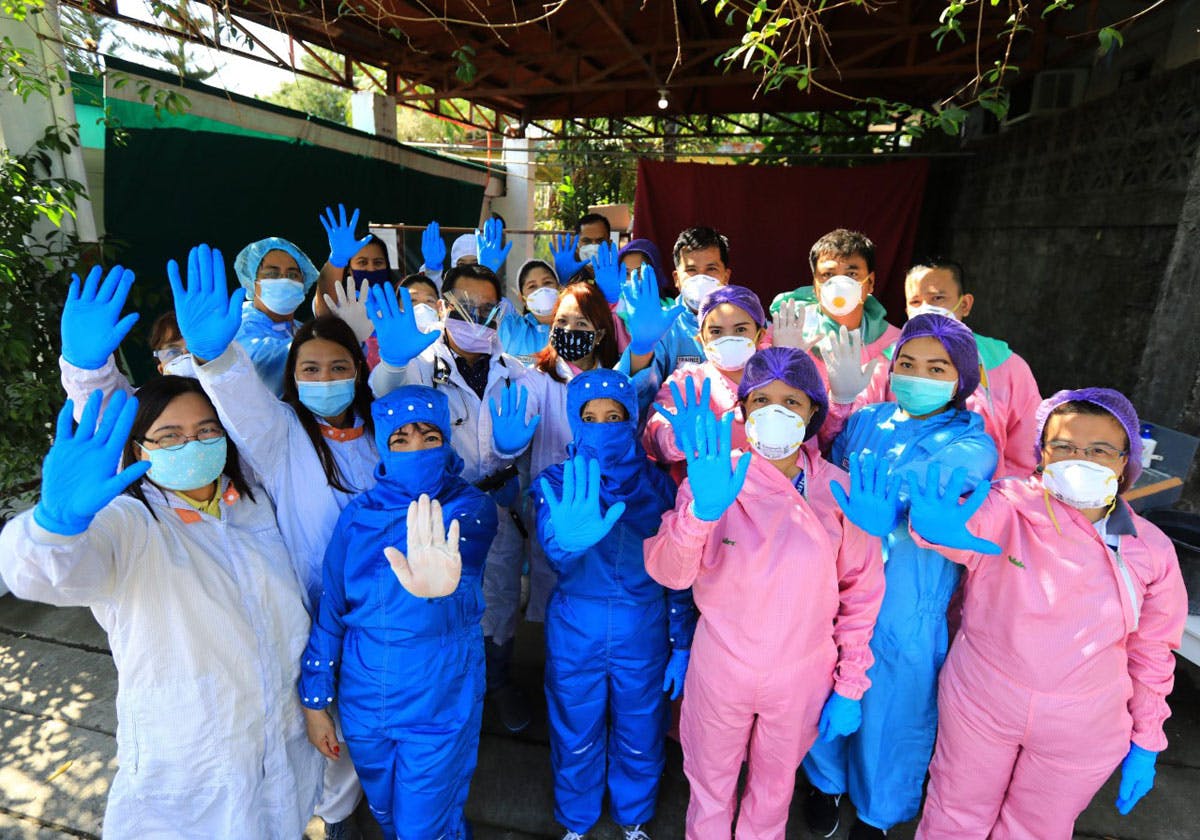
Health officials can be held liable for “criminal neglect” after they failed to spend the P3-billion budget Congress allocated for the sole purpose of acquiring personal protective equipment sets (PPEs) for the country’s medical frontliners.
“The failure of DOH (Department of Health) executives to use the P3 billion allotted (under) Bayanihan 2 for the acquisition of PPEs smacks of criminal neglect,” Camarines Sur Rep. LRay Villafuerte warned over the weekend.
The budget was included in Republic Act (RA) No. 11494 or Bayanihan to Recover as One Act (Bayanihan 2) allocating P165.5 billion for an economic stimulus package to help the country recover from the impact of the COVID-19 pandemic.
President Duterte signed the law on Sept. 11, 2020 after it was ratified by the Senate and the House of Representatives in August.
The PPEs, according to him, are essential in the almost 1.8 million medical frontliners’ daily battle to save patients, and their own lives as well, from COVID-19.
“What makes this almost criminal negligence doubly infuriating is that these DOH officials have chosen to take their own sweet time in buying such protective equipment that are so es-sential in our healthcare workers’ daily battle to save infected people,” Villafuerte, who authored the House version of the bill and was one of the heads of the bicameral conference committee, said.
The negligence of DOH officials – which is a “continuing inaction” – has put frontliners at “serious risk of infection, great harm and even death on a daily basis in the absence or shortage of such indispensable protection against the highly infectious pathogen,” the congressman added.
“This seeming I-couldn’t-care-less mindset of our DOH officials is totally disgusting and betrays their apparent apathy towards our doctors, nurses and other hospital frontliners who risk their lives on a daily basis trying to save Filipinos from dying,” Villafuerte lamented.
Bayanihan 2 stipulated that the DOH would receive P3 billion for additional face masks, PPE, shoe covers and face shields, alongside P13.5 billion for emergency employment and compensation of health workers.
The Bayanihan 2 likewise provided for a P10-billion fund that would be on standby for COVID-19 testing and purchase of medicines and vaccines once they become available.
The government was also mandated to hire and train some 50,000 contact tracers, with P5 billion provided for such purpose under the Bayanihan 2.
Another P4.5 billion for the construction of temporary isolation and quarantine facilities as well as the expansion of existing public hospitals would also be taken from Bayanihan 2.
The Department of National Defense was allotted P4.5 billion to cover expenses in isolating and treating returning overseas Filipino workers who test positive for COVID-19.
The Department of Foreign Affairs was also given P820 million for repatriation efforts.
And while certain areas in the country are subjected to lockdowns from time to time, P6 billion was given to the Department of Social Welfare and Development for cash assistance to affected Filipinos.
Displaced workers were also assured of assistance through cash-for work programs as P13-billion fund was allocated for such purpose.
In a related development, a party-list congressman has filed a bill seeking to grant lucrative tax benefits to private corporations and wealthy individuals that will sponsor the COVID-19 vaccination of 933,000 teachers and 23 million children in the public school system.
Under House Bill No. 9200 filed by Anakalusugan’s Mike Defensor, private entities paying for the COVID-19 vaccine jabs of teachers and children will be entitled to claim 150 percent of what they spent for the shots as “additional deduction” from gross income subject to tax.
HB 9200 seeks to expressly include COVID-19 vaccines as qualified donations under the 23-year-old Adopt-a-School Program.
The Adopt-a-School program was established by Congress in 1998 through RA 8525 to help mobilize private funds in addressing the school system’s persistent resource gaps.
Under the program, donors of qualified materials and supplies badly needed by public schools may further deduct from their gross income up to 150 percent of the value of their contribution.
For example, should a corporation sponsor P10 million worth of supplies, it may claim an extra deduction of up to P15 million from gross income.
For purposes of claiming deductions, the valuation of the donation other than cash is based on the acquisition cost or purchase price of the materials or services supplied as evidenced by official receipts.