



Death For Heinous Drug Offenses, Plunder
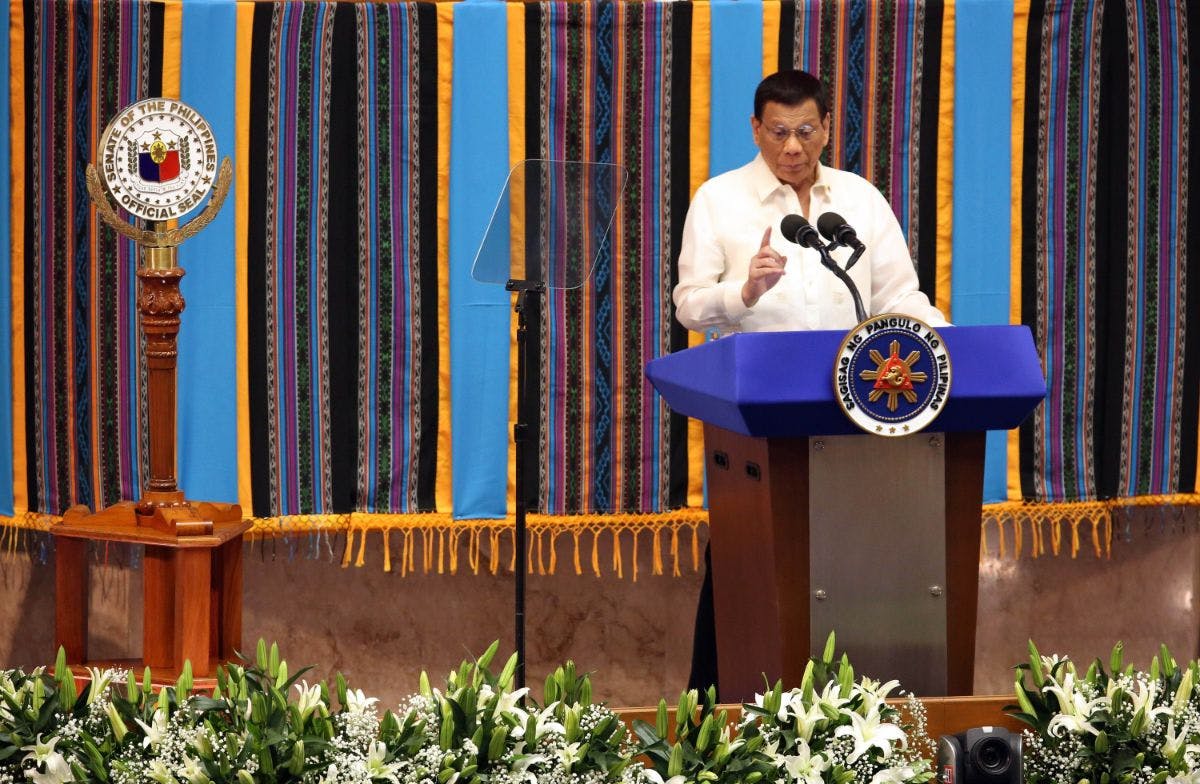
President Duterte asks Congress in his fourth State of the Nation Address to pass a measure reimposing capital punishment for heinous drug offenses and plunder.
In what could be a cue on what President Duterte wanted Congress to do, his most trusted ally, former special assistant and now Sen. Christopher “Bong” Go filed a bill to restore the death penalty for heinous crimes related to illegal drugs as well as for plunder on July 2, or two days after he assumed office.
The return of capital punishment was among the top priority measures mentioned by Duterte in his fourth State of the Nation Address.
Another senator with close ties to the President, former Philippine National Police chief Ronald dela Rosa, is also seeking to reimpose capital punishment for illegal drug cases. Dela Rosa led the drug war right after Duterte was sworn in as chief executive in 2016.
Duterte, who is under fire for alleged extrajudicial killings related to the drug war, cited the Marawi City siege in 2017 as one example of a destructive move against the government powered by drug money.
“I am aware that we still have a long way to go in our fight against this social menace. That’s the reason why I advocate the imposition of the death penalty for crimes related to illegal drugs,” the President said.
“Our citizens have begun to do their part in the war against drugs through the formation of barangay anti-drug councils and also actually surrendering bricks of cocaine found floating in the sea into our islands. I call this responsibility. However, the drugs will not be crushed unless we continue to eliminate corruption that allows the social monster to survive,” he added.
“I respectfully request Congress to reinstate the death penalty for heinous crimes related to drugs as well as plunder. My countrymen, it is a sad commentary that we cannot distinguish our need from our greed, our principles from our prejudices, the real from the fake, and the truth from a lie,” Duterte declared.
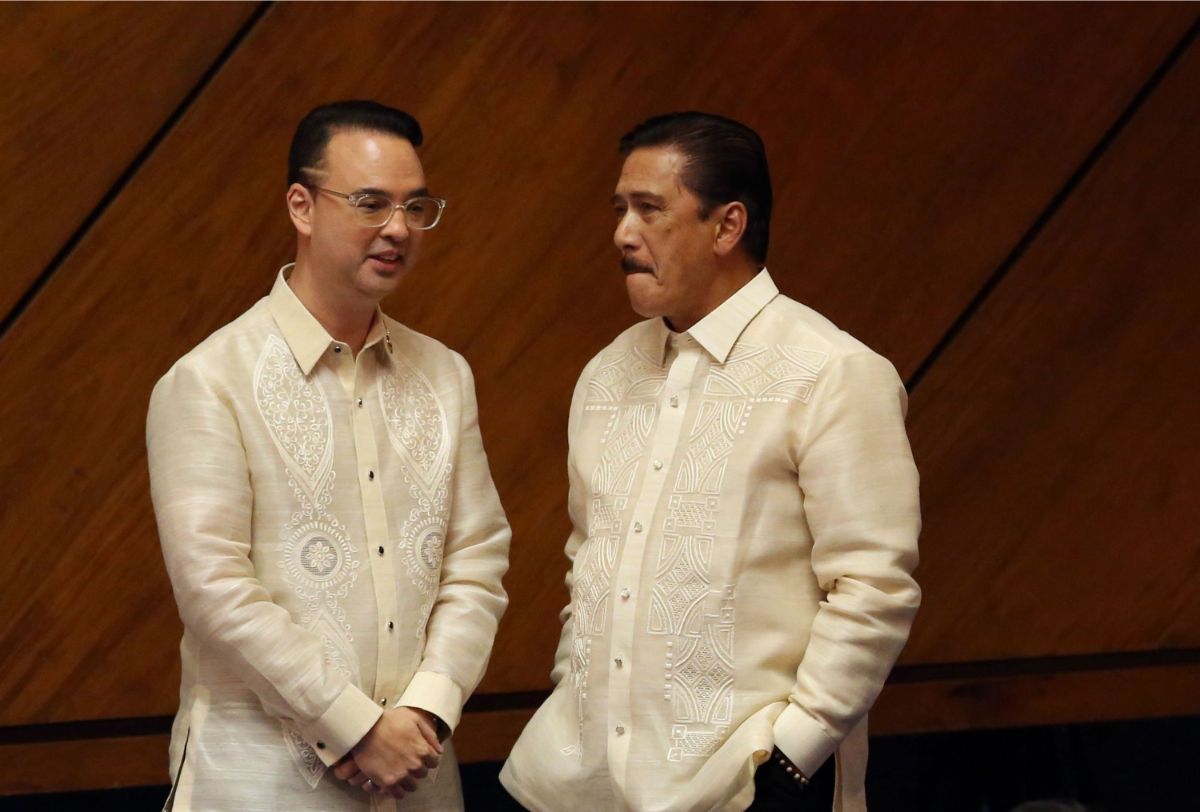
Taguig-Pateros Rep. Alan Peter Cayetano was elected House speaker before the opening of Congress yesterday while Senate President Vicente Sotto III retained his position. Photo by KJ Rosales, The Philippine STAR
The death penalty was abolished during the time of then president Gloria Macapagal-Arroyo, a Catholic who ensured good relations with the Catholic Church while she was chief executive. She signed the Republic Act 9346, or the law abolishing capital punishment, before flying to the Vatican in 2006, earning praises from members of the international community that were against the death penalty.
The Catholic Church has opposed the death penalty and the Senate does not consider it a priority.
As presidential candidate in the 2106 elections, Duterte pushed for the reimposition of the death penalty to deter criminality as he promised to eradicate the drug menace in six months.
But he acknowledged not just in yesterday’s SONA but also in other instances that curbing the illegal drug menace was not easy despite the killings that have occurred.
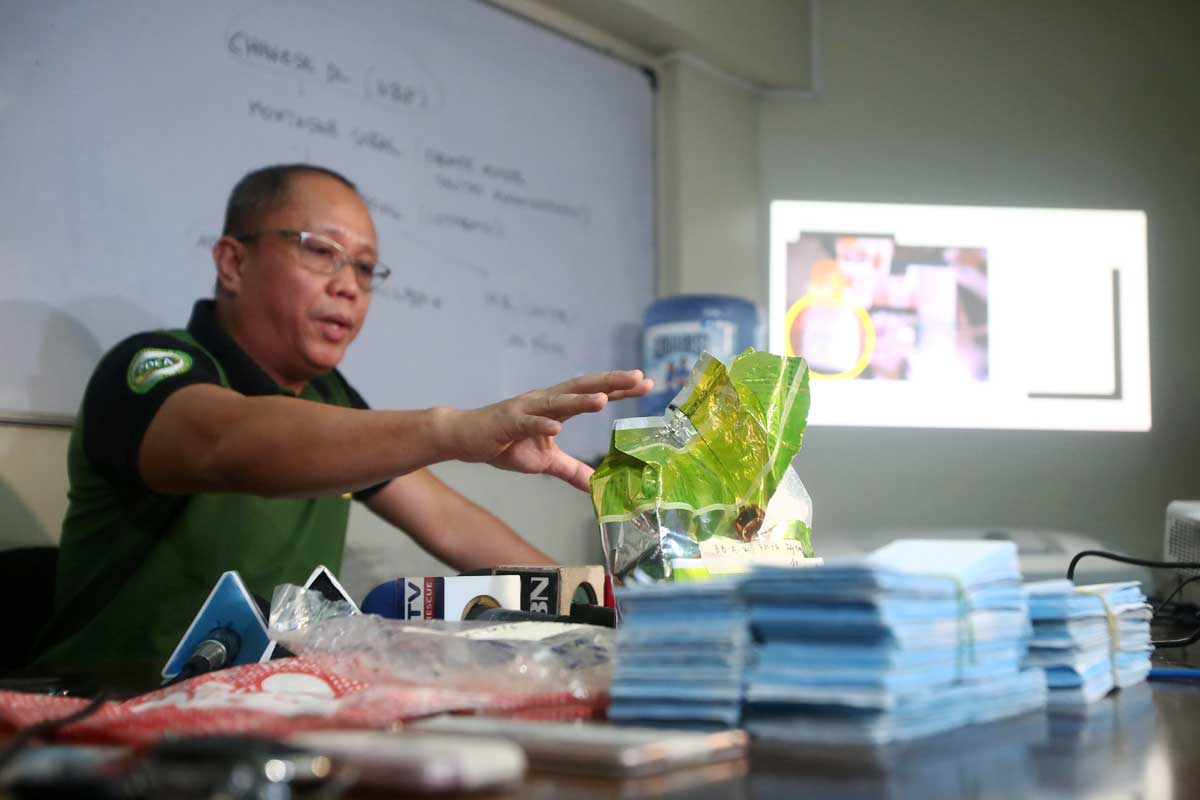
Members of the Philippine Drug Enforcement Agency and the Bureau of Customs inspect 276 kilos of alleged shabu or crystal methamphetamine packed in tea bags from Vietnam amounting to P1.8 billion in a warehouse in Manila on March 22, 2019. Photo by Miguel de Guzman, The Philippine STAR
Before Duterte delivered his SONA, a survey conducted by the Social Weather Stations from June 22 to 26 showed six out of 10 Filipinos believe that the government should not block international groups looking into deaths related to the drug war.
Duterte and his officials have been strongly criticizing those questioning the drug war and seeking an investigation into the thousands of deaths reported since 2016.
Under Go’s Senate Bill 207, which seeks to amend Section 1 of RA 9346, the imposition of capital punishment will not be allowed except for crimes specified under RA 9165, or the Comprehensive Dangerous Drugs Act of 2002 and Section 12 of RA 7659 or the Death Penalty Law passed in 1993.
Further reading: Pacquiao, Go file bills to revive death penalty
Go explained he included plunder in his bill because the President was determined to stop corruption.
Under RA 7080, plunder covers any public officer who acquires ill-gotten wealth amounting to a total of at least P50 million. The penalty is life imprisonment.
“The crippling problems brought about by dangerous drugs and corruption must be answered with a firm and decisive solution,” Go said.
There have been many attempts to restore the death penalty since Arroyo signed RA 9346.
In 1986, the Philippines became a state party to the International Covenant on Civil and Political Rights, which gave it the obligation to respect and promote civil and political rights, including the right to life, as stated in Article 6 of the ICCPR.
The 1987 Constitution, in Article 3, Section 19, states: “No person shall be deprived of life, liberty or property without due process of law, nor shall any person be denied the equal protection of the law.”
Former president Fidel Ramos signed the bill on death penalty into law as a “crime control” measure. It led to the execution of seven convicted criminals between Feb. 5, 1999 and Jan. 4, 2000, including Leo Echegaray.
Critics of capital punishment say there is a wide room for mistakes in establishing guilt, and indigent defendants who can’t afford the best lawyers are more likely to be executed.


