



Why Philippine Cinema Flourished During Martial Law: Oppression Gives Life To The Arts, Say Filmmakers
As much as cinema was a vital tool for drawing attention to the issues of the day and uncomfortable truths about society, it was also said to have been an important tool for the late dictator Ferdinand Marcos’ rise to power.
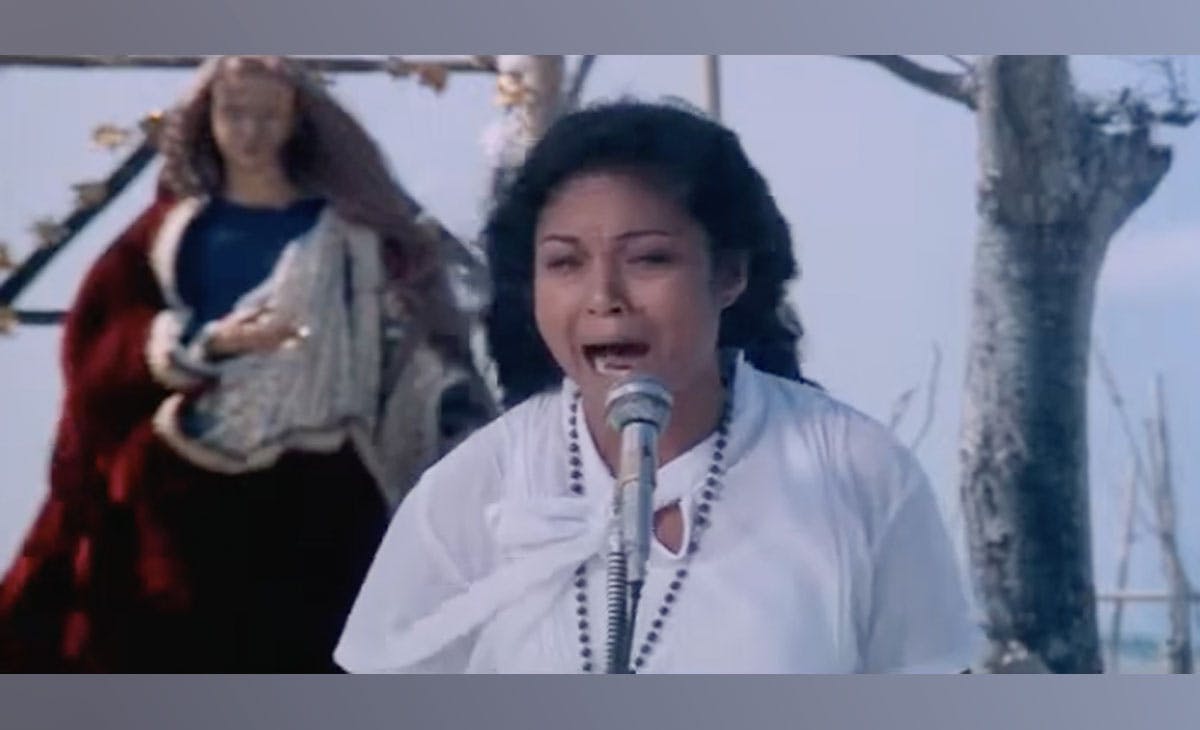
A village girl claims to have experienced an apparition of the Virgin Mary atop the hill and soon engages in faith healing, drawing flocks of hopeless people. An epidemic takes lives and shatters the illusion, but when she shows signs of becoming a virgin mother and even as she admits that she lied, the people latch on to that hope again.
“Wala silang makakapitan kundi siya. Siya lang ang magliligtas, siya lang ang makakasagot sa kanilang mga problema. So, para kang merong isang big megalomaniac (They have no one to hold on to but her. Only she can save them, only she can solve their problems. So, you have one big megalomaniac),” said the screenwriter.
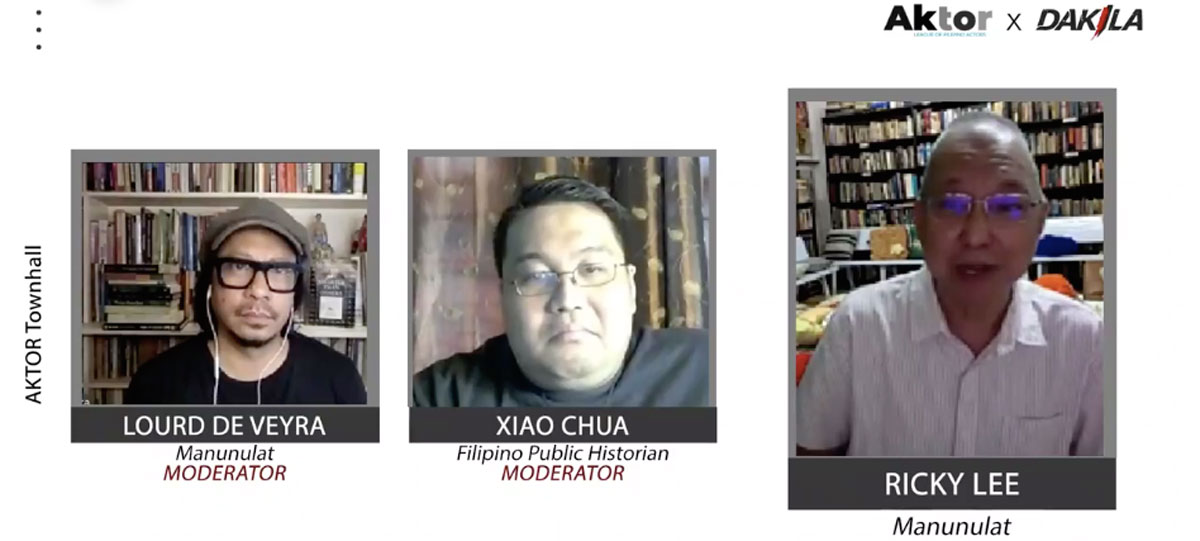
If the story and the background sound familiar, it is because Ricky Lee began writing the script for Himala in 1976, shortly after he was released from detention in Fort Bonifacio. He suspects he was targeted by the regime of dictator Ferdinand Marcos for being an officer of the writers’ group Panulat Para sa Kaunlaran ng Sambayanan (PAKSA).
“Questioning God, questioning the government, doon ko lang naipon ’yung mga hindi ko mailabas na nasa loob ng kulungan (that was when everything I could not get out when I was jailed built up),” Lee recalled.
“Kaya lumabas na tungkol sa isang populist na leader na nagsinungaling sa mga tao, at then sinusundan nila si Elsa sa kanyang false na kwento (Which is why it turned out to be about a populist leader who lied to the people, and then they followed Elsa around for her false tales),” he said.
The behind-the-scenes story for Himala¸ which became a box-office hit in 1982, was just one example of how Philippine cinema flourished despite – and because of – the oppression and extreme censorship of mass media and the arts under the Marcos regime.
Lee and several artists who experienced the worst of martial law shared their stories in the virtual forum “Ganito Kami Noon, Ganito Pa Rin Ba Ngayon?: Pelikula, Paniniil, Pagpalag” on Sunday, Sept. 20, the eve of the 48th anniversary of Marcos’ declaration of martial law today, Sept. 21.
The forum was held by Aktor – League of Filipino Actors, Dakila – Philippine Collective for Modern Heroism and Regional Filmmakers Network as part of the Active Vista International Human Rights Festival. (The title of the forum was a play on the title of Eddie Romero’s 1976 period film Ganito Kami Noon, Paano Kayo Ngayon?)
The Second Golden Age of Philippine Cinema from the late 1970s to the early half of the 1980s coincided with the martial law period. Besides Himala’s late director Ishmael Bernal, other renowned filmmakers from that time include the late Lino Brocka (who became one of the members of the 1986 Constitutional Commission after Marcos’ ouster), Mike de Leon and the late Mario O’Hara.
Films remembered from that period include socially relevant stories such as Tinimbang Ka Ngunit Kulang, Maynila sa mga Kuko ng Liwanag, Insiang, Sakada, Tatlong Taong Walang Diyos, Nunal sa Tubig, Minsa’y Isang Gamu-gamo, Itim, Jaguar, Bona, Batch ’81, Sister Stella L, Moral and Bayan Ko: Kapit sa Patalim.
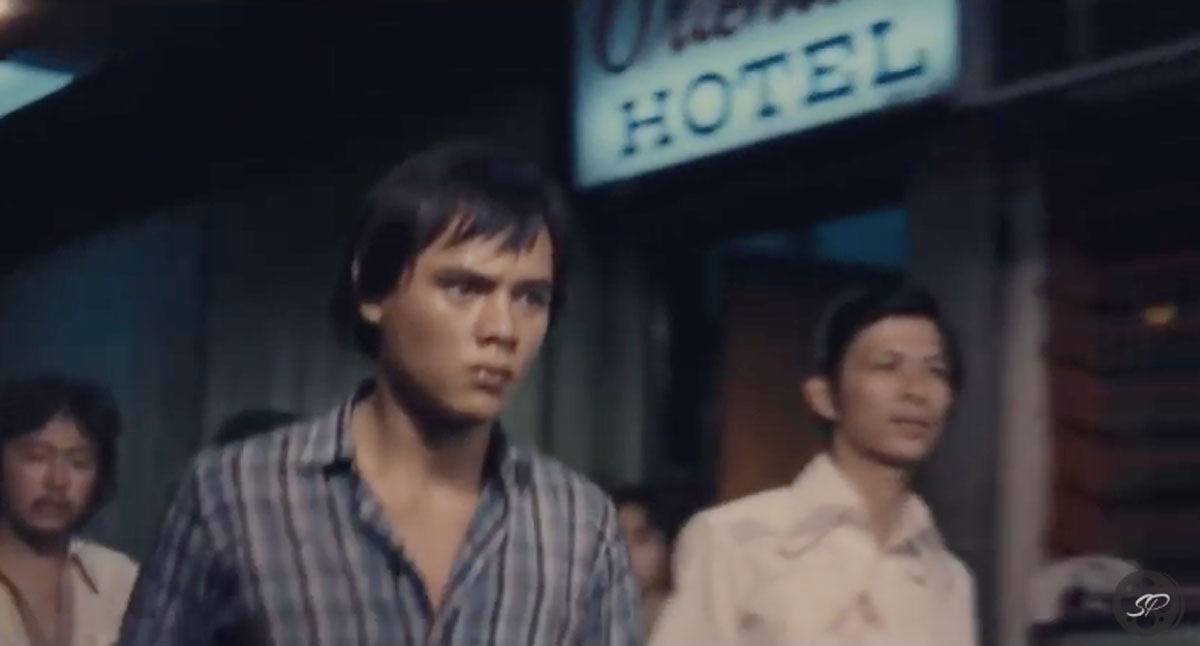
Lee said: “Mas sumigla kami. Kung kailan ang lakas ng oppression, ang lakas ng pag-suppress sa tao, doon naman lumalakas ’yung puwersa sa loob mo na gusto mong magsalita, magkwento, tumutol (We became more energetic. When oppression and suppression of the people are intense, the power inside you becomes stronger that you want to speak out, tell stories and dissent).”
“Doon lumalabas ang mga magagandang kwento, kasi kinukulong; naghahanap ng paraan na makalabas sa kulungan…Lalong yumayaman ang pagkukuwento ng pelikula (That’s when the good stories come out, because they are being confined; they look for a way to get out of the cage. Storytelling in movies becomes richer),” he added.
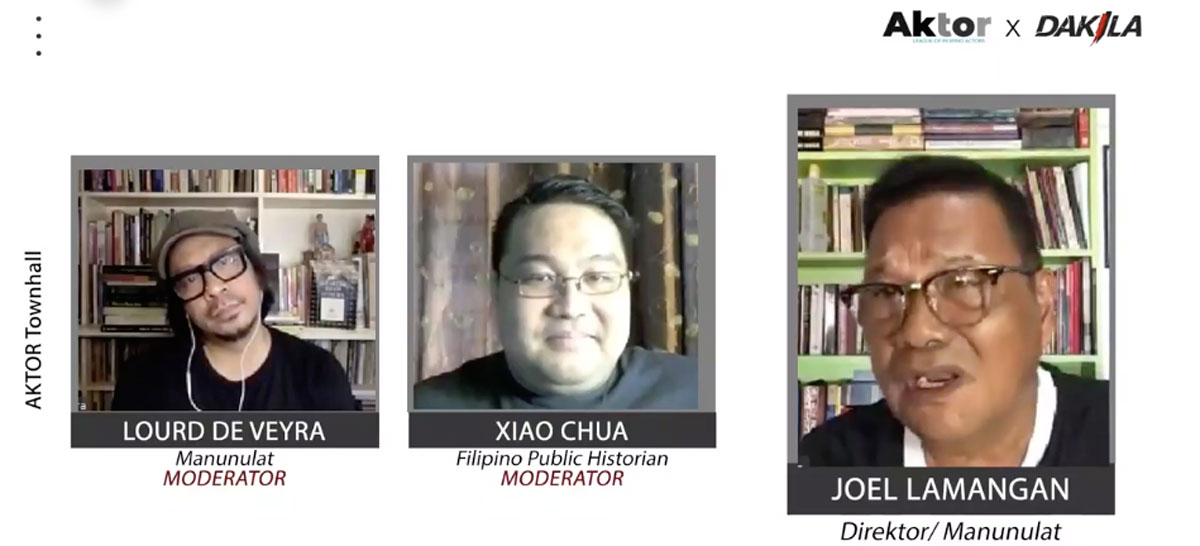
Joel Lamangan, who spent four years of his youth in jail from 1973 to 1975 and 1977 to 1979, said this was the case for all forms of art. As a teenager at the time, he started out by organizing strikes and stage plays to protest various issues, especially in Cavite province which he was ordered to leave.
“‘Pag ang panahon ay malakas ang oppression, ’pag ang panahon ay nakikita ang kawalanghiyaan ng namumuno, lumalakas ang sining. Lumalakas ang uri ng sining gaya ng teatro, dulaan, sining-biswal (In times of great oppression and when you see the shamelessness of the leaders, the arts become stronger. Forms of art like theater, plays and visual arts become stronger),” Lamangan noted.
Compared with movies, the forms of art that may be shown in communities help show the people the truths about the country. “Naging mabilis ang pagmulat ng mga tao. Malakas ang dating, progresibo ang mga produkto (The people’s awakening was fast. The impact was strong, the products were progressive),” Lamangan recounted.
The original propaganda tool
Public historian Michael Charleston “Xiao” Chua, who moderated the forum, said it was important to look back at how filmmakers told their stories during the Marcos regime to give a glimpse of what life was like back then and learn lessons that may be applicable now.
“Baka may paralelismo ang condition ngayon sa filmmaking, baka meron tayong makuhang leksyon rin (There may be parallelisms in the conditions for filmmaking, maybe we can learn lessons too),” Chua said.
As much as cinema was a vital tool for drawing attention to the issues of the day and uncomfortable truths about society, it was also said to have been an important tool for Marcos’ rise to power.
Chua cited the “huge role” played by the 1965 biopic Iginuhit ng Tadhana in boosting Marcos’ chances of defeating reelectionist president Diosdado Macapagal in the elections two months after its release.
Chua pointed out that the government unsuccessfully tried to stop the movie’s release. It became a hit as Sampaguita Pictures superstars Luis Gonzales and Gloria Romero portrayed Marcos and his wife Imelda. (Actress and now Batangas Rep. Vilma Santos, then 12 years old, appeared as now-Sen. Imee Marcos.)
“Dumadami ang revisionist at distortionist sa social media. Basta, pitong taon bago magdeklara ng martial law, hindi na bago ’yan. Si Marcos, ginamit na ang pelikula bilang propaganda (There are now more revisionists and distortionists on social media. But, seven years before martial was declared, it was already nothing new. Marcos used the cinema for propaganda),” Chua said.
Among the movie’s highlights was the alibi of Marcos that he could not have killed Julio Nalundasan in Batac, Ilocos Norte, on Sept. 20, 1935 – days after the latter defeated him in the National Assembly elections – because he was studying law in the University of the Philippines. (The Court of First Instance convicted Marcos and brother-in-law Quirino Lizardo and imposed the death penalty. The Supreme Court on Oct. 22, 1940 acquitted them, although it imposed a P50 fine for contempt of court.)

How hard it was to make movies
Chua noted that after declaring martial law, Marcos put up a Department of Public Information that silenced and controlled the media, with the number of newspapers slashed to two from 18.
The agency commanded the media outlets to only publish “news reports of positive national value,” Marcos’ former Media Advisory Council head Primitivo Mijares wrote in his 1976 book The Conjugal Dictatorship of Ferdinand Marcos and Imelda Marcos. (Mijares disappeared months after the book was published.)
Chua also cited Marcos’ issuance of Letter of Instruction No. 13 in 1972, which banned the following films from being publicly exhibited in any theater in the country:
- Films which tend to incite subversion, insurrection or rebellion against the state
- Films which tend to undermine the faith and confidence of the people in their government and/or duly constituted authorities
- Films which glorify criminals or condone crimes
- Films which serve no other purpose but to satisfy the market for violence or pornography
- Films which offend any race or religion
- Films which tend to abet the traffic in and use of prohibited drugs
- Films contrary to law, public order, morals, good customs, established policies, lawful orders, decrees or edicts; and any or all films which in the judgment of the Board are similarly objectionable and contrary to the letter and spirit of Proclamation No. 1081
“Parang may batas na kapapasa lang na ganito ang phrasing, ah (There seems to be a law with this kind of phrasing),” broadcast journalist and and writer Lourd De Veyra, who was also moderator, observed.
Chua said the enforcement of the first three parameters in LOI 13 was strict – but this was not the case for films that fell under the fourth one, which have sensational titles like Uhaw, Haliparot, Laman sa Laman, Hidhid and Hayok.
“Katawa-tawa at tila namayagpag pa ang mga pelikula noon sa ilalim ng number four, dahil sa panahon na ito, hinayaang mamayagpag ang mga pelikulang bomba (It was laughable that movies under number four apparently flourished, because during this time, they let the bomba films flourish),” he said.
There were several layers of restriction at the time, Lee stressed. First, the complete screenplay would have to be submitted to the Board of Censors.
“May sulat akong matatanggap mula sa head ng Censors Board, si Maria Kalaw-Katigbak at the time, na para akong batang kina-castigate niya na bakit ganito, bakit ganyan ang pagkakasulat (I would receive letters from the head of the Censors Board, Maria Kalaw-Katigbak at the time, as if I were a child she was castigating, why this, why write it like that)?” Lee recalled.
Film producers at the time needed to obtain permits to shoot. The finished product would have to be reviewed again. In the case of the 1982 movie Moral, it had to be cut by 23 minutes because of the portrayal of a New People’s Army rebel character and the depiction of someone falling victim to “salvage” – the extrajudicial killing of a suspected criminal or dissident.
In comparing this to the present day, Chua seemed to allude to the Film Development Council of the Philippines’ (FDCP) requirement for productions of any format to submit a week in advance a report on all scheduled shoots, ostensibly to ensure compliance with health safety protocols amid the coronavirus disease 2019 pandemic. This was despite the fact that the law did not grant the FDCP any regulatory power beyond promoting the movie industry and giving grades to films.
“Hindi lang pala sa panahon ng pandemya ’yan. Parang narinig ko na ’yan nitong mga nakaraang araw (So it doesn’t just happen during a pandemic. I seem to have heard of it these past few days),” Chua said.
Compromises
Lee disclosed that because he had become an activist in the University of the Philippines when martial law was declared, he did not get his real name credited for his first movie, Dragnet in 1973.
The movie starred action king and future president Joseph Estrada as a detective who sought to convince a Chinese man to testify about a murder he had witnessed – a departure from the latter’s usual roles as villain or comedian.
Lee bared that he was contacted to do the movie because the producers needed a writer who knew how to speak Chinese. He said even Estrada did not know he wrote the script.
To come up with such movies that stand the test of time and capture a snapshot of life under the Marcos regime, Lamangan and Lee said they had to make compromises and inject social relevance into mainstream stories.
De Veyra noted that some filmmakers acted as “smugglers” – a term coined by Martin Scorsese. For instance, Brocka’s Maynila sa mga Kuko ng Liwanag may have been a melodrama about a man finding his childhood sweetheart falling victim to prostitution in Manila, but he also depicted scenes of slum areas and poverty.
“Walang tahasang pagtuligsa sa gobyerno, pero mas intense pa sa kahit anong op-ed commentary o duguang placard (There is no explicit opposition to the government, but it was more intense than any op-ed commentary or bloody placard),” De Veyra said.
Often, it was a test of how much an artist could get away with expressing themselves. One plot twist in Himala involves a name in the credit roll: the P3-million film was produced by the Experimental Cinema of the Philippines, a government-owned and controlled corporation that was dissolved after the fall of the Marcos regime.
Lee said people would usually point out that the film was made possible by the government. He would rebut: “Hindi, ang nag-finance niyan taumbayan. Pera nila ang ginamit diyan (No, it was the people who financed it. Their money was used for it).”
Chua commented that this was a form of “creative resistance.”


