


Why Is The Philippines Upgrading Its Batanes Military Defense?
Largely ignored until 2018, this piece of rock and sand that measures only two square kilometers was only occupied by a small detachment of soldiers beginning six years ago.
MAVULIS ISLAND, Batanes – Anywhere else, and people would have taken it for granted.
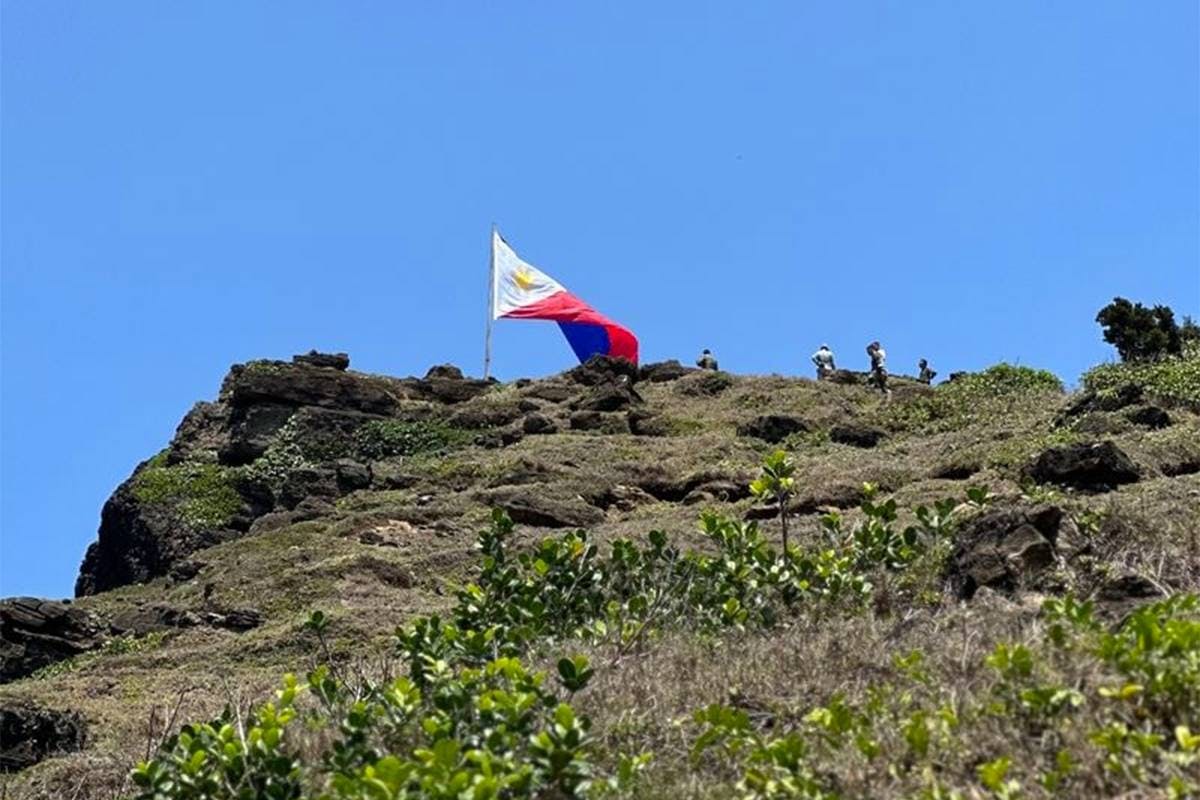
But the enormous Philippine flag dancing with the crosswinds from one of the highest points of this island is hard to ignore. Maybe that is the point.
This 200-meter peak is the so-called tip of the spear of the Republic of the Philippines – it is the northernmost frontier of the country, the tip that points at the critical Bashi Channel that separates the Philippines from Taiwan, just 98 kilometers away.
And it is a tip that is going to get some sharpening.
Bashi Channel, a narrow waterway that separates Taiwan’s southernmost Lesser Orchid Island from this island, is a critical military and commercial chokepoint. In many ways, it is the gateway in and out of the South China Sea to the Western Pacific. Most underwater cables carrying data and telephone traffic to Asia pass through this channel as well, making it a potential vulnerability for internet and communications in the region. And most of all, the Bashi Channel is one of the few supply lines in the event of a war between China and Taiwan.

Credible naval facility
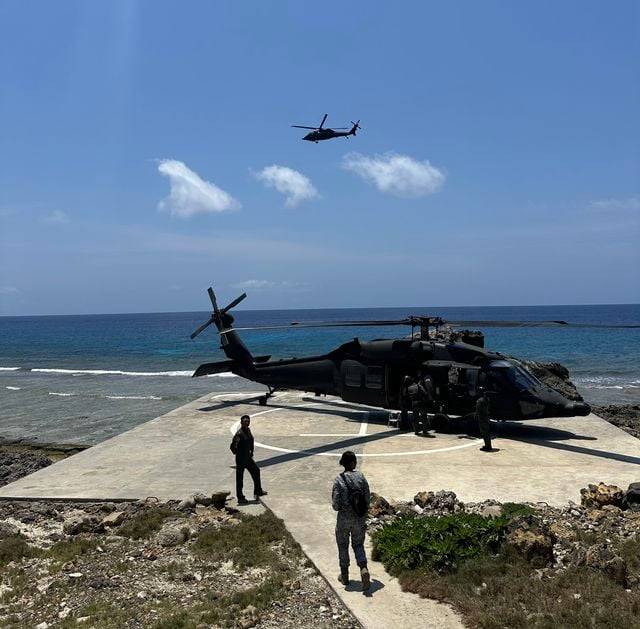
Over the weekend, military officials flew in to begin preparations for a buildup that will bring in more military personnel and equipment to this deserted island. In the next few months, the Philippine government will be building a third helicopter landing area and a port. But even this is not the final objective. The new infrastructure is only meant to support the landing of even more heavy construction equipment for an even bigger military presence on this island.
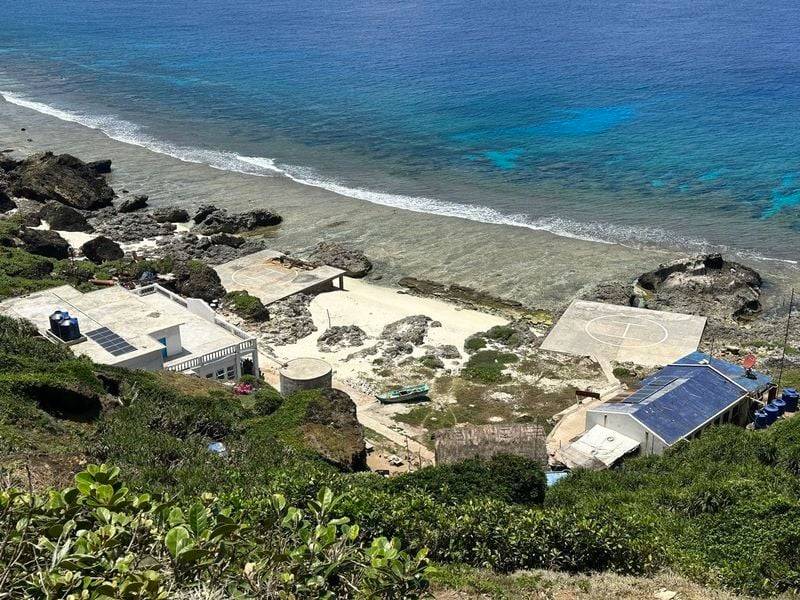
“May mga structures tayo dun na hindi pa talaga prepared, kailangan ayusin pa siya, pati ‘yung mga helipads natin na na-damage,” says Tactical Operations Northern Luzon Wing Commander Brigadier General Dennis Estrella. “Para lang siyang maging isang credible navy facility.”
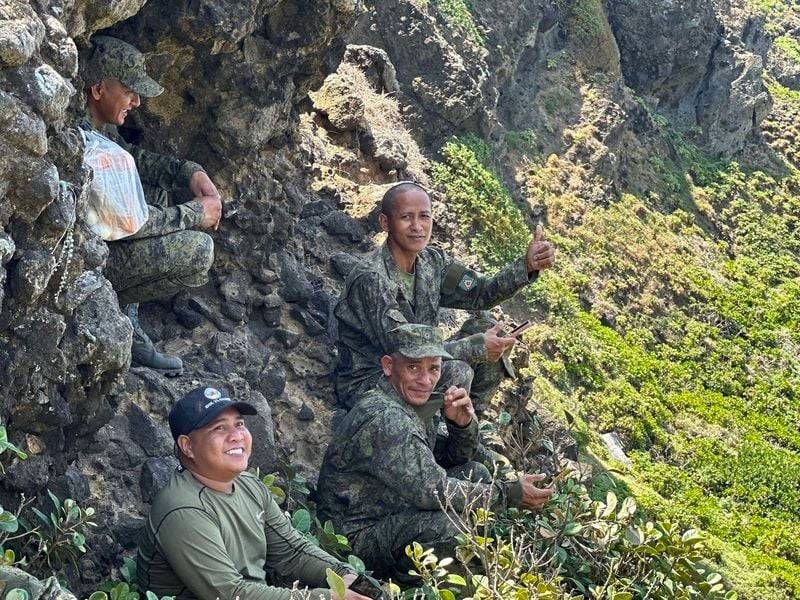
Largely ignored until 2018, this piece of rock and sand that measures only two square kilometers was only occupied by a small detachment of soldiers beginning six years ago. The soldiers were rotated every 15 days from the bigger island municipality of Itbayat. And with tensions flaring between China and Taiwan, it was only in the last three years that the government has made serious effort to show the flag.
The buildup has certainly been slow. It began with crude fishermen’s shelters almost a decade ago, until a small permanent government detachment was set up despite the lack of power and fresh water. Solar panels were brought in in 2021, but these have deteriorated because of exposure to the harsh Batanes climate. There is enough power on the island though, to power up a Starlink satellite connection that keeps solitary days warm.
The soldiers struggle with the basics, mainly getting clean potable water on the island, as their desalination plant has broken down too, and has not been fixed since mid-2023. Clean water is carefully rationed for cooking and drinking, before new supplies get sent on the next rotation. Personal hygiene doesn’t rank high on the list of priorities.
But the recent tensions between China and Taiwan, and the US involvement with EDCA bases in the Philippines, have reflected a lot of attention towards this island. Add to that, some versions of China’s controversial 10-dash line appear to include parts of the province in their territorial claim, according to Sen. Francis Tolentino, chairperson of the Senate committee on maritime zones.
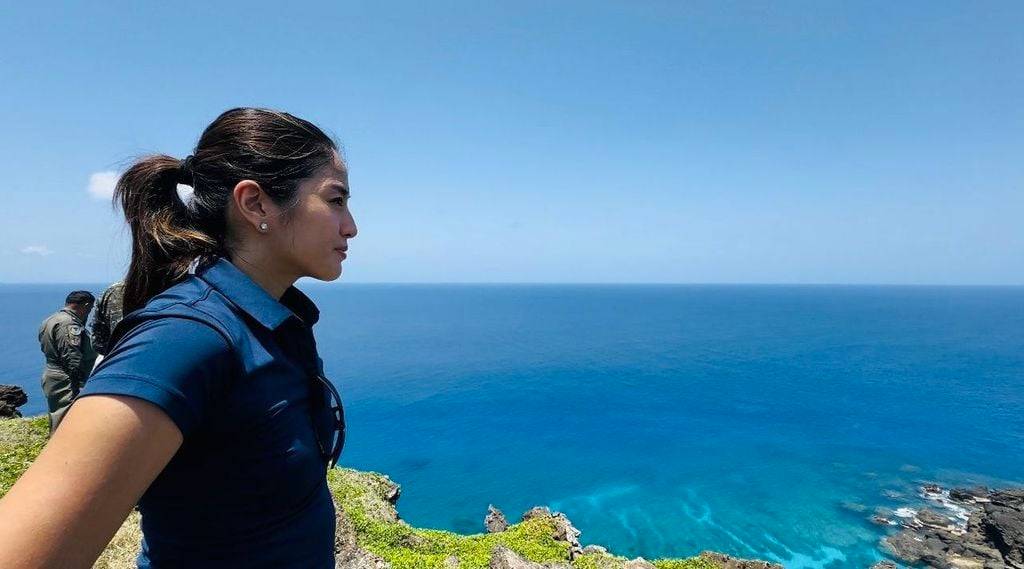
From the highest elevation on the island, we could look out to the blue-green expanse of the Bashi Channel, which any antagonist in any possible conflict would want to control first and foremost. This is the front seat to any action in the region.
With the goal of ensuring operational readiness and efficacy, the Northern Luzon Command also announced on Tuesday, April 23, the installation of high-tech Harris radios to facilitate reliable and secure voice and data communications in its naval detachments in Mavulis, Fuga and Calayan Islands.
US-funded ports?
In a Philippine Star report dated March 12, Batanes Governor Marilou Cayco revealed that they were in talks with the United States over plans to build a US-funded civilian port. She also said the US Army would arrive in April to further discuss plans aiming to accommodate Filipino workers from Taiwan in case a crisis occurs. However, the governor also denied days later in a Reuters report that the US military will be involved in the development of the port, and that funding will be sourced instead from the Philippine Ports Authority.
Sources on the ground say, potential sites for port construction and improvements are at Basco Port, Boulder Beach and Itbayat.
Will the ports be used for civilian or military purposes?
Cayco says the project’s goal is to help vessels unload cargo from Manila, especially during monsoon season where ships have to weather rough seas. However, some locals have expressed their apprehensions, saying they have yet to be consulted and are quite unsure over whether the port improvements will be for economic activity or used only for military purposes.
After all, Batanes has always had the reputation of a peaceful Eden, where villagers are so open and honest, and the only sound of anger comes from the wind. But that has not always been the case.
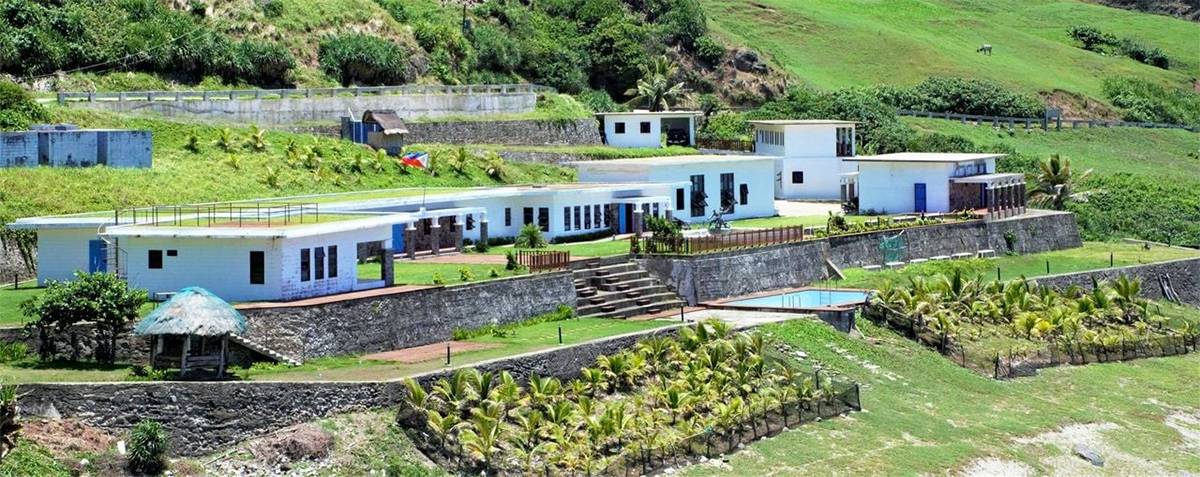
It can be recalled that in 1953, the US Coast Guard built a Loran Station in Uyugan, Batanes. “Loran,” standing for Long Range Aid to Navigation. The navigational facility-turned-museum in Batanes was once part of a series of points that provided an accurate system for defense for the US Coast Guard during World War 2.
The strategic importance of Batanes was recognized even before the second world war. The Americans built an airfield in the capital of Basco, called Batan airfield. That airfield and the rest of the province would later be occupied by Japanese troops and the Japanese Air Force. Underground Japanese bunkers and tunnels still dot the province, testament to the importance the island holds in a conventional conflict.
But from the rocky windswept hilltop of this island, overlooking the Bashi Channel, it is easy to forget that countries could joust for control of this slice of Eden.
At least until the snap of the flag brings you back to reality.