



Who Is New Chief Justice Diosdado Peralta?
Get to know new Chief Justice Diosdao Peralta, from his early days as a corporate employee to how he voted on various cases as associate justice of the Supreme Court, including on the burial of the late dictator Ferdinand Marcos in 2016.
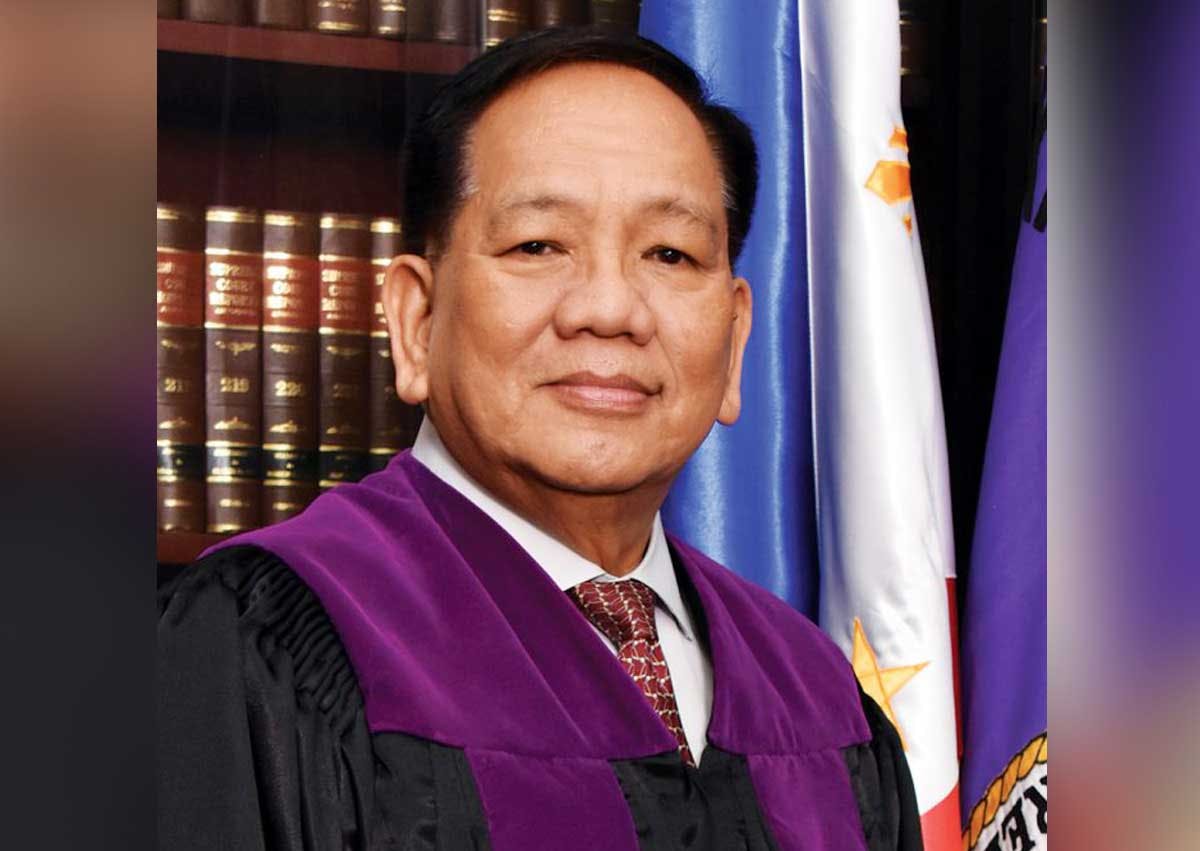
President Duterte appointed yesterday Supreme Court (SC) Associate Justice Diosdado Peralta as the 26th chief justice.
Peralta was among the three that the Judicial and Bar Council (JBC) shortlisted as candidates to head the High Court, the other two being SC Associate Justices Estela Perlas-Bernabe and Andres Reyes Jr.
The Ilocano magistrate from Laoag City is the most senior and most experienced among the three candidates, with two and half decades of judicial experience. Peralta will serve until March 27, 2022 when he reaches the mandatory retirement age of 70.
Peralta, a former presiding justice of the Sandiganbayan and member of the special division that convicted ousted president Joseph Estrada of plunder in 2007, was appointed to the SC in January 2009 by then president Gloria Macapagal-Arroyo.
A Quezon City regional trial court (RTC) judge from 1994 to 2002, he was dubbed the “hanging judge” because he had sentenced to death more than 40 people when capital punishment was still in effect.
As SC associate justice, Peralta served as ponente or wrote a number of decisions of the entire court, the most controversial of which was the high tribunal’s decision to bury former dictator Ferdinand Marcos at the Libingan ng mga Bayani or heroes’ cemetery on Nov. 8, 2016.
During last year’s JBC search for the next chief justice, Peralta, who was interviewed by the council as one of the candidates, said his ponencia on Marcos’ burial was necessary so that the country could move on from the past. He expressed belief that the decision united the country.
The SC decision to bury the late dictator at the heroes’ cemetery triggered mass protests staged by anti-Marcos groups and martial law human rights victims. The decision was arrived at despite a National Historical Commission of the Philippines study questioning Marcos’ wartime service record that made him eligible for burial at the Libingan.
Another controversial ponencia of Peralta was on the 2017 drug case Estipona versus Lobrigo. Arrested drug suspect Salvador Estipona filed the case against Legazpi City Regional Trial Court Branch 3 Judge Frank Lobrigo after the magistrate rejected Estipona’s petition for a plea bargain.
In his decision, Peralta stated that Lobrigo’s rejection of Estipona’s motion to file a plea bargain on the basis of Section 23 of Republic Act No. 9165 or the Comprehensive Dangerous Drugs Act of 2002 was a violation of the equal protection clause in the 1987 Constitution. Section 23 of RA 9165 states that any person charged with violating any provision of the law shall not be eligible for the plea bargaining provision.
Peralta’s decision led the SC in 2018 to adopt a new plea-bargaining framework for drug cases. A circular was issued to all trial courts to implement the framework.

Peralta also made his mark in his votes on other high-profile cases.
During the previous administration, Peralta voted in favor of declaring the Priority Development Assistance Fund (PDAF) and three acts under the Disbursement Acceleration Program (DAP) as unconstitutional.
When Grace Poe, daughter of the late actor Fernando Poe Jr. ran for a Senate seat in 2013, and as president in 2016, Peralta was among the SC justices who concurred that Poe is a natural-born citizen of the Philippines despite being a foundling.
The previous administration filed plunder charges against former president Arroyo in relation to the P336-million Philippine Charity Sweepstakes Office scam. In July 2016, Peralta was one of the SC justices who voted to acquit the woman who appointed him to the High Court.
It was in the same month that Duterte, an ally of Arroyo, took office. Arroyo later thanked Duterte for “creating a climate” that led to her acquittal.
Peralta also voted in favor of granting bail for another Duterte ally, former senator Juan Ponce Enrile, in 2015. The former Senate president was arrested in 2014 following charges of plunder in relation to the PDAF scam.
Peralta voted to affirm the legality of the arrest of staunch Duterte critic Sen. Leila De Lima in 2017 in relation to her alleged involvement in the drug trade.
In the same year, when Duterte placed Marawi under martial law following the siege of the city by Islamic extremists, Peralta was among those who voted to affirm the constitutionality of the declaration. He also voted in favor of extending martial law for a year and expanding it to the entire Mindanao thrice.
Last year, when Solicitor General Jose Calida filed a quo warranto petition to invalidate then chief justice Ma. Lourdes Sereno’s appointment as SC associate justice in 2012, Peralta was among the justices who voted to grant the petition, leading to Sereno’s ouster from the high tribunal.
This year, Peralta voted in favor of two controversial motions: first, the order to release all legal documents in relation to the Duterte administration’s war on drugs, and second, the recent decision of the SC, sitting as the Presidential Electoral Tribunal, to deny the petition to dismiss outright Ferdinand “Bongbong” Marcos Jr.’s electoral protest against Vice President Leni Robredo.
Peralta’s beginnings
The SC website provides ample information on Peralta’s early years as a prosecutor and his career as a judge and magistrate.
According to the website, Peralta, who graduated from the Colegio de San Juan de Letran in 1974 with a degree in economics, initially worked as a corporate analyst, and later, as a corporate manager while studying to become a lawyer at the University of Santo Tomas, where he graduated in 1979. He passed the Bar Examination the following year, although he was not among the top 10.
He worked for Cosmos Bottling Corp., the first Filipino soft drink manufacturer and maker of Pop Cola, Sarsi and Cheers, and managed several subsidiary businesses of the company until 1987 when he accepted the position to become the third assistant city fiscal in his hometown Laoag.
In 1988, he moved to Manila where he was appointed to the City Prosecutor’s Office. He was later assigned as assistant chief of the investigation division of the same office.
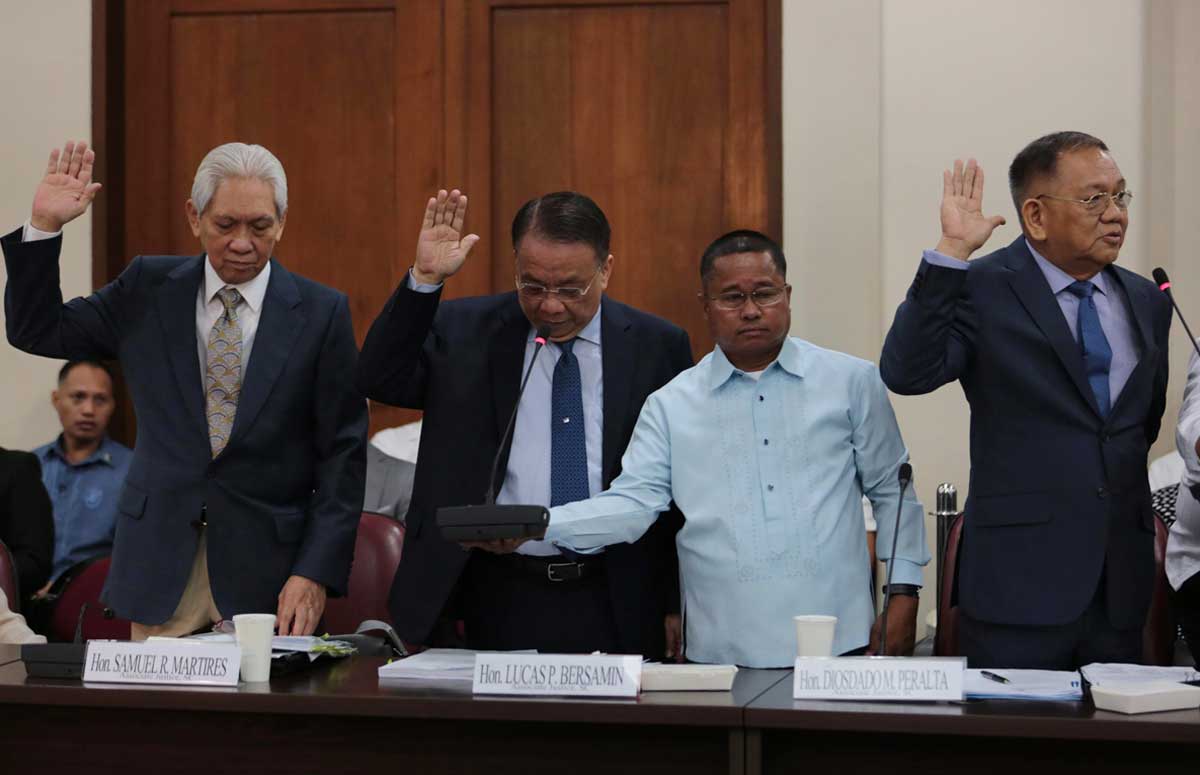
Peralta’s career as a judge began in September 1994 when he was appointed presiding justice of Branch 95 of the Quezon City RTC. At the time, the branch was a special criminal court that specialized on heinous crimes and drug cases.
As RTC judge, one of the controversial cases that Peralta decided on was the 1999 murder case People versus Fallorina. Peralta convicted then Police Officer 3 Ferdinand Fallorina in the killing of 11-year-old Vincent Jorojoro Jr. as the boy was flying a kite on the roof of their house on Sept. 26, 1998. Peralta sentenced Fallorina to death after hearing the testimonies of six witnesses and concluding the trial in just three months.
The case has since been depicted in the 1999 Gil Portes film Saranggola starring Ricky Davao and Lester Llansang.
That same year, Peralta received two awards for his speedy disposition of cases: a commendation from the Integrated Bar of the Philippines – Quezon City chapter and the first Annual Pillars of the Criminal Justice System Award from the Volunteers Against Crime and Corruption.
Another historic case that Peralta decided was the 2001 plunder case People versus Manalili. The case was filed against Bureau of Internal Revenue cashier Dominga Manalili, who diverted public funds amounting to P260 million to her personal bank accounts in 1996.
Peralta convicted Manalili a few months before Estrada faced impeachment for plunder, making her the first person to be convicted of the offense in the country.
His handling of the Manalili case earned Peralta an appointment as associate justice in the anti-graft court Sandiganbayan in 2002. He became part of the court’s Special Division that tried and convicted Estrada of plunder in 2007.
While at the Sandiganbayan, Peralta was an advocate of the computerization of case management information, even before the anti-graft court embarked on digitization. It enabled him to speedily and efficiently decide on the numerous cases he handled.
He also proposed the adoption of statements and affidavits as direct testimony of witnesses, which the anti-graft court adopted, enabling it to cut short the process of witness presentation and testimony and decide on the most number of cases based on merit.
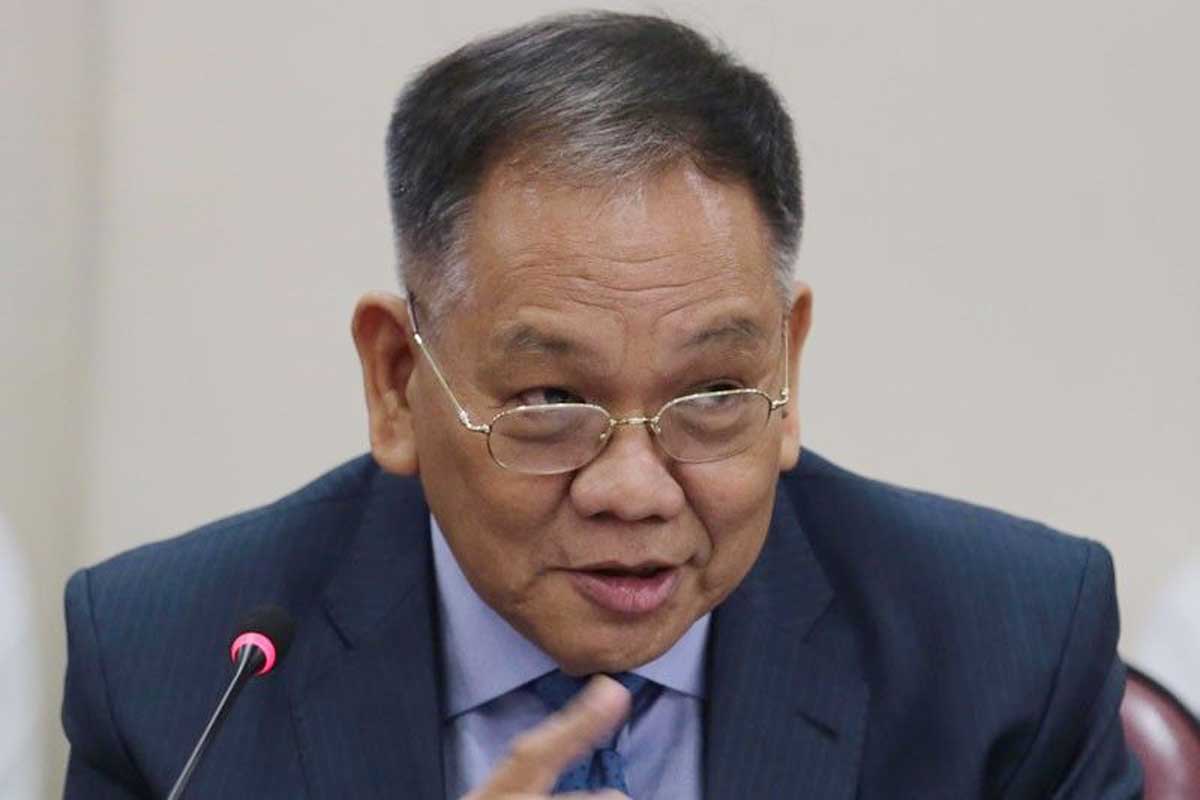
After Arroyo appointed Peralta as the 162nd associate justice of the SC in January 2009, this innovation was incorporated in the 2017 Revised Guidelines for Continuous Trial of Criminal Cases, of which Peralta was the main architect. Peralta also drafted the new SC rule allowing inmates to submit their testimonies through teleconferencing, reducing the need for their presentation in court.
Compliance with the new rules is spotty.
The Sandiganbayan, for example, recently junked the corruption complaint filed against former Metro Rail Transit 3 general manager Al Vitangcol because the court could no longer wait for the testimony by teleconference of one of the principal complainants, former Czech ambassador to Manila Josef Rychtar. The envoy, who twice sought a deferment because he wanted to complete his tour as ambassador to Chile before the teleconference, had submitted a signed affidavit detailing the alleged $30-million extortion.
Peralta replaces former chief justice Lucas Bersamin, who retired last week. Prior to Peralta’s appointment, SC Senior Associate Justice Antonio Carpio served as acting chief of the High Court. Carpio will retire on Saturday, Oct. 26.


