


War Of Drug Documentaries
The government has decided to come up with its own documentary to justify its drug war. Apparently, criticisms against it cannot be brushed aside despite surveys showing that the public supports the campaign.
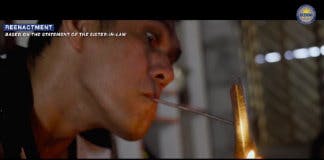
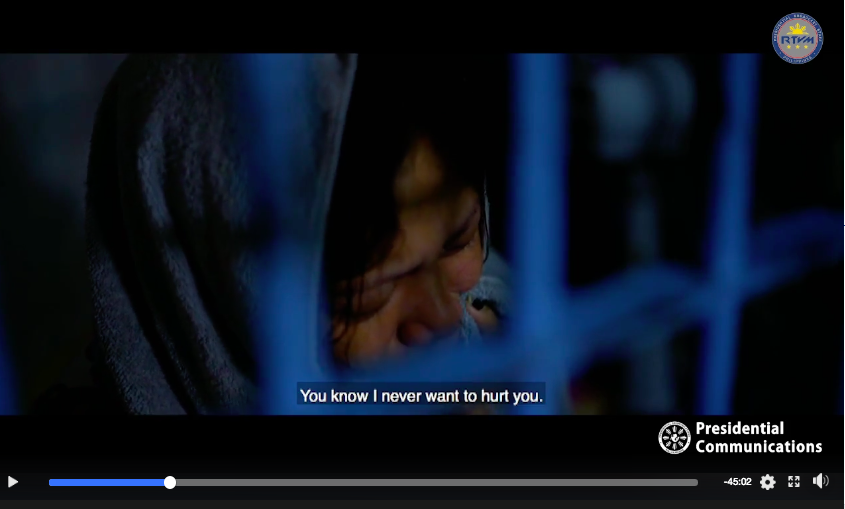
A husband’s beheading of his own wife in front of their young daughter and other gruesome crimes related to drug abuse are among the scenes featured in a documentary titled Gramo, produced by the Presidential Communications Operations Office (PCOO).
“Gramo” refers to the sale of shabu — methamphetamine hydrochloride or the poor man’s cocaine — by the gram to users.
According to Secretary Martin Andanar, PCOO chief, the government came up with the documentary to give the international community a “balanced” picture of the campaign against illegal drugs.
The Duterte administration has been dealing with criticisms, both here and abroad, against its drug war due to alleged extrajudicial killings of drug suspects. Children killed in the campaign have been described by some officials as collateral damage.
Andanar said the 50-minute documentary would be dubbed in English for the benefit of the international audience.
“We will possibly have a film viewing for the diplomatic community here in the country,” he said.
Andanar said the documentary may also be forwarded to the country’s permanent missions to the United Nations in Geneva and in New York.
“Sila na ang bahala magbigay sa UN (It’s up to them to give it to the UN),” he added.
During the preview of the film on Wednesday, Dec. 11, Andanar admitted that the negative publicity related to the drug war placed the Duterte administration in a bad light in the international community.
Andanar said it is important for the diplomatic community and local groups to understand how drug abuse has ruined people’s lives.
The documentary also justifies the manner by which the anti-drug campaign is being carried out.
Andanar expressed hope that the video documentary would help the international community understand President Duterte’s campaign.
“This is to clear things up especially on what our government has been doing in the last three years… we can also communicate the message of the President… that it is about saving the future of our nation, by countering drugs,” Andanar said.
The documentary shows how police officers conduct anti-drug operations in the slums of Tondo, Manila.
It also substantially featurs clips of Duterte during his sorties, explaining why he is dead serious in his drug war.
“If you f**k with my country, I will kill you,” Duterte has said in many instances.
The film gives a brief history of the government’s drug war, starting from the Marcos regime during which Chinese drug trafficker Lim Seng was executed in 1973.
The prosecution of policemen behind the killing of teenager Kian delos Santos was cited as an example that the government is not tolerating abuses by law enforcers.
Andanar said the administration supports the promotion of human rights, contrary to how Duterte is portrayed in the media here and abroad.
“(It’s) never been a policy of the national government,” Andanar said, referring to alleged extrajudicial killings that prompted the filing of a complaint against Duterte before the International Criminal Court (ICC).
The ICC is in the process of wrapping up its preliminary examination of the case before deciding whether it should proceed to pre-trial.
Andanar stressed that the government has relentlessly pushed pro-human rights policies.
“We will continue to implement strong law enforcement with consistent adherence and observance of human rights and dignity through rescue, rehabilitation, reformation, and ridding drug war operations of corruption,” he said.
The first full-length documentary on the Duterte administration’s drug war, titled On the President’s Orders, was presented to the United Nations Human Rights Council (UNHRC) before the body voted last July to adopt a resolution calling for the monitoring of the conduct of the drug war in the Philippines.
The documentary was directed by James Jones and was shown in the Philippines in September.
Further reading:
- Documentary On The War On Drugs Finally Premieres In Phl
- Chel Diokno: Drug War Film Can Be Used As Evidence Before ICC
From July 1, 2016 to Nov. 30 this year, the Philippine National Police (PNP) reported that authorities have conducted 151,601 anti-drug operations, resulting in the arrest of 220,728 suspects.
PNP spokesman Brig. Gen. Bernard Banac reported that 5,552 suspects were killed in drug-related police operations during the same period.
The government had earlier pegged the number of drug users at over four million — double the P1.8 million cited by the Dangerous Drug Board (DDB).
Agencies involved in the drug war have admitted the need to reconcile the conflicting figures, including those cited by President Duterte himself.
Philippine Drug Enforcement Agency director general Aaron Aquino has said that the PDEA is in the process of establishing a scientific method of collecting reliable data on drug dependents and users in the country.
Aquino said the DDB had started mapping out a more scientific way of determining the number of users and pushers.
Vice President Leni Robredo noticed this lack of reliable baseline data during her brief stint as co-chairperson of the Inter-Agency Committee on Anti-Illegal Drugs or ICAD.
The PCOO’s documentary is being released before Robredo is expected to make public her findings on the administration’s campaign against illegal drugs.
Robredo has hinted that her report would focus more on recommendations to address weaknesses in the drug war.
Asked if he thought Robredo could be referring to evidence that would prove the administration has sponsored extrajudicial killings, Aquino said the PDEA is ready to look into the Vice President’s revelations.
Law enforcement agencies had withheld confidential information on the drug war from Robredo when she was co-chair of ICAD, saying such information should be shared only on a “need-to-know” basis.
“I really don’t know if she discovered data on the so-called extrajudicial killings, but for me, if she discovered some cases related to that, well, it’s fine. She should just reveal it, no problem,” Aquino said in an interview last Thursday at Malacañang.
“We have four million (in statistics) but it is not really that scientific. It is not that accurate and that’s the reason why the DDB is doing something to have a better and more accurate and more specific way of getting the figure,” he said during the briefing on the #RealNumbersPH this week.
Duterte had campaigned on a promise of eradicating the drug problem in six months. He eventually changed his tune and admitted that the drug menace would be around even beyond his presidency.
He has been showing a so-called narco list with the names of politicians, police officers and even members of the judiciary allegedly involved in the illegal drug trade.
Duterte has publicly admitted his frustration over the magnitude of the drug problem.
Apart from the documentary, the PCOO also launched a magazine titled Saving the Future of A Nation: Countering Hard Drugs.
“We hope that both the documentary and the magazine will help enlighten everyone on the whole-of-nation approach the government is taking to address the problem of illegal drugs,” Andanar said.
The magazine also zeroes in on the harmful social effects of illegal drugs.
In launching the documentary and magazine, Andanar cited the successes and challenges faced by authorities in fighting illegal drugs.
Gramo was aired on People’s Television Network Inc. or PTV-4 on Dec. 11 and broadcast simultaneously in PCOO-managed social media pages.
Andanar said they are also discussing partnerships with other government agencies and private institutions, including those in the transport sector to broadcast the film. The PCOO is coordinating with the Department of Transportation to allow the viewing of the documentary in TV-equipped public utility vehicles, he added.